5 things cinematographers need to know about live broadcast
5 things cinematographers need to know about live broadcast
5 things cinematographers need to know about live broadcast

5 things cinematographers need to know about live broadcast
I spent fifteen years avoiding live broadcast. I told myself it wasn’t cinema. That multi-camera was ugly. That switching destroyed composition. Then a friend got sick two hours before a national news special, and I was the only operator available.
I said yes. I was terrified.
That night I learned that live broadcast is not the enemy of cinematography. It’s the ultimate editing room. You cut with your feet. You color with your iris ring. And you learn more about storytelling in one hour than in a week on a scripted set.
Here are five things I wish someone had told me before that first show.
1. Your feet are your timeline
In narrative, you have an editor. In live broadcast, you are the editor. Every step you take is a cut.
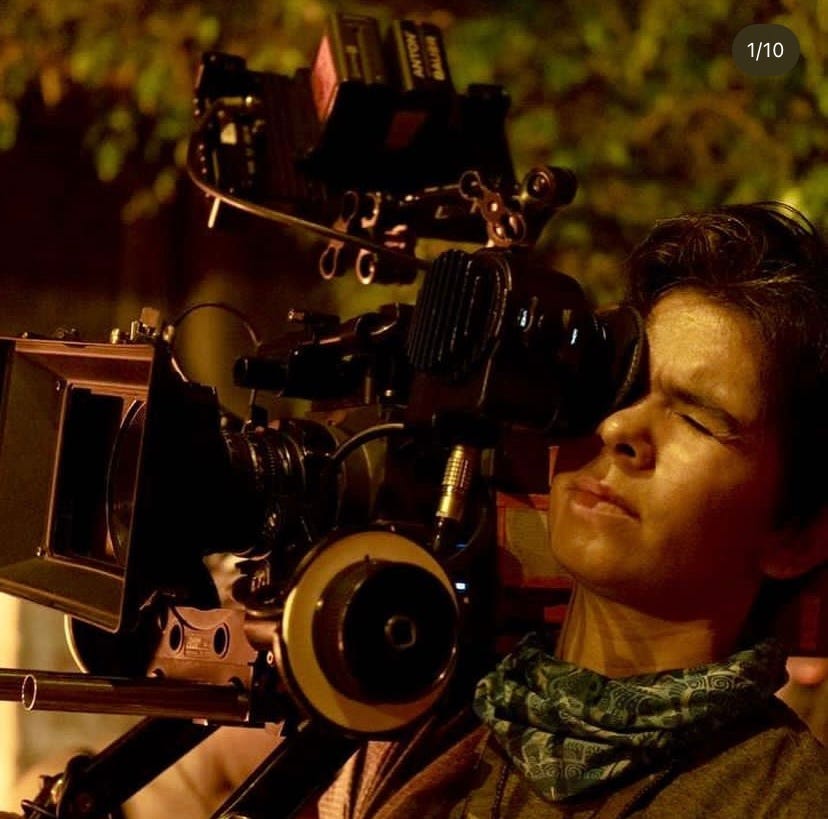
When I operate a handheld camera on a live show, I don’t think about “shots.” I think about sentences. A wide shot is a period. A slow push-in is a comma. A whip pan to a new subject is an exclamation.
The director shouts “Cam 3, take it” — and you have three frames to land on the right face. Not thirty minutes. Three frames.
That taught me to move with intention, not decoration. Every step must answer: what is the story right now?
2. Respect the iris ring like a Zen master
You know that beautiful, shallow depth of field you love on an Alexa with Master Primes? Forget it for a moment. Live broadcast is about exposure first, bokeh second.
Why? Because a broadcast truck has no “fix it in post” button. If you blow out the presenter’s forehead, sixty million people see a white blob. There’s no second take. No color grade.
So you learn to ride the iris like a pilot rides turbulence. Small adjustments. Constantly. A cloud passes? You move two stops without thinking. The talent turns toward a window? You close the iris before they finish turning.
I started practicing at home. I would watch the sunset through my living room window and chase the exposure with my thumb on an imaginary ring. After a month, it became breathing.
3. The viewfinder is a lie — trust the vectorscope
Here’s something they don’t teach in film school: your eye lies to you. Especially after hour four of a live show. Fatigue makes you think skin tones look warm when they’re actually orange. Your brain compensates. The waveform doesn’t.
In live broadcast, you learn to read scopes like a pilot reads instruments. The vectorscope for color. The waveform for exposure. The RGB parade for balance.
I remember my first live show, the director kept saying “too magenta” and I couldn’t see it. Then I looked at the parade. Blue was low. I added two points of gain on blue. The director said “perfect.”
That was the moment I stopped being a “cinematographer doing broadcast” and became a broadcast cinematographer.
4. You will miss the big moment. That’s fine.
In narrative, you roll again. In live, there are no retakes. And one day, you will miss.
I missed once. A presenter asked an unexpected question. The interviewee started crying — real tears, the kind you wait hours for on a scripted set. And I was on the wrong side of the room. I zoomed in too fast. The focus breathed. It was ugly.
After the show, I apologized to the director. He said something I never forgot:
“You didn’t miss. You were the only one who saw her eyes before she cried. Next time, you’ll be ready.”
He was right. I learned that live broadcast forgives fast if you learn faster. The audience forgets a shaky zoom. They remember the emotion. Don’t let perfectionism kill presence.
5. The truck is your temple
Behind every live show, there’s a production truck that smells like coffee, fear, and old cable. That’s where the real work happens. As a cinematographer, you must understand what happens after your signal leaves your camera.
The shading operator. The technical director. The audio engineer who hates when your zoom motor makes noise. They are your new family.
Learn their names. Bring them coffee. Ask the shading op to teach you how they match seven different cameras in under four minutes. Watch the TD cut between shots like a jazz drummer.
I spent my first six months thinking the truck was “not my department.” Then a veteran told me:
“The camera is where the image is born. The truck is where it survives. Respect both.”
Now I arrive an hour early just to sit in the truck and listen. The chatter. The countdowns. The calm before the red light. That’s where live broadcast becomes art.
After that first terrified night, I walked out of the studio at 1 AM. My hands were shaking. My back hurt. I had missed two shots and blown one exposure. But I had also caught a moment — a politician’s voice breaking, an unscripted gesture — that no film set could have manufactured.
Live broadcast doesn’t replace cinema. It’s a different instrument. Like jazz vs. classical. Both are music.
Now, when narrative directors ask me why I still do live shows, I say: because it keeps me honest. No second takes. No safety net. Just me, the camera, and the now.
That’s not a limitation. That’s freedom.
메타데이터
- post_id
- 46d91c417c7e
- slug
- 5-things-cinematographers-need-to-know-about-live-broadcast-46d91c417c7e
- url
- https://medium.com/@morvarid/5-things-cinematographers-need-to-know-about-live-broadcast-46d91c417c7e
- canonical_url
- https://medium.com/@morvarid/5-things-cinematographers-need-to-know-about-live-broadcast-46d91c417c7e
- author_url
- https://medium.com/@morvarid
- status
- ok
- fetched_at
- 2026-07-28 04:57:20