Secure by Design: Building Cybersecurity Into Technology From the Beginning
In today’s rapidly evolving digital world, organizations face an endless stream of cyber threats ranging from ransomware attacks and data…
Secure by Design: Building Cybersecurity Into Technology From the Beginning
In today’s rapidly evolving digital world, organizations face an endless stream of cyber threats ranging from ransomware attacks and data breaches to supply chain compromises and cloud misconfigurations. Traditionally, many companies approached cybersecurity reactively — building systems first and attempting to secure them later after vulnerabilities were discovered.
Unfortunately, this approach often leads to expensive security incidents, operational disruption, and loss of customer trust.
To address these challenges, modern organizations are increasingly adopting a more proactive philosophy known as Secure by Design.
Secure by Design is the practice of integrating security directly into the architecture, development, and deployment of systems and software from the very beginning rather than treating security as an afterthought.
Instead of asking: “How do we secure this product after it is built?”
Organizations adopting Secure by Design ask: “How do we build this product securely from the start?”
This mindset shift fundamentally changes how technology is designed, developed, and maintained. It reduces vulnerabilities, minimizes attack surfaces, and creates more resilient systems capable of resisting modern cyber threats.

What Does Secure by Design Mean?
Secure by Design is a cybersecurity approach where security principles, controls, and risk management practices are integrated into every stage of a system’s lifecycle.
This includes:
- Planning
- Architecture
- Development
- Testing
- Deployment
- Maintenance
The objective is to prevent vulnerabilities before they reach production environments.
Rather than relying entirely on detection and response mechanisms after deployment, Secure by Design focuses on reducing the possibility of security weaknesses existing in the first place.
This proactive strategy has become increasingly important as organizations adopt:
- Cloud computing
- DevOps
- Remote work environments
- APIs and microservices
- Artificial intelligence systems
- Internet-connected devices
As systems become more complex, retroactively fixing security problems becomes significantly more expensive and difficult.
Why Secure by Design Matters
Cybersecurity incidents often occur because security was overlooked during development.
Examples include:
- Hardcoded credentials
- Weak authentication systems
- Excessive permissions
- Insecure APIs
- Misconfigured cloud resources
- Lack of input validation
Attackers actively search for these weaknesses.
A single design flaw can expose millions of users or compromise entire infrastructures.
Secure by Design reduces these risks by ensuring that:
- Security is planned early
- Threats are identified proactively
- Secure defaults are enforced
- Risk is minimized continuously
Organizations that fail to prioritize secure design often spend significantly more money fixing breaches, recovering systems, and managing reputational damage.
Core Elements of Secure by Design
Threat Modeling
Threat modeling is one of the foundational components of Secure by Design.
It involves identifying:
- Potential attackers
- Attack vectors
- Critical assets
- Security weaknesses
- Possible attack scenarios
Before development begins, teams ask questions such as:
- What could attackers target?
- How could this system be abused?
- Which components are most sensitive?
- What happens if this service is compromised?
Threat modeling helps organizations anticipate risks before vulnerabilities appear in production systems.

Secure Defaults
Secure systems should be safe even without advanced configuration.
Secure defaults include:
- Disabled unnecessary services
- Strong authentication requirements
- Minimal privileges
- Encryption enabled by default
- Restricted network access
For example: A cloud storage bucket should never be publicly accessible unless intentionally configured that way.
Secure defaults reduce human error and prevent dangerous misconfigurations.
Minimization
Minimization focuses on reducing unnecessary complexity and attack surfaces.
This includes:
- Removing unused services
- Limiting exposed ports
- Eliminating unnecessary dependencies
- Restricting permissions
- Reducing sensitive data collection
The fewer components a system exposes, the fewer opportunities attackers have to exploit vulnerabilities.
Defense in Depth
Secure by Design also relies heavily on layered security controls.
Instead of depending on a single defense mechanism, organizations implement multiple protective layers such as:
- Firewalls
- Multi-factor authentication
- Endpoint protection
- Access controls
- Logging and monitoring
- Network segmentation
If one layer fails, additional protections remain active.
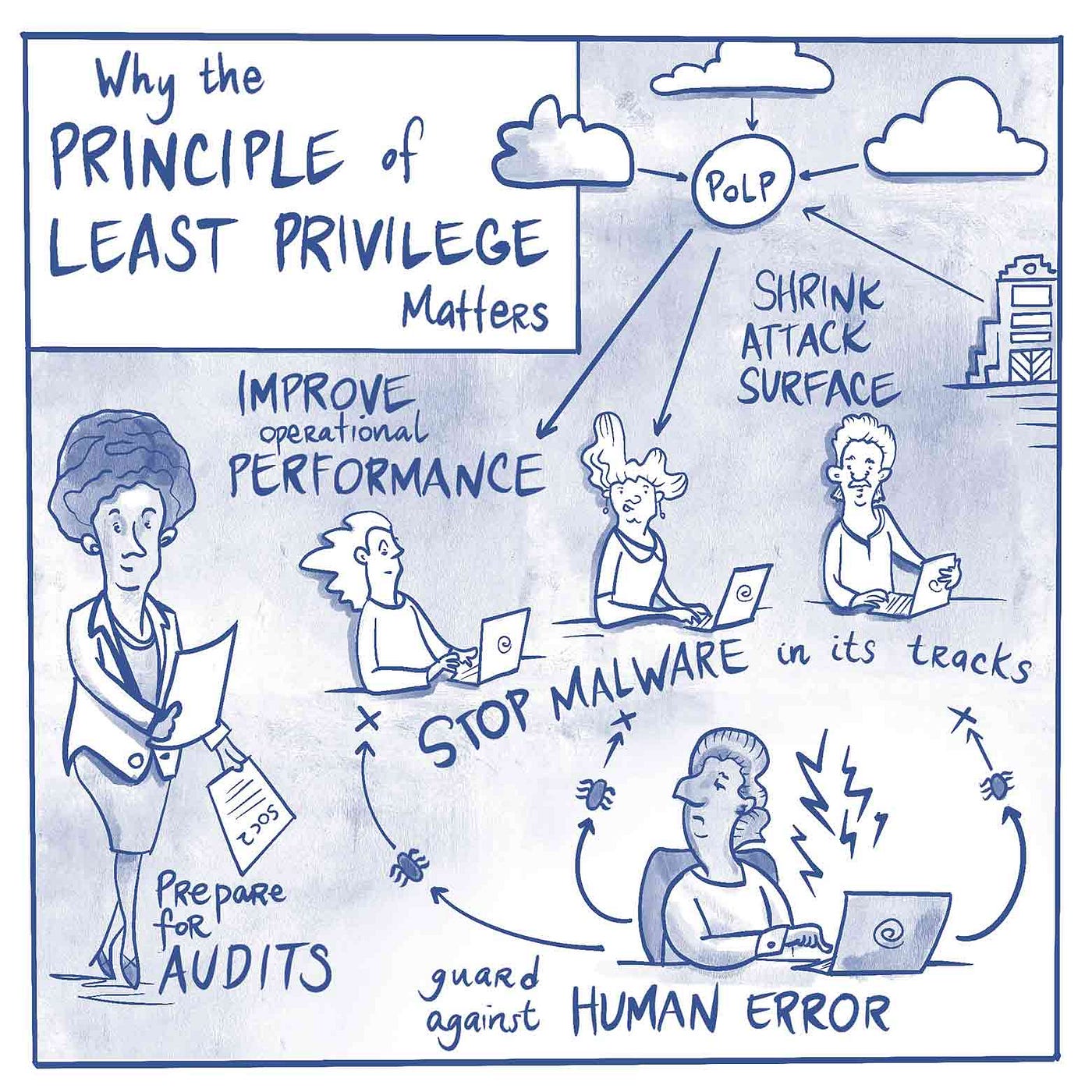
Least Privilege
Applications, services, and users should only receive the minimum permissions required to perform their functions.
This limits damage if an account or service becomes compromised.
Least Privilege works closely with Secure by Design because excessive access often turns small vulnerabilities into major security incidents.
Benefits of Secure by Design
Reduced Vulnerabilities
Integrating security early helps identify and eliminate vulnerabilities before deployment.
This dramatically lowers the number of exploitable weaknesses in production environments.

Lower Security Costs
Fixing vulnerabilities after deployment is significantly more expensive than preventing them during development.
Organizations save resources by:
- Reducing incident response costs
- Preventing downtime
- Avoiding legal penalties
- Minimizing recovery expenses
Improved Customer Trust
Customers increasingly care about how organizations protect their data.
Secure products build confidence and improve brand reputation.
Security incidents, on the other hand, often lead to:
- Financial losses
- Reputation damage
- Customer churn
- Regulatory investigations
Better Compliance
Many regulatory frameworks encourage or require secure development practices.
Secure by Design supports compliance with standards such as:
- ISO 27001
- NIST Cybersecurity Framework
- SOC 2
- PCI DSS
- GDPR
Stronger Long-Term Security Posture
Organizations that embed security into development processes create sustainable and scalable security practices rather than temporary fixes.
Implementing Secure by Design
Integrating Security Into the SDLC
Security should exist throughout the Software Development Lifecycle (SDLC).
A secure SDLC may include:
- Security requirements during planning
- Threat modeling during design
- Secure coding practices during development
- Automated testing during CI/CD
- Security validation before deployment
- Continuous monitoring after release
Security becomes part of the development culture rather than a final checklist item.
The Role of Developers
Developers play a major role in Secure by Design.
They should:
- Follow secure coding standards
- Validate user input
- Avoid insecure dependencies
- Understand common vulnerabilities
- Participate in security training
Modern developers are increasingly expected to think about security alongside functionality.
Security Specialists and DevSecOps
Security teams should collaborate closely with development and operations teams.
This approach is commonly called DevSecOps.
Instead of security operating separately, DevSecOps integrates security directly into:
- CI/CD pipelines
- Infrastructure deployment
- Code review processes
- Automated testing workflows
This enables faster and more secure software delivery.
Automated Security Testing
Automation is essential in modern development environments.
Organizations often integrate tools that automatically scan for:
- Vulnerabilities
- Misconfigurations
- Secrets exposure
- Dependency risks
- Insecure code patterns
Examples include:
- Static Application Security Testing (SAST)
- Dynamic Application Security Testing (DAST)
- Dependency scanning
- Container security scanning
Automation helps identify issues continuously instead of relying solely on manual reviews.
Challenges of Secure by Design
Pressure for Rapid Development
Organizations often prioritize speed and feature delivery over security.
Teams may skip security reviews to meet deadlines.
Solution:
Embed automated security checks directly into development workflows so security does not become a bottleneck.
Lack of Security Knowledge
Some development teams lack cybersecurity expertise.
Solution:
Provide:
- Secure coding training
- Security awareness programs
- Threat modeling workshops
- Access to security specialists
Legacy Systems
Older systems were often not designed with modern security principles in mind.
Solution:
Organizations can gradually modernize legacy infrastructure while adding compensating controls such as:
- Network segmentation
- Monitoring systems
- Access restrictions
Complexity of Modern Environments
Cloud-native systems, APIs, containers, and microservices create highly distributed architectures.
Solution:
Use:
- Infrastructure as Code (IaC)
- Automated compliance checks
- Centralized logging
- Cloud security posture management tools
Real-World Examples of Secure by Design
Multi-Factor Authentication by Default
Many modern platforms now enable Multi-Factor Authentication (MFA) by default or strongly encourage it during account creation.
This simple design decision significantly reduces account compromise risks.
Cloud Security Improvements
Cloud providers like Amazon Web Services, Microsoft Azure, and Google Cloud increasingly provide secure defaults, identity management tools, and automated monitoring to reduce misconfigurations.
These built-in protections help organizations avoid common security mistakes.
Browser Sandboxing
Modern web browsers isolate processes using sandboxing techniques.
Even if malicious code executes inside a browser tab, sandboxing helps prevent attackers from gaining full system access.
This is a strong example of Secure by Design architecture.
Secure Software Deployment Pipelines
Organizations implementing DevSecOps often prevent vulnerabilities from reaching production through:
- Automated testing
- Code review requirements
- Secret scanning
- Dependency validation
These controls reduce the likelihood of insecure software releases.
Visual Elements You Can Add to Your Blog
To improve reader engagement and make technical concepts easier to understand, consider adding:
Diagrams
- Secure SDLC lifecycle
- Defense in Depth architecture
- Threat modeling workflow
- Secure CI/CD pipeline structure
Flowcharts
- Vulnerability prevention lifecycle
- Secure deployment process
- Automated security testing pipeline
Infographics
- Cost comparison: prevention vs breach recovery
- Common causes of vulnerabilities
- Benefits of Secure by Design
Architecture Illustrations
Show layered security in:
- Cloud environments
- Web applications
- Enterprise infrastructure
Visuals make cybersecurity concepts significantly more accessible to readers.
Conclusion
Secure by Design represents a major shift in how organizations approach cybersecurity. Instead of reacting to security incidents after they occur, organizations proactively build systems that resist attacks from the beginning.
As technology becomes more interconnected and cyber threats continue evolving, security can no longer be treated as an optional add-on. It must become a fundamental part of software development, infrastructure architecture, and organizational culture.
Implementing Secure by Design requires collaboration between developers, security specialists, operations teams, and leadership. It involves continuous improvement, automation, secure defaults, and a commitment to reducing risk at every stage of development.
No system can ever be perfectly secure, but designing security into technology from the start dramatically improves resilience and reduces the likelihood of catastrophic failures.
The future of cybersecurity belongs to organizations that prioritize security before vulnerabilities become disasters.
How does your organization approach Secure by Design? Are security practices integrated early in development, or are they still treated as a final step? Share your thoughts and experiences in the comments.
메타데이터
- post_id
- 470864dbfebf
- slug
- secure-by-design-building-cybersecurity-into-technology-from-the-beginning-470864dbfebf
- url
- https://medium.com/@13771_19621/secure-by-design-building-cybersecurity-into-technology-from-the-beginning-470864dbfebf
- canonical_url
- https://medium.com/@13771_19621/secure-by-design-building-cybersecurity-into-technology-from-the-beginning-470864dbfebf
- author_url
- https://medium.com/@13771_19621
- status
- ok
- fetched_at
- 2026-08-03 18:10:52