Security in Crypto: Protecting Your Digital Assets in a Digital Age
In the fast-paced world of cryptocurrency, where fortunes can be made overnight, the risks are just as real.
Security in Crypto: Protecting Your Digital Assets in a Digital Age
In the fast-paced world of cryptocurrency, where fortunes can be made overnight, the risks are just as real.
I’ve watched friends and online communities celebrate massive gains only to see devastating losses from hacks, scams, or simple mistakes. If you’re holding any crypto whether it’s Bitcoin, Ethereum, or altcoins you need to treat security as seriously as your investment strategy.
This isn’t about scaring you away from crypto. It’s about empowering you to enjoy the freedom and potential of decentralized finance without becoming another statistic. In 2026, with AI-powered scams on the rise and billions lost annually, proactive protection is your best defense. Let’s dive into practical, battle-tested tips to safeguard your digital assets.
Why Crypto Security Matters More Than Ever
Cryptocurrency operates on the principle of “not your keys, not your coins.” Unlike traditional banks, there’s no customer service to call if things go wrong. Transactions are irreversible, and the decentralized nature means you’re fully responsible for your security.
Recent reports show crypto scams and fraud causing massive losses, with impersonation scams growing explosively and sophisticated tactics like deepfakes becoming common. Whether you’re a HODLer with long-term holdings or an active trader, understanding the threats is step one.
Common risks include:
- Phishing and social engineering: Fake websites, emails, or messages tricking you into revealing keys or approving malicious transactions.
- Rug pulls and fake projects: Hyped tokens that drain liquidity after attracting investors.
- Pig butchering scams: Fraudsters build fake relationships over time to lure you into bogus investments.
- Address poisoning and malware: Subtle tricks that redirect funds or steal data.
- SIM swapping and account takeovers: Targeting your phone or exchange accounts.
The good news? Most losses are preventable with basic habits and the right tools.
Choosing the Right Wallet: Hot vs. Cold Storage
Your wallet is the gateway to your assets. Not all are created equal.
Hot wallets (connected to the internet, like mobile or browser extensions) offer convenience for daily transactions but are more vulnerable. Use them only for small amounts you can afford to lose.
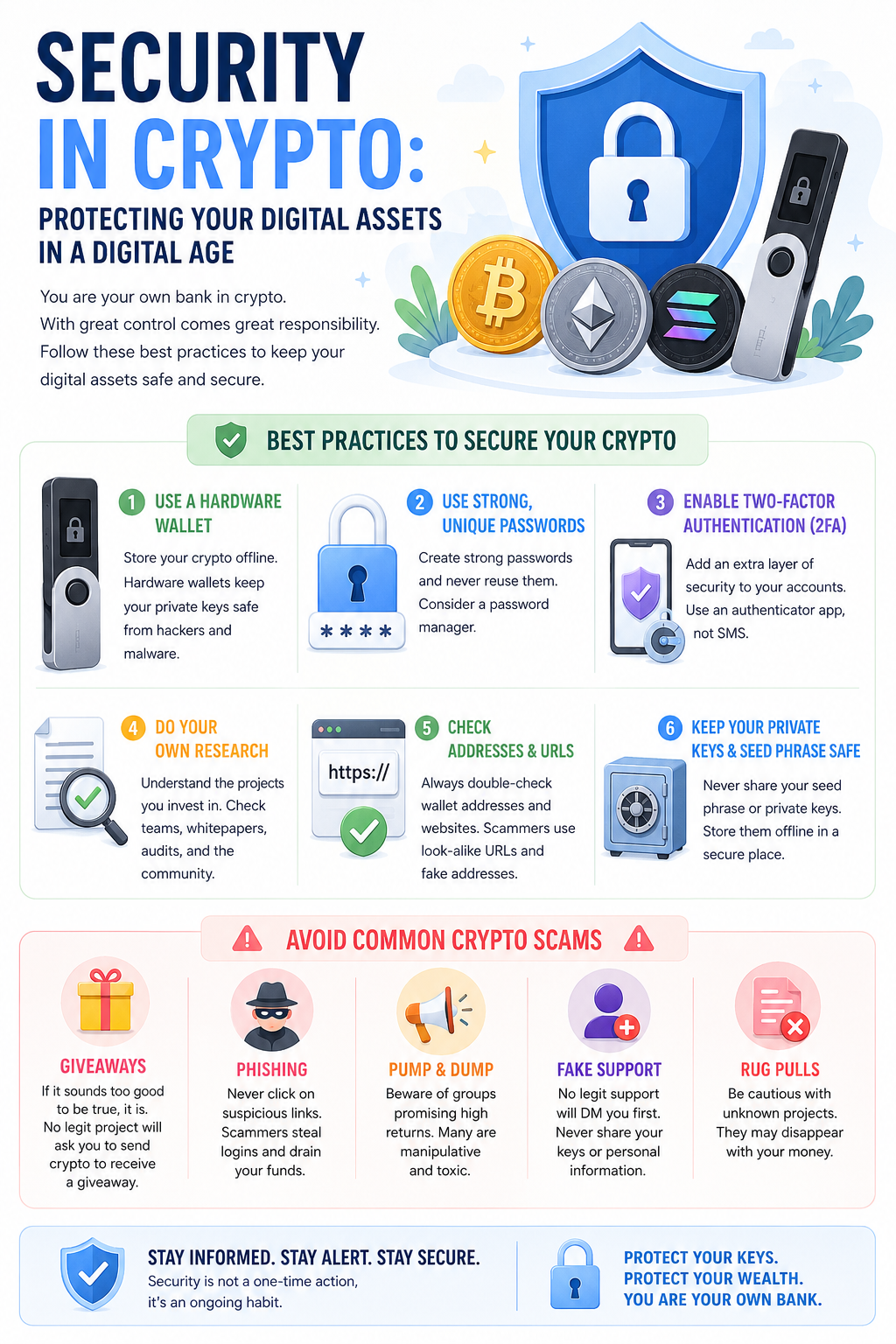
Cold storage is the gold standard for larger holdings. Hardware wallets keep your private keys offline, making them far safer from remote hacks.
Popular options in 2026 include Ledger, Trezor, and others with secure elements and open-source firmware. Buy directly from the manufacturer to avoid tampered devices. Set it up on a clean computer, and never share your seed phrase.
Pro tip: Follow the 80/20 or “blast radius” rule keep 80–90% in cold storage and only what you need for trading in hot wallets. Compartmentalize your holdings across multiple wallets so a single breach doesn’t wipe you out.
Mastering Seed Phrases and Private Keys
Your 12- or 24-word seed phrase is the master key to your wallet. Lose it, and your funds are gone forever. Share it, and someone else owns everything.
Best practices:
- Write it down on paper or engrave it on metal plates (fire and water-resistant backups are ideal).
- Never store it digitally or in the cloud.
- Consider a passphrase for an extra hidden wallet (advanced users only).
- Test your recovery process periodically without exposing the phrase.
Store backups in multiple secure locations, like a safe deposit box or with trusted family (split across people if needed), but never email or text it.
Enable Strong Authentication Everywhere
Passwords alone aren’t enough. Use a reputable password manager to generate and store unique, complex passwords for every exchange and wallet account.
Turn on two-factor authentication (2FA) everywhere possible. Prefer app-based authenticators or hardware keys (like YubiKey) over SMS, which is vulnerable to SIM swaps.
For exchanges, enable all available security features: withdrawal whitelists, anti-phishing codes, and login notifications.
Everyday Habits That Make a Huge Difference
Security isn’t a one-time setup it’s a lifestyle:
- Update everything: Keep your wallet software, operating system, and apps current. Patches fix vulnerabilities hackers love to exploit.
- Avoid public Wi-Fi: Use a VPN for transactions on the go.
- Double-check addresses: Always verify recipient addresses. Copy-paste carefully, and consider small test transactions first. Address poisoning attacks prey on haste.
- Be skeptical of links and offers: Never click unsolicited links. Bookmark official sites. Verify URLs manually.
- Revoke permissions: Regularly check and revoke wallet approvals on sites like revoke.cash to prevent drainer contracts.
- Use dedicated devices: Consider a separate phone or computer for crypto activities if your holdings are significant.
Spotting and Avoiding Common Scams
Scammers are getting smarter, but patterns remain:
- Too good to be true: Guaranteed returns, celebrity endorsements (often deepfakes), or “exclusive” presales scream red flags.
- Urgency and pressure: Tactics that rush you into decisions.
- Fake support: Impersonators on Telegram, Discord, or X pretending to be from exchanges.
- Rug pulls: Research team doxxing, locked liquidity, and audited smart contracts before investing.
- Romance/pig butchering: Anyone pushing investments after building an online “friendship.”
Always do your own research (DYOR). Use tools like Etherscan for transaction history, check project audits, and trust your gut when something feels off.
Advanced Tips for Serious Holders
- Multi-signature (multi-sig) wallets: Require multiple approvals for transactions great for teams or extra personal security.
- Air-gapped setups: For ultra-high net worth, use completely offline computers.
- Insurance: Some platforms or DeFi protocols offer coverage explore options.
- Estate planning: Document access instructions securely for heirs, without compromising current security.
What to Do If Something Goes Wrong
Stay calm. If you suspect a hack:
- Disconnect affected devices.
- Change all passwords and revoke approvals.
- Contact the platform’s support immediately.
- Report to authorities and blockchain forensics firms if significant amounts are involved.
- Learn from it and strengthen your setup.
Prevention is always better, but recovery resources exist.
Your Crypto Journey Can Be Secure and Rewarding
Protecting your digital assets doesn’t have to be overwhelming. Start small: Move your holdings to a hardware wallet this week, enable 2FA, and audit your current practices. Over time, these habits become second nature.
The crypto space rewards the diligent. By treating security as a non-negotiable part of your strategy, you protect not just your wealth but your peace of mind. The digital age offers incredible opportunities don’t let preventable mistakes stand in your way.
What’s one security step you’re implementing today? Share in the comments I’d love to hear your tips and experiences.
Stay safe out there, and happy (secure) HODLing!
메타데이터
- post_id
- 471b85bb7bd5
- slug
- security-in-crypto-protecting-your-digital-assets-in-a-digital-age-471b85bb7bd5
- url
- https://medium.com/coinmonks/security-in-crypto-protecting-your-digital-assets-in-a-digital-age-471b85bb7bd5
- canonical_url
- https://medium.com/coinmonks/security-in-crypto-protecting-your-digital-assets-in-a-digital-age-471b85bb7bd5
- author_url
- https://medium.com/@lalitkumarmba23-25
- status
- ok
- fetched_at
- 2026-07-17 13:33:47