TECTONIC GEOGRAPHIES
A SHORT HISTORY OF DULCIGNO
TECTONIC GEOGRAPHIES
A SHORT HISTORY OF DULCIGNO
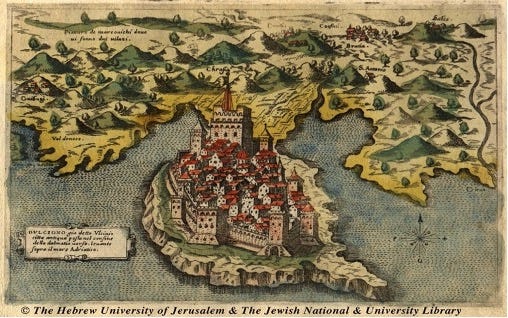
Ulcinj, Montenegro is built around a hill overlooking a small bay on the eastern coast of the Adriatic Sea, just north of modern-day Albania. It’s a location not unlike any number of coastal towns on the Adriatic, from Trieste, Italy in the north to Igoumenitsa, Greece in the south. And like many of them, it is a town that was shaped by thousands of years of wars, empires and population movements taking place among shifting inland borders and coastal migrations.
For much of this history, the town was known to European mapmakers as Dulcigno (D’Ulcinjians), the Italian name being a legacy of the long reign of the Most Serene Republic of Venice, which ruled the Adriatic. On a personal note, in 1826, my great-great grandfather survived a battle in the Greek war of independence against the Ottoman Empire by escaping to Dulcigno, from whence our last name originated. I wanted to learn more.
After I visited Dulcigno in 1990, I began to learn that the town has been part of 3000 years of conflict, but also eras of adaptation, anarchy, reconciliation, and co-existence. There are unifying tendencies as well as (forgive the expression) Balkanizing tendencies.
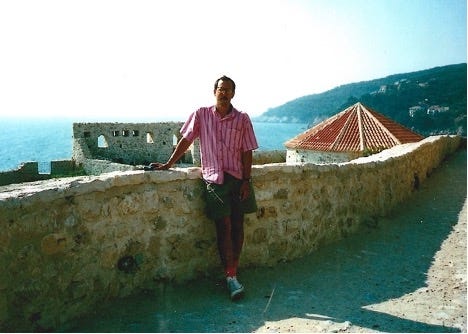
A Dulchinos in Dulcigno
This essay will describe the ebb and flow of conflict and control sweeping repeatedly around and across Dulcigno, and sketch several episodes of note in its long history.
The Eras of Dulcigno — The Clash of Empires
Cervantes and Dulcinea
Dulcigniotes — A Nest of Pirates
The Messiah in Dulcigno
Dulcigno and the Greek Revolution
Dulcigno and the New Balkan Wars
A Global Dulcigno in the 21st Century
THE ERAS OF DULCIGNO — THE CLASH OF EMPIRES [1]
[1] Much of this section of the essay is based on online versions of the Encyclopedia Britannica and Wikipedia. The essay uses the name Dulcigno throughout, although contemporary usage is officially Ulcinj.
Decline and Fall of the Roman Empire — The decline of the Roman empire followed the division of the empire and its provinces among the sons of the emperor Constantine in the 4th century CE. Constantinople (renamed from Byzantium and capital of the Eastern Roman Empire) remained oriented toward the Balkans for hundreds of years, and the Eastern Orthodox religion was more common than Catholic in the region, dating to the 12th century split between the Latin and Greek churches. Constantinople remained the capital of the Greek peninsula and islands, and lands to the north. The Eastern Roman, or Byzantine Empire lasted a thousand years.
After the division of the Roman Empire, Dulcigno became a part of the Byzantine province of Prevalis and the population converted to Christianity. From around 820 CE, the city was the see of a Diocese of Ulcinj, which was suppressed in 1532, and later revived with a Latin bishop.
Geopolitically, the division of the Roman Empire between Western (Roman, later Charlemagne) and Eastern (Byzantine) rule was delineated by a line that ran northward from Skadar through modern Montenegro, marking the status of this region as a perpetual marginal zone between the economic, cultural, and political worlds of east and west, as well as north and south. Dulcigno as a coastal city even more deeply embodied that status.
MEDIEVAL PERIOD
Arrival of the Slavic Peoples — As Roman power declined, the Dulcigno region and the Dalmatian coast suffered from intermittent ravages by various seminomadic invaders, especially the Goths in the late 5th century and the Avars during the 6th century. These soon were supplanted by the Slavs, who became widely established in Dalmatia by the middle of the 7th century.
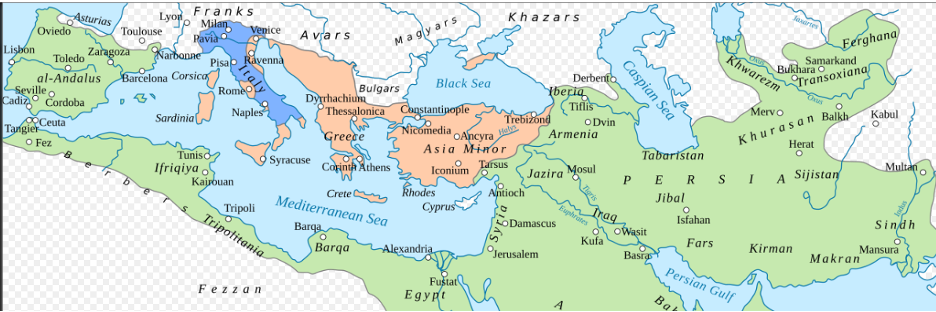
Franks (blue), Byzantine Empire (orange) and the Caliphates (green) — Circa 1000 CE
The Rise of the Islamic Caliphate — The migration of the Slavs coincided with the rise of the first Islamic Caliphate in the 8th Century. Slavic tribes were pushed out of lands north of the Black Sea by clashes between the Caliphate and northern kingdoms. In just a couple hundred years, the fast growing Muslim caliphate founded by Mohammed quickly spread over Arabia and “Asia Minor,” — assimilating Jewish and Christian “history” along the way. By around 800 C.E., the Caliphate extended from India to the east, across north Africa and into Spain. Dulcigno was never under the direct control of the Caliphate, but the rivalry between the Caliphate and the Byzantine empire made the town a base for pirate raids sponsored by both sides, as will be discussed later in this essay.
Catholic Papal bulls from the 11th Century address Dulcigno in various spellings including Dulcinum, Ulcignum, Dulcignum, and Ulcinj. One source says the original town was destroyed by “Saracens” in the 9th century, at a time when the Abbasid Caliphate controlled the lands along the southern Mediterranean, as well as much of Spain and the islands of Sicily and Sardinia.
In the 9th century, Dulcigno was part of a military outpost of the Byzantine Empire. In 1010, Tsar Samuel of Bulgaria (997–1014) tried and failed to conquer the town during a war against the Byzantines. In the 11th century the town was under the rule of a kingdom covering the area east of Dulcigno known then as the Zeta.
In 1183, Serbian Prince Stefan Nemanja conquered Dulcigno and the town prospered as one of this kingdom’s most significant coastal towns. Dulcigno remained in Nemanjić hands in their Kingdom and Empire, and a succession of rulers through much of the 14th century.
In 1388, George II, ruler of the Zeta region, conferred special privileges on Venetian merchants in Dulcigno, likely to help protect against Ottoman encroachment. The town’s location at the crossroads of merchants and caravans on their way East and West meant that it continued as an important port for the sea trade as it had been in classical times.
RENAISSANCE AND OTTOMAN ERA
Western Europe, after reaching its nadir during the Black Plague in the middle of the 14th century, began to emerge from Dark Ages and the period known as the Renaissance began.
Venice had been a local coastal region dating back to the 7th century. It came into its own as a seafaring power in the 9thcentury, and then became extremely wealthy through its control of trade between Europe and the Levant (Eastern Mediterranean). The Most Serene Republic of Venice began to expand into the Adriatic Sea and beyond by the turn of the millennium.
In 1402, Venice took full control of Dulcigno, and used it as a port of call in their control of European trade with the Ottoman Empire across the Mediterranean. Venice was essentially a coastal empire, by then controlling a thin strip of land from Italy all the way down the Adriatic coast and on into Mediterranean Grecian islands.
In 1421, Venice extended their control inland over parts of Montenegro, although Ragusa (now Dubrovnik) remained an independent district. The walls of the city of Dulcigno were first built in the 13th Century, although the Venetians continued to rebuild them through the end of the 16th century. Actual control of Dulcigno by the Venetians fluctuated in these years as the Ottoman Empire asserted itself.
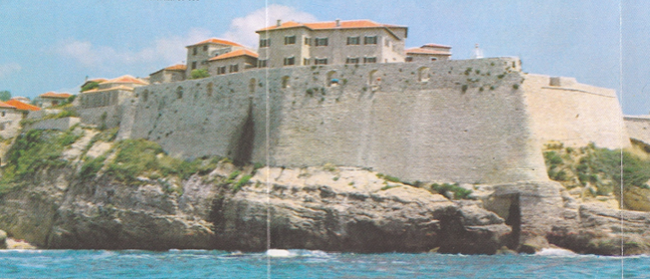
Venetian walls, Ulcinj, ca. 1990
Ottoman Empire — The Ottoman Empire was founded at the end of the 13th century in northwestern Anatolia. In 1354, the Ottomans crossed into Europe. Ottoman expansion in the Balkans in the late 14th and 15th century led to the decline and fall of the Serbian Empire; the Battle of Kosovo of 1389 is considered to be one of the defining moments in Serbian medieval history. The Ottomans fully conquered the region after the Second Battle of Kosovo, and then ruled most of the area for almost five centuries until 1912.
Altogether, the Ottomans controlled all of Asia Minor, overran Greece and much of the Balkan peninsula, and challenged the Habsburg Empire as far north as Hungary. When Mehmed II ascended to the Ottoman throne in 1451, he worked to strengthen the Ottoman navy. This projection of power into the Mediterranean had consequences for Dulcigno.
At this time, Venice still controlled Dulcigno and other Mediterranean towns and islands. In a series of wars, Ottomans captured various islands and territories in Greece from Venetian control. Then the Fourth Ottoman–Venetian War, also known as the War of Cyprus, was fought between 1570 and 1573. Venice was allied with the Holy League, a coalition of Christian states formed under the auspices of the Pope, which included Spain (with Naples and Sicily), the Republic of Genoa, the Duchy of Savoy, the Grand Duchy of Tuscany, and other Italian states.
The war began with the Ottoman invasion of Venetian-held Cyprus. The capital Nicosia and several other towns fell quickly to the considerably superior Ottoman army, and the island eventually fell in August 1571. But just two months later, at the Battle of Lepanto (now part of the Greek town of Nafpaktos), the united Christian fleet destroyed the Ottoman fleet, but were unable to consolidate the victory. The Ottomans quickly rebuilt their naval forces and Venice was forced to negotiate a separate peace, ceding Cyprus to the Ottomans.
In 1573, Venice surrendered Montenegro and Serbia. This was the height of expansion for the Ottoman Empire, and for a time Dulcigno became part of the Empire. The walls of Dulcigno were totally rebuilt by the Ottomans.
Even though defeated, Venice held onto parts of Zeta. Also, parts of the coastal region known as Dalmatia, including Dubrovnik, became a theocratic state under the Eastern Orthodox Church. This area was a base from which raids on Ottoman territory were carried out.
Not far away, even though the town was surrounded by Ottoman conquests, Dulcigno was considered something of a non-aligned area, which allowed the Ottomans to base pirates, some from the Barbary (African) coast, in order to harass European shipping without being themselves part of the Ottoman navy (see DULCIGNIOTES story below).
And when the controversial Jewish messiah figure Sabbatai Sevi (see MESSIAH OF DULCIGNO story below) was exiled by Ottoman Sultan Mehmed IV, Dulcigno was an area under the control of the Ottomans but not considered within the empire per se. This amorphous status was an early example of ports which later became known as entrepots, shipping intermediaries with loose customs arrangements and limited imperial control.
The Ottoman decline accelerated a century later in 1683 when they attempted a second siege of Vienna. Ottoman forces were ultimately swept away by allied Habsburg, German, and Polish forces at the Battle of Vienna. The Ottomans surrendered control of significant territories, many permanently. Venice received most of the Dalmatian coast and parts of Greece. Dulcigno however remained under Ottoman control into the 19th century.
MODERN ERA — THE RISE OF GREAT POWER COMPETITION
Nation states in western Europe began to consolidate during the Renaissance Era — e.g., Spain, France and Britain — and each began to build colonial empires. Powers like the Austro Hungarian (Habsburg) Empire and the Holy Roman Empire had consolidated central Europe, but the Balkan region was still fragmented. Russia consolidated as a nation beginning in 1400’s, and adopted Eastern Orthodoxy through the Czar’s marriage to Sophia Palaiologina, the niece of the last Byzantine emperor Constantine XI. This union eventually led to the Byzantine double-headed eagle becoming Russia’s coat-of-arms.
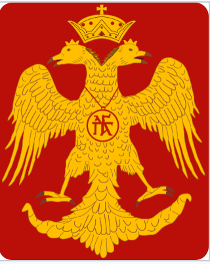
During the early years of the 19th century, it was generally recognized that the political organization of the world consisted of eight Great Powers and numerous small, or minor countries. The Great Powers, recognized as such, were Austria-Hungary, France, Germany, Great Britain, Italy, Japan, Russia, and the United States. These were the nations whose policies dominated world affairs, economic and political, and controlled large swaths of territory.
The Developing Independence of Montenegro — In 1718, Prince Danilo of the free territory of Zeta, allied himself with the Russians during the Russo-Turkish War, and set out to free Montenegro from Turkish rule. He was attempting to capture Dulcigno when the Treaty of Passorowitz was signed, which left Dulcigno to the Turks. In 1782, Peter I, known as the great Vladika (leader) of Montenegro, became ruler and was backed by the Russians. In 1796, Montenegro defeated the Turks again and probably freed Dulcigno.
The continual border wars took Turkish attention away from Dulcigno and the surrounding area. There was another Russo Turkish war in 1809. In 1813–14, Austria began reconquering Dalmatia. Cattaro, a town near Dulcigno, was captured in 1814 by Montenegro, but ceded back to Austria.
From 1819–21 there were Turkish invasions in the region, and a revolt broke out in Bosnia as well as Greece in 1821. England had interests in the Mediterranean (Gibraltar, Malta, Cyprus? and Middle East), supported by its growing naval power, and so an interest in Dulcigno and other strategic coastal cities. It also strongly supported the Greek revolt as strengthening their hand against the Ottomans in the Mediterranean.
The Greek revolt was said to have prevented the Ottomans from invading Montenegro, and Montenegro remained free. At this time, Dulcigno must have been under the control of Montenegro, although at the very borders of Ottoman influence. Thus, it was a likely safe place for a Greek guerilla fighter such as George Michalopoulos to have traveled to in 1826 during the Greek war of independence. (See DULCHINOS section below.)
In the 1850s, Montenegro was ruled by another Prince Danilo but under Turkish patronage. By 1858, Montenegro was essentially autonomous. Multiple treaties were signed in 1878 to end the last Russo Turkish War. The Treaty of San Stefano recognized Montenegro as an independent nation and placed Dulcigno in Albania, but the subsequent Treaty of Berlin drew the border of Montenegro to encompass Dulcigno. Dulcigno remained part of Montenegro, but the nature and borders and context of Montenegro continued to evolve as the scope of competing empires only grew in the 20th Century.
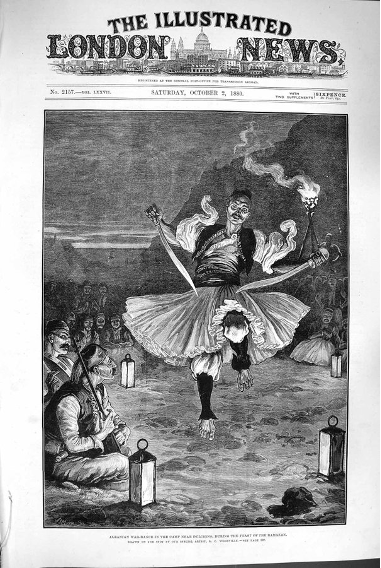
Albanian War Dance in the Camp Near Dulcigno, 1880
The Balkan Wars — These Balkan Wars were a set of two conflicts that took place in the Balkan states in 1912 and 1913. In the First Balkan War, the Balkan states of Greece, Serbia, Montenegro and Bulgaria declared war upon the Ottoman Empire and defeated it, in the process stripping the Ottomans of its European provinces, leaving only Eastern Thrace (west of Istanbul and contested by Greece) under the Ottoman Empire’s control. A first cousin of the my grandfather, Panos (Peter) Doultsinos, died in this war.
In the Second Balkan War, the Ottoman Empire lost the bulk of its territory in Europe. Although not involved as a combatant, Austria-Hungary became relatively weaker as a much enlarged Serbia pushed for union of the South Slavic peoples. The war set the stage for the Balkan crisis of 1914 and thus served as a “prelude to the First World War”.
The Balkan Wars were marked by ethnic cleansing, with all parties being responsible for grave atrocities against civilians and helped inspire later atrocities including war crimes during the 1990s Yugoslav Wars. A major issue of these wars (and WWI) was the partitioning of these Ottoman territories, inhabited by Greeks, Bulgarians, Serbs, Jews, Turks, Albanians, and other nationalities. Albanians were largely unsatisfied since the majority of their population was left outside of the country’s borders, mostly in areas like Kosovo and Macedonia, but also in small areas of Greece and Montenegro, including Dulcigno.
World War I — In 1914 in Sarajevo, just 300 kilometers from Dulcigno, the assassination of Archduke Franz Ferdinand, heir to the throne of the Austro Hungarian Empire, launched World War I as multiple national and imperial entities honored existing bi-lateral treaties. Another personal note — in the late 19th century John Bigda was born in a small village near Krakow; he emigrated from Poland to America to avoid draft into the Austrian army, and likely death in WWI. His great-granddaughter is my wife Carolyn (Bigda) Dulchinos
Toward the end of WWI, the Podgorica Assembly, an elected body claiming to represent the Montenegrin people, unanimously adopted a resolution deposing King Nicholas 1 and unifying Montenegro with Serbia. In December 1918, Serbia and Montenegro together formed a major part of the new Kingdom of Serbs, Croats and Slovenes (eventually known as Yugoslavia).
The Treaty of Versailles ending WWI was signed in 1919. it ended the state of war between Germany and most of the Allied Powers. The Treaty of Sèvres was a 1920 treaty signed between the Allies of World War I and the Ottoman Empire. While the Treaty of Sèvres was still under discussion, the Turkish national movement under Mustafa Kemal Pasha (later known as Ataturk) split with the monarchy, based in Constantinople, and set up a Turkish Grand National Assembly in Ankara in April 1920. He demanded the Turks fight against the Greeks, who saw an opportunity to take land in Thrace (along the Northeastern Mediterranean, which they called Greater Greece) that had been held by the Ottoman Empire but given to Greece in the Treaty.
This was the background to the Greco-Turkish War (1919–1922), which resulted in a Turkish victory. Another first cousin of the my grandfather, named Giorgios (George) Doultsinos, died in this war. Eventually, Ataturk succeeded in his War of Independence and forced the Greeks out of Anatolia. (This was the backdrop to part of the MESSIAH IN DULCIGNO story below, about the religious underpinnings of Ataturk’s nominally secular war of independence.)
Just as wind and water erode land, the ebb and flow of empires erodes cultures. (Tectonic Geographies.) Port cities were always multicultural well into the twentieth century. The major ports of Salonica (Thessaloniki) in Greece and Smyrna (Izmir) in Turkey had been populated by Greeks and Jews and Turks and Armenians for hundreds of years, their mercantile expertise supporting these cities’ roles as major trade and economic centers. (Another dimension of the MESSIAH IN DULCIGNO story). But the Turkish national movement, in a model that is still followed today, advocated for an ethnonationalist “cleansing”, forcing Christian Greeks and Armenians out of Smyrna (after a massive fire of unclear origins), while Turks/Muslims were relocated from Salonica to Turkey.
World War II — The great power struggle continued into World War II. The illustration below comes from Winston Churchill’s Triumph and Tragedy, part of his multi-volume history of the end of World War II. As the Allied Powers were in mid-1945 confident of victory, Churchill met with Josef Stalin and Franklin Roosevelt, and essentially designed the terms of surrender and the subsequent influence of a new set of Great Powers in Europe.
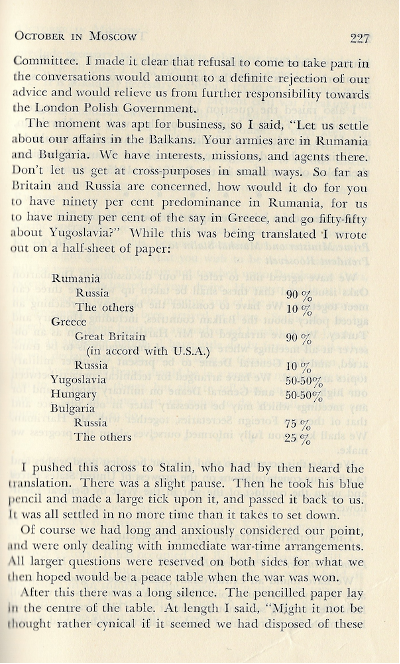
from Winston Churchill, Triumph and Tragedy
This proposed “partition” of Yugoslavia was ultimately resisted by Josef Tito, who became sole ruler of a state somewhere between a planned economy and a liberal economy, but all substantially independent of Russia or Western Europe. In 1948, Yugoslavia essentially broke from the Soviet Union. At this time, according to local legend, a road crossing between Albania and Montenegro (one bus stop away) was blocked, and Dulcigno became part of Yugoslavia.
This Eras of Dulcigno section has presented an extremely condensed history of the facts and the geography affecting the course of Dulcigno’s history. The following sections tell stories that all flow from the nature of Dulcigno as variously a port city, a strategic military location, an entrepot, and a prize in the eras of competing empires and nationalisms.
CERVANTES AND DULCINEA
Among the victims and survivors of the clash of Islamic and Christian empires was the Spanish author of Don Quixote, Miguel Cervantes. If you believe the local legend, Spanish writer Miguel de Cervantes spent several years as a captive in Dulcigno during the 1500s. Cervantes is said to have named Don Quixote’s muse, Dulcinea, after the Venetian name for Ulcinj, Dulcigno.
The Cervantes family is widely considered by scholars to have been of converso origin, i.e., converts to Catholicism of Jewish ancestry. In the Spain of Cervantes’s days, this meant living under clouds of official suspicion and social mistrust, with far more limited opportunities than were enjoyed by members of the ‘Old Christian’ caste. This may be why, in 1570, Cervantes enlisted in a Spanish Navy infantry regiment. In September 1571, Cervantes sailed on board the Marquesa, part of the Holy League fleet under Don John of Austria, illegitimate half- brother of King Phillip II of Spain. On 7 October, they defeated the Ottoman fleet at the Battle of Lepanto (now Nafpaktos), in the Gulf of Patras in the Greek Peloponnese.
According to his own account, although suffering from malaria, Cervantes was given command of a 12-man skiff, a small boat used for assaulting enemy galleys. The Marquesa lost 40 dead, and 120 wounded, including Cervantes, who received three separate wounds, two in the chest, and another that rendered his left arm useless. This last wound is the reason why he later was called “El Manco de Lepanto” (The one-armed man of Lepanto), a title that followed him for the rest of his life. His actions at Lepanto were a source of pride to the end of his life.
He served as a soldier until 1575, when he was captured by Barbary pirates. After five years in captivity, he was ransomed, and returned to Madrid. Local legend, and some scholars, think Cervantes’ captivity was in Dulcigno, which was for a period a known haven for pirates.
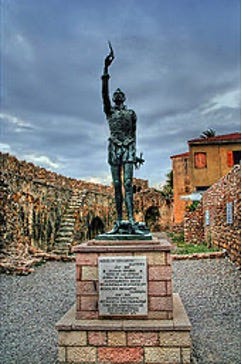
Statue of Miguel de Cervantes at the Harbor of Nafpaktos
DULCIGNIOTES — A NEST OF PIRATES
A common feature of port cities in many border zones is piracy. This became less true in the modern era, but the practice occasionally re-surfaces (such as with Somali pirates in the early 21st century Persian Gulf at a time when much of Somalia at the time was largely without a central government.)
In order to consolidate the sea trade and drive Venetians out of the Adriatic, Sultan Selim of the Ottoman Empire around 1600 surrendered Dulcigno to a horde of pirates from Algiers (the so-called Barbary Pirates) in exchange for their agreement to harass Venetian trade. The pirates also set up a slave trade operating from the town. These pirates became known as Dulcigniotes.
While such raids had occurred since soon after the Muslim conquest of the Iberian Peninsula in the 710s, the terms “Barbary pirates” and “Barbary corsairs” are normally applied to the raiders active from the 16th century onwards, when the frequency and range of the slavers’ attacks increased. In that period, Algiers, Tunis and Tripoli came under the sovereignty of the Ottoman Empire, either as directly administered provinces or as autonomous dependencies known as the Barbary states.
The longest-lasting pirate haven in the area, the pirate capital of the Adriatic, and a major pirate trade spot in the whole eastern Mediterranean Sea, was the city of Dulcigno. Albania’s piracy spanned from the early 14th century to the 19th century, yet Dulcigno was known as a pirate hotspot as far back as the pre-medieval period, known for having fierce people that were extremely protective of their lands and their borders. The town’s name Dulcigno was given while under Venetian rule, once occupied in 1405, hence in the Italian peninsula from then on, the pirates hailing from this region were called lupi di mare Dulcignotti (‘Ulcinian sea wolves’). [1]
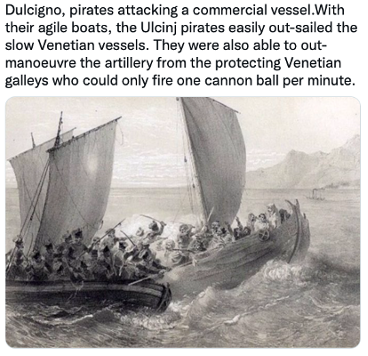
The Barbary Pirates were active as late as the 18th Century — Americans are familiar with them indirectly via the still popular U.S. Marine Corps Hymn — “From the halls of Montezuma to the shores of Tripoli.” With the ascendance of the Great Powers, as both the U.S. and Great Britain policed the Mediterranean in the 19th century, the pirate presence gradually diminished in the Mediterranean.
THE MESSIAH IN DULCIGNO [1]
Sabbatai Sevi, Sabbatai Sevi
We are waiting for you
Sabbatai Sevi, Sabbatai Sevi
There is none like you.
Dulcigno played (and maybe still plays) a role in a Jewish messianic movement of the 17th Century. This role developed for some of the same reasons that saw the town as a haven for pirates.
THE EMERGENCE OF THE MESSIAH
After more than a thousand years of persecution and expulsions of Jews from different parts of Europe, the advance of the Caliphate into Europe led to some changes of status and the rise of new expectations. In the 15th century, Jews were expelled from newly Catholic Spain. At this time, the Sultan invited Jews to live in his empire, calling the Jews victims of Catholic persecution just as Muslims had been. Many Spanish Jews first settled in Vlora in Albania, about 250 kilometers south of Dulcigno, where they built a synagogue and cemetery. Jews in large numbers also migrated in the same time frame to Salonica (what is now Thessaloniki in Greece), which was an important commercial center in the Ottoman Empire.
While Jews were not aggressively persecuted in Vlora or Salonica, the expulsion from Spain, followed by incidents like the “Chmielnicki Rebellion” in 1648–49 when 200,000 Jews were killed in Poland, left the Jews of Europe in an unsettled position. And so many were receptive or at least curious when a Salonican Jew named Sabbatai Sevi declared himself the long awaited, true Jewish messiah.
According to a centuries-old prophecy of Jewish Kabbalists, (followers of an esoteric interpretation of the Torah that emerged in the 13th century C.E.,) the Messiah would appear in the world in September 1666. This Messiah would not be Christ coming to Earth for the second time, because the Kabbalists did not accept Christ and the Gospels, but it would be a Jew who would respect only the Talmud. Millennial sentiments were growing at the time not only among Jews but also Christians, who considered the year 1666 (the number of the Beast in the Book of Revelations, 666, added to a millennium) to be a date of redemption. The conversos and former conversos (those who had returned to their ancestral Judaism after escaping Iberia), who came from a Christian milieu, were especially concerned with matters touching on the Messiah
Sabbatai Sevi’s father, Mordecai, moved from the port of Patras in Greece to Smyrna in Turkey, where there was a large Jewish community. Smyrna was an important center for trade with Europe during wars between Turkey and Venice, and had a prosperous Jewish community in early 1600’s. There, young Sabbatai met students of the Kabbalah. Kabbalah taught the need for Tikkun, or repair, to the damage done by the Creator in bringing forth the world out of En-Sof, or wholeness.
Sevi revealed himself as messiah in May 1665 in a proclamation signed “I am the Lord, your God, Sabbatai Sevi.” His claims were based on Kabbalistic expectations that the Messiah permitted things which are forbidden. Moses brought the Torah; the Messiah abrogates the Torah and brings the new. And so, Sabbatai smashed the doors of the synagogue, struck against the Holy Ark, and spoke the forbidden name of God, the tetragrammaton. All fasts commemorating the destruction of the temple were ordered discontinued, and “the sorrow of the fast turned into rejoicing of gladness.” Perhaps most shockingly, he called women to read from the Torah.
The treatment of women was radical and further was associated with sexual freedom that Sabbatai instituted. He slept with many followers, encouraged or required adultery within and among the community, led ritual naked bathing in the sea and other shocking practices.
Sabbatai’s new teachings were widely publicized by the writings of respected rabbi Nathan of Gaza, in the holy land, but Sabbatai also disseminated his own writings. He created a large following among the Jews of Smyrna, and at the peak of excitement in Smyrna, there were reports of pillars of fire and other miracles.
Sabbatai eventually was banished from Smyrna for stirring up the Jews, and so proceeded to establish his headquarters in Salonica, then the largest Jewish community in the Ottoman Empire. Sabbatai traveled and preached across the Ottoman cities of Edirne and Constantinople in Turkey. He even went to Jerusalem and recruited 12 rabbis to accompany him to Temple Mount to signal the imminent rebuilding of the temple. Word spread throughout northern and western Europe as well, in such major Jewish centers as Amsterdam, Venice and Prague.
Some Jews would plead for Sabbatai not to call down wrath of Ottomans, but momentum built in part due to the effectively miraculous fact that he and his Jewish followers had been left unharmed for the better part of five years, although they were technically guilty of rebellion. But eventually the Sultan became concerned about the agitation Sabbatai created in the Jewish communities, who had prior been compliant and served important merchant roles in the Caliphate. As some Jews began leaving Ottoman centers for the promised land of Palestine, this exodus had economic effects on trade which finally moved the Ottoman authorities toward action. This, combined with accusations of sexual license, led to Sabbatai’s arrest in 1672.
EXILE TO DULCIGNO
Sultan Mehmed IV offered Sabbatai the choice of execution or conversion, and Sabbatai shocked everyone once again by converting to Islam. Not able to sentence him to death but needing to calm the hysteria across the Empire, the Sultan decided to exile him to Dulcigno in January 1673.
Many followers also converted. Some referenced Kabbalistic interpretations of the conversion — one had to enter the realm of the demons in order to destroy them. And since the believers believed themselves already living in the time of salvation, they basically expected anything could happen. If not political salvation (restoration to Palestine) then they expected some kind of liberation. About twenty families of believers who had converted to Islam traveled to Dulcigno with Sabbatai.
Dulcigno as noted was an entrepot — surviving letters from Sabbatai himself noted there were residing there at the time of his exile “about 400 Algerian pirates, and 400 Albanian pirates, and 300 black pirates who often fought with each other.” He also reported a terrible earthquake that devastated the town.
In Dulcigno, as in Smyrna and Gaza, Sabbatai would shut himself up and refuse to see people. He continued to make sudden proclamations and changes — moving Sabbaths and other holy days to other dates. And open sexual practices seemed to continue as well.
Under Sabbatai’s supervision and in line with his “conversion”, the 15th century St. Mary’s church in Dulcigno was transformed into a mosque. But Sabbatai and followers continued to follow some Jewish customs — they secretly fasted on Yom Kippur and celebrated Holy Saturday. In Dulcigno they even celebrated Eastern Orthodox feasts of Tabernacles and Pentecost in one week a year before his death.
In 1676 there was one last great illumination — Sabbatai marched to the quarter of Ottoman notables and officials, and at midnight “ascended the wall of the tower” (i.e., the minaret of the mosque) but no punishment ensued. This was seen by followers as a “miraculous salvation.”
Sabbatai died in 1676, ten years after the declaration of his messianic mission. His followers placed the moment of death at hour of the ne’ilah prayer on the day of Atonement, the most solemn and holy moment of the year. (Rabbinic legend has it that Moses died at that hour.) Another legend had it that the body of Sabbatai had been laid in a cave, but three days later when Sabbatai’s brother came, the cave was empty. Nathan of Gaza called his death an occultation — the Messiah was not dead but hidden, and would return. (Christianity and Shiite Islam also had saviors who were in occultation.)
Despite the death or disappearance of Sabbatai, the movement grew and followers reunited in Salonica. Sabbatai’s second wife, the daughter of the rabbi of Salonica, returned to Salonica from “Albania” after Sabbatai’s death, and her younger brother Jacob Querido led a group mass conversion to Islam around 1685. This resulted in a total of 600 families in the Sabbataian community by 1700.
SABBATAI’S INTERFAITH INFLUENCE
What I find most interesting about these movements is the wish to experience firsthand religious experience, in opposition to long-ritualized rote recitations of prayers and genuflection. In this, they are ecumenical attempts to find commonality across what are otherwise separate traditions that also are bound up in political power and coalition building.
Some part of Sabbatai’s followers were disappointed with their Messiah’s conversion, but another part thought that this gesture of his was part of the true martyrdom of the Messiah, unifying all religions. After Sevi’s death, three syncretic sects arose from Sabbateanism.
The Frankist sect was founded in 1756 in Poland and headed by Jakob Frank (1726–1791). Frank called himself heir to Sabbatai, also led his Jewish followers in heretical behavior like adultery within the sect. The Frankists then converted to Catholicism in 1759 under pressure from the Austro Hungarian empire (echoing Sabbatai’s apostasy), and there were thousands of followers in Poland following his death in 1791. Frank was said to have visited Salonica in the 1750’s and shared ideas with the descendants of Sabbatai’s followers. (The Books of Jacob, a recent historical novel by Olga Tokarczuk, tells Frank’s story in some detail.)
The Hasidic movement was founded around the same time as the Frankists by Polish Jew Israel Ben Eliezer (1700–1760), whom his followers called Baal Shem Tov and who was also a student of Kabbalah. Hasidism spread rapidly in Russia, Belarus, Ukraine, Hungary, and Romania. The Hasids inherited key ideas from Sabbatai Sevi. Hasids believe that honoring God should be done not only in temples but everywhere, even while eating, drinking, sleeping and during sexual relations. God is the source of joy, so the Hasids sing and dance. Their dances are similar to the dances of the Jalaluddin Rumi sect of Iran, of the group of “Dancing Dervishes.” This particular practice is found in Albanian Bektashism, and so Hasids have some commonality with the Donme.
The Donme was the name given to survivors and descendants of Sabbataians in Salonica (Thessaloniki), Smyrna and elsewhere. (Donme meaning “to turn”, or convert.) While his Islamic conversion happened under pressure, Sabbatai had prior exposure to dervishes in Edirne in northern Turkey, as well as in Slaonica. It seems that Albanians in the vicinity of Dulcigno of the 17th century welcome Sabbatai partly because Albanians had embraced and spread Bektashi Sufism in the 17th century. Bektashis in the 17th century was a somewhat heretical but definitely liberalizing sect of Islam. (Berat in Albania also claims a burial place of Sabbatai.)
The Donme were outwardly Muslim, but inwardly were seeking an esoteric Judaism. This brought them close to the Bektashi, whose Muslim orthodoxy and loyalty had similarly been suspected throughout their history. There were multiple reports that Sabbatai took part in the ecstatic rites of the mad dervishes who “brought upon themselves an evil spirit by means of dances and invocations of the name of Allah.”
The Donme built a New Mosque in Thessaloniki around 1900. (Still preserved — see photo from 2021 below.) Donme prayed in the new mosque like other Muslims, but added additional Donme prayers and rituals just as they did at their private burial services. And it was reported that Donme traveled to Dulcigno for pilgrimages to Sabbatai’s tomb, indicating their continued expectation of his return.
[1] This summary based on the book Sabbatai Sevi, The Mystical Messiah, Gershom Scholem.
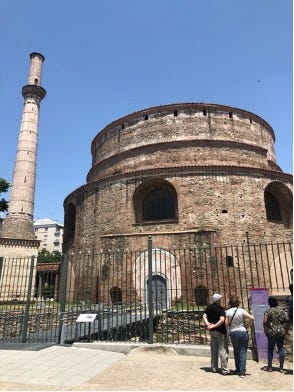
The Mosque of Thessaloniki
Later in the 20th Century, the Donme came to consider it a further miracle of messianic redemption that they had been forced out of Salonica (see below) just a few years before two-third of European Jews were exterminated in the Holocaust.
THE DONME AND THE FOUNDING OF MODERN TURKEY [1]
These interdenominational streams came together in the founding of modern Turkey. Mark Mazower, in Salonica, City of Ghosts, wrote: “By a strange twist of fate it was the Muslim followers of a Jewish messiah who helped turn late nineteenth century Salonica into the most liberal, progressive and revolutionary city of the empire.”
The Donme embraced European learning, identified themselves with secular knowledge, political radicalism and freemasonry (where different faiths came together in secret to protect against conservatives in their respective cultures.) Ottoman Empire defeats at the hands of Western and European forces led to reform and opening to Europe in the 18thand 19th centuries. “Salonica was well positioned in the increasingly globalized world.” Even British and American missionaries came to Salonica. As Donme scholar Marc Baer put it, the Donme were “religious cosmopolitans who forged an ethno-religious identity syncretizing Jewish (Kabbalah) and Islamic (Sufism) mysticism.”
The Donme identified themselves with Kemal Ataturk’s movement to create a Turkish state, in part because secularism promised a national identity that would transcend tradition. But the Kemalists were also ethnonationalists, and after independence and a war with Greece, Turkey engaged in a population exchange sending Jews and Greeks to Salonica, and receiving Muslims from Salonica (including the Donme who had been there 200 years.) All this despite questions about Ataturk himself — he is rumored to have once said “Some people seem to think that I was of a Salonican and therefore Jewish origin. (His birthplace is now a museum in Thessaloniki.) Don’t forget that Napoleon was of Corsican origin, Italian as well. But he died as a French man and history remembers him as being French.”
Bektashi Sufi Muslims, friendly to the Donme as noted earlier, supported the young Turks (whereas the Ottomans had favored Sunni Muslim sects.) St Demetrius church in Salonica was tended by Mevlevi Sufis until WWII. Nevertheless, Ataturk banned Freemasonry and outlawed Sufi orders in 1925 to consolidate his political power.
Almost immediately after the Turkish state was created in 1924, people began to question and spread rumors about Donme, some citing adultery and other “improper” sexual activity, but there was no organized persecution, perhaps because many Donme filled government roles. Today in Turkey, it is estimated here are approximately 60–70,000 persons of Donme descent in Turkey. Pressure on them has increased in recent years under the ethnonationalist Erdogan regime in Turkey. (See last section.)
[1] This section based on The Burden of Silence, Cengiz Sisman, 2015; The Donme, Marc David Baer; 2009.
DULCIGNO AND THE GREEK REVOLUTION
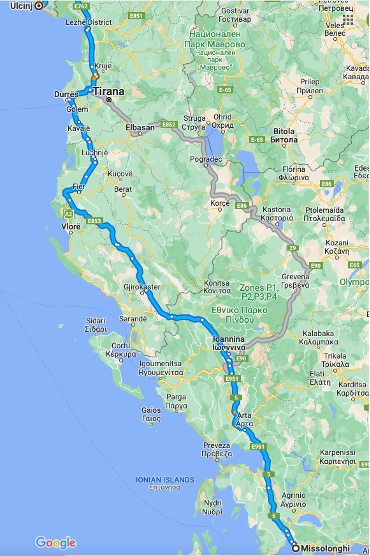
Path of George Michaelopoulos from Missolonghi to Dulcigno
My father, Theodore J. (Ted) Dulchinos, told me this oral history around 1970.
In 1821, George Michalopoulos was fighting in the Greek War of Independence against the Ottoman Empire (“the Turks,” said Ted.) George made his way from his home, Lagadia in the Peloponnese, to the coastal city of Mesolonghi (now Missolonghi)(also 40 kilometers from Lepanto, now Nafpaktos,) where the poet English Lord Byron had established his leadership role in the Philhellenic movement of Great Britain and Europe. Mesolonghi came under siege, as the Ottomans were recapturing rebel territory, and when the siege finally was broken and Mesolonghi overrun, killing half the Greek forces, George escaped to the north. He stayed in a town called Dulcigno (dull tsi gnyo).
The Ottoman forces had remained in the Peloponnese until 1828, and Greek independence was recognized by the Treaty of Adrianople in 1829. Probably George was in Dulcigno for two or three years. He then returned to Lagadia many years later, after being presumed dead in the fighting at Mesolonghi. When he told the villagers where he’d been, he became known as Doultsinos (wife and daughters Doultsinou.) Thanks to Ellis Island, my family spells it in America, Dulchinos.
In recent years, I communicated with an Athenian, Dimitris Tsalkanis, descended from a family in our common village of Lagadia, who tells this story of cultural evolution.
I was studying some records from the 1840s from the Greek State Archives regarding a case of a Turkish-Langadian boy. As you may know, before the Revolution of 1821, Langadia was home to about 250–300 Turkish people (about 40 families). During the War of Independence, they were slaughtered, but a few children were spared. Later on, when the new Greek State was organized, these children — who had become Christians and adopted by Greeks — could request rights on the land properties of their killed Turkish parents.
One such case was a Turkish boy called Sali (just 2 or 3 years old in 1821), son of a prominent Turkish Langadian. The boy was spared from the killing. He was taken during the sack of Tripolitsa (September 23, 1821) by a fighter named P. Prapas, and was given to the Matrozos family who adopted him and made him Christian giving him the name Christos Neofotistos. Sali-Christos in the 1840s tried for more than 10 years to take back some of his father’s property and through his endless letters and certificates he sent to the government we learn that his adoptive grandmother gave him afterwards to Georgios Doultsinos and then G. Doultsinos passed him over to a certain Antonios Makrodimitropoulos in the village of Agoulinitsa. Sali-Christos obviously once a teenager tried to learn a trade among the stonemasons. (Since Sali-Christos sent many certificates for more than 10 years, some of them contradict each other. For example, another court statement by a man from Langadia in 1846 says that the boy was taken during the sack of Tripolitsa in 1821 by Georgios Doultsinos himself.)
In any case, Georgios Doultsinos with other Langadians worked in the area of Agoulinitsa as stonemasons (see note below) and they recognized the kid. In around 1836 they brought him along to Langadia and supported him in every way they could, in order to get some of his lost property back, against other Langadians who had illegally taken over his house and fields (as former Turkish properties, they were supposed to be owned by the Greek State).
These documents furthermore confirm that G. Doultsinos was working as a stonemason and that he was still alive in around 1836. But in the court testimonies ten years later, although many other co-villagers mention Georgios in the story of the boy, he does not appear to give testimony, which makes me think that by 1846 G. Doultsinos must have died.
But many people descend from spared Turks like Sali-Christos. Sali-Christos took the surname Neofotistos. Neofotistos, meaning “newly enlightened” — baptized Christian, was a name and surname given to Turks who turned to Christianity.
That was when my jaw dropped. In a family tree inherited from my mother, where women’s birth last names were generally omitted (yes, a patriarchal culture,) my great grandmother Eleni’s entry on my mother’s side showed a last name: Neofotistou. And so, a little Turkish blood in this “full-blooded” Greek? More from Dimitris:
But you need to keep in mind that before the Revolution of 1821 the Greek and Turkish Langadians co-existed, they were neighbors and while certainly were keeping some distances (mainly for religious reasons) they lived rather peacefully, apart of course from the most powerful families who were rivals, often violent to each other. So, I’m not surprised that many Greek fighters chose to spare the Turkish children of Langadia. And finally, to me, it is not really correct to just call these people “Turkish” but rather Langadian Muslims, because they lived in Langadia for so many generations [really close to 500 years] that surpassed most of the Christian Langadian families who settled much later than them. Muslims of Langadia originated from Turks, Muslim Albanians and Greeks who converted to Islam, such as the Greek Langadians descend from Greeks, Christian Albanians and, as some speculate, Jews who converted to Christianity too [Sabbataian influence?] and of course Muslims who converted after 1821. What actually mattered in 1821 and the years before was just religion. Language and descent had nothing to do with anything.
A recent history called The Greek Revolution by Mark Mazower (who also wrote the history of Salonica as noted above), adds the following story of Lagadia and its native son Kanellos Deliyiannis (the mother of one of my uncles was a Deliyiannis):
Because many Greeks lived in terror of Ottoman reprisals for weeks after the uprising began, the temptation to capitulate was always present. In the village that was his family stronghold, Deliyiannis was shocked to find the same defeatist mood. He commanded: “Send orders without any delay to kill all the Muslims that remain in Langadia, men women and children, some three hundred in all, and to burn down the mosque…And then we will surely have saved the fatherland. Otherwise, we and the nation are lost!” He thus sent off his younger brother Konstantaki with 250 armed men and they entered Langadia at dawn the next morning and carried out his orders. As was the intention, the Christian villagers were appalled and terrified: the killing of the Turks was for them a completely unprecedented act. Deliyiannis told them sternly that he forgave them; the main thing was that “it was impossible henceforth for us to live together with Turks.”
It appears the villagers retained some measure of mercy for some Turkish children.
Note: There is a memorial in Lagadia today that talks about the village history of accomplished stonemasons, doing business “as far away as Montenegro.” It could be that one reason George found his way to Dulcigno during the war was already knowing about it as part of his trade or fellow local stonemasons.
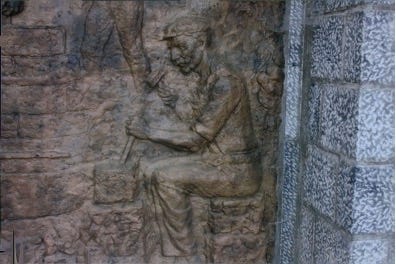
Stonemasons Monument — Lagadia
DULCIGNO AND THE NEW BALKAN WARS
In 1990 when I visited Dulcigno, he remembers going to the airport in Dubrovnik for his flight home, and there were soldiers stationed all over the runways. After several hours delay, the plane departed. But this was the early years of the dissolution of the Soviet empire, and clearly Tito’s Yugoslavia was facing its own post-imperial moment. Back in the U.S., I married, began a family, and years later was struck one day by the following story and especially its dateline:
Adrift Inside Yugoslavia: Trapped by Hunger and Red Tape
By ANTHONY DEPALMA New York Times
Dateline — Ulcinj, Montenegro: May 5, 1999
They were kicked out of their homes and herded across the border, just like so many other refugees from Kosovo. But the 70,000 ethnic Albanians who came to Montenegro are distinct from the others because they are not considered refugees. They are citizens of the Yugoslav federation, and they have moved from one federated republic, Serbia, to another, Montenegro. Because these people were displaced within their own country, they — and the Montenegrin government — are in a rather complex and delicate position. Because they are not, technically, refugees, relief agencies, particularly the United Nations High Commissioner for Refugees, are limited in how they can help.
While their numbers are far smaller than the 350,000 who flooded neighboring Albania, the Kosovars who crossed into Montenegro represent over 10 percent of the tiny republic’s population. They are placing a heavy burden on the already shaky Montenegrin Government. To make matters worse, there were an estimated 30,000 refugees from the wars in Croatia and Bosnia still here in Montenegro before the NATO strikes began March 24 and the new crowd of exiles started to arrive.
But those who were forced by the army to come here are in an exile unlike any other. Although Montenegro does not consider itself to be at war, the Second Yugoslav Army is based here and the consequences that presents for the exiles can be deadly. About two weeks ago, the Yugoslav Army moved into an area along the border where thousands of ethnic Albanian refugees were camped. At least seven ethnic Albanians, including a child and a woman, were killed in what the army said later was an offensive against the Kosovo Liberation Army, a group of ethnic Albanian rebels fighting for the independence of Kosovo. The army’s explanation satisfied few people.
‘’This is not the safest place to be,’’ said Afija Arifaj, an ethnic Albanian from the Kosovo town of Istok, near Pec, in western Kosovo. Mrs. Arifaj and her family were forced from their home but they feel lucky to have resettled in what for them is a familiar place. For the last few years, she and her family had spent two weeks of their annual vacation at a small trailer camp in Ulcinj, which before the war had been a popular destination for vacationers from Kosovo.
Others said they do not feel safe because the Montenegrin government itself is so shaky right now. The Yugoslav Army here has made menacing moves toward seizing power from the civilian government, and members of the parliamentary opposition who support Slobodan Milosevic, the Yugoslav President, are trying to whip up anti-government sentiment that some analysts fear could lead to a civil war or a coup. ‘’Until now I’ve felt safe but I don’t know about the future,’’ said Rizo Gashi, 40, who came from Pec three weeks ago with his 86-year-old mother. He worries the war might spread here, or the army might try the same kind of ‘’ethnic cleansing’’ as in Kosovo.
‘’And I don’t know,’’ he said, ‘’what’s going to happen to Montenegro.”
We now know what happened was the break-up of Yugoslavia, and an ensuing decade of ethnic and religious wars and atrocities. From Wikipedia:
In the 1980s, Albanians of Kosovo started to demand that their autonomous province be granted the status of a constituent republic, starting with the 1981 protests. Ethnic tensions between Albanians and Kosovo Serbs remained high over the whole decade, which resulted in the growth of Serb opposition to the high autonomy of provinces and ineffective system of consensus at the federal level across Yugoslavia, which were seen as an obstacle for Serb interests. In 1987, Slobodan Milošević came to power in Serbia, and through a series of populist moves acquired de facto control over Kosovo, Vojvodina, and Montenegro, garnering a high level of support among Serbs for his centralist policies. Milošević was met with opposition by party leaders of the western constituent republics of Slovenia and Croatia, who also advocated greater democratisation of the country in line with the Revolutions of 1989 in Eastern Europe. The League of Communists of Yugoslavia dissolved in January 1990 along federal lines. Republican communist organisations became the separate socialist parties.
Serbia went on to declare a Republic of Serbia and forcibly expelled (and massacred) Bosnians, and did the same to Kosovar Albanians (Muslims) in a round of ethnic cleansings. It is hard for me to contemplate this history and not see the grim psychological effects of geographic and cultural tectonics created by centuries of imperial wars.
Following the breakup of Yugoslavia, the republics of Serbia and Montenegro together proclaimed a federation. Following an independence referendum held in May 2006, Montenegro (with Dulcigno inside its borders) declared its independence in June 2006 and the confederation dissolved.
A GLOBAL DULCIGNO IN THE 21ST CENTURY
Dulcigno continues to attract beachgoers from much of Europe. But the character of Dulcigno continues to evolve as political, religious and historical movements continue to swirl about the globe and all its entrepots and still shifting borders.
THE ETERNAL LIFE OF SABBATAI SEVI
Some sources say Jewish pilgrims of Thessaloniki came to Dulcigno and venerated the tomb of Sabbatai Zevi until the beginning of the 20th century. There are some competing claims that he may have been buried in a cemetery that was near the King’s Mosque in Berat, Albania, and another thesis that he was buried in the village of Fterë on the Ionian coast. In any case, a shrine to Sabbatai can be found in Dulcigno today.
A landmark academic Symposium on Sabbatai Sevi was held in Dulcigno in 2015. The opening ceremony speakers reflect more than academic interest.
Prof. Sanja Vlahović, Minister of Science, Montenegro
Mr. Ranko Krivokapić, Speaker of the Parliament of Montenegro
Prof. Zvi HaCohen, Rector of Ben-Gurion University of the Negev, Israel
Dr. Eliezer Papo, Chair of the Academic Committee, Ben-Gurion University of the Negev
Mr. Ratko Cerović, President of NGO Likud Montenegro
Mr. Fatmir Gjeka, Mayor of the City of Ulcinj
Following the conference, some of the scholars “became acquainted with the descendants of the ‘Ma’aminim’ who converted to Islam and took up residence close to Sabbatai Sevi in Ulcinj.”
In addition to a range of historical and artistic scholarship, there is growing acknowledgment of the idea that Sabbatai Sevi is a figure who inspires interfaith understanding, from the Balkans to the Holy Land. “Sabbatai is one figure in a tangle of customs, secrets and traditional beliefs belonging to a regional identity that is rooted in mysticism, tolerance and religious cross-fertilization.”
Occasional strands of Sabbataian thought appear even in America in the 21st Century. One of these is Donmeh West. Thanks in part to Gershom Scholem’s work, the Kabbalah became one of the items on the spiritual buffet of baby boomers that emerged in the 1960’s in western Europe and America. (Some may remember, Kabbalah became for a time the focus of celebrities like non-Jewish pop star Madonna, who for a time took the Jewish name Esther.) Kabbalah was grouped with other contemplative practices that were part of the lesser known heritage of multiple traditional religions, and sought out in a general disillusionment with the traditional “major” religions in the late 20th century.
Lawrence Corey, a Jewish psychologist who worked with Kabbalah in combination with Jungian thought, founded Donmeh West, A Center for the Study & Practice of Neo-Sabbatian Kabbalah, in California in 1972. He took on the name Reb Yakov Leib HaKohain (from Jacob Frank), and gathered “a small congregation of overtly Orthodox but covertly Sabbatian Jews in Hermosa Beach, California.” His followers considered him the spiritual heir of Sabbatai Sevi. “Yakov Leib HaKohain — whose own family comes from Constantinople (Istanbul) — have close ties with the hereditary dönmeh of Turkey, some of whom look upon him as the leader of a world-wide revival in Neo-Sabbatian Kabbalah. HaKohain wrote, “I have been spending the last years of my life in promoting Jewish-Muslim understanding.”
As part of the syncretic nature of the Neo-Sabbatian Kabbalah he developed and espouses, HaKohain also taught on the relationships between his own spiritual system and other older spiritual systems such as Hinduism, Gnosticism, the Qur’an, and New Testament Christianity
…we Neo-Sabbatians worship God, not as a supernatural being but as an infinite, boundless, undefinable Mind possessing no corporeality or substance, yet having self-awareness, intelligence, emotion, will, and intention. It corresponds more to the Ayn Sof of Kabbalah than to the Yahweh of Judaism. Strictly speaking, we Neo-Sabbatians don’t ‘worship’ or pray to this ‘God’ but seek to know It, communicate with It and assist It in its return to the wholeness from which It has fallen by the act of creation.
Another American scholar inspired indirectly by Sabbatai Sevi is Brandon Woolf, a professor at New York University. He has been working on an experimental play entitled “Waiting for the Messiah”. “Woolf found himself moved by the segment int Tractate Sanhedrin that addresses that most intricate of all Jewish theological questions, the one pertaining to precisely when we might expect the Messiah to grace us with his presence.”
EUROZONE TOURISM
As my wife and I visited Dulcigno in 1990, they were struck by the medieval fortifications and the marketplace teeming with veiled Muslim residents (Albanians), but more surprised by the presence of European tourists. In particular, the black sand beach of Dulcigno, had become an attraction for tourists (especially Germans) who are naturalists/nudists. In a town with a majority Muslim population, it was quite the contrast.
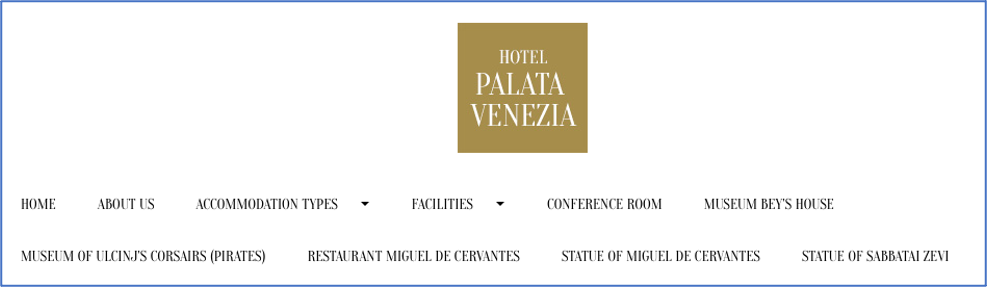
Further hotel accommodations have been added since then, and to combine another theme of modern Dulcigno, a statue of Sabbatai was unveiled in 2020 in a Dulcigno hotel courtyard. As reported by Eliezer Papo, the organizer of the academic conference mentioned above,
Ulcinj and Montenegro the first in the world to erect a monument to Sabbatai Sevi, the man who pushed the Jews into the modernity abolishing the traditional approach to Judaism as a package deal and reimagining it. It’s not a public monument yet but rather a private statue on the premises of a private enterprise Hotel Palata Venezia. But one has to start someplace.
I recently discovered a couple of sons of Dulcigno through Facebook postings under the pseudonym Sammi Dulcigno. Sami Flamuri is one of two brothers, sons of Ulcinj, who recently published a biography (see below). But Sami has become a civic booster, reporting on new developments that broaden the image of Dulcigno, such as the post below.
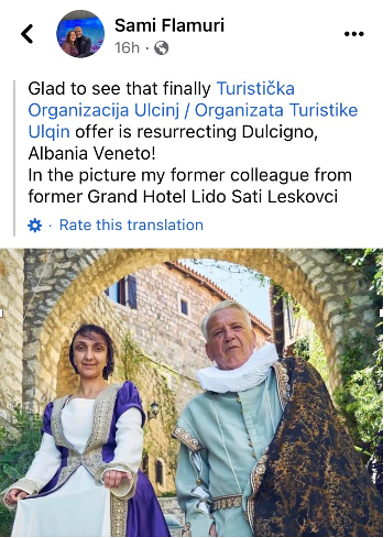
This news is interesting in the context of a Kickstarter fundraiser for The Extinguished Countries Project, to which I made a donation. This campaign resulted in a delightful history entitled The Republic of Venice, a country that no longer exists, but encompassed Dulcigno as noted earlier. The Project is now focused on another extinguished country that impacted the history of Dulcigno and the Balkans, the Habsburg Empire.
An interesting connection is that Venetian wealth early on came from salt flats that provided a valuable commodity in the Middle Ages. Dulcigno also was source of salt, which the Venetians must have noticed, but the Dulcigno salt lakes are unattended in recent years. The Venetian connection also surfaced in a recent Facebook posting from Alessandro Zanotti:
I’m almost out of my skin! Today is a day to remember! I don’t know if it was luck or something, but I just got some photos from an Albanian friend who decided, based on my directions, to trace “step by step” the “old town” of Dulcigno (today Ulcinj). On the portal of a house, from 1510, he found a “sawed tombstone slab”. Being the local church became a mosque (and then an Orthodox church in 1908), he asked the presbyter for news, who after some hesitation…recounted that it was found in the rubble of what was supposed to be the floor, discarded by Muslims and moved.
From tradition and documents, they knew that the grave contained two bodies (father and son), a Venetian conductor (and his father, the original inhumated) beheaded there for never wanting to give up… not even when the city had fallen into the hands of the Turks. He was buried by the Giannizzeri with the honours due to a warrior in the same grave as his father. He managed where I had failed, to find the grave and the church in which my two grandfathers were buried: Andrew I Count Zanotto and his son Antonio.
Traces of the grave were lost for almost five hundred years. Today I’m the first Zanotto to see it. Two more friends from Dulcigno helped me, thank you so much Sammi Dulcigno and Gëzim Mavriqi for your photos and videos.
CONTEMPORARY LIFE
Speaking of Sammi Dulcigno, that is an online name used by Sami Flamuri, and he and his brother Naim Flamuri (both named after poets of the 19th century Albanian National Awakening) published a biography called Season of Pomegranates in 2021. It draws a picture of life in and around Dulcigno in the 20th century.
They recount a childhood around Dulcigno among Muslim families, recounting Sufi Dervish chanting, and a grandmother who would quote Sufi poet Rumi. They were also aware of Sabbatai Sevi, known by his Islamic name Mehmet Dadaj, and heard legends of him including reviving a dead child. They also mention Catholic and Orthodox neighbors, the latter celebrating St. George’s Day (May 6) with a mixture of Orthodox and probably pagan rituals. And they also mention working in the beachfront restaurants, bemused by the naked tourists.
Their father Flamur moved to Australia as did many Albanians (like Greeks, Albanians emigrated to Australia or America.) Flamur’s family was originally from a village along the southern border of Montenegro, uphill from Dulcigno, and a grandfather spent time in Istanbul when Albania was still an Ottoman territory. Sami and Naim as young adults reunited with their father in Australia, founded successful restaurant businesses there, and then returned to Dulcigno in recent years.
Population of Ulcinj Municipality by self-defined ethnicity (2011 census):
- Albanians — 14,076
- Montenegrins — 2,478
- Serbs — 1,145
- Bosniaks — 449
- Muslims — 770
- Roma — 159
- Russians — 10
DULCIGNO AMIDST THE NEW “GREAT POWERS”
The “New World Order” proclaimed by U.S. President George H.W. Bush did not last long, undermined almost immediately by the Balkan Wars of the 1990s. But the emergence of Eastern Europe from the Soviet bloc did serve to increase the increase travel and commerce between East and West, and opportunities for a different flavor of empire to emerge.
After decades of isolation, China grew rapidly wealthier, in part as a low cost manufacturer in a digital age. In recent years, China sought to extend its political and economic interests around the world through investments in its Belt and Road initiative. One of these investments, in Montenegro, soon became known as Montenegro’s Highway ‘From Nowhere to Nowhere’.
Under the original plan, the 25-mile stretch built by China was to be part of a proposed 100-mile highway linking the port city of Bar on the Adriatic Coast to the border with Serbia. The route promised to make Montenegro, a nation with just 600,000 people, a transport hub for the Balkan region and to bolster economic activity in the country’s deprived north.
Hailed by China as an early triumph for its Belt and Road Initiative, a huge infrastructure program announced in 2013 by the Chinese leader, Xi Jinping, the Montenegro highway fused China’s oversize ambitions with those of Milo Djukanovic, the Balkan nation’s prime minister when work on the road started. But, with Mr. Djukanovic’s party no longer in charge for the first time in 30 years after elections last year, the highway has become a lightning rod for accusations of waste, graft and bloated ambitions that are out of sync with economic reality.
A more local example is the influence of Turkey seeking under Ahmet Erdogan to project more regional power. In a more open and interconnected world, Erdogan has borrowed the autocrats’ playbook of “ethnonationalism”, which devasted the Balkans but did provide brief periods of power for some autocrats. In the Turkish case, this includes a move toward Islam and away from the founding nation’s secular roots (as supported by the Donme), as well as an ethnic component (denial of Armenian genocide and fresh attacks on Kurdish autonomy.) This Muslim nationalism resonates as well in Albania and elsewhere in the Balkans after the Balkan Wars of the 1990s.
More recently, I saw traces of regressive values in a visit to Thessaloniki, Greece. It’s a thriving, cosmopolitan seafront and university town, but in two cases tourists came upon armed guards. One was at the tiny Jewish Museum (with a small Sabbatai Sevi exhibit) and the other at Kemal Ataturk’s childhood home and museum. There is interfaith tolerance in the region, but it is fragile. Dulcigno is cosmopolitan, but still majority Muslim.
Finally, there is the “imperialism” of the modern digital age (not much different from other kinds of economic imperialism.) In one example, crypto entrepreneur turned fugitive (after his business collapse contributed to a trillion dollar crash in value) Do Kwan surfaced in Montenegro where he was quickly jailed. But he managed to affect local politics.
Already notorious as an agent of market mayhem, the crypto industry has now unleashed political havoc, too, upending a critical general election in Montenegro, a troubled Balkan nation struggling to shake off the grip of organized crime and the influence of Russia.
Only days before a vote on June 11…in a handwritten letter sent to the authorities from the Montenegrin jail where he has been held since March, Mr. Kwon claimed that he had “a very successful investment relationship” with the leader of the Europe Now Movement, the election front-runner, and that “friends in the crypto industry” had provided campaign funding in return for pledges of “crypto-friendly policies.”
Europe Now had been expected to win a decisive popular mandate in elections for a new Parliament. Its campaign mixed populist promises to raise salaries and pensions with pledges to put the country on a clear path to joining the European Union by cleansing the crime and corruption that flourished under Montenegro’s former longtime leader Milo Djukanovic.
Europe Now did manage to win its June 2023 vote. But Do Kwon’s interest in Montenegro was probably related to its border (entrepot) status as approaching EU membership, and he was thinking to leverage or arbitrage that status. The following deal was advertised on a Bloomberg web site — if you saw this in an email you’d probably immediately delete it, but still.
Applicants to the Montenegro Citizenship by Investment Program must make a minimum financial contribution of €450,000 (a minimum investment of €250,000 and a donation of €200,000 to the country). In exchange, subject to a stringent vetting and due diligence process including thorough background checks, applicants and their families are granted Montenegrin citizenship within 10 months.
Montenegro is a candidate for membership in the EU, with 2025 as the country’s target for accession. With easy access to major EU metropolises, an increasing number of investors see Montenegro as an ideal, well-priced gateway to Europe and all its associated networking and business opportunities throughout the region.
Dulcigno remains for me a connecting point on a personal basis and as a model for tolerance and an interconnected world in the 21st century and beyond. One can scarcely claim the same even in the United States in these days of polarization and anti-immigrant backlash, but one must keep these ideas alive, at least in one’s imagination.
THE DULCIGNO OF THE IMAGINATION
The Jewish journalist and science fiction writer Avram Davidson once wrote a series of detective stories set in part in the real central Europe, and set in part in his fanciful land of the imagination he called Scythia-Pannonia-Transbalkania. The map he drew of the setting in some ways is just not that different from what is really there.
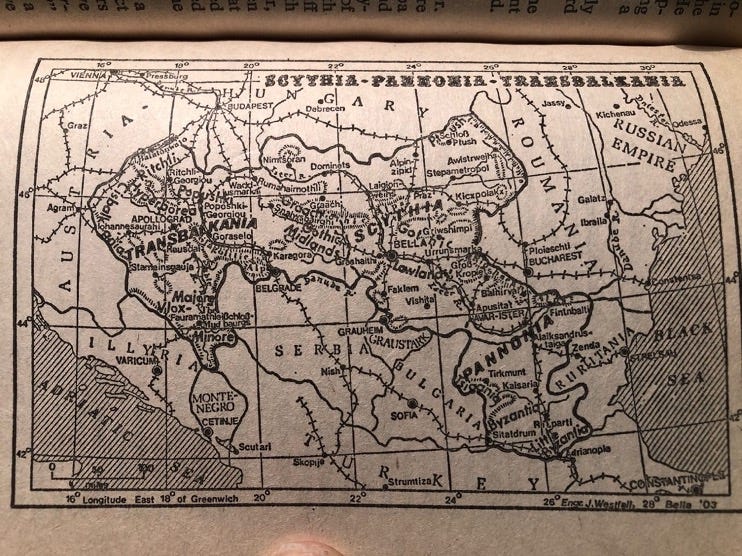
Similarly, I recently looked up the Hotel Palata Venezia in Dulcigno, and their web site pays tribute to the real and mythical stories of Dulcigno.
I continue to believe, despite centuries of tragedy, that knowledge of history, Dulcigno and beyond, can still provide models for diversity, tolerance, connectedness and prosperity.
메타데이터
- post_id
- 4748e1472d9e
- slug
- tectonic-geographies-4748e1472d9e
- url
- https://medium.com/@dulchinos_90468/tectonic-geographies-4748e1472d9e
- canonical_url
- https://medium.com/@dulchinos_90468/tectonic-geographies-4748e1472d9e
- author_url
- https://medium.com/@dulchinos_90468
- status
- ok
- fetched_at
- 2026-07-13 06:23:13