Spotify Is Not a Music Company Anymore
The world’s biggest streaming platform built a trillion-song jukebox, then became a data-harvesting machine tied to military AI investments…
Spotify Is Not a Music Company Anymore
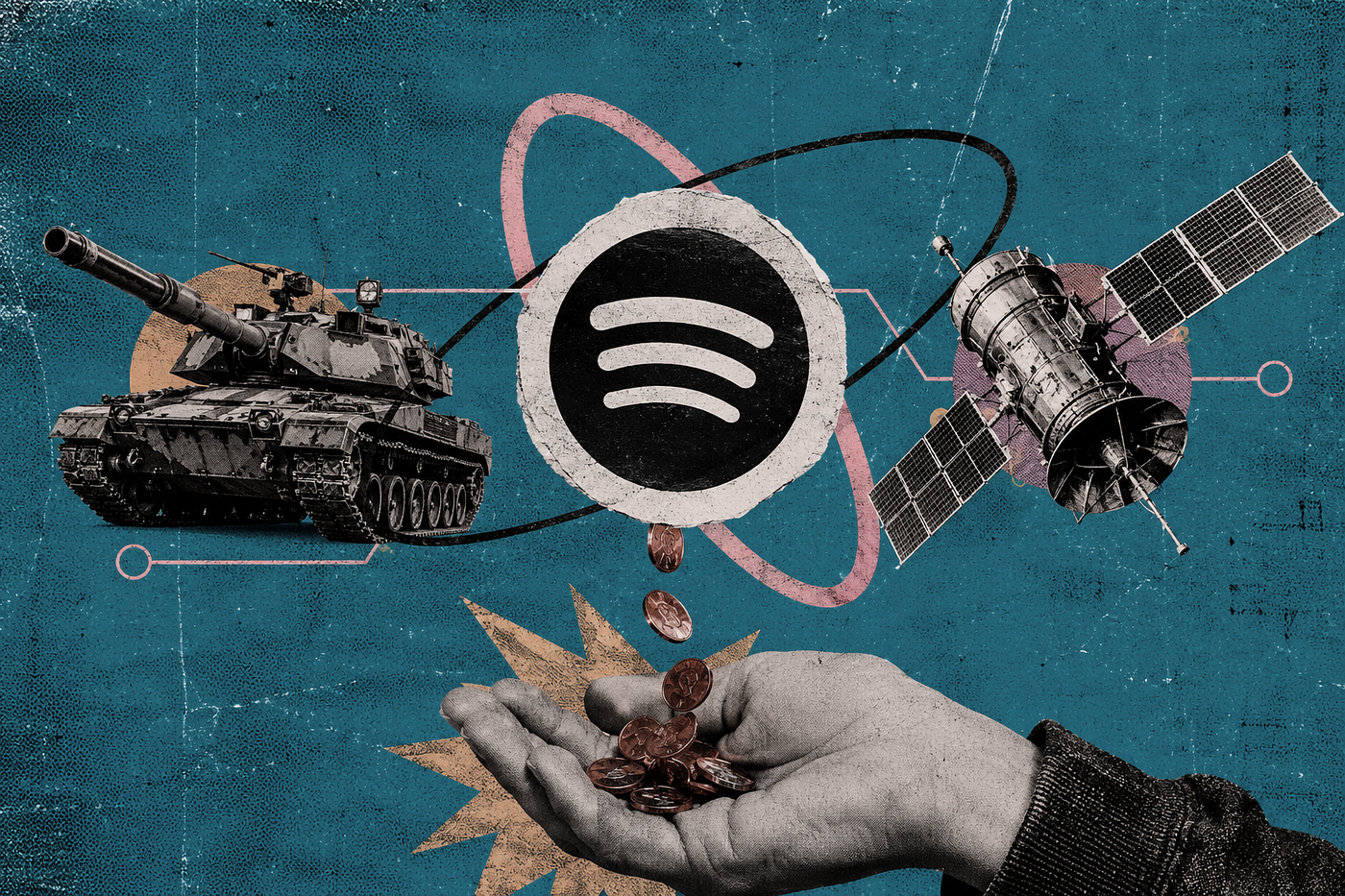
The world’s biggest streaming platform built a trillion-song jukebox, then became a data-harvesting machine tied to military AI investments and an economy that barely pays musicians enough for lunch.
By Omar Afra
READ THE WHOLE ESSAY AT TESTSET
Spotify still wants to be perceived as the benevolent miracle of modern music culture. That familiar green app that lets you jump from Burial to Beyoncé and offers Infinite music, discovery, and convenience.
And to be fair, the thing fucking works. Nobody serious denies that. Spotify solved piracy by making theft less convenient than subscription. It gave listeners access to more music than any civilization in human history has ever had sitting in one place.
But somewhere along the way, Spotify stopped behaving like a music company and started behaving like Sith lords. Financial and data infrastructure became the beating heart of the business. The music increasingly feels like the wrapper around the real product.
That tension became front and center again this month after Cedric Bixler-Zavala ( Mars Volta / At The Drive In ) publicly blasted Spotify over CEO Daniel Ek and his investments in Helsing, a European defense-tech company building military AI systems. Bixler-Zavala accused Spotify of contributing financially to the deaths of children through military investments. The wording was inflammatory by design, but the backlash did not emerge in a vacuum.
For years now, musicians have increasingly viewed Spotify less as a partner and more as a giant extraction machine that converted recorded music into low-margin utility wallpaper while vacuuming up oceans of behavioral data in the process.
And the ugly irony underneath all of this is impossible to miss: streaming convenience helped destroy the economic foundation that once allowed musicians to survive without charging six hundred dollars for concert tickets and selling VIP experiences that feel less like concerts and more like luxury airport packages for emotionally exhausted professionals.
Spotify did not singlehandedly create the live-music affordability crisis. But it absolutely helped engineer the conditions for it.
For decades, artists could rely on a combination of album sales, publishing, licensing, radio, physical merchandise, and touring income. The internet destabilized that system. Streaming finished the job. Spotify normalized the idea that virtually all recorded music ever made should cost listeners less per month than a mediocre sandwich.
The average Spotify payout per stream is routinely estimated somewhere around fractions of a cent. Independent artists often cite rates hovering around $0.003 to $0.005 per stream before labels, publishers, distributors, managers, and taxes take their cuts. Millions upon millions of streams can still translate into income that barely stabilizes rent in major cities.
So musicians adapted the only way they could: they shifted survival onto live performance. ( Sorry independent promoters that can’t afford to offer the same exorbitant guarantees Live Nation offers artists. )
That shift fundamentally changed the economics of touring. Concerts stopped being promotional vehicles for albums and became the primary economic engine itself. Ticket prices climbed. VIP packages metastasized. Dynamic pricing became normalized. Every inch of the venue suddenly needed monetization. Meet-and-greets started costing more than actual vacations.
The modern concert industry increasingly resembles airline economics wrapped around emotional attachment.
And because Spotify flattened the value of recorded music, the pressure moved downstream directly onto fans.
The middle class of musicians got obliterated first.
메타데이터
- post_id
- 474f46b9aef5
- slug
- spotify-is-not-a-music-company-anymore-474f46b9aef5
- url
- https://medium.com/@omarafra/spotify-is-not-a-music-company-anymore-474f46b9aef5
- canonical_url
- https://medium.com/@omarafra/spotify-is-not-a-music-company-anymore-474f46b9aef5
- author_url
- https://medium.com/@omarafra
- status
- ok
- fetched_at
- 2026-06-09 15:37:30