The worlds meet at the Small Calunga: Obaluaiê, Omulu, and Exu-Caveira
In front of the flower shop across from the cemetery, a religious man walks with an air of pride. He is heading toward a nearby Umbanda…
The worlds meet at the Small Calunga: Obaluaiê, Omulu, and Exu-Caveira

In front of the flower shop across from the cemetery, a religious man walks with an air of pride. He is heading toward a nearby Umbanda terreiro (temple of Afro-Brazilian religion where rituals with orixás and spirits are practiced). Surprised, he recognizes a former pai-pequeno (assistant to the priest or priestess of the house) buying orchids and cries out from the other side of the street:
— You became an atheist, why do you still speak of religion?
— You stopped going to the terreiro, why are you still moved by temples?
— You do not believe in life after death, what makes you continue?
— If you do not believe in Exu-Caveira (a spirit of the crossroads and cemeteries, guardian of thresholds between life and death), why do you enter cemeteries?
The atheist crosses the street and calmly replies:
— Even as an atheist I speak of religion because religion is the human language for dealing with mystery, morality, and belonging; speaking of it helps us understand people and histories, it is not a confession of faith.
— I stopped going to the terreiro, yet I am still moved by temples because ritual brings memory, rhythm, and an aesthetics of the sacred that touches remembrance and human affection, regardless of belief.
— Not believing in life after death does not erase what matters here: projects, bonds, curiosity, and responsibility. What makes me continue is the meaning I build in the present, not a promise of the future.
— Not believing in Exu-Caveira and entering cemeteries is no contradiction; it is a practice of confronting finitude, respecting the dead, and a discipline of silence that helps one live better. Besides, cemeteries are usually well-shaded and full of flowers. The living who come here are often moved and hopeful that someone listens to them… in truth, they are no different from those outside.
The fervent believer insists against the atheist, accusing him of incoherence, of hypocrisy, of seeking in symbols what he claims not to believe. He attacks his presence, saying he has betrayed the ialorixá and babalorixá (female and male heads of the religious house) who once did so much for him. His mere presence, the believer says, is an act of disrespect and affront.
Then a gravedigger steps out of the cemetery and raises his voice. With the eloquence of simple men, yet in the diction of the learned, he says:
“Do not confuse the human heart with a blank slate. The atheist who speaks of religion does not deny it, but recognizes it as a structure of language that shaped centuries and peoples. The man who no longer walks the terreiro, yet is still moved, is not incoherent: he is human, made of memory and affection, who even without faith still feels the vibration of ritual. He who does not believe in eternal life and yet persists shows even greater strength than the believer, for he walks without the promise of reward. And he who enters the cemetery without calling upon Exu-Caveira does not do so out of superstition, but in contemplation of finitude and reverence for those who came before.
Do not condemn him for this. For to deny faith is not to deny dignity. And truth is not defended only in words, but in the recognition that even the unbeliever seeks meaning. He who does not defend truth is complicit in falsehood, he who does not defend the wronged is coauthor of injustice. And justice, my brothers, is not made only with faith, but with dignity and with actions — virtuous actions are by their nature divine actions.”
The discussion ended, but the reflection of the Iaô (a newly initiated medium in Umbanda) was only beginning. The next morning, after the passes (ritual passes of spiritual cleansing), he went to the cemetery to seek out the gravedigger. They told him the cemetery was closed, for the city hall had given collective leave to the gravediggers due to the renovation of the chapel of the wake. They had been absent for three days and would only return under an emergency system.
And the Iaô, in silence, began to suspect: perhaps the gravedigger was not merely a man, but Obaluaiê (orixá of earth, healing, and disease), or Omulu (orixá of death, transformation, and rebirth), who clothed himself in dust to teach dignity at the threshold of the flesh.
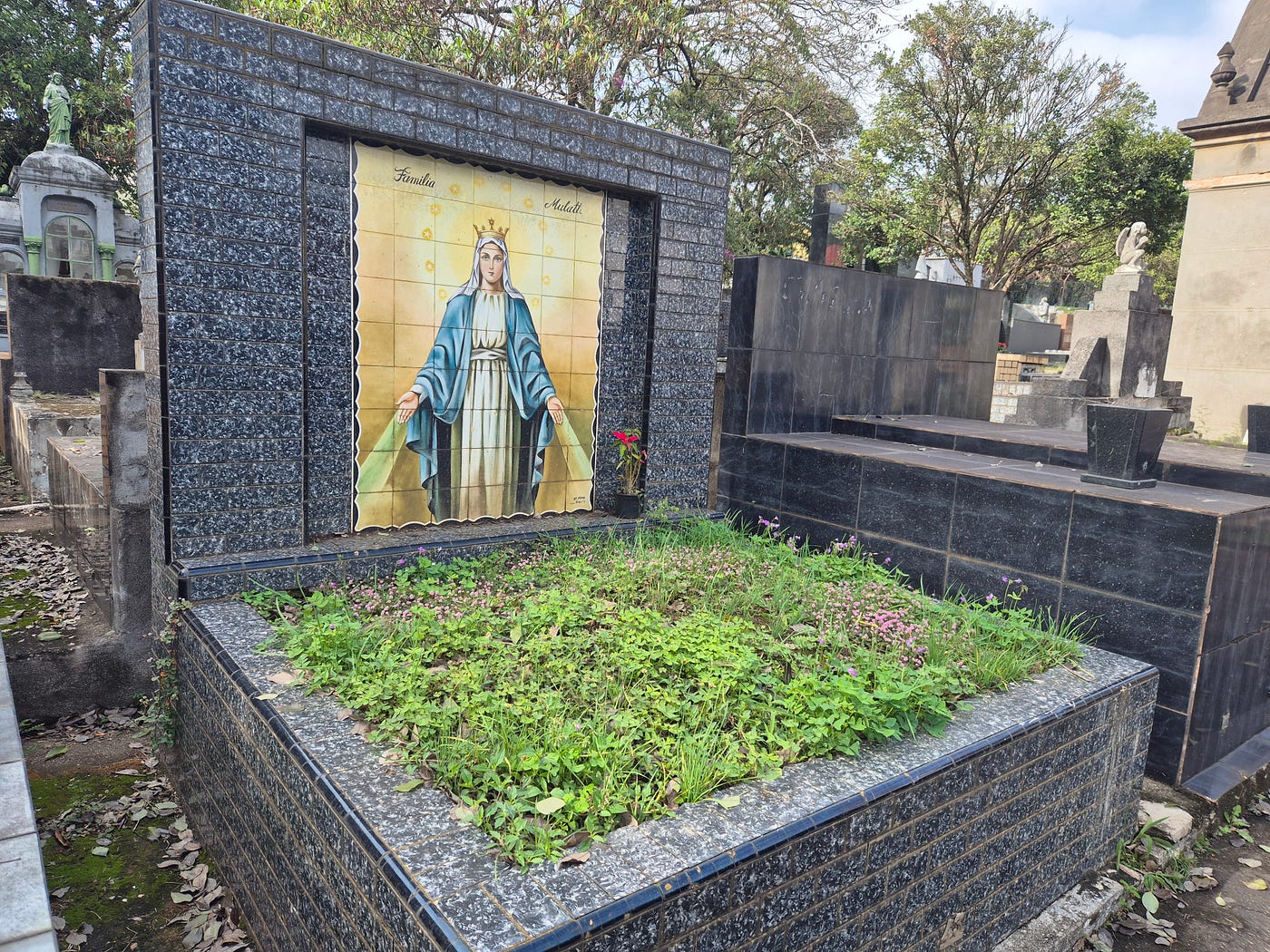
On the pavement before the Small Calunga (metaphorical name for the cemetery, a sacred threshold between the world of the living and the dead in Afro-Brazilian cosmology), the living and the dead met in words, and the gravedigger, with his speech both simple and erudite, left engraved that justice too is a divine act.
메타데이터
- post_id
- 4765c484406a
- slug
- the-worlds-meet-at-the-small-calunga-obaluaiê-omulu-and-exu-caveira-4765c484406a
- url
- https://medium.com/@luizeduardogasparelo/the-worlds-meet-at-the-small-calunga-obaluai%C3%AA-omulu-and-exu-caveira-4765c484406a
- canonical_url
- https://medium.com/@luizeduardogasparelo/the-worlds-meet-at-the-small-calunga-obaluai%C3%AA-omulu-and-exu-caveira-4765c484406a
- author_url
- https://medium.com/@luizeduardogasparelo
- status
- ok
- fetched_at
- 2026-07-17 11:44:46