AI Society for 3.18.25 — AI Cost Reduction
Today: Google’s move to Mediatek, the NY Times on how AI datacenters are different, more on the OpenAI and Anthropic policy proposals and…
AI Society for 3.18.25 — AI Cost Reduction
Today: Google’s move to Mediatek, the NY Times on how AI datacenters are different, more on the OpenAI and Anthropic policy proposals and a poignant editorial by the Mercury News, and AI’s impact on reading

DALL-E
To begin, the race for AI cost optimization. Remember that the AI arms race isn’t all about $500B Stargate spend. ‘The Information’ reports on the latest move by Google to broaden its horizons away from Broadcom, looking to the Taiwanese company ‘Mediatek’ as a second source for its TPUs. A long time ago I had partnered with the firm, and they have good technology.
· Google and Broadcom have sometimes butted heads over Broadcom’s prices for the TPUs, prompting Google to seek alternatives such as MediaTek.
· Google typically produces two different TPUs: one for training new models and an “inference” chip that powers existing models for services such as Google Search, YouTube and the Gemini app. It isn’t clear whether Google plans to alter its strategy to focus on producing just one type of TPU, which would mirror a change Amazon made to its AI chip lineup.
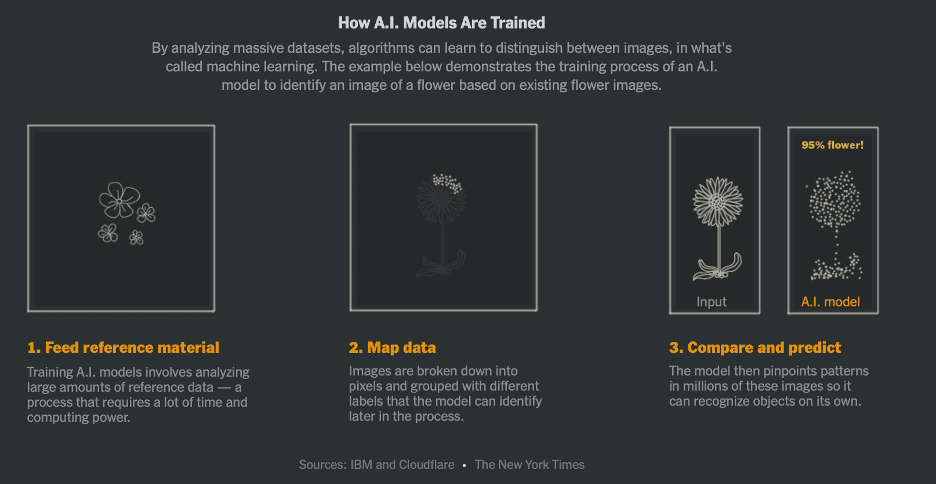
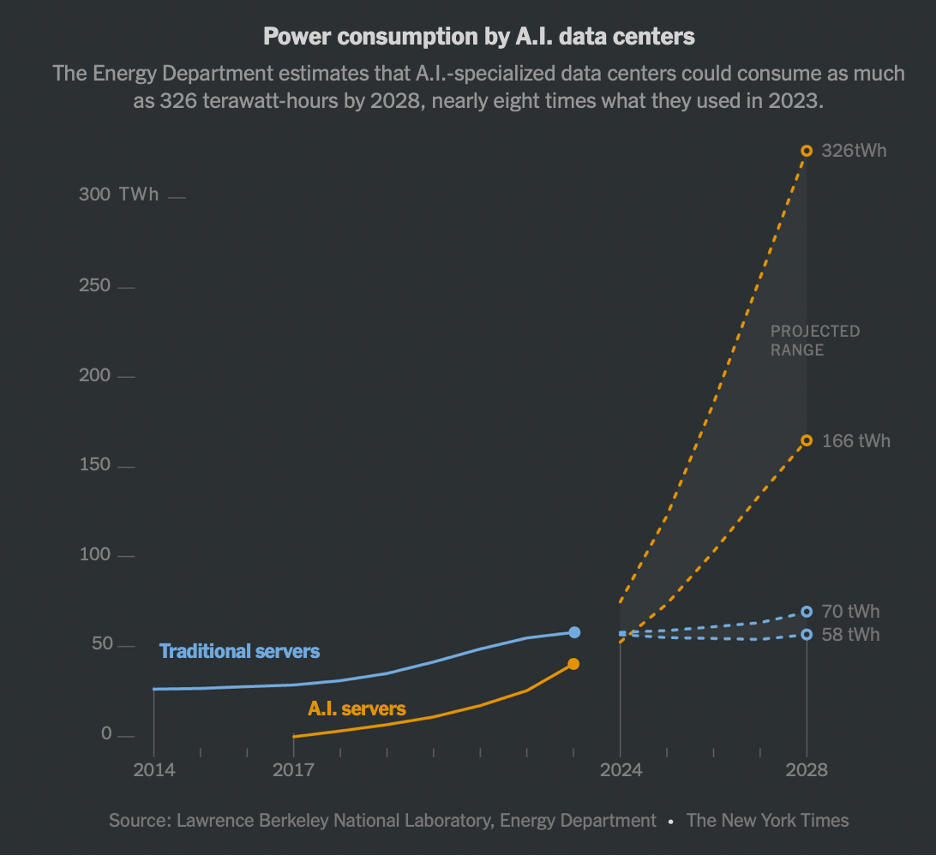
On the same theme, the ‘NY Times’ offers a great explainer on how AI datacenters are different from more traditional on-premises or even earlier cloud datacenters. It begins with explaining GPUs and their as well as their connectivity and power requirements and then goes on to extrapolate the impact of this globally. A few images from the interactive article:
Next, a good follow-up on the recent AI policy proposals by both Anthropic and OpenAI. Conrad Gray at ‘Humanity Redefined’ concludes:
After reading both documents, is clear that AI is not just a powerful technology — it is also a geopolitical issue. Both proposals from OpenAI and Anthropic, as well as Trump’s administration’s push to advance AI, offer an idea of what the new regulatory AI landscape in the US could look like. OpenAI and Anthropic recognise the threat to the US dominance in technology coming from China, which has some advantages in terms of what Chinese companies can do while the US companies cannot. OpenAI explicitly frames AI as a struggle between democratic and authoritarian models, advocating for “exporting democratic AI.” In contrast, Anthropic focuses on AI security and containment, warning that adversarial states could misuse advanced AI capabilities.
Read his full post to dig into Conrad’s views as to how the proposals impact:
· National Security and Export Controls
· AI Infrastructure and Energy
· Government AI Adoption
· AI Regulation
· AI’s Economic and Workforce Impact
On the same subject, a ‘Mercury News’ editorial, ‘Big Tech’s AI pitch seeks a license to steal.’ It looks at one area of the above proposals, and leads with:
Open AI and Google, having long trained their ravenous bots on the work of newsrooms like this one, now want to throw out long-established copyright law by arguing, we kid you not, that the only way for the United States to defeat the Chinese Communist Party is for those tech giants to steal the content created with the sweat equity of America’s human journalists.
Strong words! The editorial adds:
· Gutting generations of copyright protections for the benefit of AI bots would have a chilling effect not just on news organizations but on all creative content creators, from novelists to playwrights to poets. That ironclad commitment to protecting the rights of owners of work they themselves created is precisely what distinguishes the United States from communist China, not the reverse.
· This country has dominated the world of news and information by respecting not just the precious freedom of the press but also its right to protect its work. Had it not done so, there would have been no economic base on which to build the kinds of news organizations that can, and still do, keep a check on the government.
My highlight above.
I’ve covered AI’s impact on writing and creativity several times, but what about reading? Turning the question on its head, how does AI impact how we read, and can it make it more efficient and meaningful? Something potentially critical to people like me who read quite a bit on a daily basis. Aaron Stanton asks just that question.
· Imagine I have an AI model trained on my tastes and preferences in reading. A quick Google search finds that the average LLM on a moderately powerful computer can ingest content at 188,000 times the 10 bits per second of the human brain.
· In other words, the 2GB of data a human can consume in their lifetime would take an LLM about 5.2 seconds to read for you.
· And then make a recommendation.
And he suggests:
With all the open source LLM projects out there, maybe there should be one for the production of “non-human but human-readable” metadata for recommendations. It could be as simple as an analysis of a book’s key attributes — language, writing style, thematic tags, etc — packaged as a profile that could be downloaded and distributed by the author or publisher.
Of interest:
· A great post by my friend and former colleague, Jaz Lin, taking a product manager view of AI’s impact on the network. Her latest in a series on laying the foundations, ‘Is Your Network Ready for AI? Building the Backbone for AI-Driven Innovation.’
메타데이터
- post_id
- 4768add68bc1
- slug
- ai-society-for-3-18-25-ai-cost-reduction-4768add68bc1
- url
- https://medium.com/a-i-society/ai-society-for-3-18-25-ai-cost-reduction-4768add68bc1
- canonical_url
- https://medium.com/a-i-society/ai-society-for-3-18-25-ai-cost-reduction-4768add68bc1
- author_url
- https://medium.com/@daveginsburg
- status
- ok
- fetched_at
- 2026-08-04 00:42:32