How Apixmed Integrates Genetic and Pharmacogenomics Data into the Healthcare Ecosystem of the…
From Genetic Complexity to Standardized Precision
How Apixmed Integrates Genetic and Pharmacogenomics Data into the Healthcare Ecosystem of the Future
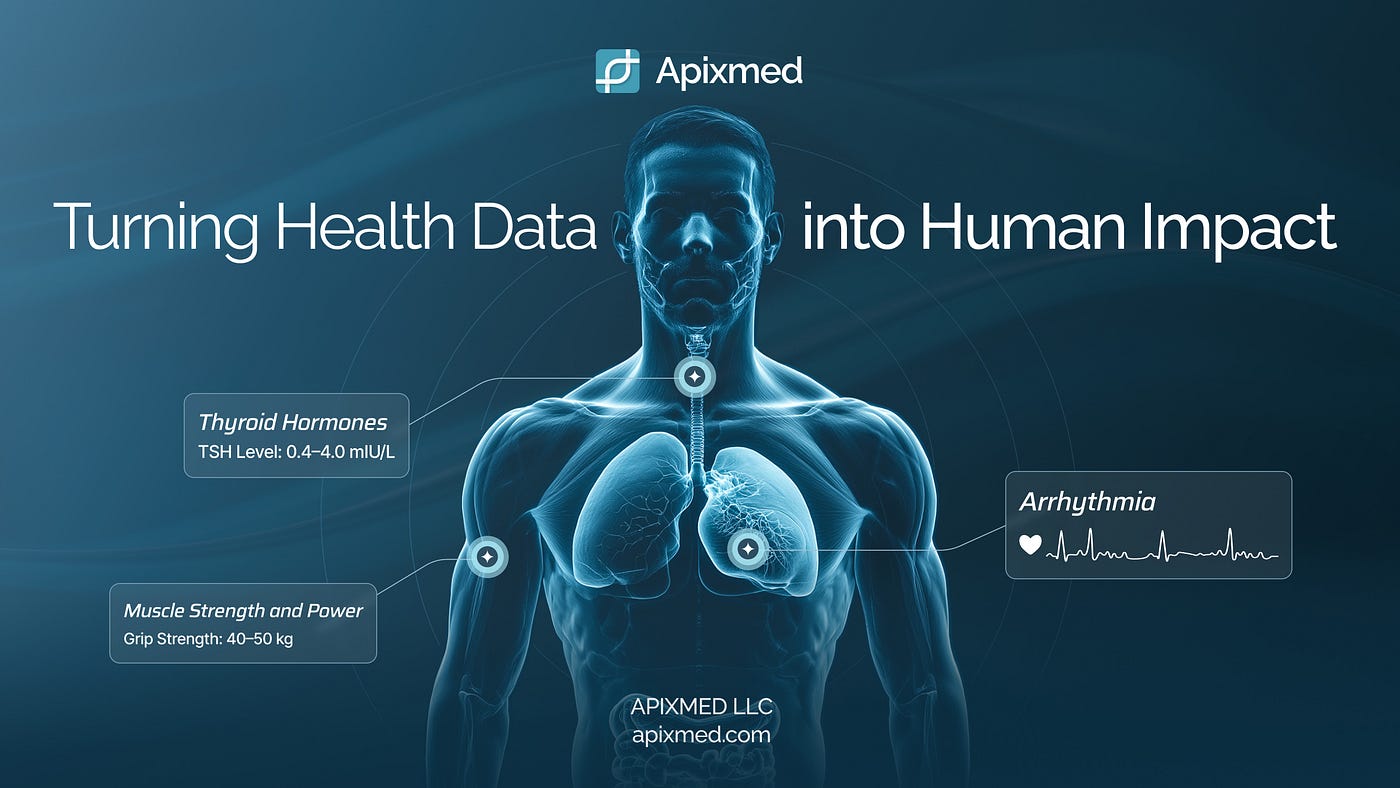
From Genetic Complexity to Standardized Precision
Genetic and pharmacogenomic data are among the most complex to process in medicine. They are generated in various formats (multiplexed PCR, microarrays, next generation sequencing data such as whole exome (WES) or whole genome sequencing (WGS), based on evolving clinical guidelines, and require precise interpretation. Without unified data models, these results remain trapped inside reports — unavailable to clinical systems and unused in decision-making.
Apixmed bridges this gap through controlled, standards-based automation that transforms fragmented genetic testing outputs into structured, interoperable, and traceable data ready for integration into LIS (Laboratory Information System — software that manages and transmits laboratory test data) and EHR (Electronic Health Record — a digital record containing a patient’s medical history and clinical data) or to be provided to customer directly. As a result, complex scientific insights become accessible to physicians, laboratories, insurers, and patients — in a format that supports clinical workflows, compliance, and secure data exchange.
Genetic and Pharmacogenomic Data — The Foundation of Personalized Prevention
Pharmacogenomics explains how genetic variants influence the safety and efficacy of medications, forming the foundation of personalized and preventive medicine — where treatment decisions are guided not by population averages, but by individual genetic profiles. To illustrate its value in practice, let’s take a closer look at several key examples and core pharmacogenes.
CYP2D6 — metabolism of antidepressants and opioids
The CYP2D6 gene is responsible for metabolizing over 25% of all prescribed drugs, including antidepressants, antipsychotics, and painkillers such as codeine and tramadol. Variants of this gene determine whether a person is a poor, intermediate, normal, or ultra-rapid metabolizer:
- Poor metabolizers are at higher risk of drug accumulation and side effects (5–10% of European population)
- Intermediate metabolizers (10–15%)
- Ultra-rapid metabolizers may convert codeine to morphine too quickly, risking toxicity (5–10% of European population).
International CPIC guidelines recommend CYP2D6 testing before prescribing antidepressants and opioids. Over 15,000 documented clinical cases show that such testing reduces adverse drug reactions and improves therapy precision.
CYP2C9 / VKORC1 — sensitivity to warfarin
The CYP2C9 and VKORC1 genes determine an individual’s sensitivity to the anticoagulant drug warfarin. Certain variants increase the risk of bleeding, while others reduce drug efficacy. Studies involving more than 20,000 patients have shown that pharmacogenetically guided dosing stabilizes INR faster and reduces hospitalizations and complications. Many hospitals already integrate these markers into clinical decision support systems for safer, more accurate dosing.
Variants of these genes define how sensitively a person responds to warfarin:
- Moderate sensitivity (intermediate metabolizers): ~40–50% of individuals
- High sensitivity (poor metabolizers): ~10–15% of individuals.
International CPIC and FDA guidelines recommend CYP2C9 and *VKORC1* genotyping before initiating warfarin therapy to optimize dosing, minimize bleeding risk, and ensure stable INR control.
SLCO1B1 — risk of statin-induced myopathy
The SLCO1B1 gene regulates the transport of statins (such as simvastatin and atorvastatin) into the liver. When the gene’s transporter function is reduced, blood drug levels rise, leading to muscle pain, weakness, or even rhabdomyolysis.
An estimated 5–10% of statin users experience muscle-related side effects, and up to 60% of severe myopathy cases are linked to SLCO1B1 variants. Genetic testing allows physicians to identify high-risk patients in advance and choose a safer or lower-dose regimen.
All these examples illustrate one idea: data only gain value when they can be standardized, interpreted, and integrated into clinical practice. This is what Apixmed makes possible.
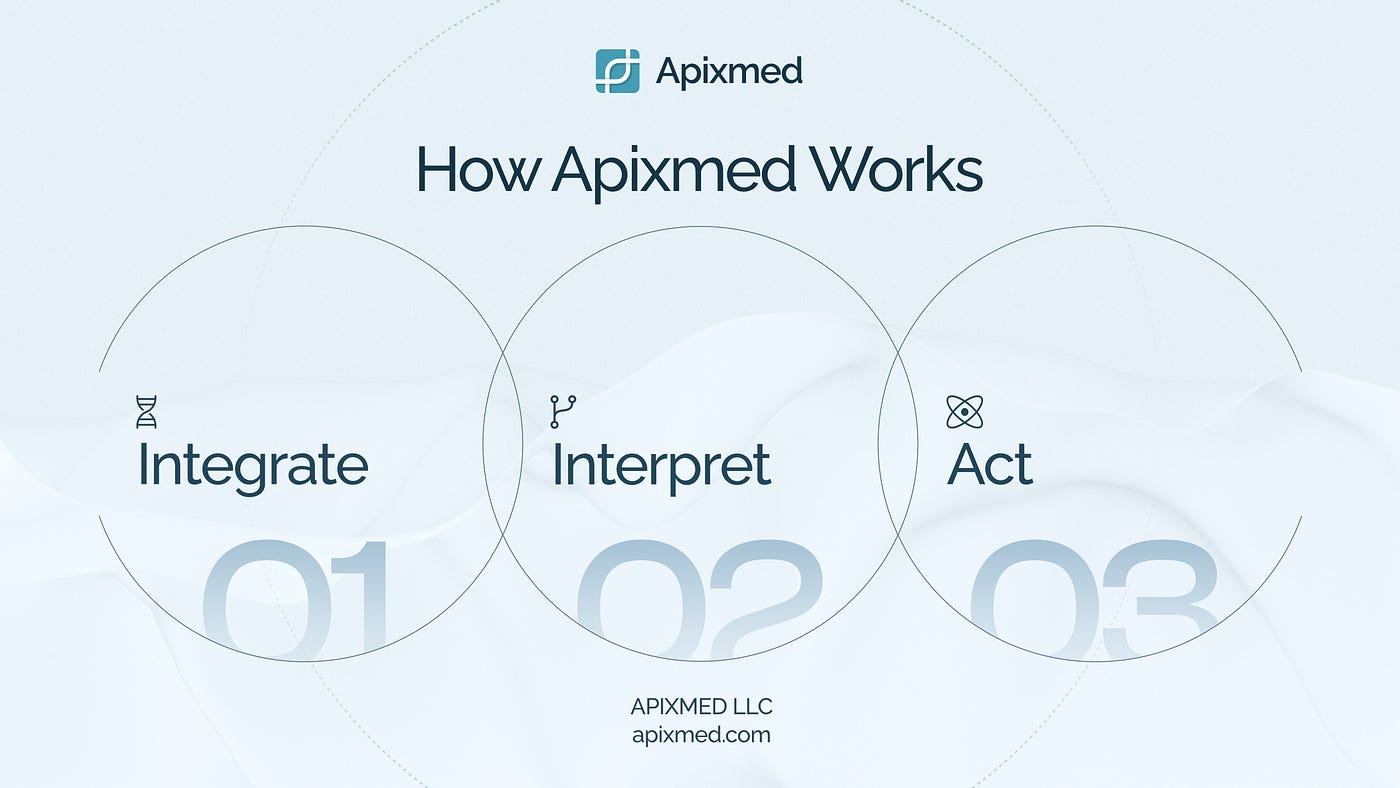
Automated Genetic Data Interpretation
In a world where a single gene can have dozens of clinically significant variants, automation is not optional — it’s essential.
Apixmed applies Controlled Automation, combining Natural Language Processing (NLP) and rule-based algorithms to structure validated pharmacogenomic knowledge derived from international sources such as CPIC, DPWG, FDA, and EMA.
This ensures that every interpretation step is reproducible, verifiable, and auditable. The platform does not make autonomous clinical decisions — it automates interpretation logic within defined, standards-aligned parameters, leaving the clinician in control.
The platform ensures seamless data exchange between clinical and laboratory systems — including Electronic Health Records (EHR) and Laboratory Information Systems (LIS) — using HL7® FHIR® standards.
Output includes:
- FHIR-compatible Genomics Report — ready for integration into EHR and LIS
- Clear summary for healthcare communication — standardized, easy-to-read reporting
- Up to 60% faster reporting and analysis with full accuracy and compliance.
Standards as the Core of Interoperability
Interoperability is the heart of digital health. Apixmed’s architecture is built on global standards that ensure transparency, security, and scalability:
- HL7® FHIR® (Fast Healthcare Interoperability Resources) — the foundation for structured data exchange among laboratories, clinics, and medical records
- FHIR Genomics Reporting — a unified model for encoding genes, variants, and interpretations
- LOINC / SNOMED CT — consistent identifiers for lab tests, variants, and phenotypes
- GDPR, HIPAA, ISO 27001 — full compliance with privacy, quality, and information security requirements.
As a result, pharmacogenomic data move seamlessly across systems — machine-readable, human-verifiable, and fully traceable.
Business Value for Genetic and Medical Laboratories
For laboratories and clinics, pharmacogenomics represents not just medical innovation but a new business opportunity.
Apixmed unlocks new value models based on interpretation, not sequencing.
- New revenue streams. Automated pharmacogenomic analysis allows laboratories to move beyond raw genotyping and offer fully interpreted clinical reports. Integrating CYP2D6, CYP2C9/VKORC1, and SLCO1B1 panels supports personalized therapy and opens new B2B avenues, validated by over 15,000 processed patient cases
- Reproducibility and compliance. Controlled workflows are aligned with international clinical guidelines
- Scalability. Adding new genes or knowledge updates requires no redevelopment
- Re-analysis services. As new evidence emerges, Apixmed allows results to be updated automatically, creating a continuous cycle of value for laboratories and clients.
Implementing Apixmed means more than efficiency — it enables a data-as-an-asset model, generating consistent revenue and building lasting trust in the laboratory’s brand.
Future-Proof Architecture
Apixmed’s architecture follows a modular and standards-based design, easily adapting to new knowledge and regulatory requirements. It supports periodic re-analysis workflows, minimizing maintenance costs and ensuring long-term compliance.
This ensures:
- Ongoing alignment with evolving CPIC and DPWG guidelines
- Sustained data security and interoperability without manual intervention
- Continuous evolution of the service to reflect the latest state of science.
In short, investing in Apixmed remains relevant over time, as the platform grows alongside scientific progress.
From Data to Preventive Action (Closing Section / CTA)
Apixmed transforms complex genetic information into clear, actionable, and standardized insights.
Built on controlled automation and verified knowledge, it empowers partners — laboratories, clinics, and insurers — to move from treatment to prevention, from data to action.
From data to action. From sequencing to prevention. From standards to the future.
More articles on genetic interoperability and preventive healthcare are coming soon — follow Apixmed to stay updated.
Genomics #Pharmacogenomics #DigitalHealth #Interoperability #HealthTechnology
메타데이터
- post_id
- 477c7e1b6b81
- slug
- how-apixmed-integrates-genetic-and-pharmacogenomics-data-into-the-healthcare-ecosystem-of-the-477c7e1b6b81
- url
- https://medium.com/@apixmed/how-apixmed-integrates-genetic-and-pharmacogenomics-data-into-the-healthcare-ecosystem-of-the-477c7e1b6b81
- canonical_url
- https://medium.com/@apixmed/how-apixmed-integrates-genetic-and-pharmacogenomics-data-into-the-healthcare-ecosystem-of-the-477c7e1b6b81
- author_url
- https://medium.com/@apixmed
- status
- ok
- fetched_at
- 2026-06-09 15:37:30