The Sgt. Pepper’s Cover: 6 Are Still Alive (Not 5)
Every person on the classic cover and how they ended up
The Sgt. Pepper’s Cover: 6 Are Still Alive (Not 5)
Every person on the classic cover and how they ended up
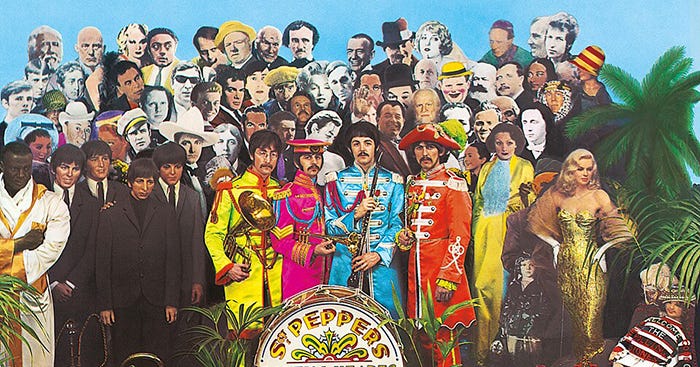
Wikimedia Commons
You might have seen the article floating around lately about who’s left alive from the 69 assembled figures (not counting the doubled Beatles) on the Sgt. Pepper’s Lonely Hearts Club Band album cover. The story names 5 survivors, but there are actually 6 as of this article’s publication.
Read on to find out who’s alive, who’s dead, who’s MIA, and who was never born in the first place …
The Living
We’ll start with everyone left alive in twenty-hundred and twenty-six, from front to back.
Ringo Starr and Paul McCartney (b. 1940, 1942)

The Beatles appear twice on the Sgt. Pepper’s cover, in a live pose and as wax figures borrowed from Madame Tussaud’s museum in London. The currently surviving band members, Ringo and Paul, stand front and center. If you’re not a lifelong fan of this band, you might think I’m exaggerating when I say even the thought of an inevitable Beatle-less world fills me with existential grief, but it’s absolutely true.
Sophia Loren (b. 1934)
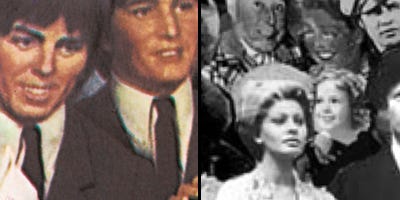
Several figures are obscured on the final shot of the cover, but it’s hard to get more obscured than Italian actor Sophia Loren, who only shows part of her collar and neck behind the wax figures of George Harrison and John Lennon. Her cutout includes actor Marcello Mastroianni who appeared with her in a photo. Typically, the lifesized cutouts were based on photos from the BBC Hulton Picture Library, personal collections, and book stores like London’s Indica Books & Gallery.
Larry Bell (b. 1939)
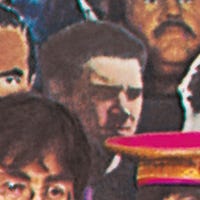
Larry Bell is an artist associated with the “Light and Space” group of American abstract sculptors. He tends to work at large scale with the goal of “overwhelming” viewers so as to envelop them in the experience of the piece and its setting. Fewer than half the figures on the cover were chosen by the band; several artists and designers were chosen by set designer Peter Blake and other members of the production team.
Dion (b. 1939)

Dion DiMucci was a force of early American rock’n’roll of the 1950s and early ’60s, now best remembered for his hits “The Wanderer” and “Runaround Sue.” I recall an interview he did many years ago when he was asked if there really was a Runaround Sue. He said yes, but her name was Dolores – he changed it because “the only words I knew that rhymed with Dolores were Lavoris and clitoris.”
Bob Dylan (b. 1941)

This image of Dylan, who famously introduced The Beatles (Ringo first) to marijuana, is taken from the front cover of his 1965 album Highway 61 Revisited. My favorite Dylan story comes from a 2009 concert tour when he decided to take a walk before the show and was reported as a suspicious person while eyeing a house with a “For Sale” sign in the yard. The New Jersey cops had never heard of him and refused to believe that this raggedy-ass dude was, as he claimed, headlining at the nearby stadium until he took them back to his tour bus and scrounged up some ID.
The Dead
Next up, everyone who has passed, in order of their exit from this worldly stage.
Edgar Allan Poe (1809–1849)
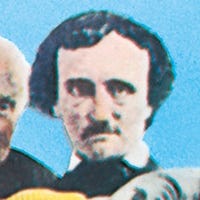
Edgar Allan Poe, most famous for his macabre short stories and his poem “The Raven,” died in Baltimore, MD, after being found semi-conscious in someone else’s clothes on election day. While no one knows the cause of his death, Poe was a notorious alcoholic and may have been accepting free drinks to vote multiple times under false names.
Robert Peel (1788–1850)
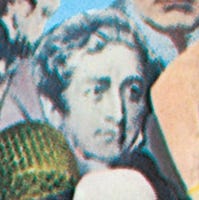
Sir Robert Peel was among the most prominent British politicians of the 19th century, responsible for a mix of both conservative and liberal reforms, including the creation of England’s world-famous “Bobbies.” He died at the age of 62 from injuries sustained when riding a new horse who threw him and then fell on top of him.
David Livingstone (1813–1873)
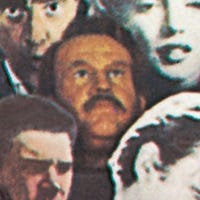
David Livingstone was a Scottish Christian missionary most famous these days for his work in Africa, which was mostly unknown territory to northern Europeans at the time. For six years he lost contact with Europe until located by Henry Morton Stanley of the New York Herald. Stanley’s account and a subsequent film version of the tale generated the catchphrase “Dr Livingstone, I presume?” Livingstone died a year and a half later, after a bout with malaria and dysentery.
Karl Marx (1818–1883)
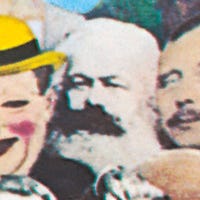
Karl Marx is the world-famous author of The Manifesto of the Communist Party and Das Kapital. There’s a story that when The Beatles were accused of supporting communism, Paul responded, “We can’t be communists, we’re the world’s number one capitalists,” but the tale so far eludes all attempts at confirmation. Marx died of bronchitis as a stateless man living in London. Because of a delayed public announcement which mistakenly claimed he’d died in Paris, only about a dozen people attended his funeral. Marx was buried in the atheist section of Highgate Cemetery.
Sri Lahiri Mahasaya (1828–1895)
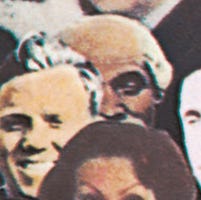
The partially visible Sri Lahiri Mahasaya was a yogi from a Bengali Brahmin family who claimed to have been taught his yogic system by Mahavatar Babaji (see below) and was a teacher to Yukteswar Giri (also below) and to the parents of Paramahansa Yogananda (ditto) who held him up as an example of the perfected lay practitioner in his memoirs. Unsurprisingly, George chose all four of these figures, which comprise the entirety of his contribution to the cast of characters on the cover. Many miracles are now attributed to Lahiri, and the details of his death appear to have gone unrecorded.
Lewis Carroll (1832-1898)
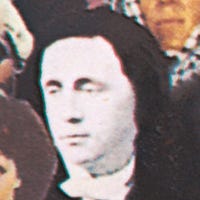
Lewis Carroll is the world-renowned author of Alice’s Adventures in Wonderland which fueled much of the imagery in “Lucy in the Sky with Diamonds,” as well as Through the Looking-Glass containing the poem “The Walrus and the Carpenter” which inspired “I Am the Walrus.” Lennon later said he didn’t get the socio-political allegory of the poem at the time and so he “picked the wrong guy,” but was OK with that because “I am the carpenter” doesn’t have the same punch. Carroll died of the flu at his sister’s house.
Aubrey Beardsley (1872–1898)

Aubrey Beardsley was an illustrator and self-described “grotesque” who was a leading figure of Art Nouveau, an aesthetic movement which profoundly influenced the imagery of 1960s rock music including the cover of Revolver. Appropriately, he died a tragic and Romantic death of tuberculosis in France at age 25.
Stephen Crane (1871–1900)

Stephen Crane was an American writer who revolutionized English letters with his sparse, journalistic style derived from his experiences as a war correspondent. Best remembered for his classic short novel The Red Badge of Courage, Crane also died young of tuberculosis, at the age of 28 while staying at a health spa with his wife near the Black Forest in Germany.
Oscar Wilde (1854–1900)

The Irish author Oscar Wilde was one of the most celebrated prose writers, poets, and dramatists of the Victorian Era, closely associated with other transgressive talents like Beardsley. After being jailed in England for having sexual relationships with other men, Wilde fled to the continent, never to return. He died of meningitis in a two-bit hotel in Paris, which is now a luxury destination. His dying words were reported to be “Either this wallpaper goes or I do,” although that is an apocryphal reworking of a comment he had made about the room’s decor sometime earlier.
T. E. Lawrence (1888–1935)

Thomas Edward Lawrence was a British archaeologist, military man, and writer, later immortalized in the classic film Lawrence of Arabia. He lived a truly astonishing life, and was killed in a motorcycle crash two years after retiring from the Royal Air Force, when he swerved to avoid two boys on bicycles whom he had suddenly encountered. His resulting death led directly to the widespread adoption of crash helmets by motorcyclists.
Sri Yukteswar Giri (1855–1936)
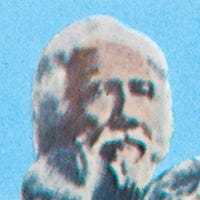
Yukteswar Giri was a Bengali yogi, monk, and scholar of the Bhagavad Gita, an extended dialog between the warrior Arjuna and the incarnated god Krishna from the Hindu epic Mahabharata, which is the foundational text of the Hare Krishna sect. George Harrison had become involved with the group around the time Sgt. Pepper’s was recorded, and had Hare Krishna devotees chanting from the Gita at his death. Yukteswar’s own death was not recorded, although some followers claim he was resurrected after his cremation.
Tom Mix (1880–1940)
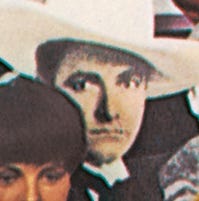
Tom Mix was among the earliest of the movie cowboys, having starred in nearly 300 films dating back to the silent era. He met his end when his Cord Phaeton convertible flipped on a detour in the Arizona desert as he tried to avoid a caved-in bridge at high speed. If you ever find yourself on State Route 79 in the scrublands between Florence and Oracle Junction, you can visit the Tom Mix memorial plaque. It’s literally just a wide spot in the road, but you can’t miss it because there’s nothing else out there. It was actually Tom’s aluminum suitcase that killed him, and you can see the lethal luggage on display at the Tom Mix Museum in Dewey, OK.
James Joyce (1882–1941)
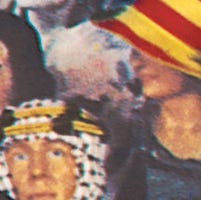
Almost entirely hidden by T. E. Lawrence on the album jacket, Irish author James Joyce was a pioneer modernist writer, most famous these days for his novels Ulysses, Finnegan’s Wake, and A Portrait of the Artist as a Young Man. Notoriously difficult for their use of stream-of-consciousness, interior monologue, and heavy dialect, perhaps his books’ most lasting contribution to the English language comes from the line “Three quarks for Muster Mark!” which contributed the name “quark” to the standard model of particle physics. Lennon admired Finnegan’s Wake but quit after the first chapter, saying, “I mean… he just didn’t stop, you know.” Joyce died in Switzerland in 1941 after fleeing Nazi-occupied France.
H. G. Wells (1866–1946)
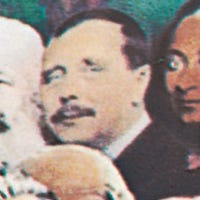
H. G. Wells was one of the earliest science fiction writers, still famous for works like The War of the Worlds, The Time Machine, and The Invisible Man. Later in life, he became a champion of liberal causes. After his death, Wells’ ashes were scattered over the English Channel.
W. C. Fields (1880–1946)
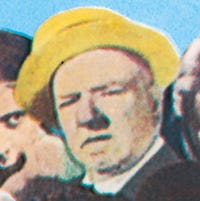
W. C. Fields was a widely popular American comedian in the Vaudeville tradition. On his final day on this earth, his partner Carlotta Monti used a garden hose outside his room in a Pasadena, CA, hospital to give him the sound of rain which he enjoyed. It was Christmas Eve and as midnight approached Carlotta held his hand and pleaded with him to recover. Fields placed a finger to his lips, gave her a wink, and as the church bells announced Christmas Day he passed on.
Aleister Crowley (1875–1947)
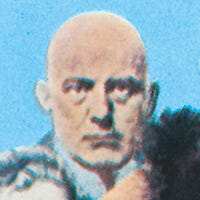
Aleister Crowly was an English occultist, most famous in rock music circles through Ozzy Osborne’s song “Mr. Crowley.” He lived a strange and varied life, eventually succumbing to chronic lung disease in a boarding house in Hastings. His funeral was sparsely attended, and after the cremation his ashes were sent to fellow occultist Karl Germer who buried them in his back yard in New Jersey.
Tommy Handley (1892–1949)

The Liverpool-born comedian Tommy Handley was famous for his fast-talking routines on BBC radio. He died of a cerebral hemorrhage while bending over to pick up a collar stud.
George Bernard Shaw (1856–1950)

George Bernard Shaw was an Irish writer, philosopher, and leftist political activist who swung toward support for authoritarianism in the 1930s. Prone to both brilliance and quackery, Shaw passed away at his home at age 94 after breaking a leg from a fall while pruning a fruit tree in his garden.
Sri Paramahansa Yogananda (1893–1952)
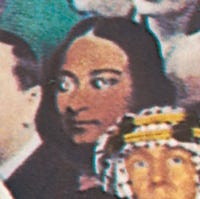
Paramahansa Yogananda was a disciple of Yukteswar Giri who moved to the United States to spread his yogic teachings in the West, sparking the American yoga movement from his base in Los Angeles. George Harrison’s solo tune “Dear One” was dedicated to him. He died of a heart attack while delivering a speech on US-Indian relations during a dinner for the Indian ambassador at the Biltmore Hotel in LA.
Dylan Thomas (1914–1953)
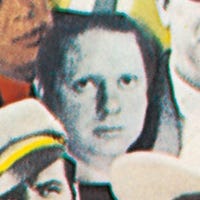
Welsh poet and dramatist Dylan Thomas was cited by both John and Paul as a favorite author. He did not go gentle into that good night. While in New York on a speaking tour, suffering from severe chest pains and coughing, after repeated bouts of whiskey-drinking at the White Horse Tavern and a morphine injection from a quack doctor Thomas lapsed into a coma at his room in the Hotel Chelsea from which he never recovered.
Albert Einstein (1875–1955)
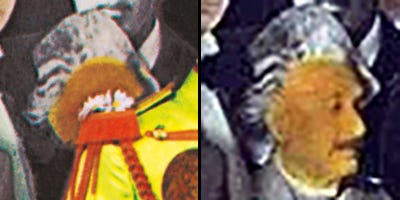
Albert Einstein is likely the most famous scientist in history, father of relativity and co-parent of quantum mechanics. He spent much of his later life protesting the military uses to which his discoveries had been applied and criticizing the cruelties of capitalism. Einstein died after refusing surgery in the wake of an aortic aneurysm, saying “I have done my share; it is time to go.” While his body was cremated and his ashes scattered privately by his family, Einstein’s brain was removed without permission and preserved in a pair of Mason jars. Today, sections of the brain are owned by the National Museum of Health and Medicine in Maryland and the Mütter Museum in Philadelphia.
Tyrone Power (1914–1958)
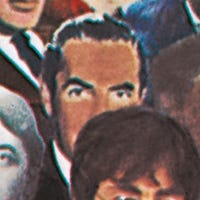
Tyrone Power was an early star of American cinema, specializing in swashbuckler films. His cutout was the first to be painted, and ended up, in the words of artist Jann Howarth, “as orange as Donald Trump.” Howarth went progressively lighter on subsequent figures, and you can tell which ones were painted early by noting the gradual lightening of the tone. Power died of a heart attack while filming a swordfight in Madrid, Spain.
Carl Jung (1875–1961)
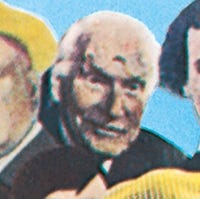
Carl Jung was a Swiss psychologist most remembered today for his theories of the collective unconscious and universal archetypes. He passed away from natural causes at his home on Lake Lucerne in Switzerland at the age of 85.
Stu Sutcliffe (1940–1962)
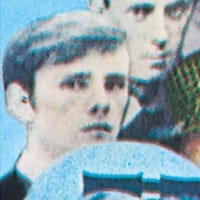
Stuart Sutcliffe was the original bassist for The Beatles and co-originator with Lennon of the band’s name. But he was more interested in painting than music, so he left the group to attend art school and Paul switched from guitar to bass. Sutcliffe died of a brain hemorrhage at the age of 21, the youngest of all the persons portrayed on the Sgt. Pepper’s front cover.
Marilyn Monroe (1926–1962)
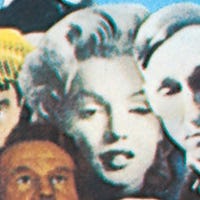
Marilyn Monroe (born Norma Jeane Mortensen) is one of the most famous and iconic film stars in the world. Plagued and wearied by the burdens of superstardom, Monroe lived a short and turbulent life and died from an overdose of barbiturates at her home in Brentwood. The coroner’s office declared her death a probable suicide. Elton John wrote the original version of the global hit “Candle in the Wind” in her honor. The song was rewritten and re-released in 1997 to commemorate the passing of Diana, Princess of Wales.
Max Miller (1894–1963)
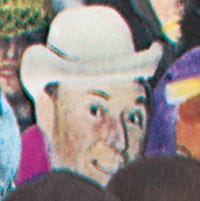
Max Miller was a British standup comedian and songwriter who often battled with censors over his racy double entendres. He died at his home in Brighton of heart failure.
Aldous Huxley (1894–1963)

Aldous Huxley was an English writer, philosopher, and advocate for psychedelic drugs who relocated to California in the 1930s. While incapacitated from cancer at his home, he instructed his wife Laura with a written note (“LSD, 100 μg, IM”) to inject him with LSD as he died while his nurses watched television news accounts of the assassination of American President John F. Kennedy. Huxley’s ashes were interred at a family cemetery in Surrey, England.
Laurel & Hardy (1890–1965, 1892–1957)

Stan Laurel Oliver Hardy were a popular slapstick comedy duo of early American cinema (although Stan was British) and have been combined here because it’s impossible to mention one without the other. Hardy’s cutout was not based on a photograph of the man himself, but rather a toy figurine, giving it a highly stylized look. When Hardy died at home of a cerebral thrombosis, Laurel was inconsolable and retired from the stage, although he continued to work behind the scenes with younger comedians. After suffering a heart attack, Stan Laurel was at home relaxing in an armchair when he told his attending nurse that he wouldn’t mind going skiing. When the nurse remarked that she didn’t know he was a skier, Laurel replied “I’m not, but I’d rather be doing that than getting all these needles stuck in me,” then passed away.
Simon Rodia (1879–1965)

As a teenager Simon Rodia emigrated from Italy to America where he worked as a coal miner, a logger, and later a mason. After settling in California, without any formal training, he single-handedly constructed the Watts Towers from scrap materials using basic toolbox implements. These folk art Eiffel Towers are now part of a state park named for Rodia, who died of natural causes at the age of 90.
Lenny Bruce (1925–1966)
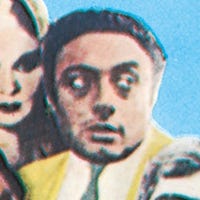
Lenny Bruce was an American comedian and satirist famous for his aggressive confrontations with the forces of censorship. Bruce died from a morphine overdose at his home at the age of 40, the last of the Sgt. Pepper’s assembly to pass before the album’s release. Music producer Phil Spector, who would produce the Let It Be album, purchased the negatives of the crime scene photos and destroyed them to protect Bruce’s legacy. Thirty-seven years later, New York Governor George Pataki granted Bruce a pardon on his obscenity charges in the state.
Sonny Liston (1930–1970)
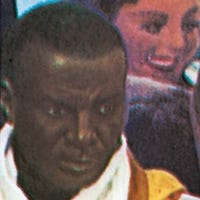
Sonny Liston was a world heavyweight boxing champion, considered unbeatable until his defeats at the hands of Muhammad Ali. Liston died in his Las Vegas home while his wife Geraldine was on vacation. Due to the state of decomposition, it was never conclusively determined whether his death was caused by heart failure or an overdose of heroin, to which he had become addicted as a result of the chronic pain he suffered from years of boxing.
Wallace Berman (1926–1976)

Wallace Berman was an experimental film maker and visual artist who heavily influenced the California arts scene of the 1950s and the indie movie movement of the 1960s. He was killed by a drunk driver on his 50th birthday.
Issy Bonn (1903–1977)
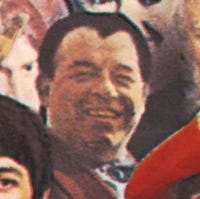
Issy Bonn was a British comic actor and singer. According to set artist Jann Howarth, Bonn was recommended by Ringo, who has claimed no recollection of participating in the selection process. I can find no records regarding Bonn’s manner of death.
Richard Lindner (1901–1978)
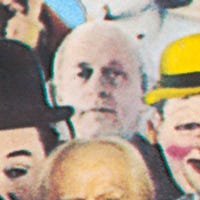
Richard Lindner was a German-American visual artist whose bright, bold, zaftig compositions had a profound influence on the look of Yellow Submarine. Lindner died of a heart attack in his New York apartment at the age of 77.
Mae West (1883–1980)
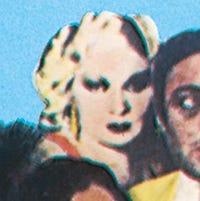
Mae West was an American stage and film actor and writer famous for her sexually suggestive humor whose one liners, like “Is that a gun in your pocket or are you just happy to see me,” survive in popular culture to this day. At first, she declined to appear on the album cover because “what would I be doing in a lonely hearts club?” West died from complications of a stroke and was entombed in her family’s mausoleum in Brooklyn, New York.
John Lennon (1940–1980)

I remember the morning when my brother told me John Lennon had been shot outside his and Yoko’s Dakota apartment in New York. I refused to believe him until I heard it confirmed on the radio. I was still in school then, and the first thing my English teacher said when she saw me was “I am so sorry.” Lennon was a revolutionary force in popular music and culture whose legacy is simply beyond measure.
H. C. Westermann (1922–1981)
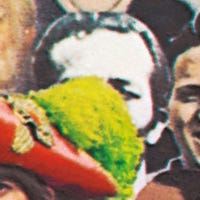
H. C. Westermann, whose face is largely obscured by a plume in George Harrison’s hat, was an American mixed-media artist who blended an arts-and-crafts aesthetic with a surrealist/expressionist style. He refused to provide interpretations of his work, remarking that “it puzzles me, too.” He died of complications from a heart attack in a hospital near his home in Brookfield Center, Connecticut.
Johnny Weissmuller (1904–1984)
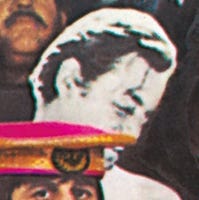
Johnny Weissmuller was a German-American swimmer who won multiple Olympic gold medals. He’s best remembered today for playing the role of Tarzan in Hollywood movies. Weissmuller died of lung congestion at his home in Acapulco after a decade of struggle with heart disease and strokes.
Diana Dors (1931–1984)
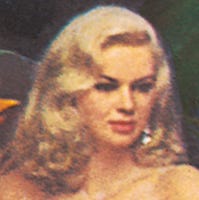
Diana Dors was a British actor, model, and singer in the “blonde bombshell” mold whose career stretched from the 1940s to the 1980s. She became notorious for hosting celebrity sex parties in her home. Dors died of ovarian cancer in a London hospital.
Fred Astaire (1899–1987)
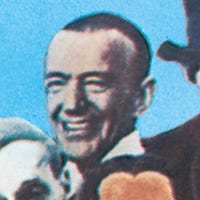
Fred Astaire was an American dancer and actor who had a notable professional partnership with Ginger Rogers. His eclectic and seemingly effortless dancing style made him one of the most iconic performers of the 20th century. Astaire died of pneumonia at the age of 88.
Bette Davis (1908–1989)
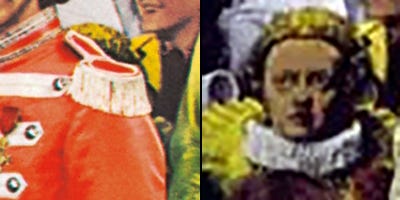
Bette Davis was an American stage and film actor known for her sharp wit and riveting presence. When Kim Carnes’ rendition of the song “Bette Davis Eyes” became a hit in the early 1980s, Davis said it was the first time her grandkids thought she was cool. Davis died of breast cancer while traveling in Europe. Her remains are entombed at Forest Lawn under the epitaph “She did it the hard way.”
Marlene Dietrich (1901–1992)
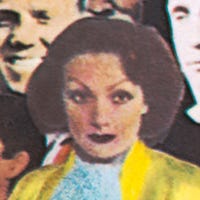
Marlene Dietrich was a German-American actor and singer who said her proudest accomplishment from her decades-long career was entertaining Allied troops during the Second World War. After breaking her leg on stage, she remained largely bedridden for the following 13 years of her life, eventually succumbing to kidney failure in her Paris apartment.
Timothy Carey (1929–1994)

Timothy Carey was an American character actor, both famous and infamous for his on- and off-screen antics, whose acting style and personal temperament fall somewhere between Nicholas Cage and Andy Kaufman. On the album cover, his face is entirely obscured by George Harrison, leaving only his shirt in view. Carey died of a stroke in Los Angeles.
Terry Southern (1924–1995)
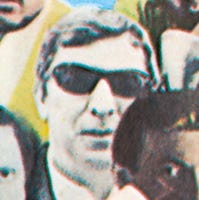
Terry Southern was an American writer who spent a lot of time in Europe. A pioneer of New Journalism in the 1960s, a self-consciously literary and subjective style which birthed gonzo journalism in the 1970s, he’s probably best known to Americans for co-writing the scripts for Dr Strangelove and Easy Rider. Southern died of respiratory failure after collapsing on his way to teach a class at Columbia University.
Marcello Mastroianni (1924–1996)
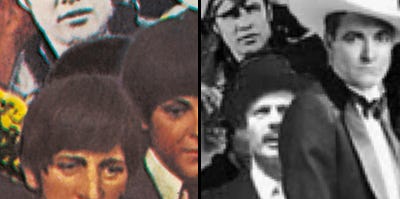
Marcello Mastroianni was the quintessential leading man of 20th century Italian cinema. He and Sophia Loren are in a single cutout taken from a photograph of the two standing side by side. Like Loren, Mastroianni is almost entirely hidden by the wax figures of the Fab Four, with only the crown of his hat visible behind Ringo and Paul. When he died of pancreatic cancer at age 72, Rome’s Trevi fountain was turned off and draped in black.
William S. Burroughs (1914–1997)
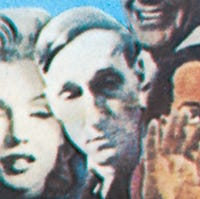
William S. Burroughs was an American writer associated with both the beat and postmodernist movements. An unapologetic drug user, Burroughs became an icon of American counterculture in the mid to late 20th century. Despite a decades-long heroin addiction, Burroughs lived to age 83 before dying of a heart attack in Lawrence, Kansas.
Huntz Hall (1920–1999)

Huntz Hall was an American actor who typically played tough guys and military roles. This image it taken from a promotional photo for one his Bowery Boys films. Although it’s hard to tell here, his character is wearing a whoopie cap, the sort of hat sported by Jughead in the Archie comics. Hall died of heart disease in Los Angeles at age 78.
George Harrison (1943–2001)
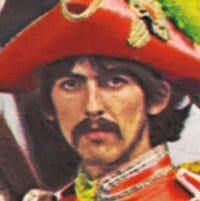
After the breakup of The Beatles, George Harrison went on to have a successful solo career including collaborations with the other former members of the band, especially Ringo, as well as hit records with the supergroup The Traveling Wilburys which included Bob Dylan. His Concert for Bangladesh, co-organized with Ravi Shankar, pioneered the modern benefit concert. The memorial Concert for George, following his death from cancer in 2001, is an amazing show featuring a rousing rendition of “Wah-Wah” and a performance of “Photograph” by Ringo that brings me to tears every time.
Albert Stubbins (1919–2002)
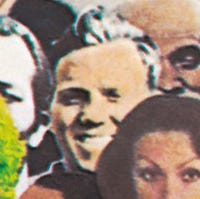
Reportedly, the band chose Liverpool footballer Albert Stubbins because they liked the name. Since Stubbins had no controlling contract for his likeness, he was unaware of his inclusion on the cover until a signed copy of the record arrived at his door. He died of natural causes at age 82.
Marlon Brando (1924–2004)

Marlon Brando was an American actor and later activist for Native American rights. This photo is from the 1953 film The Wild One. Brando died of respiratory failure at UCLA Medical Center after refusing to have oxygen tubes inserted into his lungs. His ashes were divided into three parts: one part interred with the cremains of his childhood friend and fellow actor Wally Cox (voice of Underdog), another scattered in Tahiti, and the third scattered in Death Valley.
Karlheinz Stockhausen (1928–2007)
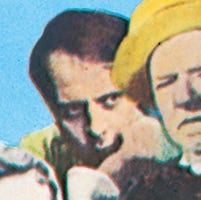
Karlheinz Stockhausen was a highly influential composer of electronic and experimental music who partially inspired Lennon’s musique-concrète piece “Revolution 9” and the never-released “Carnival of Lights.” He died of sudden heart failure at his home in Kürten, Germany.
Richard Merkin (1938–2009)

Richard Merkin was an American artist, teacher, and fashion hound who was friends with set designer Peter Blake, who sent him a photo of the album cover after the final shoot. Having no interest in The Beatles’ music, Merkin sold the photo for $200. He died of natural causes at his home in Westchester County, NY, at age 70.
Tony Curtis (1925–2010)
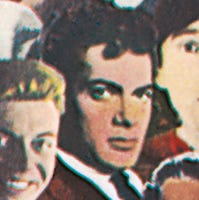
Tony Curtis was a highly popular American actor and father of actor Jamie Lee Curtis who very much resembles him. He died of cardiac arrest at his home in Henderson, NV, at the age of 85.
Shirley Temple (1928–2014)
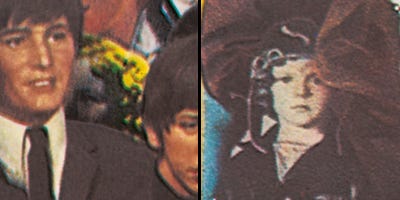
Shirley Temple Black was a child actress and American ambassador to Ghana and to Czechoslovakia. She appears twice on the album cover, in her roles as Heidi and as Shirley Blake in Bright Eyes. Her daughter Lori was bassist for the hard rock band Melvins. A smoker for all her adult life, although never in public, Temple died of chronic lung disease at her home in Woodside, CA, at age 85.
Bobby Breen (1925–2016)

Bobby Breen was a Canadian-American actor and singer. The photo used for the cutout was a publicity still for the movie Rainbow on the River, filmed when Breen was 10 years old. He died of natural causes in Pompano Beach, FL, three days after the passing of his wife of more than 50 years, Audrey Howard.
The Missing
A few of the figures on the outer jacket remain unidentified nearly six decades later.
Member of the Royal Antediluvian Order of Buffaloes

It’s speculated that this legionnaire may be John Lennon’s uncle Charlie. The photo of the cutout at right is somewhat distorted, as the figure is at an angle relative to the camera.
“Petty Girls”
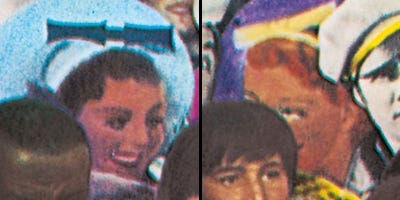
These two figures are taken from the illustration “Esky with Two Girls in Lavender,” appearing in Esquire magazine, by pinup artist George Petty whose “Petty Girls” were a favorite for “nose art” on Allied planes in the Second World War, including the iconic Memphis Belle. The models for the drawing are, as far as I know, unidentified.
“Vargas Girl”
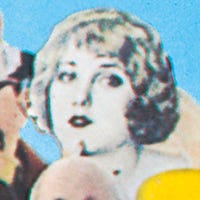
Another unidentified model appears on the cover, painted by pinup artist Alberto Vargas, who also painted model Candy Moore for the cover of The Cars’ album Candy-O.
Unknown
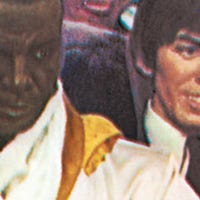
There are no surviving photos or records that reveal the identity of the dark cutout standing behind the figures of Sonny Liston and George Harrison. So your guess is as good as mine.
The Undead
Not all the Sgt. Pepper’s figures are capable of dying, as it turns out.
Babaji

Sri Mahavatar Babaji is a legendary immortal yogi who purportedly revealed the secrets of yoga to Lahiri Mahasaya.
Mannequins
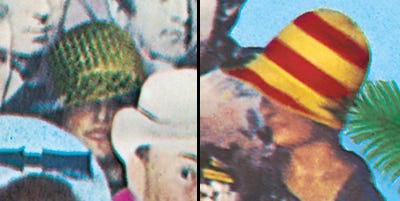
I have no idea why anyone thought the crowd was too thin and a pair of mannequins should be pressed into service. Maybe it was just an inside joke to keep people guessing.
It’s interesting to look at the categories of personages selected by the band and the artists who created the cover image. The dearth of musicians is somewhat surprising, although the high number of comedians is not, aside from the absence of any members of the Goon Show. The prevalence of experimental and transgressive artists, writers, and thinkers is notable, although there’s plenty of childhood nostalgia in evidence as well.
Actors (15)
- Fred Astaire
- Marlon Brando
- Timothy Carey
- Tony Curtis
- Bette Davis
- Marlene Dietrich
- Diana Dors
- Huntz Hall
- Sophia Loren
- Marcello Mastroianni
- Tom Mix
- Marilyn Monroe
- Tyrone Power
- Shirley Temple
- Mae West
Writers (11)
- William S. Burroughs
- Lewis Carroll
- Stephen Crane
- Aldous Huxley
- James Joyce
- Edgar Allan Poe
- George Bernard Shaw
- Terry Southern
- Dylan Thomas
- H. G. Wells
- Oscar Wilde
Artists & Designers (9)
- Aubrey Beardsley
- Larry Bell
- Wallace Berman
- Richard Lindner
- Richard Merkin
- George Petty (by proxy)
- Simon Rodia
- Alberto Vargas (by proxy)
- H. C. Westermann
Comedians (7)
- Issy Bonn
- Lenny Bruce
- W. C. Fields
- Tommy Handley
- Laurel & Hardy
- Max Miller
Spiritualists & Philosophers (6)
- Babaji
- Aleister Crowley
- Yukteswar Giri
- Carl Jung
- Lahiri Mahasaya
- Paramahansa Yogananda
Musicians (5)
- Bobby Breen
- Dion
- Bob Dylan
- Karlheinz Stockhausen
- Stu Sutcliffe
Politicians & Activists (4)
- T. E. Lawrence
- David Livingstone
- Karl Marx
- Robert Peel
Athletes (3)
- Sonny Liston
- Albert Stubbins
- Johnny Weissmuller
Scientists (1)
- Albert Einstein
Other (1)
- Anonymous Legionnaire
Bonus Trivia: The Purged
Not everyone originally planned for inclusion on the cover wound up on the final version. Here are the known rejected choices, in order of their demise.
Jesus of Nazareth (early 1st century CE)
Jesus was an early choice, but after considering the kerfuffle raised by Lennon’s “more popular than Jesus” comments a year previous, the figure was struck from the list and a cutout was never produced.
Adolph Hitler (1889–1945)
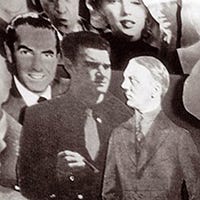
John wanted to include Hitler just to be provocative, but fortunately everyone thought better of the idea before the setup was complete and the führer got the heave-ho.
Mahatma Gandhi (1869–1948)
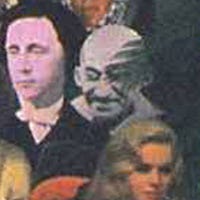
Ghandi was part of the setup all the way through early photography, but was removed out of concerns that his inclusion might be deemed disrespectful and trigger a ban of the album in India.
Leo Gorcey (1917–1969)

Actor Leo Gorcey was cut at the last minute because he demanded a fee for appearing on the album cover.
Sal Mineo? (1939–1976)

This omitted figure has never been positively identified, but my bet is on actor Sal Mineo.
Elvis Presley (1935–1977)
Elvis was another early choice that got scrubbed before a cutout could be produced, because the band had so much respect for his place in rock music history that they decided it would be presumptuous of them to include him.
Jane Cain? (1909–1996) / Peter Blake? (b. 1932)
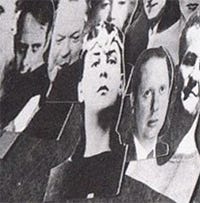
I can’t be sure in either case, but I think the center figure in this set of cutouts is actress Jane Cain, also the voice of London’s dial-up time service from 1936 to 1963, and the figure to her left is the project’s primary set artist Peter Blake.
Etcetera
A handwritten list given by Beatles’ personal assistant Neil Aspinall to bookstore owner Barry Miles (who, coincidentally, introduced Paul McCartney to hash brownies) in search of usable photographs includes, among some of the figures appearing above, the names Marquis de Sade, Nietzsche, Lord Buckley, Alfred Jarry, Magritte, Richard Crompton, and Dick Barton.
Huge thanks to Chris Shaw of I Am the EggPod for his diligent work sourcing photos and cutouts used for the shoot. All images appearing here fall under fair use in the USA.
Similar articles by Paul Thomas Zenki
[embed]All the “Charlie Brown Christmas” Dancers — ID’ed Their names and their backstoriesmedium.com
[embed]The Beatles Canon, Ranked None of these albums are bad, some are timelessrocknheavy.net
[embed]Every Springsteen Album, Ranked: 0-5 Cadillacs A man, his music, and his carsmedium.com
메타데이터
- post_id
- 478e455b90cd
- slug
- the-sgt-peppers-cover-6-are-still-alive-not-5-478e455b90cd
- url
- https://medium.com/thinkpiece-magazine/the-sgt-peppers-cover-6-are-still-alive-not-5-478e455b90cd
- canonical_url
- https://medium.com/thinkpiece-magazine/the-sgt-peppers-cover-6-are-still-alive-not-5-478e455b90cd
- author_url
- https://medium.com/@ptzenki
- status
- ok
- fetched_at
- 2026-06-21 12:17:11








#/media/File:MemphisBelle_crew_USAF.jpg)