Gould’s Bach and the Gould Effect
“Glenn Gould didn’t just play Bach. He changed the way we imagine listening to Bach — so profoundly that even resistance can’t erase his…
Gould’s Bach and the Gould Effect
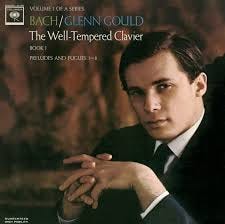
“Glenn Gould didn’t just play Bach. He changed the way we imagine listening to Bach — so profoundly that even resistance can’t erase his influence.”
Discovering Gould
It was in my teens, sometime in the early 1970s, that I first came upon the recordings of Glenn Gould, the legendary Canadian pianist and interpreter of Bach. I remember driving with my father and reading a magazine article (I think it might have been in Saturday Review) about his recordings of Bach’s Well-Tempered Clavier (WTC), and not long afterward purchasing the first album in the series on Columbia. I was studying the WTC with some seriousness for the first time, working my way through these preludes and fugues and beginning a relationship with this music that would occupy me, in one way or another, for a lifetime.
Gould was a big deal in classical music at a moment when classical music itself seemed to be losing its sheen. The era of marquee classical musicians was fading, if not already over, and Gould’s appearance as a kind of wunderkind on the scene — playing Bach, no less — felt genuinely different. This was around the time the early music movement was just beginning to gain ground, and Bach’s keyboard works were still largely regarded as the province of specialists rather than material for broad public consumption.
A Mechanical Clarity
Gould’s breakthrough came with Columbia’s release of his recording of Bach’s Goldberg Variations in 1956, a sensation both commercially and artistically. My own introduction to him, however, was through his recordings of the WTC. What struck me immediately was the rapid-fire precision of his execution, unlike any pianistic technique I had encountered. The playing was metronomic in its exactitude, the articulation dry and unsentimental, perhaps faintly reminiscent of Horowitz’s Scarlatti recordings in their naked clarity. There were no blurred pedal passages, no Romantic wash of sound, no excess of dynamic shading. It was Bach served up plain and, at least on the surface, unadorned.
“Gould gave us a way — a way — of hearing Bach at the keyboard.”
What distinguished Gould further were his tempi combined with an almost uncanny evenness of tone. There was something beautifully mechanical about it. It is in the fugues of the WTC, in the articulation of independent voices in counterpoint, that Gould still seems to me to have few rivals. Each line is exposed, voiced, and propelled forward with a clarity that remains unmistakably his.
Enough has been said about Gould’s eccentricities: the humming and singing, the conducting gestures, the extreme tempi of works such as Beethoven’s Appassionata, his contempt for the concert hall, the Bernstein debacle, the low posture at the keyboard, the chair he carried with him, the drug use, the winter wardrobe. What matters more, at least here, is what he left behind. Gould exerted a deep and lasting influence on nearly every major interpreter of Bach at the piano in the generations that followed.
The Allemande and Dance Movements
Today, each new crop of pianists appears to cut its teeth on the Goldberg Variations as a kind of rite of passage, an Everest of the keyboard repertoire. Once largely the domain of baroque specialists, Bach’s Well-Tempered Clavier has generated entire catalogues of recordings and has found its way into recital programs devoted to the complete set of forty-eight preludes and fugues. Bach composed the first book of the WTC in 1722 “for the profit and use of musical youth desirous of learning, and especially for the pastime of those already skilled in this study.” Like much of Bach’s Clavier-Übung, these works were instructional in nature and intended for private or intimate settings, not for the concert hall, which in Bach’s time did not exist in anything like its modern form. Gould, to some degree, altered that trajectory, raising the profile of Bach’s keyboard works and helping to turn them into vehicles for public performance, comparison, and personal statement.
What troubles me now is not Gould himself so much as the afterimage he leaves behind. It is one thing to admire a singular musical intelligence; it is another to inherit, often without noticing, a set of assumptions about how Bach ought to sound. Gould’s legacy is not merely interpretive but imaginative. He did not simply play Bach; he altered the expectations of listeners and pianists alike. What has gone largely unremarked is not that Gould influenced Bach performance, but that he influenced how influence itself is no longer perceived.
The Gould Effect in Practice
If there is a problem with Gould, it lies in the long shadow he casts — on pianists, on audiences, and on the collective ear through which Bach’s keyboard works now pass. Almost any pianist who takes on the Goldberg Variations or the Well-Tempered Clavier after Gould must contend, knowingly or not, with what might be called the Gould Effect. This applies to listeners as well. We hear Bach through a filter that Gould helped to install, one that privileges clarity, velocity, and a kind of crystalline objectivity that has come to feel not merely persuasive but, for many, expected.
This matters because Bach provides remarkably few dynamic or tempo markings, and the performance traditions that followed him drifted, for a long time, into something of a stylistic fog. Historically informed performance practice has since recovered much — particularly with respect to ornamentation and dance rhythms — yet Gould’s Bach seems largely unconcerned with these questions. He approaches Bach as though the music were a neutral grid upon which an intensely personal vision might be imposed. Many pianists who followed him appear, at least to my ears, impressed by his mannerisms: the dry staccato touch, the relentless evenness of tone, the extreme tempi that may or may not correspond to any baroque sensibility, if such a thing can be cleanly defined.
This is most evident in Bach’s dance movements. Gould’s handling of the Allemande from the Partita №1 in B-flat major, BWV 825, for example, is taken at nothing less than a presto tempo. Whatever latitude one allows in baroque performance, the allemande is, at its core, a courtly dance — measured, stately, inward. In Gould’s hands it becomes breathless, its rhythmic dignity and bodily character largely effaced. The music dazzles, but it no longer seems to dance.
The Gould Effect is not confined to listeners alone; it reaches into the practice room as well. After becoming acquainted with Gould’s recordings of the Goldberg Variations, my own study of the work began to suffer a kind of intimidation. I find that I cannot practice the fifth variation without hearing, involuntarily, Gould’s impossible tempo, and with it a feeling of inadequacy — as though that velocity were not one interpretive choice among others but the standard against which all others must be measured. Something similar occurs with the Well-Tempered Clavier. The musical memory of Gould’s performances of the D major prelude from Book I and the D-flat major prelude from Book II has proved nearly impossible to erase. They intrude upon my own attempts at the keyboard, shaping my sense of what feels correct, inevitable, even necessary, often before any conscious decision about tempo, articulation, or character has been made.
“In this way, Gould’s Bach ceases to feel like an interpretation at all and begins to function instead as an internalized limit on one’s own musical imagination.”
The difficulty is not that Gould takes liberties — many great musicians do — but that these liberties have come to stand in for Bach himself. We walk away not simply hearing a Bach, but believing we have heard Bach. This is the quieter power of the Gould Effect: it settles into our listening habits and expectations, even — perhaps especially — among those who resist Gould most vocally.
Gould as Non-Conformist
Gould’s self-fashioning as a non-conformist extended well beyond the keyboard. His 1962 programming for the CBC, painful as it can be to watch, is revealing in this regard. Gould appears visibly at war with his own thoughts, his body unable to settle as he strains to articulate the grandeur of Bach’s music. What emerges is less illumination than a series of abstractions: Bach as “one of music’s greatest non-conformists,” a figure who “stands outside the creative process,” the “supreme architect of sound.” These pronouncements tell us little about Bach and a good deal about Gould’s need to locate a historical mirror for his own stance of radical independence.
Seen this way, Gould’s Bach becomes part of a larger project of self-definition. His rejection of the concert hall, his disdain for tradition, his extremes of tempo and articulation, and even his awkward public theorizing all seem to point in the same direction: a refusal of inheritance in favor of singularity. The irony, of course, is that this refusal would itself become an inheritance, absorbed and reproduced by generations of pianists and listeners who followed.
Gould was, in many respects, an archetypal Romantic. He took liberties with the music of the past for their own sake, disregarding formal constraints in favor of expressive will. He was a rebel at a time when classical music was undergoing significant changes in popularity and institutional authority, and he distinguished himself by abandoning the concert hall altogether. There is also something unmistakably queer about Gould, as though he were queering the musical past itself — an approach that can feel liberating or exhausting, depending on one’s tolerance for disruption.
Gould had a penchant for the absurd, evident in writings such as his High Fidelity article “Glenn Gould Interviews Glenn Gould about Glenn Gould,” a piece that tries the patience even of sympathetic readers. His experiments in print, radio, and television are similarly trying, as are some of his pronouncements — his admiration for Petula Clark as “possessed of an enthusiasm which transcends the generations,” or his claim that Richard Strauss was “the greatest musical figure who has lived in this century.”
Reflections
Are we better for the Gould Effect — as musicians, as listeners, as inheritors of Bach? I am not sure that the question admits of a clear answer, or even that the Gould Effect exists anywhere outside my own listening history. What seems undeniable is that Gould exerted a lasting influence on how Bach is delivered and received. The final irony, at least to my mind, is that Gould continues to inhabit the musical subconscious, shaping not only how we listen to Bach, but how we imagine that listening ought to sound, even when we believe we are listening against him.
메타데이터
- post_id
- 47985b0bfae3
- slug
- goulds-bach-and-the-gould-effect-47985b0bfae3
- url
- https://medium.com/@gracedeoliveira18/goulds-bach-and-the-gould-effect-47985b0bfae3
- canonical_url
- https://medium.com/@gracedeoliveira18/goulds-bach-and-the-gould-effect-47985b0bfae3
- author_url
- https://medium.com/@gracedeoliveira18
- status
- ok
- fetched_at
- 2026-07-28 15:34:20