The Storm Shelter Effect: Why Heavy Rain Always Triggers a Pest Invasion
There is something undeniably comforting about a heavy afternoon downpour. We stay inside, listen to the rain drumming against the roof…
The Storm Shelter Effect: Why Heavy Rain Always Triggers a Pest Invasion
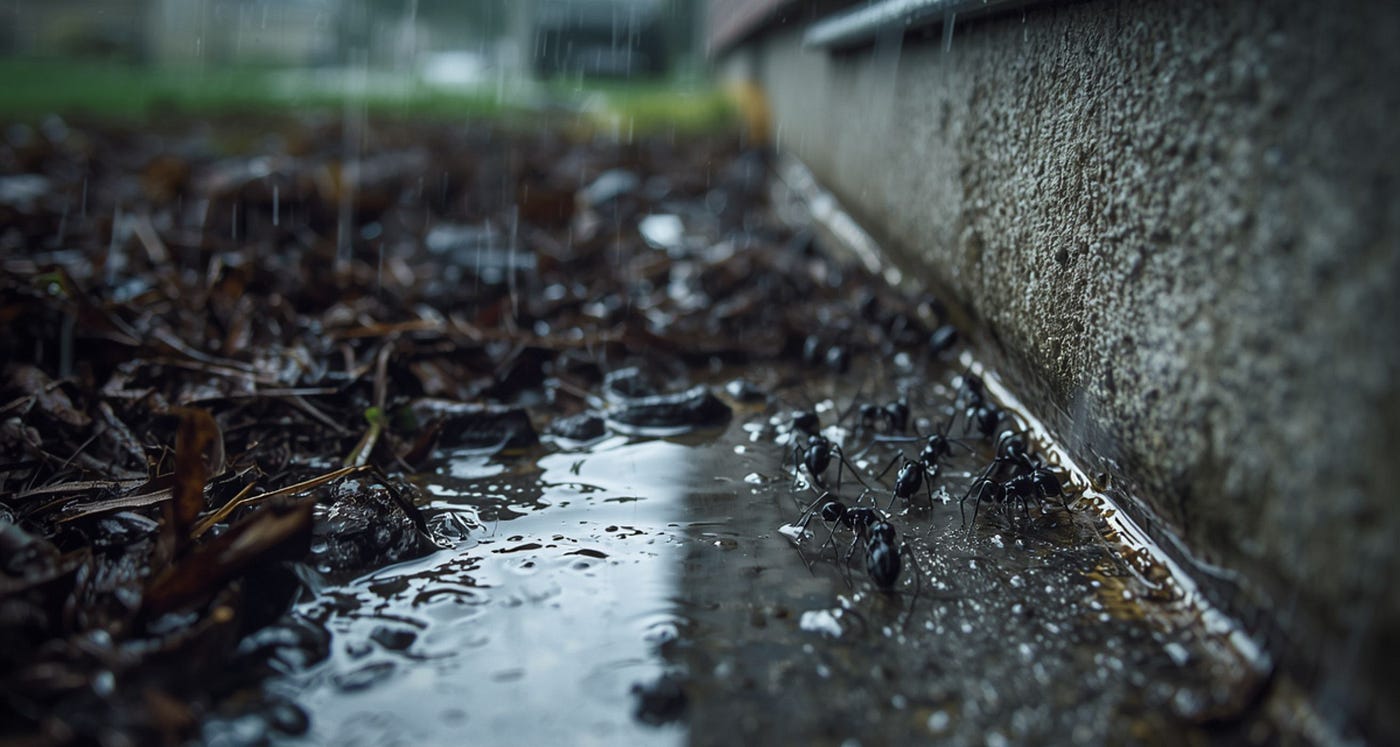
There is something undeniably comforting about a heavy afternoon downpour. We stay inside, listen to the rain drumming against the roof, and enjoy a quiet moment of isolation. The world outside turns into a blur of grey and green, and for a few hours, we feel untouchable behind our double-paned glass and sturdy brick.
But while we are relaxing safely indoors, the natural world just outside our walls is going into absolute survival mode.
Many homeowners notice a sudden, frustrating spike in pest activity right after a major storm or a week of consistent rain. A kitchen that was perfectly clean on Monday is suddenly trailing with ants on Wednesday. A garage that was empty is now hosting a family of field mice. It often feels like a stroke of bad luck or a lapse in hygiene, but it is actually a highly predictable biological pattern. Weather dictates pest movement far more than crumbs or dirty dishes ever will.
This is the Storm Shelter Effect. Your home, in the eyes of the local ecosystem, is not just a residence; it is the most premium, high-elevation, climate-controlled bunker in the neighborhood.
The Great Evacuation: Why Pests Run for Cover
To understand why this happens, you have to look at your property from the ground down. We often view our yards as flat surfaces, but for the creatures living beneath them, the yard is a complex network of tunnels, chambers, and highways.
When torrential rain hits, the soil rapidly saturates. For subterranean insects — like certain ant species — and burrowing pests — like rodents and moles — this isn’t just “inclement weather.” It is a catastrophic flood event on a biblical scale.
1. The Subterranean Drowning
Imagine living in a basement apartment when a water main breaks. That is the reality for an ant colony when a summer thunderstorm drops two inches of rain in an hour. Their intricate tunnels, designed for airflow and temperature regulation, become conduits for rushing water. To save the queen and the larvae, the colony must evacuate immediately.
In a desperate search for higher, drier ground, they move upward. Suddenly, the microscopic gap under your patio door, the worn weatherstripping on your garage, or the tiny crack in your foundation isn’t just an accidental entry point. To a colony fleeing a flood, your home is the ultimate high ground.
2. The Rodent Relocation
Mice and rats are highly sensitive to barometric pressure changes. They often know a storm is coming before the first drop falls. Because they are mammals with high caloric needs, they can’t afford to get soaked; hypothermia is a real threat to a small rodent.
When their outdoor burrows fill with water, they seek out architectural “high points.” This often leads them into crawl spaces, attics, and wall voids. Once they realize your home offers not just dryness, but also the scent of a pantry, a temporary storm shelter quickly becomes a permanent residence.
The Aftermath: Creating a Post-Storm Breeding Ground
The threat doesn’t end when the clouds clear and the sun peeks through. In fact, the aftermath of wet weather brings an entirely different set of biological challenges. As the humidity levels spike and the air turns thick and heavy, the standing water left behind becomes a massive liability.
The Mosquito Factory
Mosquitoes are perhaps the most opportunistic survivors in the insect kingdom. They do not require a large pond or a lake to breed; they only need a few ounces of stagnant water left undisturbed for a couple of days.
Consider the “micro-habitats” created by a storm:
- The folds of a heavy grill cover.
- A child’s forgotten plastic shovel in the sandbox.
- The bottom of a corrugated downspout extension.
- An upturned leaf in a pile of debris.
Within 48 to 72 hours of a rain event, these tiny pools can host hundreds of larvae. By the time the weekend rolls around, your backyard — which should be a place for a BBQ — becomes an active combat zone.
The Rise of the Decomposers
Heavy rain also accelerates the decay of organic matter. Damp mulch, rotting leaves, and water-logged wood become a buffet for “occasional invaders” like silverfish, centipedes, and earwigs. These pests thrive in high-humidity environments. When the exterior of your home stays damp for too long, these moisture-loving insects migrate toward the dampest parts of your structure — usually bathrooms, basements, and laundry rooms.
The Hidden Danger: Water as a Structural Beacon
Beyond the immediate “flush” of pests into your living space, heavy rain acts as a beacon for more destructive guests: Termites and Carpenter Ants.
These pests aren’t just looking for a dry spot; they are looking for soft, compromised wood. When rain gutters fail or grading issues allow water to pool against your foundation, the wood framing of your home begins to absorb moisture. This “wicking” effect softens the wood and releases a scent that wood-destroying organisms can detect from a distance.
A storm doesn’t just bring the rain; it tests the integrity of your home’s envelope. Every leak is an invitation.
The 15-Minute Post-Storm Audit
The smartest homeowners don’t wait for the first “scout” ant to appear on the kitchen island. Instead, they use the weather as an operational trigger. Once the rain stops and the yard is safe to walk, spending just 15 minutes doing a Post-Storm Audit can save you months of professional pest control costs.
1. The Tip-and-Toss Patrol
Walk your property with a critical eye. Dump out plant saucers, buckets, wheelbarrows, and decorative garden items. If you have a birdbath, refresh the water or ensure it has a bubbler to prevent stagnation.
2. The Gutter and Downspout Check
Ensure your downspouts are actively directing water at least 3 to 5 feet away from the foundation. Clogged gutters are the #1 cause of pest-related moisture issues. If water is spilling over the side of the gutter, it is soaking into your fascia boards — an absolute magnet for carpenter ants.
3. The Door Sweep Litmus Test
Check the rubber seals at the bottom of your exterior doors. A simple rule of thumb: If you can slide a piece of paper (or see light) under the door, an insect can easily walk through it. The pressure of a storm pushes pests right up against these thresholds; if the seal is weak, they are coming in.
4. Interior Leak Detection
Check the ceilings and the walls near windows for any fresh water stains. Even a tiny “trickle” leak inside a wall cavity provides enough hydration to support a massive pest colony for weeks without them ever needing to leave the walls for water.
5. Audit Perimeter Structures
Open the doors to your detached garage or garden shed. These are often the first places rodents go because they are quieter than the main house. Look for “rub marks” (dark oily stains) along baseboards or the tell-tale signs of shredded insulation.
Proactive Defense: Securing the Perimeter
If you find yourself constantly battling the “Storm Shelter Effect,” it may be time to look at long-term exclusion strategies.
Foundation Cracks
- The Fix: Seal with silicone-based caulk.
- Why it works: This blocks the primary “highway” into your structure for ants, spiders, and silverfish.
Mulch Beds
- The Fix: Keep mulch pulled back at least 6 inches from the foundation.
- Why it works: Deep mulch holds moisture like a sponge; keeping a dry gap prevents a “moisture bridge” that pests use to climb your walls.
Vents and Openings
- The Fix: Install 1/4-inch hardware cloth (metal mesh).
- Why it works: It maintains necessary airflow for your home while physically stopping rodents and large insects from squeezing inside.
Landscaping and Trees
- The Fix: Trim branches so they are at least 2 feet away from the roofline.
- Why it works: This eliminates the “aerial bridge” that squirrels, roof rats, and carpenter ants use to bypass your ground-level defenses.
Conclusion: Nature is Predictable
It is easy to feel like pests have a personal vendetta against your home after a storm. In reality, they are simply following the same survival instincts that have kept their species alive for millions of years: Get high, get dry, and find food.
By understanding that weather is the primary driver of pest behavior, you can stop being reactive and start being proactive. You don’t need heavy chemicals or expensive monthly contracts to keep your home pest-free; you often just need a ladder, a tube of caulk, and a willingness to walk your perimeter after the clouds break.
Your home is your sanctuary. With a little bit of foresight, you can make sure it stays your sanctuary — and not the neighborhood’s favorite storm shelter.
For more expert advice, resources, and comprehensive guides on protecting your property from local climate challenges, visit the Boca Raton Pest Control homepage.
Have you noticed a sudden influx of uninvited guests after our latest heavy rains? What is your biggest post-storm challenge? Let me know in the comments below — I’d love to hear your “battle stories” and help you troubleshoot the entry points.
메타데이터
- post_id
- 47bfcc5cd1c3
- slug
- the-storm-shelter-effect-why-heavy-rain-always-triggers-a-pest-invasion-47bfcc5cd1c3
- url
- https://medium.com/@bocaratonpestscontrol/the-storm-shelter-effect-why-heavy-rain-always-triggers-a-pest-invasion-47bfcc5cd1c3
- canonical_url
- https://medium.com/@bocaratonpestscontrol/the-storm-shelter-effect-why-heavy-rain-always-triggers-a-pest-invasion-47bfcc5cd1c3
- author_url
- https://medium.com/@bocaratonpestscontrol
- status
- ok
- fetched_at
- 2026-06-09 15:37:30



