Why a 60kg Barbell Set Might Be the Only Home Gym Equipment You Actually Need
The maths on gym memberships vs. a one-time barbell investment is quietly devastating — and the results speak for themselves
Why a 60kg Barbell Set Might Be the Only Home Gym Equipment You Actually Need
The maths on gym memberships vs. a one-time barbell investment is quietly devastating — and the results speak for themselves
A simple barbell setup is all most people need to build serious, lasting strength at home.
Let’s have an honest conversation about gym memberships.
You signed up in January. You went four times in the first fortnight. Then work got busy, the commute started feeling like a tax on your evenings, and somehow — without quite deciding to — you stopped going. But the direct debit? That one’s committed. That one shows up every month without fail, quietly moving money from your account to a building you haven’t set foot in since February.
Sound familiar? You’re in very good company.
The home gym revolution didn’t happen because people suddenly got lazier. It happened because people got smarter about friction. When the barrier between you and a workout is “walk to the spare room” rather than “drive across town, find parking, negotiate the locker situation,” the dropout rate plummets.
And at the centre of a genuinely effective home gym is something remarkably simple: a barbell and some plates.
The Case for Going Heavy at Home
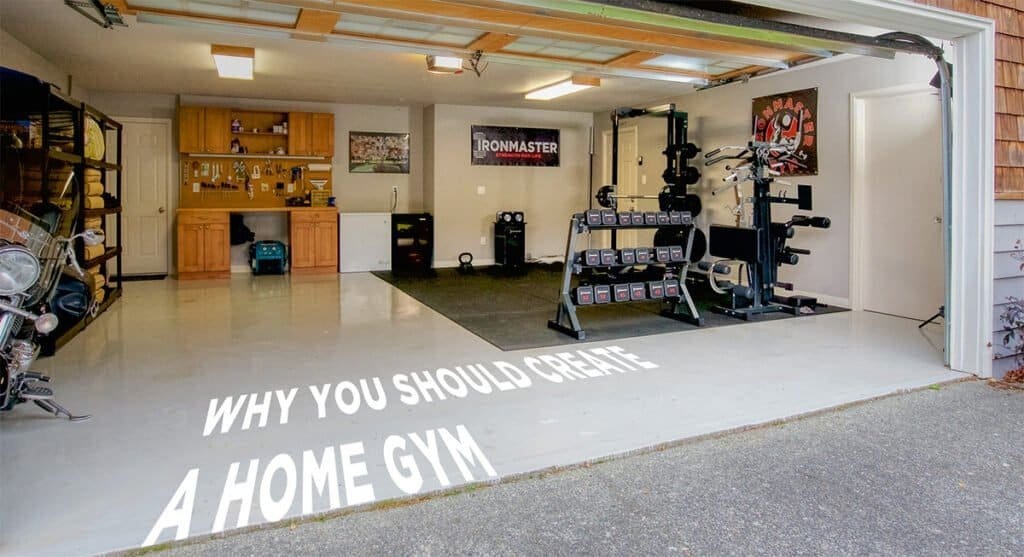
A modest garage space is more than enough for a fully functional barbell setup.
Here’s the thing most fitness content glosses over: the majority of meaningful strength development happens well within a 60kg total load. You don’t need a commercial gym’s worth of iron to build real, functional strength. What you need is consistency, progressive overload, and equipment that won’t let you down in the middle of a deadlift.
Progressive overload — the practice of incrementally increasing the challenge to your muscles over time — is the non-negotiable foundation of getting stronger. Research published in the Journal of Strength and Conditioning Research consistently shows that systematic, incremental load increases outperform any other training variable when it comes to long-term strength gains. It’s also exactly what a well-chosen barbell set enables. Small jumps in weight, reliable equipment, the same four compound movements done consistently: that’s the whole programme.
Barbells do this better than almost any other piece of home equipment because they allow you to fine-tune loads in small increments. A 1.25kg jump on each side of the bar is only 2.5kg total — enough to create a genuine training stimulus without asking your nervous system to have an emergency.
But Which Setup Is Right for You?

Adjustable dumbbells compress a full weight range into a compact footprint — ideal for flats and smaller spaces.
This is where things get more interesting — and where the choice between adjustable dumbbells, fixed dumbbell sets, and full barbell rigs actually matters.
The answer depends on three things you already know about yourself: your available space, your current training experience, and how serious you’re planning to get.
If you’re working in a flat or a small spare room, adjustable dumbbells are the obvious answer. They compress a full range of training weights into a footprint smaller than a gym bag, and modern designs switch between loads quickly enough that you don’t lose momentum between sets.
If you’ve got a garage or dedicated space and you’re past the beginner stage, a 60kg barbell set opens up the compound movements — squats, deadlifts, rows, presses — that simply can’t be replicated with lighter dumbbell work. These are the exercises that build genuine full-body strength and the kind of physique that follows.
For a genuinely thorough breakdown of what’s available at this weight range — with real reviews of six different products across the spectrum from budget-friendly adjustables to Olympic-standard bars — this guide from Nabvio is excellent: Build Muscle at Home: 60kg Barbell Sets Guide & Reviews. It covers everything from beginner-appropriate entry points to serious intermediate kit, with practical comparison tables and honest assessments of what each product is actually good for.
The Equipment Hierarchy Nobody Tells Beginners
Most people make one of two mistakes when setting up a home gym. They either buy too little (a couple of resistance bands and a yoga mat that gets used twice), or they buy too much all at once, spending on specialised kit before they’ve built the foundation of skill to use it effectively.
The sensible path looks roughly like this:
Phase 1 — Adjustable dumbbells. Learn movement patterns. Build baseline conditioning. Master form on pressing, pulling, and squatting movements before the weight gets heavy enough to matter.
Phase 2 — Add a barbell. A 60kg set lets you start loading compound movements properly. This is the sweet spot for most intermediate lifters: enough weight to drive real progress, not so much that storage becomes a logistical nightmare.
Phase 3 — Specialise. Once you’ve been training consistently for a year and have a clear sense of your goals, then start adding the sport-specific kit. Powerlifting shoes, competition bars, specialised benches — these are earned additions, not starting points.
The 60kg barbell sits squarely in Phase 2, and for many people, it’s where they stay for years. Not because they’ve hit a ceiling, but because they’ve found the exact balance between equipment investment and training output that keeps them showing up.
The Big Four: What a Barbell Actually Lets You Do
The core compound movements — squat, deadlift, press, row — are the foundation of every effective barbell programme.
Four exercises. That’s genuinely all you need to build a complete, full-body strength programme with a barbell:
Squats — bar across the upper back, lower under control, drive back up through your heels. Engages everything south of your armpits: quads, glutes, hamstrings, core.
Deadlifts — hinge at the hips, maintain a neutral spine, lift using hip and knee extension. The posterior chain’s greatest hit.
Bench Press — flat on a bench, bar at chest level, press upward. Chest, shoulders, triceps.
Bent-Over Rows — hinge forward, pull the bar toward your abdomen. The pulling counterpart to the bench press, and the exercise most commonly neglected by people who later wonder why their shoulders hurt.
Two to three times a week, rotating through these with progressive loading: that’s a complete programme. Nothing fancy, no specialist kit, no gym required.
The Health Dividend Goes Beyond the Mirror
It’s worth stepping back from the aesthetics conversation for a moment, because the evidence for strength training as a long-term health intervention is substantial. The NHS physical activity guidelines for adults recommend muscle-strengthening activity on at least two days per week — not as a bonus for people who already train, but as a baseline recommendation for general health. Improved bone density, better metabolic function, reduced injury risk as you age: these are the unglamorous, genuinely important returns on consistent resistance training that tend to get buried under before-and-after photos.
A 60kg barbell set at home makes hitting that two-day minimum almost frictionless. When the equipment is already there, the decision to train becomes much smaller.
The Financial Case Is Compelling Too
Consistent, progressive training over months and years compounds into substantial results — the financial case for home equipment tells a similar story.
A decent 60kg barbell setup costs somewhere between £150 and £400 depending on quality and brand. Amortised over ten to twenty years of regular use, that’s pennies per session. Compare that to a gym membership charging £30–£60 per month, and the break-even point arrives within a year — often sooner.
More importantly, the equipment is there at 6am when the gym isn’t open yet, there at 9pm when you finally get a moment, and there on bank holidays when the building is locked. Availability is an underrated feature. The workout you do at home at an inconvenient hour beats the workout you were planning to do at the gym next week.
One Final Thought
Strength training is a years-long game. The results that actually change how you look and move and feel in daily life take months of consistent effort, not the three dramatic weeks fitness advertising prefers to imply. But the compounding effect of regular training — slightly more strength each month, slightly better movement quality, slightly better body composition — adds up to something genuinely significant over time.
A 60kg barbell set is a reasonable, affordable, space-conscious way to start that process and sustain it indefinitely. It’s not glamorous. It doesn’t promise miracles. It just works, reliably, for as long as you’re willing to use it.
That’s about the highest compliment you can pay fitness equipment.
If you’re in the market for a 60kg barbell setup and want a detailed, no-nonsense breakdown of the best options currently available in the UK, start here: nabvio.co.uk/build-muscle-at-home-60kg-barbell
Tags: Fitness, Strength Training, Home Gym, Workout, Health
메타데이터
- post_id
- 47f7b130dfe3
- slug
- why-a-60kg-barbell-set-might-be-the-only-home-gym-equipment-you-actually-need-47f7b130dfe3
- url
- https://medium.com/@zainulexpert/why-a-60kg-barbell-set-might-be-the-only-home-gym-equipment-you-actually-need-47f7b130dfe3
- canonical_url
- https://medium.com/@zainulexpert/why-a-60kg-barbell-set-might-be-the-only-home-gym-equipment-you-actually-need-47f7b130dfe3
- author_url
- https://medium.com/@zainulexpert
- status
- ok
- fetched_at
- 2026-06-09 15:37:30



