For There To Be a Chronic MO, There Must Be a Chronic CONSO
John Dewey pointed out a while back that all education is experience, and all experience is education. He even enshrined it in a book.
For There To Be a Chronic MO, There Must Be a Chronic CONSO
Photo by Abdulai Sayni on Unsplash
John Dewey pointed out a while back that all education is experience, and all experience is education. He even enshrined it in a book.
However, stigma between education and experience continues to loom in the medical field.
In medicine and surgery, certain canalized paths exist that may be unfamiliar to those who were not invited to the 6-year minimum party of blood, sweat, and tears.
To an ailing individual, anyone who dangles a stethoscope around their neck is a doctor. Daktari. That title has often been bestowed without certification by any community that knows anyone to be donning a lab coat and working inside a hospital.
Blurred lines between what makes a doctor and a technician can lead to confusion in the public. A doctor is someone who diagnoses. You can spot a myocardial infarction (heart attack) from the symptoms the patient presents with, the EEG, and the cardiac enzymes. Accurate diagnosis guides the appropriate treatment. Serial tests can establish the progress of the patient’s recovery curve. Without proper diagnosis, the treatment cannot be customized. By extension, without a doctor, the treatment can be off.
A doctor is someone who has studied for over six years. Most degrees take three or four years. And even then, the content covered in medical school within a year is enough to account for several other four-year courses. Comparison based on the number of years is unwarranted, but the point I want to drive across concerns the title of a doctor.
By the time you earn that title, you have proven your grit. You can think. You can cram. You can imagine. You can narrow down on a disease using the detective tools at our disposal in the health industry. Granted, with more tools, you can conduct research on human beings. This is someone who can save a life, if the life hangs in the balance because of a disease.
The title of a doctor is given upon graduation. The intern, however they are called inside a hospital, is a doctor. In training, but a doctor nonetheless. They are not like any other intern. The technical jargon is Medical Officer Intern, or MOI. For the most part, they are the foot soldiers of the hospital, a necessary initiation to understand the microscopic organization of health care.
After a year, they graduate to become MOs. An MO, a medical officer, is a general practitioner. They have encountered some of the common diseases and have a good foundation for acceptable management plans for patients who present with these diseases. One renews their license annually as a certified doctor by the board.
Every year, they need to attain a minimum number of points through continuous learning, aptly called CPD points — continuous professional development. In medicine, you cease to become a helpful doctor if you stop learning.
Which brings me to the gist of my argument.
The Chronic MOs
There is a somewhat passive-aggressive wave that hits this category of doctors.
Who is a chronic MO? They are individuals who graduated with an MBChB or MBBS and didn’t further their studies despite practising for years. By further studies, I’m referring to a master's degree in whichever field of an individual’s choosing. It could be medicine, surgery, public health, health systems, business administration — there are quite a number.
Individual’s choosing — remember that.
It is an anathema to imagine yourself being called a chronic MO. After I completed my internship, I was once asked what specialty I would choose, and I struggled to answer. The conclusion at the end of the conversation was that I should not be a chronic MO. Any young doctor knows how that sounds. It’s a warning. A leprosy-esque label that those who are superior to you would never wish for you to get.
Doctors are supposed to be detailed individuals. But when you ask five doctors to give their ballpark figure for how many years it takes before an MO can be called a chronic MO, there is no consensus. The urge to get back to school and do a master's becomes real when you see your classmates enrolling. You then begin to ask if you’re moulting into a chronic MO.
Anu called it franchise thinking. She writes:
Memes spread because they’re catchy; franchise ideas spread because they’re also safe. While memes explain spread, franchise thinking explains people and persistence.
Anu is a founder, writer, and doctor. Maybe that’s why I like her work, since I, too, wear those hats. However, I am not dense as to follow someone’s creative work because we’re similar. It’s not a recipe for developing good ideas.
And that is what is happening in the medical field. The fear of being labelled a chronic MO drives many doctors to specialize. It’s a safe bet.
While still in medical school, most of my classmates, I later came to realize, feared failure with a passion. They would rather spend sleepless nights than risk failing. In anything. The label of a chronic MO is one example of failure, so most begin to specialize early.
I have read arguments about the need to purge the MO phase. I wonder why. In my view, as good as it may be, it’s myopic and tends to create a facade of progress. Specialization is not the holy grail. It might even discourage the creation of good ideas. As I have argued elsewhere, it may foster shame. It is just a safe bet. And as anyone who fears failure, safe bets are the preferred option.
What the evangelists preaching against this label don’t realise is that a chronic MO implies the existence of a chronic CONSO. The capitalization is mine, intentionally done to emphasize a difference that should not be avoided.
A consultant is a doctor who has done their graduate studies and has practised for at least two years after graduation.
In medical school, consultants were either feared, revered, or both. You could not and should not cross them. Once you have crossed the consultant’s threshold, nobody can touch you.
Logic, however, does not care who it finds along its way as it executes its ruthless truism. Thus, the premise of a chronic MO implies the existence of a chronic CONSO.
Why should one be labelled with malice and the other with reverence? The logical framework cracks this supposedly sacrosanct edifice.
At this point, let me remind you once more that doctors need to attend various educational events to collect their CPD points. A chronic MO is only a label. Working throughout the years as a doctor means you have been continuously learning.
So why phase out MO-ship? First-level thinking shows that it only serves to give the impression that there is progress. The idea goes: For the longest time, we have had MOs, and now, we need facilities that phase doctors from interns to graduate programmes. This stance forgets one important, undercutting feature of the Belmont Report of 1978, the Declaration of Helsinki, and the Hippocratic Oath — autonomy.
Individual choice, remember?
We cannot enforce an idea on someone who does not want it. At the time I was done with my internship, a senior colleague broke the numbers down for me. More than 80% of medical doctors are not practising. Reasons? I can never know.
The numbers may have changed, but 80% is a large number. A government that invests in bright minds only to have 80% of its top cream cash out is one that needs to be evaluated, a necessary self-audit. As for the remaining 20%, some of them have been given the unsavoury title of chronic MO, and yet, they continue to save lives.
The chronic CONSOs can be somewhere enjoying the fruits of their labour (graduating from their master's programme and enjoying more time and money), while an MO does the labour. This narrative is changing. Even consultants are beginning to feel the pinch of the hard economic times. It is no longer the safe bet it once was.
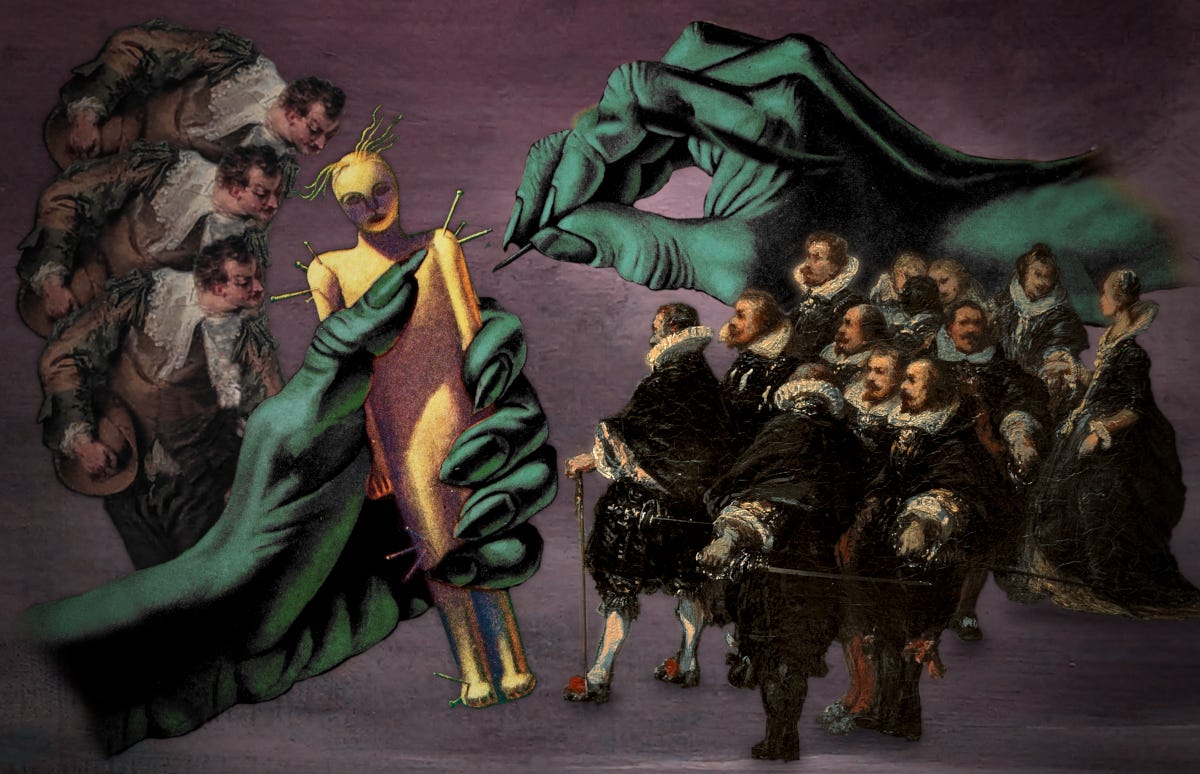
Most medical practitioners hardly think outside the cylinders they have been navigating throughout their lives. The narrative of being a chronic MO is an echo chamber. The only solution they can consider is hyperspecialization. Narrow the path inside that cylinder. Improve your safety net. But it begs the question — if the consultant pool is no longer safe, what about the hyperspecialized pool? Are we not simply extending our milking time on the same cow? It’s coming full circle now — doesn’t a chronic MO also imply the existence of a chronic CONSO?
Granted, some doctors love working as general practitioners. Others want to specialize and sub-specialize. Chasing it out of passion is a path I salute. Go, yeah, and save lives. Labelling other doctors' chronic MOs is what I don’t agree with. It’s franchise thinking that needs to stop. You can nudge someone to consider studying without calling them a chronic MO.
One can never tell the reasons one has stayed practicing as an MO for so long. I, for one, know how responsibilities can suck away what little breathing space one has. Yet, you’ll find someone lazily branding another this distasteful label. Other times, someone doesn’t want to go back to study. They are okay with the practices they perform as an MO.
I’m reminded of traditional birth attendants. All of them learn their skills on the job. They don’t have any formal certification, but they will deliver a breech baby or a shoulder dystocia with unparalleled grace without stepping into an obs/gyn class. In the same stride, a “chronic” MO will be good at reading a patient who needs urgent escalation of care from a CONSO who jumped straight to masters after internship.
Swept under the rug is the fact that the CONSOs can be heavily reliant on the experienced MOs. Some may not even want MOs to specialize, fearing a shrinking of the marketing pool. (You may have noticed that I have changed the descriptive “chronic” and replaced it with “experienced.”)
I don’t know if this is a problem only in Kenya, but I also learned (of course, as doctors, we have to continue learning) that out there (the Global North), the title of a doctor is considered the highest form of formal learning. It is at par with a PhD. Forgetting or not knowing this fact can cause one to dismiss that an MO is a title of merit.
May we never forget.
What’s more, specialization should not be the only opportunity pathway one should consider. In the past, professors were granted the title without the formal certification. Experience was education. I doubt it has changed.
We should not use certification, a process that can be hacked, to gauge one’s level of contribution. In medicine, you have to be a “chronic” doctor to be a good doctor. What we need to emphasize is good doctors, not titles.
J. Cole once shared his thoughts on titles,
Here comes lil’ ol’ Jermaine With every ounce of strength in his veins To snatch the crown from whoever y’all think has it But rather than place it on his head as soon as he grabs it Poof, boom, paow, it’s like magic With a flash and a bang, the crown disintegrates And falls to the Earth from which it came It’s done Ain’t gon’ be no more kings Be wary of any man that claims Because deep down he clings onto the need for power In reality he’s a coward Ultimately he’s scared to die And sometimes so am I
Consos held power over MOs. Justified, sometimes. Regardless, as J. Cole laments, there appears to be a deep need for power and the fear of losing it. An MO comfortable with their position is indifferent to this drive. It’s more of an evolution from the sensitivities to these pressures weighed by colleagues.
We should not force the idea that staying in that position is uncalled for, because even after specialization, there are CONSOs who stay in their positions without further education. And indeed, where should it end so that one doesn’t get that label of a chronic practitioner?
What I’m trying to say is…
The logic of calling a doctor a chronic MO, when stretched to its logical conclusion, implies the existence of a chronic CONSO. Better eliminate the idea.
Sometimes it can be used to challenge a young doctor to take on a specialty, but it does not mean that every doctor needs to build a career in medicine. Darwin could have finished his training as a doctor, but he boarded the HMS Beagle and changed the world.
A few examples of doctors who decided to take a different route: Thomas Sankara started a revolution; Stuart Kauffman led the shift in evolutionary biological frameworks from a gene-centered paradigm to self-organization; James Lovelock developed the Gaia hypothesis and developed ideas on detecting extraterrestrial lifeforms; Michael Crichton wrote Jurassic Park.
And others love their station as MOs.
Let people be.
[embed]This song inspired some of the lines used in this article. Source — YouTube
메타데이터
- post_id
- 4830f93584d2
- slug
- for-there-to-be-a-chronic-mo-there-must-be-a-chronic-conso-4830f93584d2
- url
- https://medium.com/@theonealternativeview/for-there-to-be-a-chronic-mo-there-must-be-a-chronic-conso-4830f93584d2
- canonical_url
- https://medium.com/@theonealternativeview/for-there-to-be-a-chronic-mo-there-must-be-a-chronic-conso-4830f93584d2
- author_url
- https://medium.com/@theonealternativeview
- status
- ok
- fetched_at
- 2026-06-13 07:35:29