Cellular Economics: An Economy That Renews Itself
Most debates about taxation start with the wrong questions.
Cellular Economics: An Economy That Renews Itself
Most debates about taxation start with the wrong questions.
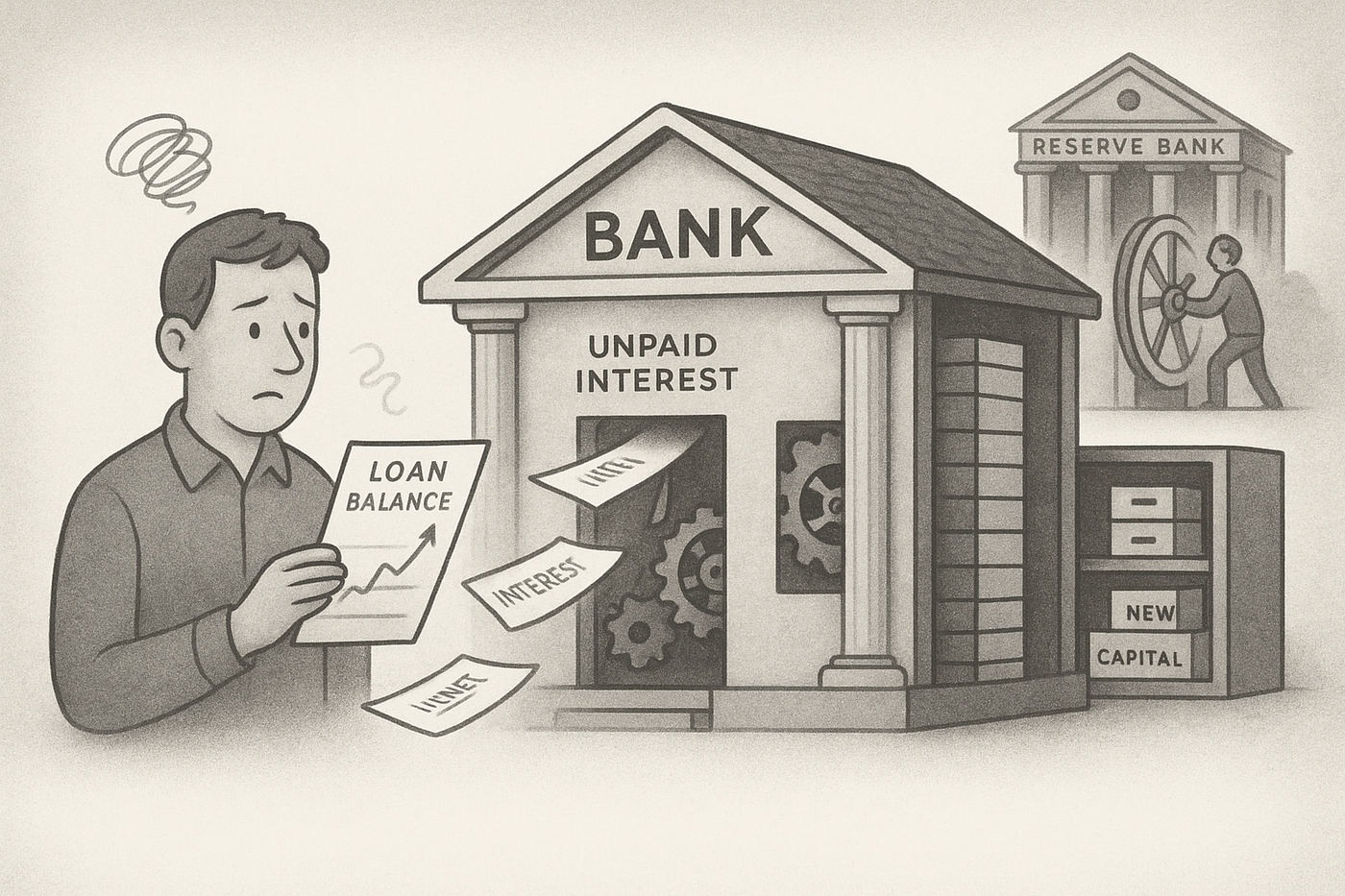
We argue about who should pay more tax, who should pay less, and whether governments are taxing too much or spending too much. Behind all these debates sits an assumption that almost everyone accepts without question. Most new money enters the economy as loans, and we later tax the profits from the loans and redistribute them to others who are unable to obtain loans.
Cellular Economics starts from a completely different place. Instead of asking how we should redistribute wealth after it has become concentrated, it asks how new wealth should be created in the first place.
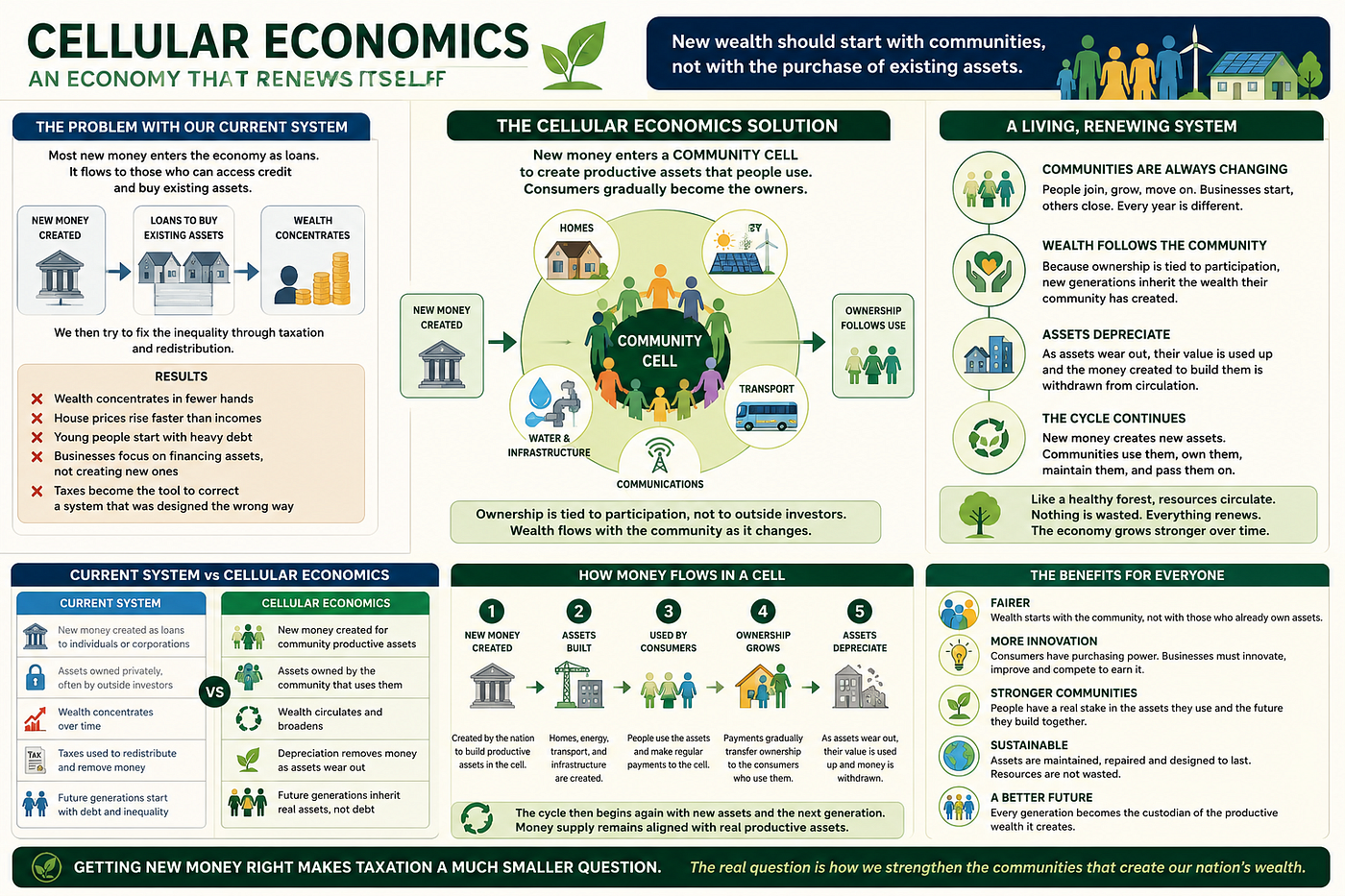
The answer is surprisingly simple. New money should enter the economy through communities of consumers who create and use productive assets, rather than purchasing existing assets that are increasingly concentrated in private hands. Once you make that one change, many of the problems we currently try to solve through taxation begin to solve themselves.
A Living Economy
The idea behind Cellular Economics is that an economy should behave more like a living ecosystem than a machine. In a healthy forest, nutrients never remain permanently in one tree. They circulate continuously. Old trees decay. Their nutrients feed new growth. The forest grows stronger because its resources are constantly renewed.
Money can work in exactly the same way. A Cellular Economics community receives newly created money to build productive assets, such as homes, energy systems, transport, communications, and other shared infrastructure. Consumers who use those assets gradually become their owners through their regular payments.
But communities are always changing. Young people become adults. Families move into the community. Older residents leave. New businesses begin while others close. Every year the community is different from the year before. Because ownership is tied to participation in the community rather than to permanent ownership by outside investors, wealth naturally follows the community’s changing fortunes. New generations are not forced to start again by borrowing ever larger sums simply because previous generations accumulated ownership.
At the same time, the assets gradually depreciate. As they wear out, the money originally created to build them is withdrawn from circulation. The money supply remains linked to real productive assets instead of growing independently of them.
The result is an economy that continually renews itself. Instead of relying primarily on taxation to redistribute wealth after it has become concentrated, Cellular Economics continually distributes newly created wealth to the people who create and use it. Ownership becomes dynamic rather than static. Communities continually inherit the productive wealth they collectively create.
That is the real purpose of an economic system. Not to maximise the wealth of those who already own assets, but to ensure that every generation has the opportunity to become the custodian of the productive wealth that its community creates.
If we get the creation of new money right, taxation becomes a much smaller question. The real question becomes much more fundamental. How do we ensure that every dollar of newly created money strengthens the communities that create the nation’s wealth?
Cellular Economics offers one possible answer.
메타데이터
- post_id
- 48368d2da377
- slug
- cellular-economics-an-economy-that-renews-itself-48368d2da377
- url
- https://medium.com/@kevin-34708/cellular-economics-an-economy-that-renews-itself-48368d2da377
- canonical_url
- https://medium.com/@kevin-34708/cellular-economics-an-economy-that-renews-itself-48368d2da377
- author_url
- https://medium.com/@kevin-34708
- status
- ok
- fetched_at
- 2026-08-10 20:44:44