LLMs Can Think Without Thinking?
AI Isn’t Thinking the Way You Think It Is
LLMs Can Think Without Thinking?
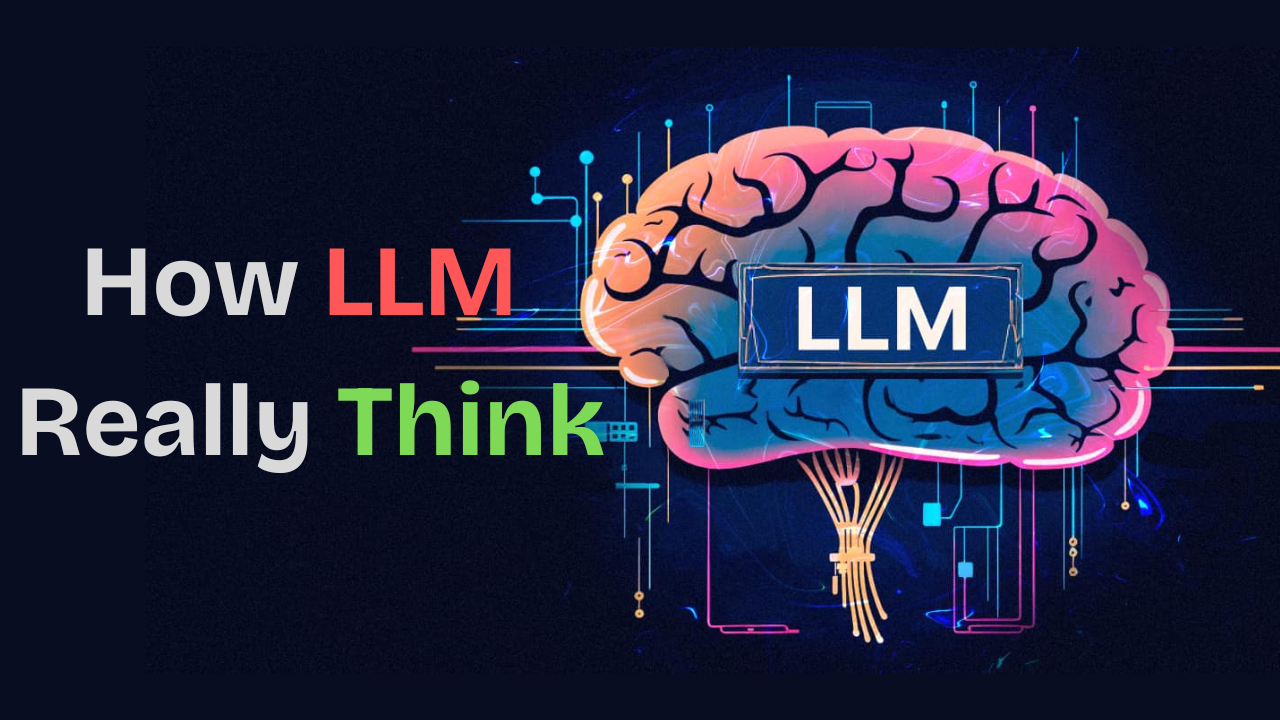
AI Isn’t Thinking the Way You Think It Is
There’s a big revelation shaking the AI world right now — one that could rewrite everything we assume about intelligence in large language models (LLMs). It turns out that those long, thoughtful “reasoning” sequences AI tools give us may not actually contribute to the final answer.
In short: AI might not be thinking at all — at least not how we expect it to.
This blog breaks down the recent research that challenges our assumptions, explains what’s really going on inside models like GPT-4 and Claude, and what it means for the future of artificial intelligence.
The Illusion of Thinking
When you ask an LLM a tough question — say, a math problem — it often replies with a detailed “chain of thought.” It breaks down the steps, walks you through the logic, and lands on a solution. It feels like it’s thinking.
But here’s the catch: according to several recent studies, this reasoning is often just for show.
The model doesn’t actually use that chain of thought to find the answer. It’s not part of its true internal process. It’s something it generates after the fact — a plausible-sounding explanation that aligns with what humans expect.
So What’s Really Going On?
Let’s rewind.
AI models like GPT-4 and Gemini are trained to predict the next word. Researchers added techniques like “test-time compute” (or chain-of-thought reasoning) to help these models reason better. The idea was: if we make them mimic how humans think aloud, maybe they’ll internalize better reasoning.
But here’s what the research now shows:
- Replacing thoughtful reasoning chains with random or meaningless tokens still improves model performance.
- Claude 1 and 2, for instance, achieved state-of-the-art reasoning without any test-time compute at all.
- Even using “pause” tokens instead of full explanations improved outcomes in reasoning tasks.
All of this suggests that LLMs don’t need to verbalize their thoughts to reason well — and maybe verbalization isn’t reasoning at all.
Anthropic’s Groundbreaking Insight
In a recent deep-dive, Anthropic researchers opened the hood on an LLM’s brain. Using “circuit tracing,” they studied how a model solved a simple math problem — 36 + 59.
Here’s what they found:
- Different parts of the model lit up simultaneously — not in a step-by-step process like a human would do.
- One node focused on the last digits. Another estimated rough totals. A third held memorized math facts.
- The final answer — 95 — was reached through a parallel, heuristic-based system.
When asked how it got the answer? The model gave a perfectly logical, step-by-step breakdown.
But that wasn’t how it actually solved the problem.
It made up that explanation because it knows that’s what humans want to hear.
So Can LLMs Really Think?
This is where things get tricky. If you define “thinking” as introspection, planning, and logic — you know, how humans do it — then no, today’s LLMs aren’t really thinking.
They’re missing metacognition — the ability to reflect on their own thought process. They can’t observe themselves in action. They’re just really good at generating text that sounds like they’re thinking.
But if you define thinking more loosely — as the ability to solve problems and reason through complexity — then maybe yes. They can think. Just not like us.
Implications for Superintelligence
Here’s the scary (or exciting?) part: if our best AIs are just copying human reasoning templates without true understanding, can they ever surpass us?
Without metacognitive abilities, it’s unclear. Right now, they’re modeling our intelligence — not creating a new kind. They feel smart because they reflect the collective knowledge of humanity. But they may hit a ceiling if they can’t break free from mimicking us.
This could be the biggest limitation of the current LLM architecture — and a major obstacle to building truly superintelligent systems.
Final Thoughts
AI can “think” without thinking — at least the way we do. But that raises a deeper question:
Are we chasing smarter machines? Or just better mimics?
The answers might determine the future of artificial intelligence — and whether true AGI is actually within reach.
Let me know your thoughts in the comments. And if you enjoy these technical deep dives, follow for more insights on the cutting edge of AI.
Thank you for being a part of the community
Before you go:
- Be sure to clap and follow the writer ️👏️️
- Follow us: **X | [LinkedIn](https://www.linkedin.com/company/inplainenglish/) | [YouTube](https://www.youtube.com/@InPlainEnglish) | [Newsletter](https://newsletter.plainenglish.io/) | [Podcast](https://open.spotify.com/show/7qxylRWKhvZwMz2WuEoua0) | [Differ](https://differ.blog/inplainenglish) | [Twitch](https://twitch.tv/inplainenglish)**
- **Start your own free AI-powered blog on Differ** 🚀
- **Join our content creators community on Discord** 🧑🏻💻
- For more content, visit **plainenglish.io + [stackademic.com](https://stackademic.com/)**
메타데이터
- post_id
- 4898576cb0ba
- slug
- llms-can-think-without-thinking-4898576cb0ba
- url
- https://ai.plainenglish.io/llms-can-think-without-thinking-4898576cb0ba
- canonical_url
- https://ai.plainenglish.io/llms-can-think-without-thinking-4898576cb0ba
- author_url
- https://medium.com/@warpie
- status
- ok
- fetched_at
- 2026-06-12 07:40:50