Higher/Lower Pressure during Maillard for Coffee Roasting: Feasibility
Beans under pressure
Coffee Data Science
Higher/Lower Pressure during Maillard for Coffee Roasting: Feasibility
Beans under pressure
My Slope V2.2 profile has allowed me to study the drum pressure during the roast, and I have been running a set of feasibility tests on the different phases of the roast. I can vary drum pressure by increasing the internal fan speed.
I want to study the Maillard phase in particular to understand how variations in drum pressure affect the roast with these three roasts:
- Lower Pressure Maillard: 51 pa, 40% internal fan speed
- Baseline Pressure Maillard: 75 pa, 50% internal fan speed
- Higher Pressure Maillard: 105 pa, 60% internal fan speed
Post-Roast Metrics
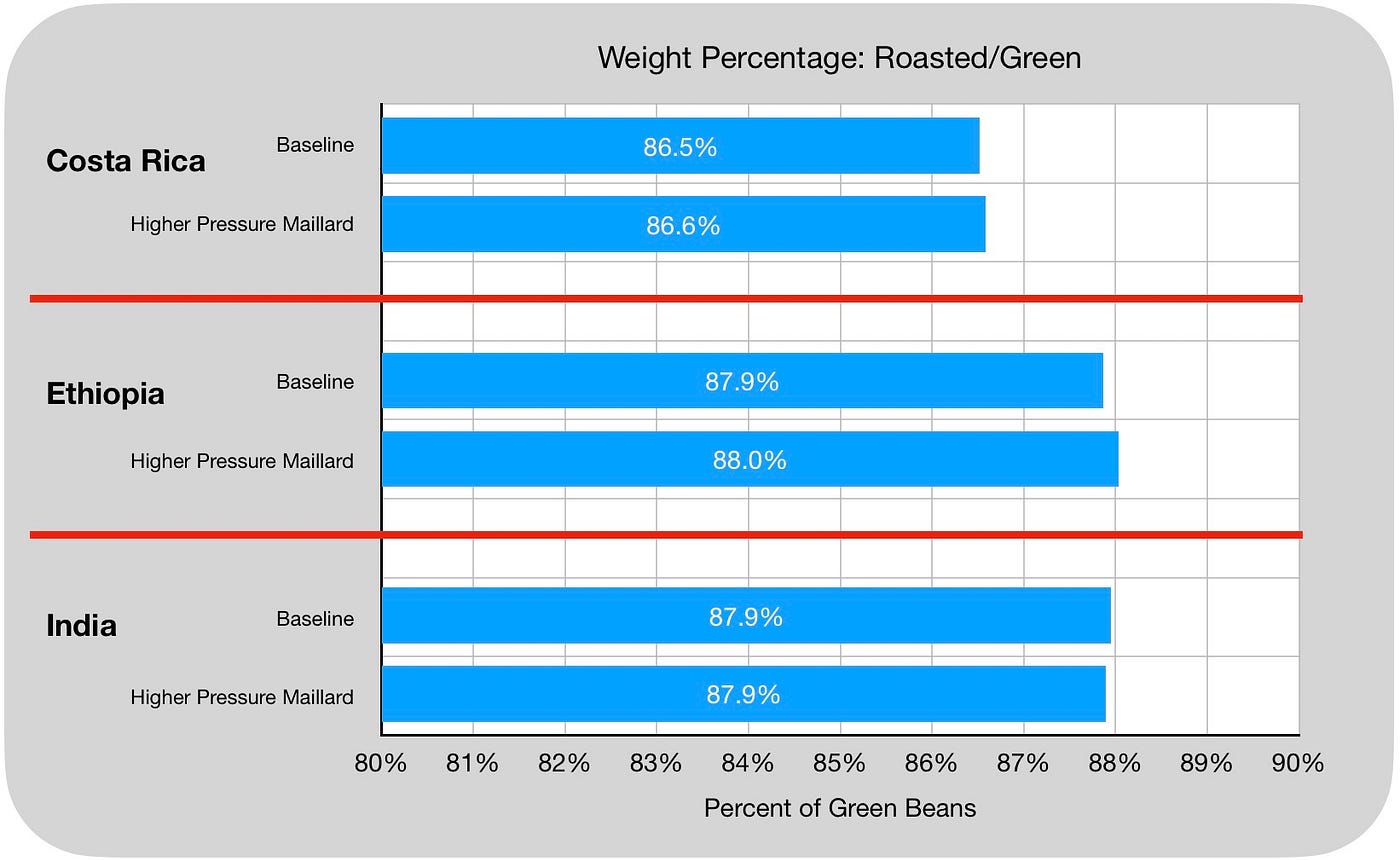
The three roasts were close in metrics. I didn’t see any potential trends.
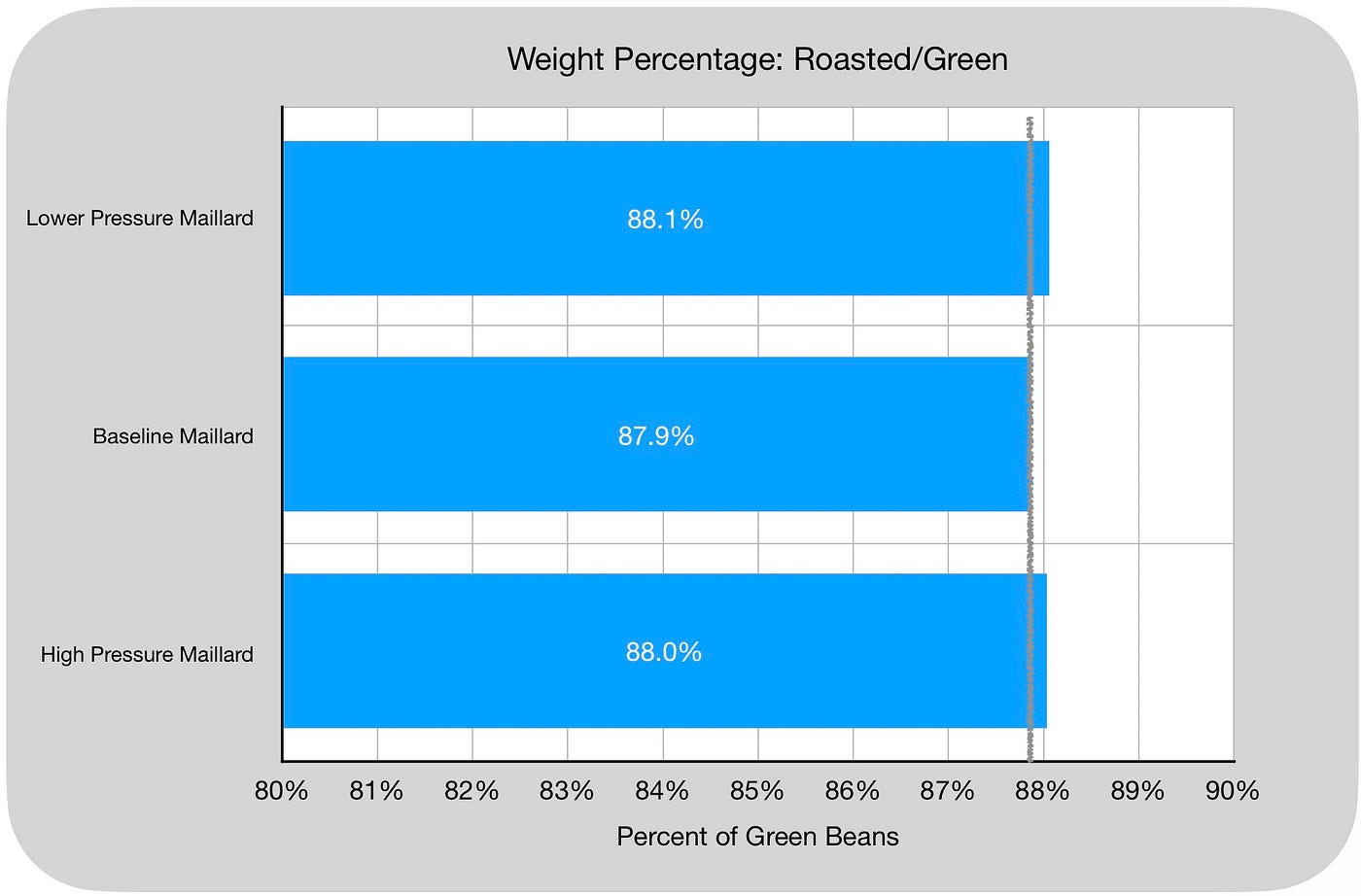

Coffee color was slightly higher for whole bean for the two variants but slightly lower as ground coffee. I’m not sure if that means anything.


Metrics of Performance
I used two sets of metrics for evaluating the differences between techniques: Final Score and Coffee Extraction.
**Final score **is the average of a scorecard of 7 metrics (Sharp, Rich, Syrup, Sweet, Sour, Bitter, and Aftertaste). These scores were subjective, of course, but they were calibrated to my tastes and helped me improve my shots. There is some variation in the scores. My aim was to be consistent for each metric, but some times the granularity was difficult.
**Total Dissolved Solids (TDS) is measured using a refractometer, and this number combined with the output weight of the shot and the input weight of the coffee is used to determine the percentage of coffee extracted into the cup, called Extraction Yield (EY)**.
Shot Data
I pulled four shots, and the higher pressure Maillard showed signs of being better than the baseline. The lower pressure was close to the baseline, and slightly exceeded it in two cases, but it wasn’t quite the same.


The real difference was seen in the average of the taste components with the higher pressure Maillard topping them all.

EY didn’t seem affected.

These tests suggest further investigation into a higher pressure for the Maillard to see if it was significant and to see how much pressure is the right amount.
If you like, follow me on YouTube and Instagram where I post videos of espresso shots on different machines and espresso related stuff. You can also find me on LinkedIn. You can also follow me on Medium and Subscribe.
Further readings of mine:
My Second Book: Advanced Espresso
My First Book: Engineering Better Espresso
메타데이터
- post_id
- 490bdbf7392a
- slug
- higher-lower-pressure-during-maillard-for-coffee-roasting-feasibility-490bdbf7392a
- url
- https://medium.com/@rmckeon/higher-lower-pressure-during-maillard-for-coffee-roasting-feasibility-490bdbf7392a
- canonical_url
- https://medium.com/@rmckeon/higher-lower-pressure-during-maillard-for-coffee-roasting-feasibility-490bdbf7392a
- author_url
- https://medium.com/@rmckeon
- status
- ok
- fetched_at
- 2026-06-09 15:37:30