Before Olivia Pope, Maxine Shaw Taught Us How to Take Up Space
She was brilliant, outspoken, ambitious, and never interested in making herself smaller for the room
Before Olivia Pope, Maxine Shaw Taught Us How to Take Up Space
She was brilliant, outspoken, ambitious, and never interested in making herself smaller for the room
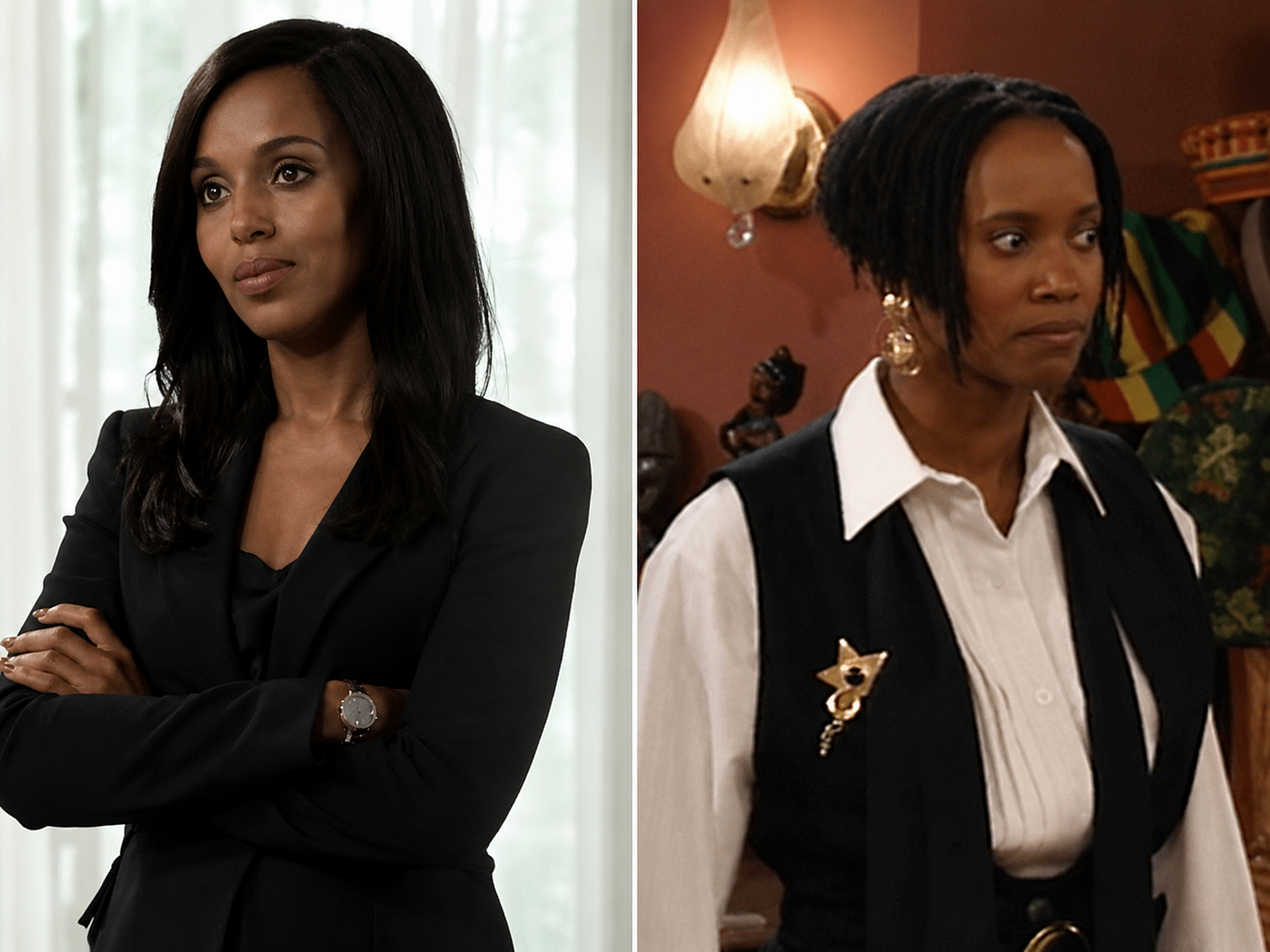
Fictional Characters of Olivia Pope and Maxine Shaw side by side giving us professionalism and wit.
Before Olivia Pope strutted through Washington in her white coat, juggling crises and solutions like it was just another Tuesday, there was Maxine Shaw.
Attorney at law.
She was sharp, smart, competitive, loyal, sometimes a little messy, and never interested in making herself smaller just to keep everyone else comfortable.
Back when I first watched Living Single, I didn’t have fancy words for what I was seeing. I just knew Maxine walked into every room like she belonged there. She didn’t wait for someone to tell her it was okay to speak up. She didn’t water down her opinions. She never played small just to make someone else feel bigger.
And maybe the best part? The show never punished her for being ambitious.
Maxine could argue a case, call out her friends, love hard, make some questionable choices, and show up the next week still completely herself. She wasn’t a cautionary tale about what happens when a woman is too outspoken or too much.
She was allowed to be a lot.
For a young Black girl who would grow up to be an educator, a leader, a writer, and a woman with plenty to say, that meant more than I realized back then.
Photo by Christina @ wocintechchat.com M on Unsplash
She never acted like being smart was something to hide.
There is a particular lesson many girls learn early: being intelligent is good, but displaying too much confidence in that intelligence can make people uncomfortable.
Know the answer, but do not sound arrogant. Speak up, but do not dominate. Be accomplished, but remain humble enough to keep everyone else at ease.
For Black girls and women, that negotiation can become even more complicated. Confidence may be interpreted as an attitude. Directness may be called aggression. A strong opinion may be treated as a character flaw instead of evidence of thought, preparation, or conviction.
Maxine didn’t waste time trying to manage what other people thought about her. She knew she was smart. She knew she was capable. And she never apologized for it.
That confidence didn’t make her perfect. Sometimes she was stubborn. Sometimes she said too much. Sometimes she was sure before she was wise. But she got to have those flaws without being defined by them.
Women are often told to be confident, but only if it’s cute, polite, and easy for everyone else. Maxine’s confidence wasn’t always neat. It wasn’t there to make everyone else feel better.
It was hers, plain and simple.
Photo by Valentina Conde on Unsplash
She showed us that taking up space isn’t the same as taking over.
For a long time, I thought taking up space meant being the loudest person in the room. Now, I see it differently.
Taking up space can mean saying what you think without apologizing for it. It can mean pointing out what’s not working when everyone else is pretending it’s fine. It can mean accepting a compliment without scrambling to explain why you don’t deserve it.
It can also mean letting yourself have needs, limits, dreams, and expectations that aren’t just about keeping the peace.
Maxine took up space because she acted as if her perspective mattered. She challenged people. She questioned what everyone else took for granted. Sometimes she made things uncomfortable, and honestly, that’s not always a bad thing.
Some rooms feel comfortable because nobody is saying what needs to be said. Some jobs run smoothly because one person keeps swallowing unfairness. Some relationships stay peaceful because someone has learned how to disappear.
Taking up space breaks that pattern. It says, I’m here too.
Not above everyone or more important than everyone. But I’m here, I’m visible, and I’m not going to erase myself just to keep things running smoothly for everyone else.
Photo by UK Black Tech on Unsplash
She was ambitious without becoming a machine
What I appreciate now, as an adult, is that Maxine’s job didn’t erase the rest of who she was.
She wasn’t just an attorney. She was a friend, a partner, the funny one, sometimes the chaotic one, and a woman still figuring out how to handle love, vulnerability, and change.
Her ambition was part of her, but it wasn’t all of her. That feels important now, especially in a world that loves to celebrate women for how much they can juggle and survive.
We cheer for the woman who leads the meeting, answers every email, supports everyone, keeps the house running, chases her dreams, and somehow looks calm doing it all.
Then we call that empowerment.
Sometimes it really is. Sometimes it’s just exhaustion dressed up as empowerment.
Maxine was successful, but she wasn’t some perfectly programmed machine. She could be confident in court and totally unsure in love. She could give sharp advice and still make a mess of her own choices.
She got to be both competent and complicated at the same time.
Women deserve that kind of range. We shouldn’t have to be flawless just to have our intelligence or ambition taken seriously.
Photo by Christina @ wocintechchat.com M on Unsplash
She wasn’t always likable, and honestly, that was part of the gift.
“Likable” is one of those words that follows women everywhere.
Was she warm enough? Was she pleasant? Did she smile? Was her tone appropriate?
Men can be respected for being decisive, demanding, or uncompromising. Women are often expected to demonstrate the same qualities while remaining endlessly approachable.
Maxine didn’t always pass the likability test. She could be sarcastic, blunt, frustrating, too quick with a comeback, and a little too sure of herself for some people’s comfort.
But she was still worthy of friendship, love, respect, and a real story. That might sound small, but it pushed back against the idea that women have to be pleasant to deserve good things.
Real people aren’t likable all the time. We get tired. We get defensive. We mess up. We speak before we know the whole story.
And then, hopefully, we grow.
A woman shouldn’t have to be sweet all the time just to prove she’s good. Sometimes character shows up not because we never mess up, but because of what we do after we do.
Maxine’s flaws made her real. They reminded us that strength doesn’t mean perfection, and being smart doesn’t mean you stop being human.
Photo by K Studios on Unsplash
I see her differently now.
When I first watched Living Single, I saw Maxine’s confidence.
As an adult, I notice the price women pay when they refuse to shrink themselves.
Speaking honestly can get you labeled as difficult. Having standards can make people say you expect too much. Setting a boundary can turn you from dependable to uncooperative in the eyes of someone who liked it better when you had none.
I’ve had moments where I walked into a room prepared, qualified, ready to help, and still felt like I had to prove my confidence wasn’t a threat.
I have wanted to say less. I have adjusted my tone. I’ve explained things that didn’t need explaining. I’ve tried to make honesty easier for other people to swallow.
There’s wisdom in being thoughtful with your words. Not every truth needs to land like a closing argument. But there’s a difference between speaking carefully and editing yourself out of the conversation.
That’s the line I’m still learning to spot.
Photo by Brett Jordan on Unsplash
Confidence is not the absence of doubt.
One of the biggest myths about strong women is that confidence means you never doubt yourself.
I do not believe that anymore. Confidence can live right alongside doubt. Sometimes it looks like preparing because you’re nervous and speaking up anyway. Sometimes it means applying for something even though you might get rejected. Sometimes it’s walking into the room before you feel ready, because waiting for perfect certainty might keep you outside forever.
Confidence is not always loud. Sometimes it’s just quietly deciding to stop asking if you deserve to be there.
Maybe that’s what Maxine really showed us, underneath all the jokes and quick comebacks. She moved like she already belonged. She didn’t spend every moment trying to prove she deserved her job, her friends, or her own life.
She participated. There’s a lesson in that for all of us.
A lot of us spend so much time trying to prove we belong that we forget to use the gifts that got us in the room in the first place.
We overprepare. Overexplain. Overperform. And then we wonder why success feels so exhausting.
At some point, we have to stop proving ourselves and start living like we actually believe in who we are.
Photo by ErnAn Solozábal on Unsplash
Young women still need to know it’s okay to be fully seen
Young people are constantly receiving messages about how to become more acceptable.
Be confident, but not intimidating. Be visible, but not too visible. Be ambitious, but do not let anyone think you believe in yourself too much.
Those contradictions, those mixed messages, can teach girls to watch themselves before they even know who they are. They start judging their tone, their clothes, their opinions, and their dreams by what they think everyone else will say. That’s why characters like Maxine still matter.
Not because young women need to copy every move she made, but because they need to see women whose presence isn’t treated like a problem.
They need to see women who are smart without being cold, ambitious without being villains, and imperfect without losing their dignity.
They need to know that taking up space doesn’t mean taking it away from someone else.
There is room.
Photo by Rineshkumar Ghirao on Unsplash
What she taught us was bigger than just confidence
What Maxine Shaw taught us was bigger than just confidence. She showed so many of us what it means to trust our own minds, to share our opinions before everyone else agrees, and to take up space without apology. She made it clear you could be excellent without pretending to be less, and loyal without bending over backwards for everyone.
Watching her, we saw that you could take up space without worrying if you were in the way — and in doing so, she made it easier for the rest of us to imagine we could, too.
But for me, the lesson was even more personal. I am still learning it. Maxine taught me that humility doesn’t mean erasing yourself. Kindness doesn’t mean staying quiet.
Leadership doesn’t mean becoming less human. And confidence doesn’t mean you’ll always be right. It means knowing that being wrong sometimes doesn’t mean you lose your right to speak up again.
Before Olivia Pope became the image of a brilliant Black woman navigating powerful rooms, Maxine Shaw had already shown many of us what it looked like to enter one without shrinking.
Attorney at law.
Sharp, complicated, ambitious, and all the way present.
She was allowed to be a lot.
And maybe, just maybe, we are, too.
Reflection question: Who first taught you that confidence did not require permission?
If this piece resonated with you, follow TheHonestInfluencHER for reflections on culture, identity, education, womanhood, personal growth, and the stories that continue shaping who we become.
Many blessings, Dr. H. xoxo TheHonestInfluencHER

메타데이터
- post_id
- 4941783a20c1
- slug
- before-olivia-pope-maxine-shaw-taught-us-how-to-take-up-space-4941783a20c1
- url
- https://medium.com/educreation/before-olivia-pope-maxine-shaw-taught-us-how-to-take-up-space-4941783a20c1
- canonical_url
- https://medium.com/educreation/before-olivia-pope-maxine-shaw-taught-us-how-to-take-up-space-4941783a20c1
- author_url
- https://medium.com/@thehonestinfluencher
- status
- ok
- fetched_at
- 2026-07-08 19:15:55