Will AI Replace Web Designers?
Spoiler: It Will!
Will AI Replace Web Designers?
Spoiler: It Will!
You know those conversations you don’t want to have, but you know you need to?
This is one of them.
So pull up a chair.
Grab a drink. Let’s talk honestly, not as designer vs technologist, not as optimist vs realist, but as two people who have lived through enough digital chaos to know when something seismic is happening.
Because I’m not here to scare you. I’m here to tell you the truth gently, like a friend watching your blind spot.
And the truth is simple:
AI will replace designers. Not all of them. But many.
Now, take a breather, let than thought sink in.
Two Years Ago, This Was Impossible. Look Where We Are Now.
Two years. That’s how long it took for the entire industry to tilt.
Two years ago:
- AI couldn’t design beyond ugly gradients
- Copywriting models sounded robotic
- “AI websites” were a joke
- Tools like Olitt, Durable, Framer AI, Lovable, Bolt, didn’t exist
- People thought chatbots were the ceiling of AI
Fast forward to today, and you can:
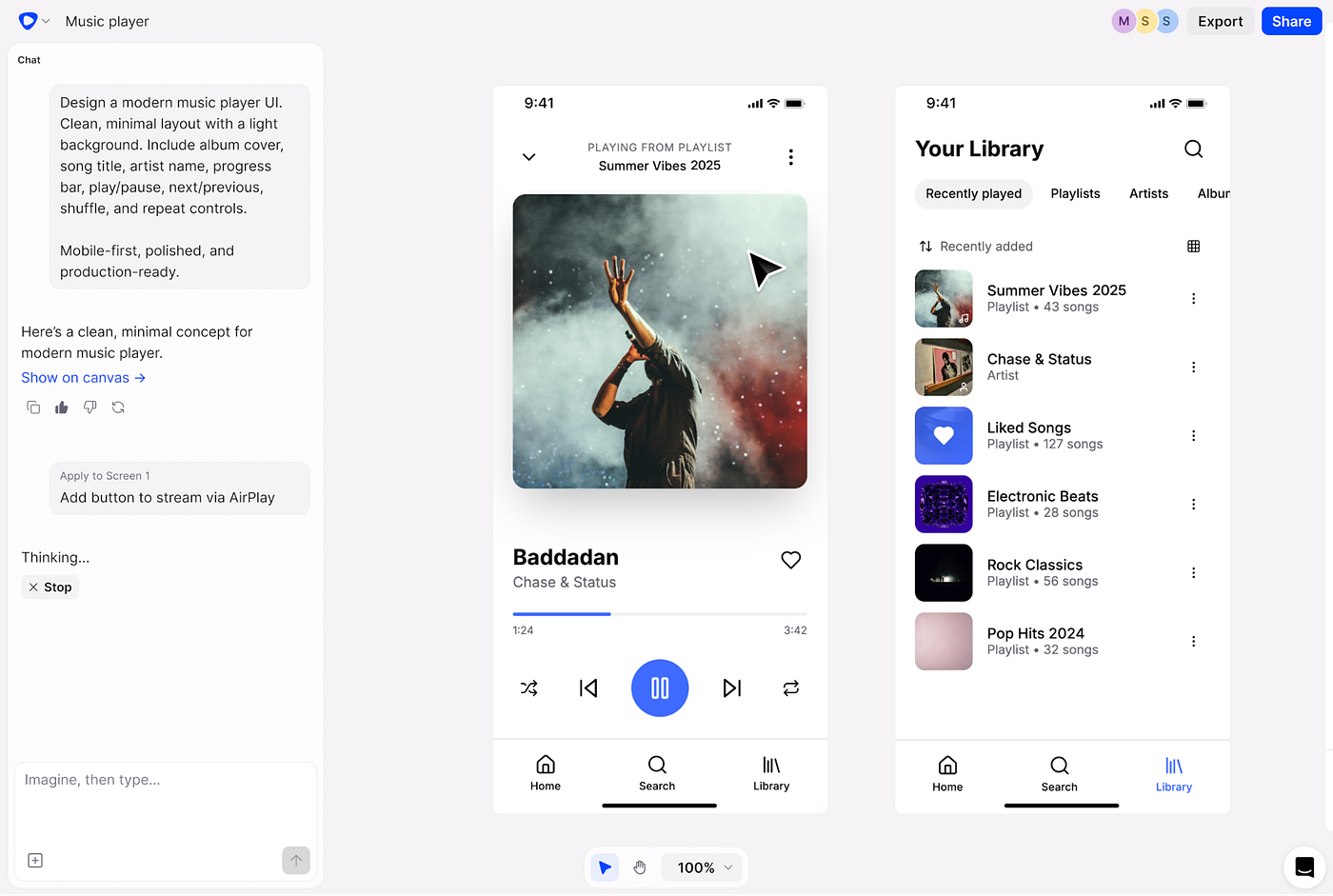
- open Olitt
- type one sentence
- Answer a few questions
- click a button
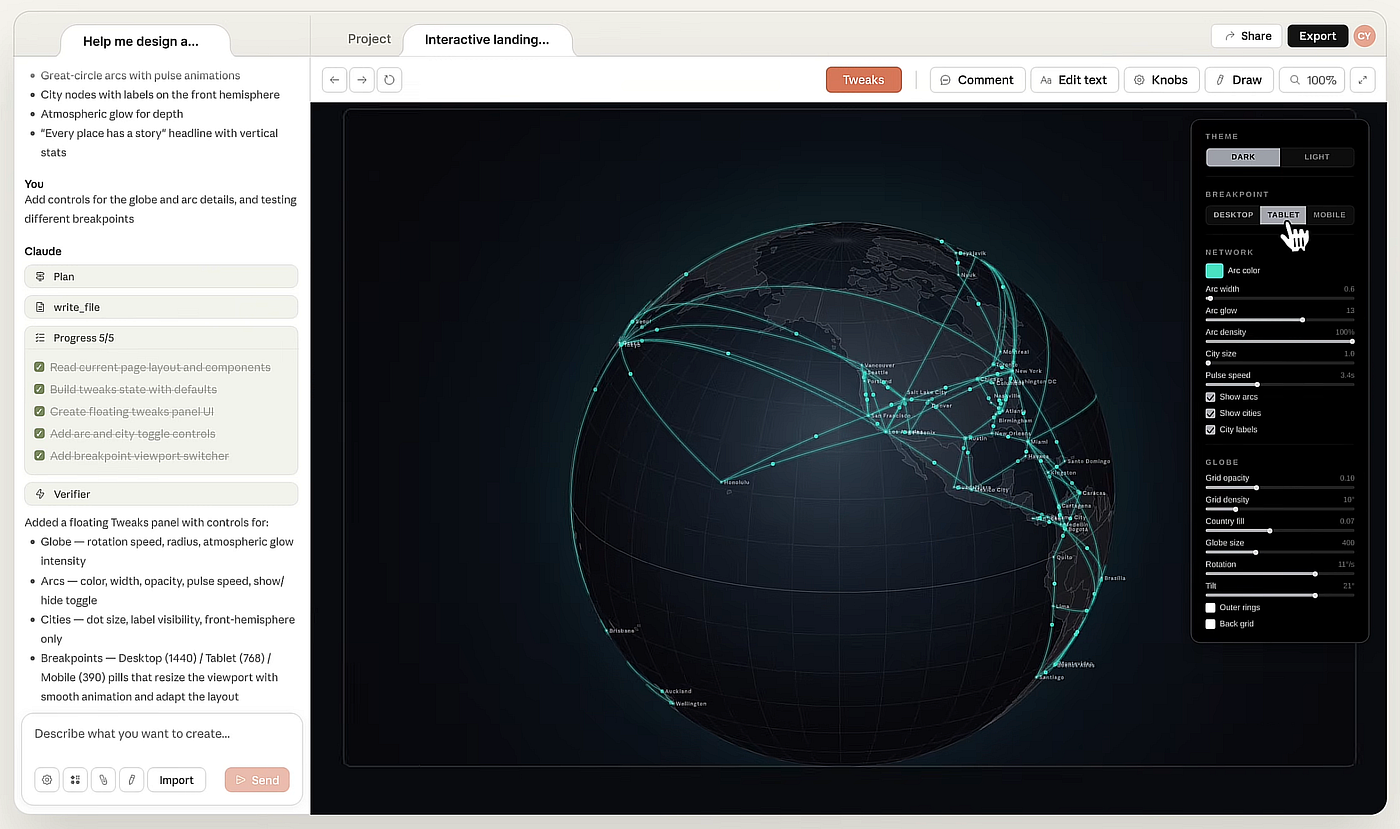
- and watch an entire website build itself in front of your eyes.
And we are talking everything (pages, copywriting, blogs, SEO optimization, Sitemaps, schemas, forms, integrations, responsiveness, brand voice, you name it!)
Now, we might want to downplay this as it’s been with us for a while now, but that exactly my friend could be the rise and fall of any great designer in 2025.
Careful now.
And if this is what AI can do in two years…, imagine what this tech can accomplish in 5, maybe 10.
Designers Comfort Themselves With AI’s Limitations — And That’s the Trap
“I’m not worried. AI doesn’t understand nuance.” “It can’t do strategy.” “It can’t replace collaboration.” “It can’t build complex logic.” “It can’t reason emotionally.”
Beautiful sentences. Reassuring, even. Warm. Like a blanket.
But here’s the problem:
These limitations aren’t set on stone. AI hasn’t even begun to scratch the surface of what it can do, by itself.
Everything AI “can’t” do today is exactly what it’s learning next.
Everything AI “Can’t” Do Today Is Exactly What It Will Do Next
You know what this moment reminds me of?
Every other moment in history where humans confidently declared, “This will never happen,” and then technology quietly said, “Watch me.”
We’ve been wrong before. Hilariously wrong.
Think about it.
There was a time when the world’s smartest people believed no machine could beat a human at chess.
This was huge because chess was long considered the peak of strategic human dominance.
Then in 1997, IBM’s Deep Blue beat Garry Kasparov, the greatest grandmaster of the era.
And the wild part? These machines had the nerves to do it again!
After Kasparov, machines didn’t stop. They got hungrier:
- Chess engines became so strong that even the worst modern engine destroys world champions effortlessly. (Today’s top engines like. Stockfish, Leela, and Komodo are untouchable.)
- 2016: AlphaGo beat Lee Sedol, one of the greatest Go players in history. Go was considered far more complex than chess, a “100-year problem.”
- A year later, AlphaGo Zero beat AlphaGo 100–0. Yes, the AI that beat the world champion got annihilated by its next evolution.
- AlphaZero then learned chess from scratch in four hours. FOUR!
- In poker, AI defeated top human professionals in Texas Hold’em, a game of hidden information, deception, and psychology. Something experts once said was “too human” for machines.
- In StarCraft II, an AI called AlphaStar reached Grandmaster level, beating pro gamers in real-time strategy — a blend of long-term planning, tactics, adaptability, and insane multitasking.
Away from games and patterns, remember self driving? Yeah, those guys are everywhere now.
But when Google first announced them in 209, we laughed. “Impossible. Too many variables,”, we said.
Now? Tesla, Waymo, Cruise — cars drive on real roads without humans touching the wheel.
It’s a pattern: AI doesn’t just beat us. It beats us, beats us again — harder, then beats the version of itself that did the second beating.
And then beats the version that beat that one.
Every win trains the next generation. Every limitation becomes an upgrade note.
That’s the thing we keep forgetting.
When AI reaches human level in a domain, it doesn’t stop. It accelerates. It compounds. It surpasses.
And if it has done this in:
- chess
- Go
- poker
- real-time strategy
- language translation
- speech recognition
- image generation
- scientific prediction
…do you really think layout design, I mean grids, spacing, colors, gradients, hierarchy, flows, structure , is where it stops evolving?
Of course not.
And that’s the message designers got to absorb. AI doesn’t pause at “good enough.” It doesn’t take breaks. It doesn’t plateau.
Once it learns the basics… it hunts for mastery.
The Next Phase of AI Website Builders is Where Everything Changes
Imagine this scenario, and try not to shiver:
You build a website for a real estate company. Today, you:
- upload properties manually
- update prices manually
- write descriptions manually
- reorder pages manually
- adjust SEO manually
- rewrite homepage content manually
Now imagine this instead:
You tell AI:
“Keep this real estate site updated. If new listings appear in these databases, add them. Generate photos. Write descriptions. Update prices. Remove sold properties. Refresh SEO monthly. Rewrite homepage weekly based on market trends. Send newsletters automatically. Show me analytics every morning.”
And AI says:
Done.
Forever. Without reminding you. Without sleeping. Without forgetting.
That’s not sci-fi. That’s maybe 24 to 36 months away.
Now imagine the same for:
- dentists
- salons
- gyms
- hotels
- ecommerce stores
- influencers
- consultants
- NGOs
- schools
- agencies
Every industry. One AI. One dashboard. Zero maintenance.
This is the moment where you either feel excited… or deeply, deeply uneasy.
Both are valid.
This Hurts Because Design Is Personal
Let’s pause here.
Because I know this isn’t just a career. It’s identity. It’s pride. It’s the thing you stayed up late practicing. The thing you poured your heart into. The thing that made you feel like you finally had a superpower.
So when someone says, “AI is coming for your job,” it doesn’t just feel like a threat to your income.
It feels like losing a part of yourself.
I get that. Deeply.
This is why I’m not telling you “surrender.” I’m not telling you “step aside.” I’m not telling you “let the robots win.”
I’m telling you: evolve.
AI Will Replace All Designers
Period.
Not “assist.” Not “empower.” Not “co-create.” Replace.
So let’s stop repeating the polite fairytale for a second.
“AI will not replace designers, but designers who use AI will.”
Soothing, I know.
But right there is the greatest lie of the AI century.
‘cause, what happens when AI is the default setting?
not an option, not an edge, not a “nice-to-know,” but the baseline — who exactly are these “designers who use AI” supposed to be competing with?
Everyone will use AI. Everyone will have access to these tools. Everyone will create landing pages, funnels, ads, logos, layouts.
Here’s the thing nobody wants to admit:
Design as we know it… the version built on structure, grids, layouts, patterns, rules — that’s exactly the kind of work AI eats for breakfast.
So the real divide isn’t between designers who use AI vs designers who don’t.
It’s between designers who evolve into a new creative category, and designers who cling to the one AI already surpassed.
And that’s where the substance starts to show: .
Group 1: Designers Who Try to Compete With AI
And I say this with utmost empathy. This group isn’t “lazy” or “uninformed.” They’re just holding onto the version of design that used to be enough, that used to work.
You’ll recognize them by phrases like:
- “I don’t want shortcuts.”
- “Good design takes time.”
- “AI doesn’t have taste.”
- “Clients will always want humans.”
- “All AI websites look the same.”
These are just coping mechamisms amidst the AI avalanche.
They still rely on workflows that peaked around 2018. They defend tools they’re emotionally attached to. They call AI design “generic,” even though their own work is 80 percent conventional patterns.
They see AI as a threat, instead of what it truly is: a preview.
A preview of where design is heading. A preview of what execution-level tasks will soon cost. A preview of what clients will expect as default output.
Here’s the sober truth:
Now this category of AI designers won’t disappear with a bang. They’ll disappear quietly.
↓ First as a slow drop in demand. ↓ Then as price compression. ↓ Then as smaller projects. ↓ Then as a shift to non-design work. ↓ Then, as irrelevance.
It won’t be dramatic. It will be quiet erosion.
Not because they aren’t talented, but because their talents are aimed at tasks AI now handles effortlessly.
Group 2: Designers Who Evolve Beyond Design
Let me be extremely clear here: These designers don’t “use AI.” They pilot it.
The difference between the two is the difference between:
- driving a car vs
- commanding a fleet of autonomous vehicles
They’re not competing with AI’s output. These fellows are directing it.
They treat AI like:
- an ideation engine
- a layout generator
- a copy partner
- a visual explorer
- a testing machine
- a UX variant factory
- a prototyping accelerator
- a pattern amplifier
- a brand system extender
They do things that are impossible manually, like:
- generating 40 layout versions in 5 minutes
- trying experimental aesthetics without cost
- testing 12 different CTA tones instantly
- prototyping 3 concepts for 3 audiences in one afternoon
- rewriting an entire brand voice in minutes
- building entire design systems through prompts
- personalizing UX flows dynamically
- rethinking architecture from scratch without fear
They go beyond what design used to be. In so doing, they avoid being
AI stylists. Execution workers. Figma laborers.
But rather creative directors of intelligent systems.
This is a role AI cannot easily replace:
A mind that chooses, curates, interprets, judges, and directs. Not the hand arranging pixels AI can already move better and faster.
This Is the Distinction That Actually Counts
Let’s simplify the truth:
AI replaces the executor. The pixel pusher. The layout builder. The template modifier. The hands-on craftsperson.
But AI does not replace:
- the director
- the strategist
- the architect
- the storyteller
- the orchestrator
- the meaning-maker
Not today. Not soon. Not until AI understands context, emotion, culture, power dynamics, politics, identity, nuance — and then applies them intentionally.
AI is powerful. But it cannot replace the human who guides meaning.
And that’s what the second group becomes.
Not “designers who use AI.” But creators who build through AI and think far above where AI currently plays.
The Work Designers Used to Do Is Disappearing
Think about your projects from five years ago:
- website mockups
- basic landing pages
- brochures
- simple UX flows
- standard UI patterns
- repetitive components
- content population
- template customization
- SEO setups
- brand visuals
Most of this? AI can now do faster than you can open Figma.
And guess what? We’re still in year two of commercial AI.
By year five, the gap won’t just be big. It will be unbridgeable.
But, but, and this is important, that doesn’t mean you lose your craft.
It means your craft got to transform.
So Yeah, AI Could Easily Be the End of Hard Design
Here’s the good news buried inside the fear:
AI removes the parts of design nobody liked anyway.
AI eliminates:
- pixel pushing
- endless revisions
- content delays
- tedious layout adjustments
- responsive headaches
- repetitive screens
- rebuilding versions
- SEO rewrites
- form integrations
- plugin breaking
- stress around deadlines
- manual research
- brainstorming from scratch
AI frees you to focus on:
- direction
- vision
- identity
- storytelling
- experience
- emotion
- strategy
- meaning
AI builds the structure. You build the soul.
If you choose to.
The Designers Who Will Thrive in the AI Era
You want to know who survives?
Designers who:
- think like directors
- communicate like strategists
- see patterns AI hasn’t discovered yet
- guide clients through clarity
- curate output
- push boundaries
- design with personality
- understand people deeply
- use AI as a multiplier
- learn faster than they fear
These are the designers who will lead teams. Lead brands. Lead markets.
AI will not replace them.
AI will make them unstoppable.
So… Will AI Replace Web Designers?
Yes. And no.
Here’s the final answer — the one nobody else is brave enough to say plainly:
AI will replace designers who refuse to evolve. AI will amplify designers who do.
Designers who cling to old workflows will fade out. Designers who embrace AI will rise higher than they ever imagined.
The future is not:
designer vs AI
The future is:
designer with AI vs designer without AI
And the gap between those two isn’t small. It’s everything.
The Conversation We Needed
So here we are. Coffee cups empty. Hearts a little heavier. Minds a little sharper. Eyes opened.
You’re not powerless. You’re not outdated. You’re not too late.
You’re early.
You’re standing at the beginning of the most exciting era design has ever seen.
If you evolve, if you lean in, if you embrace AI instead of fearing it…
You won’t be replaced.
You’ll be the one replacing.
And I’ll be right here, cheering you on as you do.
메타데이터
- post_id
- 49698e1a2301
- slug
- cwill-ai-replace-web-designers-49698e1a2301
- url
- https://medium.com/functional-ai/cwill-ai-replace-web-designers-49698e1a2301
- canonical_url
- https://medium.com/functional-ai/cwill-ai-replace-web-designers-49698e1a2301
- author_url
- https://medium.com/@mysson
- status
- ok
- fetched_at
- 2026-06-11 21:11:36