Preventive Check-Up after 50
What parameters should I monitor after 50? What is available on the market to support the monitoring of healthy aging?
Preventive Check-Up after 50
What parameters should I monitor after 50? What is available on the market to support the monitoring of healthy aging?
A few years ago, when I turned 50, I had to acknowledge that my weight was about 10 kilos higher than it used to be. My blood pressure was occasionally elevated, and although my blood tests related to cardiovascular health were still within the normal range, some of the values were no longer as favorable as they had been in the past.
And I set myself a goal:
To improve my Health and stay active and independent for as long as possible.
But…
To achieve this goal, we need to invest in our health. And if we invest in our health, we need some measurable parameters to understand whether our efforts are actually moving us in the right direction.
Of course, regular check-ups with my physician, dentist and gynecologist were already part of my routine. But as I started reading more and more about health, longevity and wellness, I found myself asking questions:
What parameters should I monitor after 50? And what is actually available to support the monitoring of healthy aging?
The wellness world offers an overwhelming amount of information: dozens of parameters from gadgets and wearables, laboratory data, and countless health and wellness recommendations , but no universal set of metrics for monitoring healthy aging. At the same time, the level of scientific evidence behind these approaches varies considerably.
So how do I navigate this information without getting lost?
My educational and professional background helped me approach this information critically. I studied scientific and health literature extensively, while being selective about the quality of evidence and the sources I used.
In this article, I want to share a practical part of my own approach: a personal checklist for monitoring the aspects of health that matter for staying active and functional as we age (see the checklist at the end of the article). I use these objective parameters to make informed decisions about my health, rather than blindly follow the latest wellness trend.
Disclaimer
This article is for educational and informational purposes only. It does not provide medical advice, diagnosis or treatment, and it is not intended to replace recommendations from your healthcare professional.
The framework presented here is a practical approach to thinking about health monitoring and healthy aging. Not every test or measurement is appropriate or necessary for every person. Decisions about medical tests, screening and follow-up should be made together with a qualified healthcare professional, taking into account individual health status, age, family history and risk factors.

What is available on the market to monitor healthy aging?
Wearables & fitness apps
Smartwatches, rings and fitness trackers can collect a wide range of health and activity data, including heart rate, heart rate variability, steps, physical activity, sleep duration, estimated VO₂max, blood oxygen levels, breathing rate, body temperature and various stress or readiness scores. Some devices can also record a short ECG and detect possible atrial fibrillation.
They are useful for tracking daily behavior and trends. But can a wearable really tell me my biological age? Do they provide the whole picture? And how reliable are the data?
Another important issue is how these numbers are calculated. Many wearable measurements are based on signals collected by the device and processed using proprietary algorithms. In other words, methods developed by the manufacturer that are not always publicly available. Devices and their software are also regularly updated. This makes it difficult to compare measurements between different brands or even between different models.
So, while wearables can be very useful for tracking behaviour and changes over time, they are only one part of the picture. They cannot replace measurements of strength, balance, functional capacity, blood pressure, body composition, cardiovascular risk, etc.¹,²
They are useful for tracking daily behaviour and trends over time. For example, I use wearable data to monitor (BASELINE 50+):
- Aerobic capacity — a simple walking test or estimated VO₂max
- Daily steps
- Time spent in moderate- and high-intensity heart-rate zones
- Strength activity
- Resting heart rate
Wearables help me understand how active I am, plan my training and follow changes in my fitness over time.
But the picture is not complete…
Biomarker & blood-testing platforms
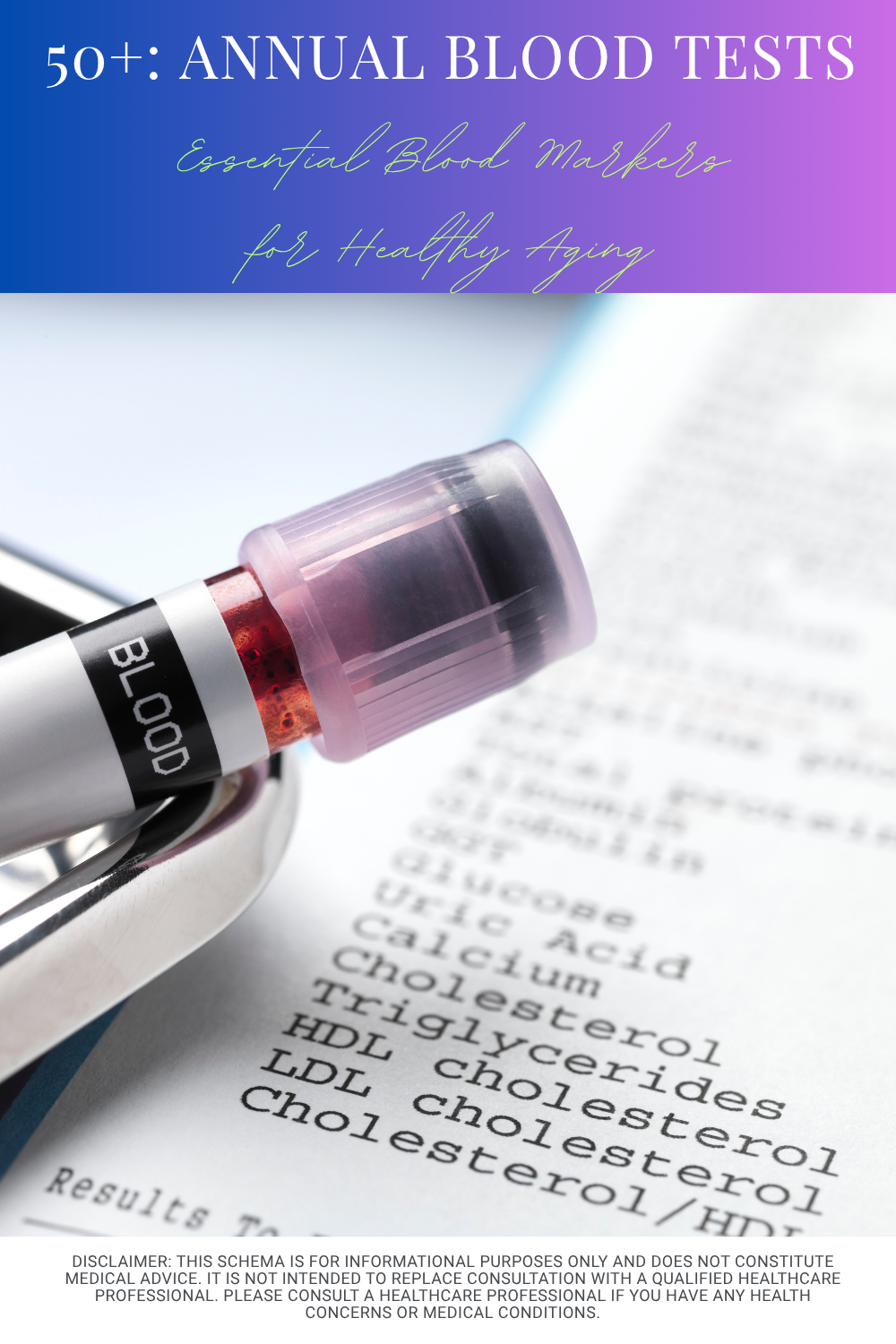
Blood tests offer a different perspective. They can provide detailed information about metabolic, cardiovascular, inflammatory, nutritional and organ-related health.
At the same time, there is an important distinction between monitoring health risks (diagnosis, disease screening) and monitoring healthy aging.
For many biomarkers, we have well-established clinical uses for diagnosing or monitoring disease. At the other end, there is a rapidly expanding field of potential biomarkers of aging including epigenetic clocks, inflammatory and immune markers, and other. Unfortunately, most of them are “reasearch only” tools.³
Which parameters a generally healthy person should monitor over time to understand whether health and functional capacity are being maintained remains unclear.
Based on my literature review, I selected a number of biomarkers to include in my personal monitoring.
Some of them have improved over time, so I can use these changes as measurable evidence of how my lifestyle is affecting my health. Others, because of their relevance to healthy aging, are simply monitored over time, helping me keep an eye on potential health risks and changes.
Longevity platforms
Another growing category combines biomarkers, lifestyle data and biological age or longevity scores to provide an overall picture of aging and suggest ways to improve selected longevity indicators.
The concept is attractive, but…
I checked the publicly available information and found that the level of validation and certification is not always easy to assess. Some platforms describe themselves as evidence-based or certified, but the specific standards, validation methods or supporting evidence are not always clearly presented.⁴
And again, the questions remained:
How valid is the measurement? What does it actually mean? Is it actionable? And, most importantly, does changing it matter for health and functional ability?
Coaching / Concierge
Another category combines health data with human guidance and ongoing support. Longevity clinics, health coaches and concierge-style services may help clients interpret test results, set goals, adjust lifestyle habits and stay accountable over time.
The advantage is the human relationship and continuity. But the quality and scope of these services can vary considerably, and the approach may depend heavily on the individual practitioner.
For me, another question remained:
How much of the process depends on the person providing the guidance, and how transparent and evidence-based is the underlying framework?
Final Takeaway
Scientific and medical research will continue to refine and validate the most useful measures of healthy aging. But preventive medicine cannot wait for every question to be settled.
I use what is sufficiently established today, translate the information into practical preventive actions, measure the outcomes, correct, and adjust to my personal needs. Trying to keep the monitoring as simple as possible.
There is important Thing that helped me simplify the approach.
Preventive screening for disease and preventive monitoring of healthy aging are not the same thing.
If we separate the two, we do not need to treat every available biomarker as a longevity marker. Many laboratory parameters are already well established within clinical medicine, with defined indications for diagnosis, risk assessment or monitoring. They should be used when clinically appropriate, but they do not all need to become part of a personal healthy-aging dashboard.
This means focusing on measures that have a reasonable evidence base for longevity and can potentially provide a basis for checking whether selected preventive actions and behaviour changes are helping to achieve the goal
To stay active for as long as possible

Visuals designed by the author using Canva (licensed elements used in accordance with the Canva Content License Agreement).
Other articles on this topic:
References:
1- Doherty C, Baldwin M, Keogh A, Caulfield B, Argent R. Keeping Pace with Wearables: A Living Umbrella Review of Systematic Reviews Evaluating the Accuracy of Consumer Wearable Technologies in Health Measurement. Sports Med. 2024 Nov;54(11):2907–2926. doi: 10.1007/s40279–024–02077–2. Epub 2024 Jul 30. PMID: 39080098; PMCID: PMC11560992.
2- Jamieson A, Chico TJA, Jones S, Chaturvedi N, Hughes AD, Orini M. A guide to consumer-grade wearables in cardiovascular clinical care and population health for non-experts. NPJ Cardiovasc Health. 2025;2(1):44. doi: 10.1038/s44325–025–00082–6. Epub 2025 Sep 2. PMID: 40909206; PMCID: PMC12404996.
3- Perri G, French C, Agostinis-Sobrinho C, Anand A, Antarianto RD, Arai Y, Baur JA, Cauli O, Clivaz-Duc M, Colloca G, Demetriades C, de Lucia C, Di Gessa G, Diniz BS, Dotchin CL, Eaglestone G, Elliott BT, Espeland MA, Ferrucci L, Fisher J, Grammatopoulos DK, Hardiany NS, Hassan-Smith Z, Hastings WJ, Jain S, Joshi PK, Katsila T, Kemp GJ, Khaiyat OA, Lamming DW, Gallegos JL, Madeo F, Maier AB, Martin-Ruiz C, Martins IJ, Mathers JC, Mattin LR, Merchant RA, Moskalev A, Neytchev O, Ni Lochlainn M, Owen CM, Phillips SM, Pratt J, Prokopidis K, Rattray NJW, Rúa-Alonso M, Schomburg L, Scott D, Shyam S, Sillanpää E, Tan MMC, Teh R, Tobin SW, Vila-Chã CJ, Vorluni L, Weber D, Welch A, Wilson D, Wilson T, Zhao T, Philippou E, Korolchuk VI, Shannon OM. An Expert Consensus Statement on Biomarkers of Aging for Use in Intervention Studies. J Gerontol A Biol Sci Med Sci. 2025 Apr 7;80(5):glae297. doi: 10.1093/gerona/glae297. PMID: 39708300; PMCID: PMC11979094.
4- Moqri M, Herzog C, Poganik JR, Ying K, Justice JN, Belsky DW, Higgins-Chen AT, Chen BH, Cohen AA, Fuellen G, Hägg S, Marioni RE, Widschwendter M, Fortney K, Fedichev PO, Zhavoronkov A, Barzilai N, Lasky-Su J, Kiel DP, Kennedy BK, Cummings S, Slagboom PE, Verdin E, Maier AB, Sebastiano V, Snyder MP, Gladyshev VN, Horvath S, Ferrucci L. Validation of biomarkers of aging. Nat Med. 2024 Feb;30(2):360–372. doi: 10.1038/s41591–023–02784–9. Epub 2024 Feb 14. PMID: 38355974; PMCID: PMC11090477.
메타데이터
- post_id
- 49888ed017ad
- slug
- preventive-check-up-after-50-49888ed017ad
- url
- https://blog.healthmanagement.in/preventive-check-up-after-50-49888ed017ad
- canonical_url
- https://blog.healthmanagement.in/preventive-check-up-after-50-49888ed017ad
- author_url
- https://medium.com/@longevity50plus
- status
- ok
- fetched_at
- 2026-10-02 01:47:58