What If This World Cup Never Happened?
Seven Eritrean players vanished after a crucial win, and somehow they might be the freest footballers in the world
What If This World Cup Never Happened?
Seven Eritrean players vanished after a crucial win, and somehow they might be the freest footballers in the world
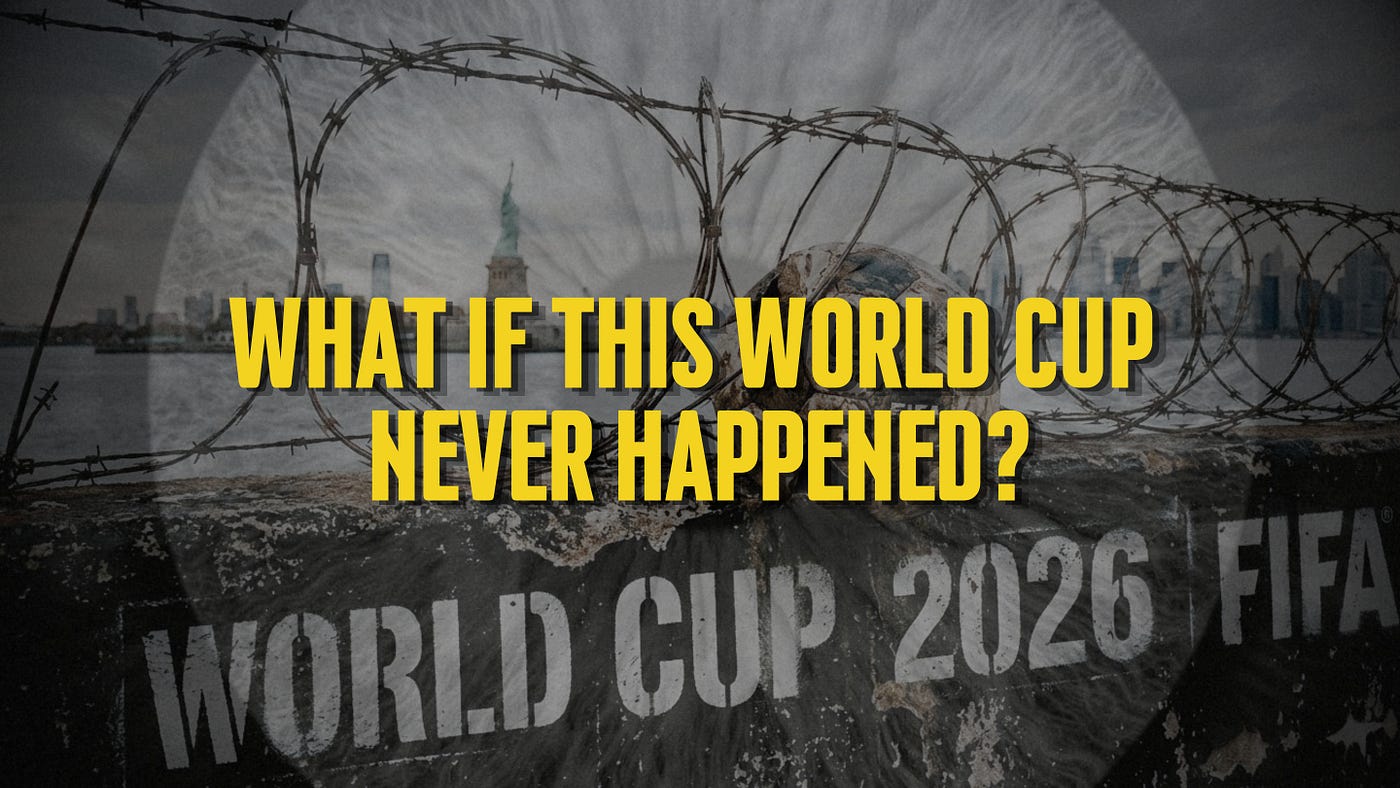
What If This World Cup Never Happened? (by author)
The plane from Johannesburg lands in Cairo in the first days of April, and somewhere between the jet bridge and the transit lounge, someone in the Eritrean delegation starts counting heads. The team has just produced the country’s biggest football result in nearly two decades, a 4–1 aggregate win over Eswatini that puts Eritrea into the Africa Cup of Nations group qualifiers for the first time since 2006. The count stops at the wrong number.
Seven players are gone. Goalkeeper Kibrom Solomon. Veteran midfielder Medhane Redie. A second goalkeeper, three defenders, a striker. Of the ten home-based players who flew out of Asmara, only three fly back: the captain, a midfielder, a forward. The rest slipped away during the stopover in South Africa, trading the biggest win of their careers for a chance at a life their passports were never going to give them.
In Asmara, the government scraps the planned celebrations. State media says nothing. The photos from the Cairo reception circulate anyway, and you can count the absences in them like missing teeth.
Eritrean football has seen this film before. Players vanished in Angola in 2007, in Kenya in 2009, in Botswana in 2015, in Uganda in 2019, until the government simply stopped letting teams travel. The UN puts the twenty-year tally at around 80 players, coaches, and officials who used a fixture as an exit. Behind the tally sits a country where military service has no end date and where the president, in power since 1993, dismisses the human rights reports as fantasy.
Most people treated the seven as a sad headline: a small-country scandal you read, shake your head at, and keep scrolling. I saw something else. Just two months later, the biggest World Cup ever is about to kick off across the US, Canada, and Mexico, and their disappearance starts to look less like an embarrassment and more like a trial run.
They found the one leverage point the modern game still doesn’t know how to defend against: players, much like gladiators in the Roman Colosseum, can simply walk away, and leave the Caesar with nothing to amuse and distract the crowds.
The Tournament Starts at the Border
US authorities put Breel Embolo’s travel permit back under review hours before Switzerland’s flight out of Zurich, and the team takes off for California without its first-choice striker. While his teammates train in San Diego, Embolo sits in the embassy in Bern, watching officials comb through court records from a 2018 altercation before they clear him three days later.
Iraq’s striker Aymen Hussein lands at Chicago O’Hare and disappears into questioning for roughly seven hours, his phone examined, before agents let him into the country he’s supposed to score goals in.
Iran’s footballers spend days grinding through visa procedures at the US consulate in Türkiye, where consular officers reject part of the delegation outright, and then watch the hosts cancel their ticket allocation days before their opener. Months earlier, the federation had boycotted the draw in Washington after the US refused entry to its officials. Now the team has based itself in Tijuana and will commute across the border for its own World Cup matches, and then be forced to leave the country. A national team treated like day labor.
Omar Abdulkadir Artan, CAF’s Best Referee of 2025, set to become the first Somali official in World Cup history, flies to Miami with his diplomatic passport, and border agents send him back, rejected. FIFA confirms he won’t officiate, explains that “FIFA is not involved in host country immigration processes,” and moves on. President Infantino, who spends his life in front of cameras repeating that FIFA and football unite the world, says nothing about him at all.
[embed]
South Africa’s delegation arrives late because parts of it couldn’t get visas, and the country’s own sports minister fumes that “we are being made to look like fools.” Border agents order Senegal’s staff to remove their shoes on the tarmac and submit to lengthy searches; Uzbekistan’s players reach their stadium only after bomb-sniffing dogs finish with them. But there’s no footage of agents processing European squads this way, and everyone already knows why.
[embed]
Then come the fans. Dozens of Scottish supporters, eligible to travel visa-free, watch their approved permits flip to “travel not authorized” with days to go, no explanation offered, £8,000 holidays collapsing on their phone screens. Some of them booked nothing until the approval came through, which turned out to mean nothing at all. A State Department memo had already frozen visa applications from 75 countries. The ACLU and more than 120 civil society groups issued a formal travel advisory for a football tournament, warning visitors about racial profiling, device searches, and detention. A travel advisory. For a World Cup.
Five days before kickoff, gunfire wounds nine people a short drive from England’s base camp in Kansas City, the same weekend a stabbing at Penn Station wounds six more in the city hosting the final.
Two years ago, in these same stadiums, the Copa América gave everyone a warning. Marcelo Bielsa, Uruguay’s coach, stood at a press conference and called the organizers a “plague of liars,” describing fake pitches, unusable training grounds, and coaches threatened into silence after Lionel Scaloni, Argentina’s coach, complained. At every press conference since, Scaloni has declined to discuss the pitches.
[embed]
Eritrea’s players ran from a country the world calls a prison. This month, the world’s footballers are queueing, shoeless, at the checkpoints of a country that calls itself “the free world.”
The Smiling Accomplice
If you want to know how football arrived here, start at dawn on May 27, 2015, at the Baur au Lac hotel in Zurich, where Swiss police walked FIFA executives out under hotel bedsheets. The US Department of Justice unsealed a 47-count indictment that morning describing two generations of officials who had turned the governing body of the world’s game into a racketeering enterprise, $150 million in bribes for television and marketing rights. By December, a second wave of indictments pushed the alleged take past $200 million. This was FIFA-gate.
The country that prosecuted FIFA’s mafia decade is the country FIFA chose to crown a decade later. And FIFA drew the obvious lesson from its near-death experience: proximity to power keeps you safe, as long as you pick the side holding the indictments.
[embed]
Because this organization has spent a century perfecting the art of the warm handshake with the cold hand. In 1934, Mussolini turned the second World Cup ever played into a fascist pageant, with historians presenting evidence at FIFA’s own symposium that Il Duce arranged favorable refereeing for the hosts, and his telegram to the squad before the 1938 final read, simply, “win or die.”
In 1978, FIFA handed the tournament to my country’s military junta. General Videla presented the trophy at the Monumental while, one mile away, the ESMA torture center processed the disappeared, close enough that prisoners in their cells could hear the goal celebrations through the walls. FIFA president João Havelange toured the country and praised the hard work of his hosts. The junta got its propaganda coup. The mothers got the Plaza de Mayo.
In 2014, Russia annexed Crimea four years before its World Cup, and Sepp Blatter’s full response fit in one sentence: “we are going forward with our work.” In Qatar, the Guardian counted 6,500 dead South Asian migrant workers in the decade after the country won its hosting rights, an average of twelve per week, and the tournament’s own secretary-general eventually let slip an estimate of 400 to 500 deaths on World Cup projects, a figure his committee had previously reported as 40.
Mussolini, Videla, Putin, the emir, and now a US president running masked federal squads through the very cities about to host the matches. The 2026 edition continues the line, with one difference: this time the disguise came off before the opening whistle.
Which brings us to December 5, 2025, half an hour into the World Cup draw at the Kennedy Center, when Gianni Infantino stops the show to hand Donald Trump a gold trophy and a medal: the inaugural FIFA Peace Prize.
[embed]
The man had spent years publicly aching for a Nobel. Three weeks after the Nobel committee passed him over, football’s governing body invented a prize for him from scratch. FIFA published no criteria and named no other candidates, and the announcement blindsided FIFA’s own Council. Trump accepted it on stage as “one of the great honors of my life.” Infantino, who had personally lobbied for Trump’s Nobel, later defended the whole thing by insisting that “objectively, he deserves it,” while Norway’s federation president, a human rights lawyer, backed an ethics complaint arguing the award shredded FIFA’s own neutrality statutes.
So a peace prize now sits in the office of a man whose government, in the six months since, kidnapped a president, threatened to overtake the largest island in the world, bombed Iran, revoked travel permits from Scottish families, turned away Africa’s best referee, and stationed bomb dogs between Uzbekistan’s footballers and their dressing room.
The most popular event in the world opens behind the most militarized perimeter in the history of sport.
The Eritrean Blueprint
What if the seven Eritreans handed every squad in this tournament a preview of the only message the system cannot absorb? Their move, stripped to its mechanics, was simple: deliver the performance, then withhold the body. The state that owned them could do nothing, because everything it controls (the federation, the stadium, the broadcast, the police) depends on the players physically showing up.
The second matchday of this World Cup arrives, and one squad, any squad, plays its opener and then declines to appear for its next fixture. The players release a statement about the referee the hosts sent home, the fans who lost thousands to revoked permits, the teams sleeping in another country to dodge the host’s border agents. FIFA’s lawyers reach for the sanctions manual. The broadcasters stare at a 90-minute hole where the content was supposed to be. And every other dressing room in the tournament holds a meeting that night.
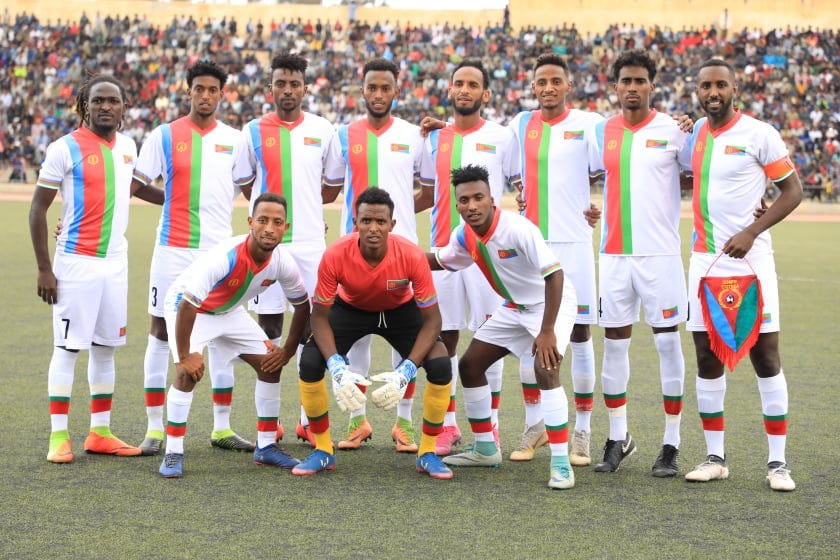
Eritrea’s national team poses before their AFCON qualifying victory over Eswatini — seven players later failed to return home (Source)
Researchers who study how social conventions break have measured the threshold at which a committed minority flips an entire system, and it sits at roughly 25 percent, far below a majority. Twelve teams out of 48. The players are the one workforce this trillion-dollar machine cannot replace, because the product is their bodies in motion. No labor force on Earth holds more leverage and uses less of it.
I won’t pretend the comparison is clean and that it isn’t utopian. The Eritreans risked their lives and their families to walk away, and most of them will spend years stateless for it. A World Cup star who walked away would risk a fine and a news cycle. That asymmetry is exactly the indictment: the people with the least protection have already shown the move, and the people with the most protection haven’t found the nerve to copy it.
One Day Before the Whistle
I’m Argentine. No version of me exists without this game. I can talk for hours about Maradona and the 1986 quarterfinal against England, about why Riquelme’s pause was a form of argument, about line-ups from World Cups played decades before I was born. I keep Messi closer to sainthood than anything any religion ever offered me. And tomorrow, when this tournament opens, part of me will want one thing with the purity of a ten-year-old: Argentina defending its title in Messi’s last World Cup, one final dance before the lights go down on the greatest player who ever lived.
[embed]Futbol is the one Argentianian religion
But I’m also Argentine in the other sense. My country sewed its first star onto the shirt in 1978, in a stadium a mile from a torture center, under a regime like the one that kidnapped my grandfather. I learned early that the ugliest people in the world have spent a century fondling the most beautiful thing in mine. And this month, Argentina’s base camp sits in Kansas City, a short drive from Saturday’s gunfire, inside a country whose government hands out peace prizes to itself.
So another part of me, the part that loves this game more than the men who own it ever could, wants this World Cup to fail in the loudest way sport has ever produced. I want the empty fixture, the statement, the meeting in every dressing room. Both wants come from the same place, and I’ve stopped trying to separate them.
Seven men walked out of an airport in April and vanished into a continent that may never grant them papers. They’ll watch this World Cup, if they watch it at all, on borrowed screens under borrowed names.
And yet, they are the freest footballers in the world.
I help curious minds who need a relatable pen put their sharpest ideas into words: stories, perspectives, and insights that actually get read. If you have something to say, reach out!
If you want to support my work, here is the place to do so. If not, thanks for reading anyway!
메타데이터
- post_id
- 498d19a2f36a
- slug
- what-if-this-world-cup-never-happened-498d19a2f36a
- url
- https://medium.com/southern-winds/what-if-this-world-cup-never-happened-498d19a2f36a
- canonical_url
- https://medium.com/southern-winds/what-if-this-world-cup-never-happened-498d19a2f36a
- author_url
- https://medium.com/@rickylanusse
- status
- ok
- fetched_at
- 2026-06-12 18:14:10