The Words English Forgot: How Negatives Preserve Lost Meanings
By Sabreet Rehal
The Words English Forgot: How Negatives Preserve Lost Meanings
By Sabreet Rehal
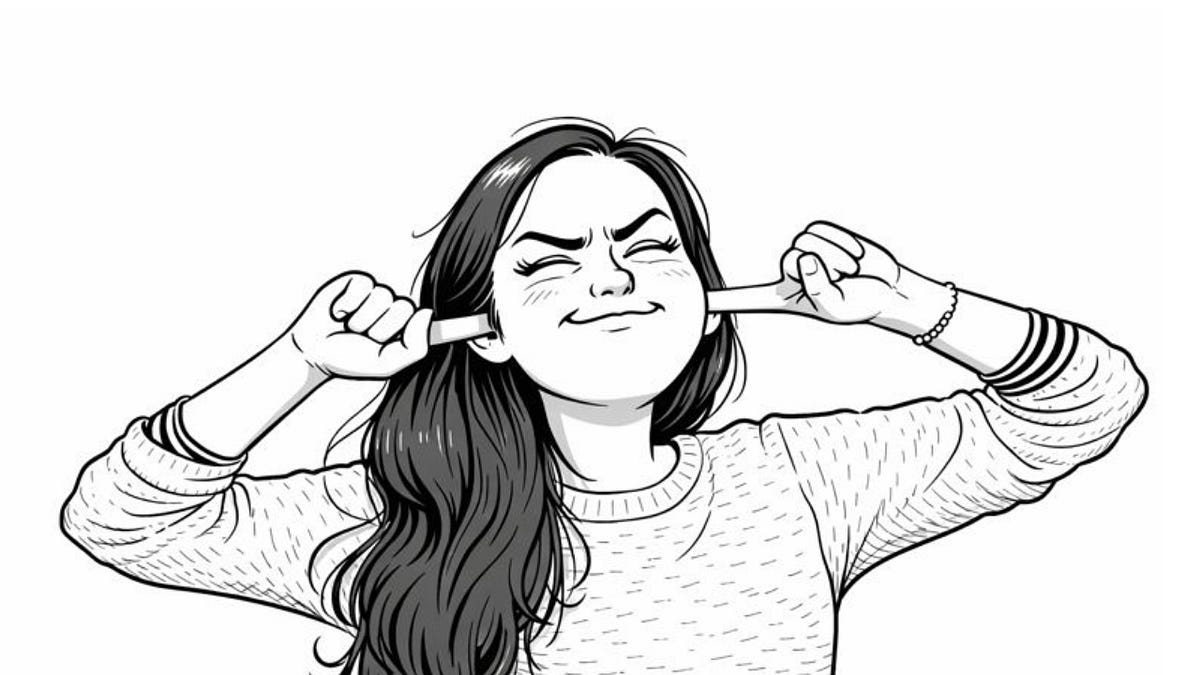
Photo by Unseen Studio on Unsplash
English is filled with linguistic ghosts. Hidden within ordinary conversation are words that seem incomplete, as though part of them has vanished over time. Consider disgruntled, unkempt, and nonchalant. Each appears to imply an opposite form: gruntled, kempt, chalant. Yet most of these positive forms either disappeared centuries ago or survive only as jokes. Linguists call these strange survivors unpaired negatives — negative words whose original positive forms have faded away (Crystal 112). These words reveal something fascinating about English: the language often remembers disorder, absence, and disruption more vividly than balance or normality.
Take disgruntled. Today it describes someone irritated or dissatisfied, especially in work or social situations. Yet the forgotten root gruntle once existed in Middle English and meant to grumble mildly. Over time, English speakers stopped using gruntled naturally, but disgruntled remained useful because frustration is a stronger and more noticeable emotion than contentment (“Online Etymology Dictionary”). Modern speakers occasionally use gruntled humorously, but only because it sounds strangely unfamiliar.
The same pattern appears in unkempt. The word comes from the Old English kemb, meaning “comb.” Someone neat and well-groomed was once described as kempt, literally “combed.” As the language evolved, kempt nearly disappeared from everyday speech while unkempt survived because people more frequently needed to describe disorder than tidiness (“Couth Definition and Meaning”). Once again, the negative outlived the ordinary state it originally depended on.
Another fascinating example is nonchalant. The word entered English from the French nonchaloir, meaning “to disregard” or “to not care.” Because English speakers recognize the negative prefix non-, many instinctively assume a positive word chalant should exist. However, standard English never fully adopted it. The language creates the illusion of symmetry even when history erased one side of the pair.
Why does this happen? Part of the answer lies in psychology. Human beings naturally pay more attention to problems than to ordinary conditions. A messy room stands out more than a clean one. An irresponsible person attracts more discussion than a responsible one. According to linguist Steven Pinker, language evolves around communicative usefulness, and emotionally charged or socially disruptive ideas tend to remain memorable longer than neutral ones (Pinker 287). Negative words survive because they describe situations people feel more urgently compelled to mention.
English history also contributes to these orphan negatives. The language developed through centuries of invasions, migrations, and borrowing from other languages. Old English mixed with Norse after Viking settlement and absorbed large amounts of French vocabulary after the Norman Conquest of 1066. During these transformations, many words naturally disappeared while others remained because speakers continued using them (Baugh and Cable 154). Sometimes only one half of a word pair survived the transition. The result is a language filled with asymmetrical remnants of older forms.
Other orphan negatives hide in plain sight throughout English:
● Innocent preserves traces of the rare word nocent, meaning harmful.
● Impeccable contains the nearly forgotten root peccable, meaning capable of sinning.
● Unruly survived while ruly became uncommon outside playful speech.
● Disarray remains common even though its older root shifted meaning over time.
Interestingly, English speakers sometimes revive these missing positives for humor. Words like kempt, gruntled, and ruly occasionally appear in advertisements or casual conversation because they sound oddly satisfying. Their rarity creates surprise. The joke works because listeners subconsciously
recognize the familiar negative form and suddenly encounter the “missing” opposite they never expected to hear.
These linguistic fossils reveal that English is not organized according to perfect logic. Instead, it is shaped by memory, emotion, and cultural emphasis. The language preserves the words speakers repeatedly need, and societies often speak more urgently about disorder, carelessness, and conflict than about ordinary stability. In this way, English reflects human nature itself: people tend to notice what goes wrong more than what quietly works.
Unpaired negatives therefore act like archaeological fragments buried inside modern speech. Every time someone describes a person as disgruntled or hair as unkempt, they unknowingly echo words that history has nearly erased. The positive forms may have disappeared, but their shadows remain preserved inside the negatives that survived them.
Perhaps that is what makes these words so compelling. They remind us that language is not a perfectly organized system but a living archive shaped by centuries of change and loss. And sometimes, what disappears leaves a deeper mark than what remains.
Works Cited
Baugh, Albert C., and Thomas Cable. A History of the English Language. 6th ed., Routledge, 2013. Crystal, David. The Cambridge Encyclopedia of Language. 3rd ed., Cambridge University Press, 2010.
“Couth Definition and Meaning.” Merriam-Webster,
https://www.merriam-webster.com/dictionary/couth
“Online Etymology Dictionary.” Etymonline, https://www.etymonline.com/ Pinker, Steven. The Language Instinct. William Morrow and Company, 1994.
메타데이터
- post_id
- 499225d2b0f0
- slug
- the-words-english-forgot-how-negatives-preserve-lost-meanings-499225d2b0f0
- url
- https://medium.com/ypla/the-words-english-forgot-how-negatives-preserve-lost-meanings-499225d2b0f0
- canonical_url
- https://medium.com/ypla/the-words-english-forgot-how-negatives-preserve-lost-meanings-499225d2b0f0
- author_url
- https://medium.com/@yplabloginterns
- status
- ok
- fetched_at
- 2026-06-24 23:31:39