A Story of Vision: Pandit Jawaharlal Nehru and the Dream of a New India
The year was 1947. The air in India carried both the fragrance of freedom and the pain of Partition. A newborn nation stood uncertain…
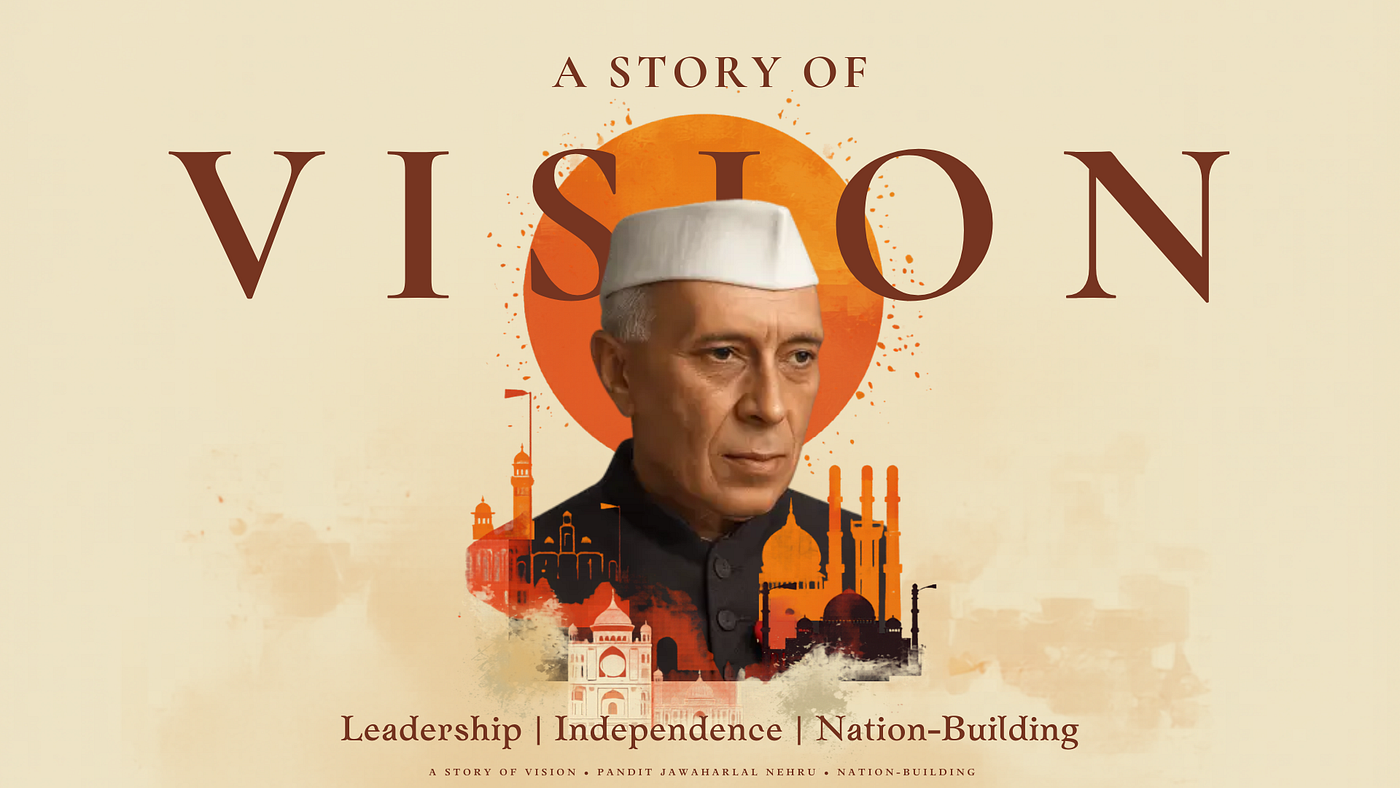
A Story of Vision: Pandit Jawaharlal Nehru and the Dream of a New India
A Story of Vision: Pandit Jawaharlal Nehru and the Dream of a New India
The year was 1947. The air in India carried both the fragrance of freedom and the pain of Partition. A newborn nation stood uncertain, hopeful, and fragile. At the center of this moment stood a tall, thoughtful man with a red rose on his achkan — Jawaharlal Nehru.
On the midnight of August 15, as the clock struck twelve, Nehru’s voice echoed through the Constituent Assembly. He spoke of India’s “tryst with destiny,” not as a celebration alone, but as a promise — a promise to build a nation rooted in justice, equality, and opportunity.
But freedom was only the beginning.
The Burden of a New Nation
India was wounded. Millions had crossed borders amid violence and fear. The economy was weak. Illiteracy was widespread. Unity seemed fragile.
Many wondered: Could this vast and diverse land survive as one nation?
Nehru believed it could.
Each morning, as he walked through the corridors of power, he carried not just files and policies, but a vision — a modern India that would stand tall among nations. He believed democracy would be India’s strongest foundation. While other newly independent countries turned toward dictatorship, Nehru chose debate over dominance, elections over authority, and institutions over individuals.
When India held its first general elections in 1951–52, people from villages, towns, mountains, and deserts stood in long lines to vote. It was not just an election; it was faith in democracy.
Temples of Modern India
One evening, standing before a massive dam under construction, Nehru looked at the rising structure and called such projects the “temples of modern India.” To him, factories, dams, laboratories, and universities were not just buildings — they were symbols of progress.
He supported the creation of scientific and educational institutions that would empower future generations. He often told young students that the future of India would not be shaped by swords, but by science, knowledge, and innovation.
He dreamed of an India that would manufacture its own goods, train its own scientists, and build its own destiny.
A Voice in the World
The world outside was divided by the Cold War. Powerful nations tried to pull smaller countries into their camps. But Nehru chose a different path. Alongside leaders like Josip Broz Tito and Gamal Abdel Nasser, he helped shape the Non-Aligned Movement — a bold idea that India would not bow to global pressures.
India would walk independently.
His calm yet firm diplomacy gave the young nation respect on the global stage.
Unity in Diversity
At home, India spoke many languages, practiced many religions, and followed many customs. After Partition, tensions were high. But Nehru stood firm in his belief that India belonged equally to all.
He spoke of secularism not as a political tool, but as a moral necessity. He believed India’s strength lay in its diversity. Whether addressing villagers in the countryside or diplomats abroad, his message remained the same — India’s unity would come from acceptance, not uniformity.
The Rose and the Children
Children adored him. They called him “Chacha Nehru.” On his birthday, he preferred spending time with them rather than attending grand ceremonies. He saw in their eyes the India of tomorrow — fearless, educated, and progressive.
To them, he was not just a Prime Minister; he was a storyteller who believed in their dreams.
The Legacy of a Dreamer
Years passed. Challenges came — some victories, some setbacks. Yet Nehru never stopped believing in the idea of India: democratic, modern, inclusive, and strong.
When he left this world in 1964, he left behind more than policies and institutions. He left behind a vision — a roadmap for a nation still finding its path.
And today, when India debates in Parliament, conducts elections, launches satellites, or celebrates its diversity, echoes of Nehru’s dream can still be heard.
He was not just a leader of his time. He was a visionary who saw beyond it.
메타데이터
- post_id
- 49cd354092cc
- slug
- a-story-of-vision-pandit-jawaharlal-nehru-and-the-dream-of-a-new-india-49cd354092cc
- url
- https://medium.com/@d.m.pachkate/a-story-of-vision-pandit-jawaharlal-nehru-and-the-dream-of-a-new-india-49cd354092cc
- canonical_url
- https://medium.com/@d.m.pachkate/a-story-of-vision-pandit-jawaharlal-nehru-and-the-dream-of-a-new-india-49cd354092cc
- author_url
- https://medium.com/@d.m.pachkate
- status
- ok
- fetched_at
- 2026-07-13 06:23:13