NASA Just Found Something Weird On Mars, Here’s What It Actually Means
Mars has a way of making ordinary things look strange. A cracked patch of dirt isn’t much to look at back on Earth. On Mars, the same…
NASA Just Found Something Weird On Mars, Here’s What It Actually Means
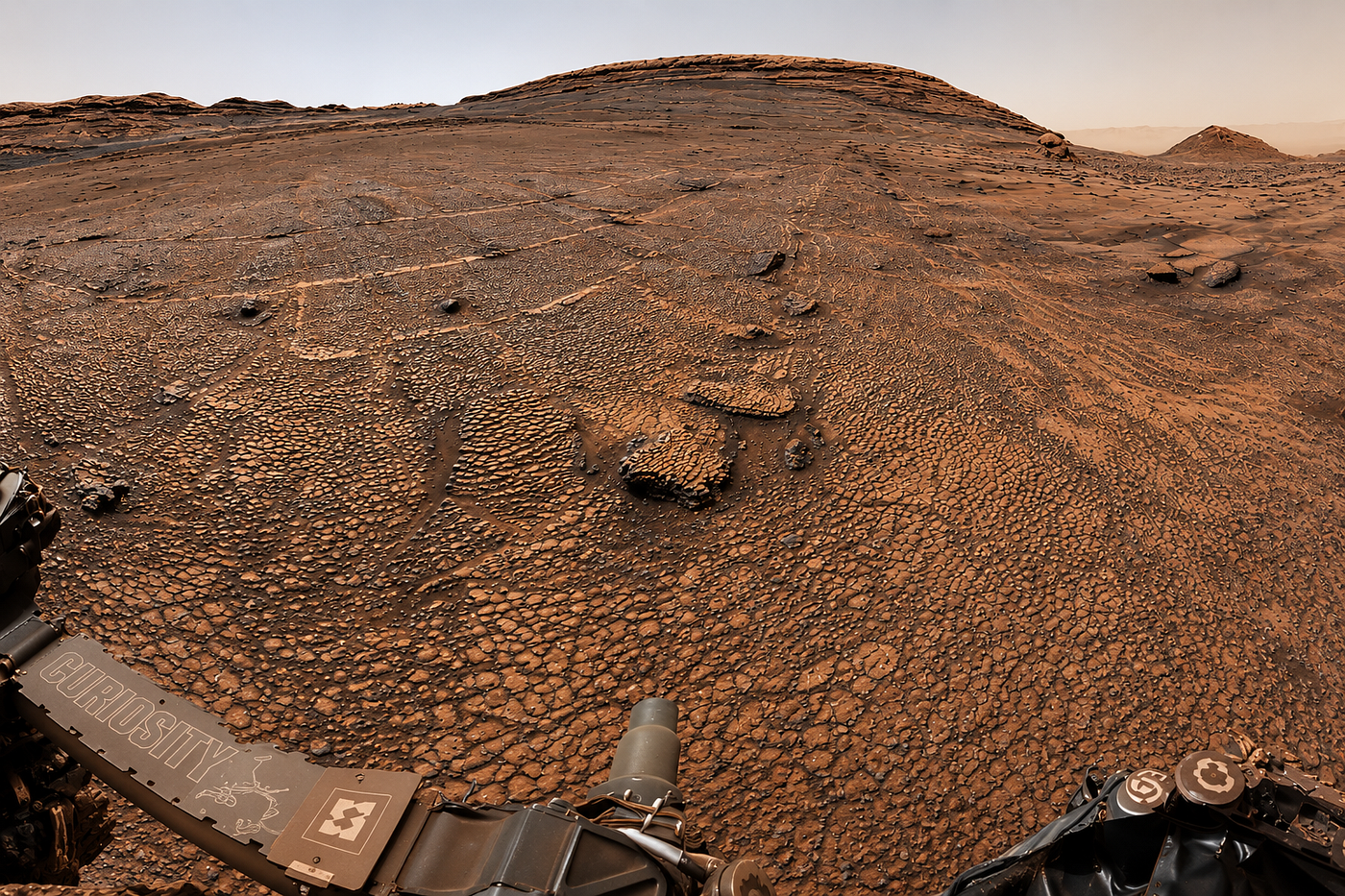
Mars has a way of making ordinary things look strange. A cracked patch of dirt isn’t much to look at back on Earth. On Mars, the same cracks just became one of the more interesting finds the Curiosity rover has sent home in years.
The rover ran into it while climbing through a valley called Valle Grande. A huge stretch of ground covered edge to edge in small, honeycomb-shaped fractures. NASA’s own description for it is “a sea of polygons,” which, once you look at the photo, feels less like marketing language and more like the perfect way to describe it.
“We’ve seen a lot of fascinating landscapes through Curiosity’s eyes, but this sea of polygons took our breath away,” said Ashwin Vasavada, the mission’s project scientist at NASA’s Jet Propulsion Laboratory.
Worth sitting with that for a second. This is a scientist who’s been staring at Mars through Curiosity’s cameras since 2012. He’s not easily impressed anymore, and he was still caught off guard.
The polygons themselves are small, about 1.5 to 3 inches across. It’s the scale of the field that’s unusual. Curiosity photographed it in June, and the honeycomb pattern wraps all the way around a 20-foot sand-capped butte the team nicknamed Miraflores, standing in the middle of it all like an island. From the rover’s cameras, it almost looks as if it were stamped into the ground.
So how’d they get there?

NASA doesn’t have a clean answer for this specific patch yet. But Curiosity’s run into similar polygon patterns before, and some of those had a fairly ordinary origin: dried mud. Wet mud shrinks as it dries, and the cracks it leaves behind often intersect to form rough polygonal shapes, the same thing you’d see at the bottom of a dry lakebed on Earth. Compression can do something similar underground, squeezing water out of buried sediment. So can repeated temperature swings.
None of that requires an exotic explanation. Water’s usually somewhere in the story.
That’s the part worth paying attention to
Because water is the whole reason Curiosity is on Mars in the first place. The rover’s spent over a decade building a case that Gale Crater, where it landed, used to be wetter, and that water once moved through the rocks and sediment there in ways it clearly doesn’t anymore.
That’s not the same as saying these particular cracks prove there was a lake here. NASA hasn’t claimed that, and neither will I. What the polygons give scientists is another data point, another surface feature to run chemistry on and compare against everything else Curiosity’s already found.
And Curiosity’s found some genuinely strange chemistry already. Earlier this year the rover picked up organic molecules in Martian rock, the kind of compounds that show up in the chemistry underpinning life on Earth. Before that turns into a headline it doesn’t deserve: nobody knows where these molecules actually came from. They can form biologically. They can also form through plain geological and chemical processes that have nothing to do with life. Right now, both are on the table.
None of this was visible from orbit
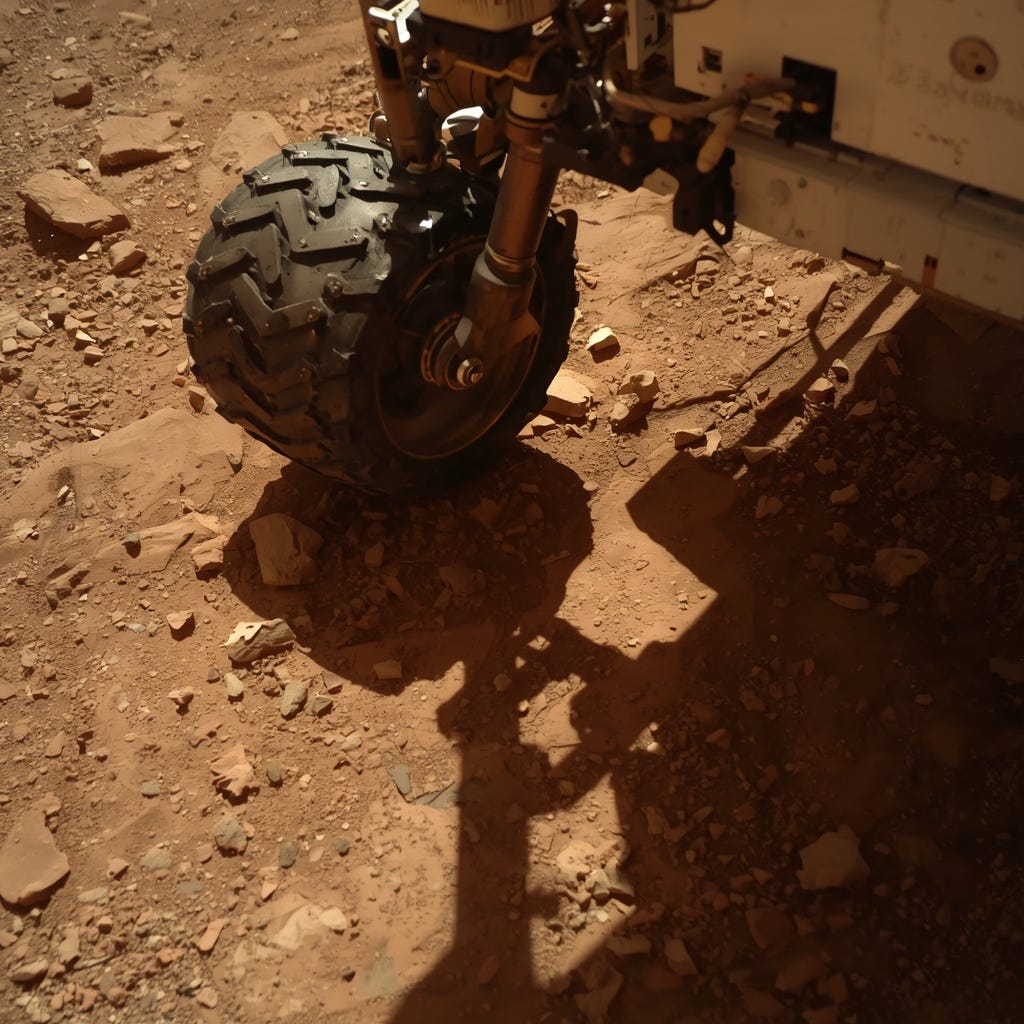
Here’s a detail that’s easy to skip past but shouldn’t be: none of it was visible from up there. The polygons are a few inches across and are completely invisible from a spacecraft circling the planet. You need a rover parked right next to them, with cameras built to pick out that kind of detail, to even know they exist. That’s the argument for boots-on-the-ground exploration in one sentence.
Curiosity landed on Mars on August 5, 2012. It’s spent most of the years since grinding up Mount Sharp, the mountain rising out of the middle of Gale Crater, stopping constantly to drill, sample, and photograph whatever looks worth a second glance. Fourteen years in, it’s still finding landscapes nobody on the team expected.
This one just happens to look like somebody pressed a honeycomb into the dirt.
Mars still isn’t finished giving things away
It’s tempting to want a huge, tidy answer out of a find like this. Did Mars have water? Plenty of evidence says yes. Could parts of it once have supported life? Possibly. Did these specific cracks form because of that ancient water? Still an open question.
For now, the polygons are one more piece of a puzzle Curiosity’s been assembling for almost fourteen years, a few inches of cracked ground at a time. And apparently it can still make the people who know Mars best stop and stare.
메타데이터
- post_id
- 49ea16a685a4
- slug
- nasa-just-found-something-weird-on-mars-heres-what-it-actually-means-49ea16a685a4
- url
- https://medium.com/@matinmaranga/nasa-just-found-something-weird-on-mars-heres-what-it-actually-means-49ea16a685a4
- canonical_url
- https://medium.com/@matinmaranga/nasa-just-found-something-weird-on-mars-heres-what-it-actually-means-49ea16a685a4
- author_url
- https://medium.com/@matinmaranga
- status
- ok
- fetched_at
- 2026-08-12 17:28:58