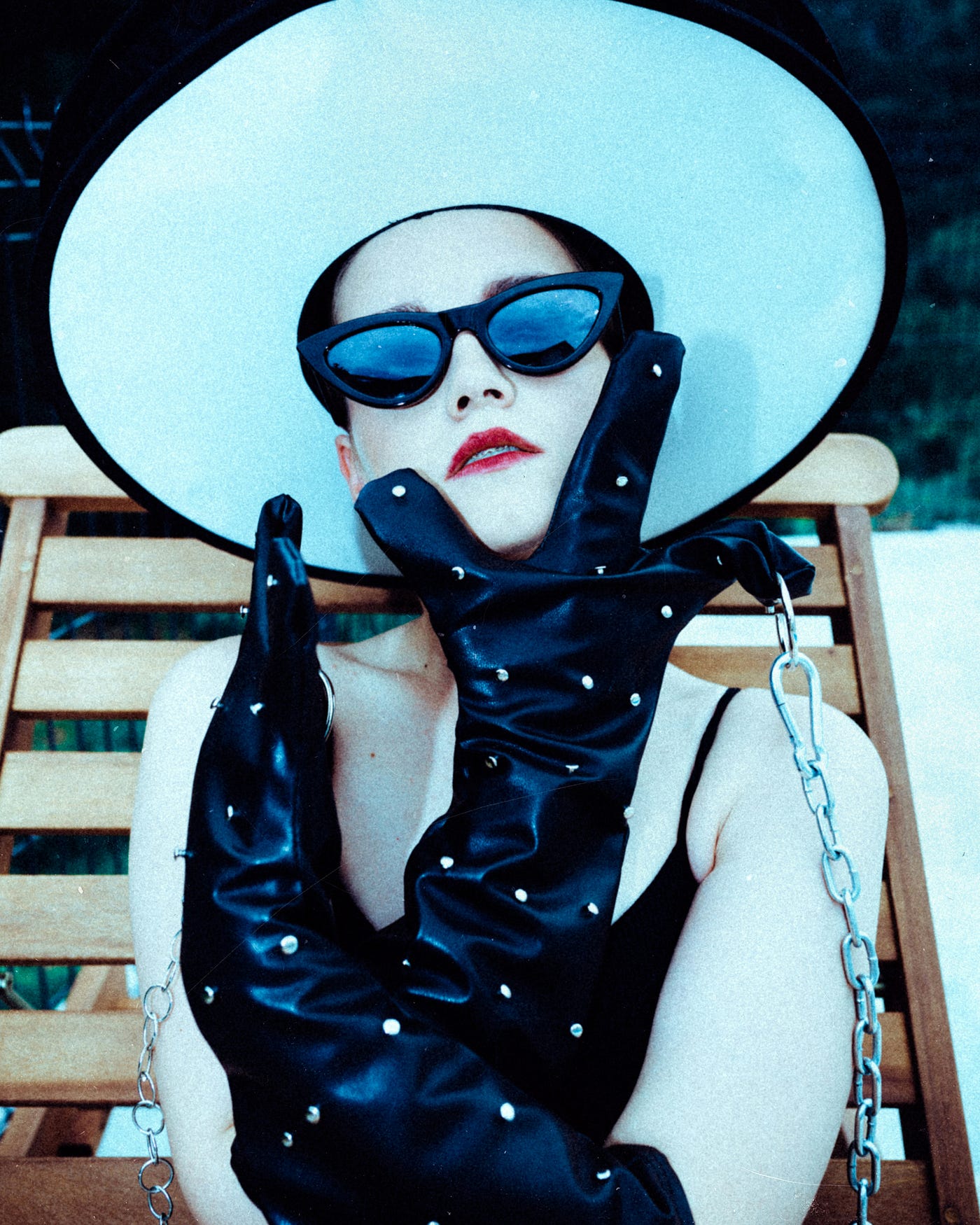
Demna Dressed Elon Musk’s Estranged Daughter for Gucci. Kate Moss Closed the Show.
Demna’s first Gucci runway featured body-con silhouettes, a supermodel comeback, and Elon’s trans daughter making her fashion debut. This…
Demna Dressed Elon Musk’s Estranged Daughter for Gucci. Kate Moss Closed the Show.

Demna’s first Gucci runway featured body-con silhouettes, a supermodel comeback, and Elon’s trans daughter making her fashion debut. This wasn’t a show. It was a signal: luxury is done playing safe.
On February 26, 2026, Demna Gvasalia presented his first runway show for Gucci in Milan. The collection was called “Primavera” (Spring). The venue was Palazzo delle Scintille. The front row included Paris Hilton, Nicky Hilton, Donatella Versace, and Demi Moore (who brought her dog Pilaf, naturally).
But the real story wasn’t the clothes. It was who wore them.
Kate Moss — 52 years old, supermodel emeritus, the woman who defined cool for three decades — closed the show in a shimmering gown. Vivian Wilson — Elon Musk’s estranged transgender daughter, who publicly disowned her billionaire father in 2022 — made her runway debut.
And Demna, the man who built Balenciaga into a $2 billion streetwear empire by putting models in oversized hoodies and Crocs, killed his entire aesthetic and pivoted to body-conscious sexuality.
This wasn’t a fashion show. It was a manifesto. And the message was clear: Luxury is done with irony. Sex is back. And the only way to survive is to burn down everything you built before.
The Aesthetic 180: From Oversized to Body-Con in One Season
For the past decade, Demna defined fashion with one signature: oversized everything.
At Balenciaga, he made $2,000 hoodies that looked like thrift-store rejects. He put models in trash-bag dresses and called it commentary. He turned Crocs into a status symbol. His aesthetic was anti-fashion fashion: ugly on purpose, ironic, designed to make luxury consumers feel smart for buying intentionally hideous things.
It worked. Balenciaga revenue tripled under his tenure. Gen Z ate it up. Celebrities wore his hoodies to the grocery store like badges of cultural literacy.
But on February 26, 2026, Demna walked into Gucci and torched that entire playbook.
The Primavera collection featured:
- Legging-pants: skin-tight, high-waisted, no apologies
- Seamless mini dresses: body-hugging, curve-showcasing, zero irony
- Shimmering evening gowns: classic Hollywood glamour, not a meme in sight
- Kate Moss in gold lamé: the antithesis of a Balenciaga trash bag
This wasn’t evolution. It was rejection. Demna didn’t tweak his Balenciaga formula for Gucci. He repudiated it. Every silhouette screamed: “The oversized era is over. Sexuality is back. And if you’re not hot, you’re irrelevant.”
It’s the most aggressive creative pivot since Hedi Slimane went from Dior Homme’s skinny suits to Saint Laurent’s rock-and-roll sex appeal. And it raises one brutal question: If Demna himself doesn’t believe in oversized irony anymore, what does that say about the $50 billion streetwear bubble he helped inflate?
Kate Moss at 52: The Return of Actual Star Power
Let’s talk about the elephant in the gilded room: Kate Moss closed the show.
Not a TikTok influencer. Not a Hadid or a Jenner. Not a 19-year-old discovered on Instagram last week. Kate Moss — the woman who walked for Chanel in 1992, who defined heroin chic, who survived decades of scandals and still commands $10 million endorsement deals.
At 52.
In an industry that treats 30-year-old models like retirees.
Demna didn’t book her for nostalgia. He booked her because luxury has a star power crisis, and Kate Moss has the one thing influencers can’t fake: irrational magnetism.
Here’s the problem luxury brands won’t admit: influencers have reach, but they don’t have mystique. They’re accessible. Relatable. They reply to DMs. They post their morning routines. You can know everything about them in 20 minutes of scrolling.
Kate Moss? You don’t know Kate Moss. You aspire to her. She doesn’t explain herself. She doesn’t sell you a lifestyle. She just exists, and you either get it or you don’t.
That’s the alchemy luxury needs: the ineffable cool that makes people want things they can’t articulate. Influencers drive conversions. Icons drive desire. And desire is worth more than clicks.
By putting Kate Moss in that gold gown, Demna was making a statement: Real luxury requires real stars. Not engagement metrics. Not follower counts. Actual, undeniable, fuck-you presence.
And luxury has been so addicted to influencer economics that it forgot what that even looks like.
Vivian Wilson on the Runway: The Casting Heard Round the Internet
Now let’s address the wildcard: Vivian Wilson, Elon Musk’s estranged daughter, making her runway debut for Gucci.
For those who missed the family drama: Vivian is Elon’s child with ex-wife Justine Musk. In 2022, at age 18, she legally changed her name from Xavier Musk to Vivian Jenna Wilson, citing her desire to sever ties with her father and align her identity with her gender.
Her reason, per court filings: “I no longer live with or wish to be related to my biological father in any way, shape, or form.”
Elon’s response? Public mockery, transphobic tweets, and a years-long campaign positioning himself as a victim of “woke culture.”
And now, Vivian Wilson — a 22-year-old trans woman who publicly disowned the richest man on Earth — walks Demna’s Gucci debut.
This isn’t a coincidence. This is a casting as political statement.
Luxury brands have spent years talking about inclusivity, diversity, and progressive values. But most of it is performative: hire a trans model for a campaign, post a rainbow logo during Pride, collect your ESG points, move on.
Demna’s choice is different. Vivian Wilson isn’t just a trans model. She’s the trans woman Elon Musk wants erased from public life. Casting her isn’t inclusion theater. It’s defiance.
It says: “We know who our customer is. And it’s not your father.”
What This Show Really Signals: Luxury’s Desperation Pivot
Let’s zoom out. Why does this show matter beyond the celebrity circus?
Because it reveals luxury’s existential panic heading into 2026.
The industry is in crisis. Gucci’s revenue dropped 20% in 2025. Kering’s stock is down 40% from its peak. Consumers are exhausted by logo fatigue, influencer overload, and $3,000 hoodies that look like Goodwill rejects.
The streetwear bubble — built on irony, hype, and artificial scarcity — has popped. Gen Z isn’t buying $1,200 distressed sneakers anymore. They’re thrifting. They’re renting. They’re questioning why a sweatshirt costs more than their rent.
So luxury is pivoting hard back to classic codes:
- Sex (body-con silhouettes, not shapeless oversized)
- Glamour (Kate Moss in gold, not influencers in hoodies)
- Exclusivity (supermodels, not TikTok stars)
- Craft (tailoring, draping, fabrication — not logo slapping)
Demna’s Gucci debut is the clearest signal yet: The irony era is over. If you’re not aspirational, you’re dead.
And brands that spent the past decade chasing streetwear hype are now scrambling to remember how to make people want things instead of just recognize them.
The Front Row Tells the Real Story
Look at who Demna invited to sit front row:
- Paris Hilton: OG influencer, reality TV royalty, built a billion-dollar empire on famous-for-being-famous
- Nicky Hilton: The Hilton sister who married into European aristocracy
- Donatella Versace: Literal Italian fashion royalty, runs a $2 billion brand
- Demi Moore: 60-year-old Hollywood icon who doesn’t need to explain herself
- Pilaf the dog: Demi’s accessory, because eccentricity is luxury
Notice who’s not there? Influencers with 10 million followers and zero cultural impact. TikTok stars who’ll be irrelevant in 6 months. Celebrities famous for dating other celebrities.
Demna invited legacy power. People whose relevance isn’t algorithmic. People who were famous before Instagram existed and will be famous after it dies.
This is a calculated bet: Luxury can’t compete on virality. It has to compete on pedigree.
Because virality is democratic. Anyone can go viral. But pedigree is scarce. And scarcity is the only moat luxury has left.
Why This Matters: Creative Directors Are Burning Their Own Legacies
Here’s the uncomfortable truth: Demna just invalidated his own career.
He built Balenciaga on one thesis: Fashion should be ugly, ironic, and anti-status. He convinced luxury consumers that $2,000 hoodies were smart. He turned logo fatigue into a selling point (“so over it, it’s cool again”). He made fashion people feel superior for wearing intentionally hideous things.
And now, at Gucci, he’s saying: Actually, none of that mattered. Sexy dresses and supermodels are what luxury needs.
So which version is true? Was Balenciaga a decade-long troll? Is Gucci the real Demna? Or is this just a desperate pivot because the old formula stopped working?
The answer doesn’t matter. What matters is luxury’s creative class is eating itself. Designers are abandoning their signatures mid-career because the market is punishing conviction.
Look at the creative director carousel in 2026 alone:
- Demna: Balenciaga oversized → Gucci body-con
- Maria Grazia Chiuri: Dior feminism → Fendi pragmatism
- Matthieu Blazy: Bottega minimalism → Chanel (debut March 9)
Nobody’s building brands anymore. They’re managing portfolios. And when creative directors become interchangeable, luxury loses its last claim to uniqueness.
The Endgame: Either You’re Aspirational or You’re Irrelevant
Let’s be honest about what Demna’s Gucci debut proves: The streetwear era was a bubble, and it just popped.
For 10 years, luxury convinced itself that irony, accessibility, and “relatability” were the future. That Gen Z wanted hoodies, not haute couture. That logos mattered more than cut. That influencers could replace models.
It was all bullshit.
Gen Z is broke. They’re not buying $2,000 hoodies. They’re thrifting $20 vintage Levi’s. The influencers luxury paid millions to are now shilling dubious crypto projects. And the logos that brands slapped on everything? They’re at Ross Dress for Less.
Meanwhile, the things that actually hold value are surging:
- Hermès Birkins: up 20% year-over-year
- Vintage Chanel: selling for 4x auction estimates
- Cartier jewelry: record sales
- Bottega Veneta under Louise Trotter: 389% growth
What do they have in common? Zero irony. Maximum aspiration. Craft over hype.
Demna sees the writing on the wall. He’s not dumb. He built Balenciaga into a $2 billion business. But he also knows that business model is dying.
So he’s doing what every smart operator does when the paradigm shifts: He’s burning the old playbook and grabbing the next one.
Kate Moss in gold lamé isn’t a throwback. It’s a life raft. And Demna is betting that luxury’s future looks a lot like its past: exclusive, aspirational, sexy, and completely inaccessible to normal people.
Because if luxury becomes accessible, it stops being luxury. And that’s the one truth streetwear tried to deny for a decade.
The Last Word: Nostalgia Isn’t a Strategy, It’s a Surrender
Demna’s Gucci debut is being praised as “a return to glamour.” But let’s call it what it is: a retreat.
Luxury tried to be cool, democratic, ironic, and accessible. It didn’t work. So now it’s running back to aristocratic fantasy: supermodels, body-con dresses, unattainable beauty, old-money codes.
But here’s the problem: You can’t just rewind to 1995 and pretend the internet didn’t happen.
Kate Moss closing a Gucci show in 2026 is powerful. But it’s also desperate. Because in 1995, Kate Moss was new. She was disruptive. She was the future.
In 2026? She’s nostalgia. And nostalgia is what brands sell when they run out of ideas.
The real question isn’t whether Demna’s Gucci gambit will work. It’s whether luxury has anything left to say beyond “remember when this mattered?”
Because casting Elon Musk’s estranged daughter and a 52-year-old supermodel isn’t vision. It’s provocation masquerading as purpose. And provocation has a shelf life.
Eventually, people stop caring about who walked. They start asking: Why should I want this?
And if luxury’s only answer is “because Kate Moss wore it,” then it’s already lost.
Written with AI assistance and edited by the author.
메타데이터
- post_id
- 4a08b6f5ee1a
- slug
- demna-dressed-elon-musks-estranged-daughter-for-gucci-kate-moss-closed-the-show-4a08b6f5ee1a
- url
- https://medium.com/@tako9555/demna-dressed-elon-musks-estranged-daughter-for-gucci-kate-moss-closed-the-show-4a08b6f5ee1a
- canonical_url
- https://medium.com/@tako9555/demna-dressed-elon-musks-estranged-daughter-for-gucci-kate-moss-closed-the-show-4a08b6f5ee1a
- author_url
- https://medium.com/@tako9555
- status
- ok
- fetched_at
- 2026-06-26 03:39:16