NATO War Game: Russia Could Seize Lithuania in Days via Kaliningrad
A recent German simulation exposes alliance hesitation, hybrid tactics, and the risks to Baltic security as Russia uses ‘humanitarian…
Geopolitics
NATO War Game: Russia Could Seize Lithuania in Days via Kaliningrad
A recent German simulation exposes alliance hesitation, hybrid tactics, and the risks to Baltic security as Russia uses ‘humanitarian distress’ as an excuse to strike
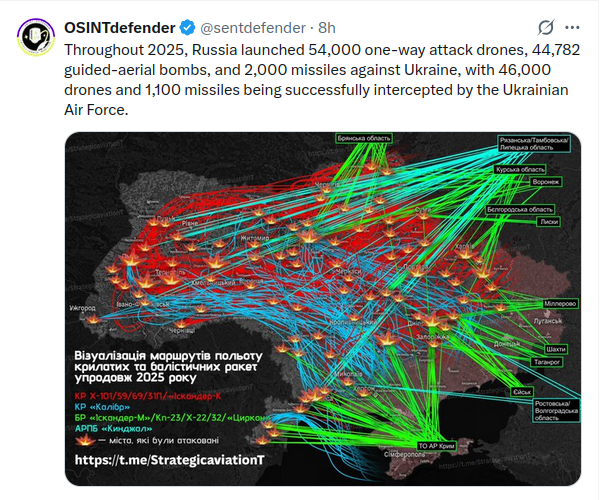
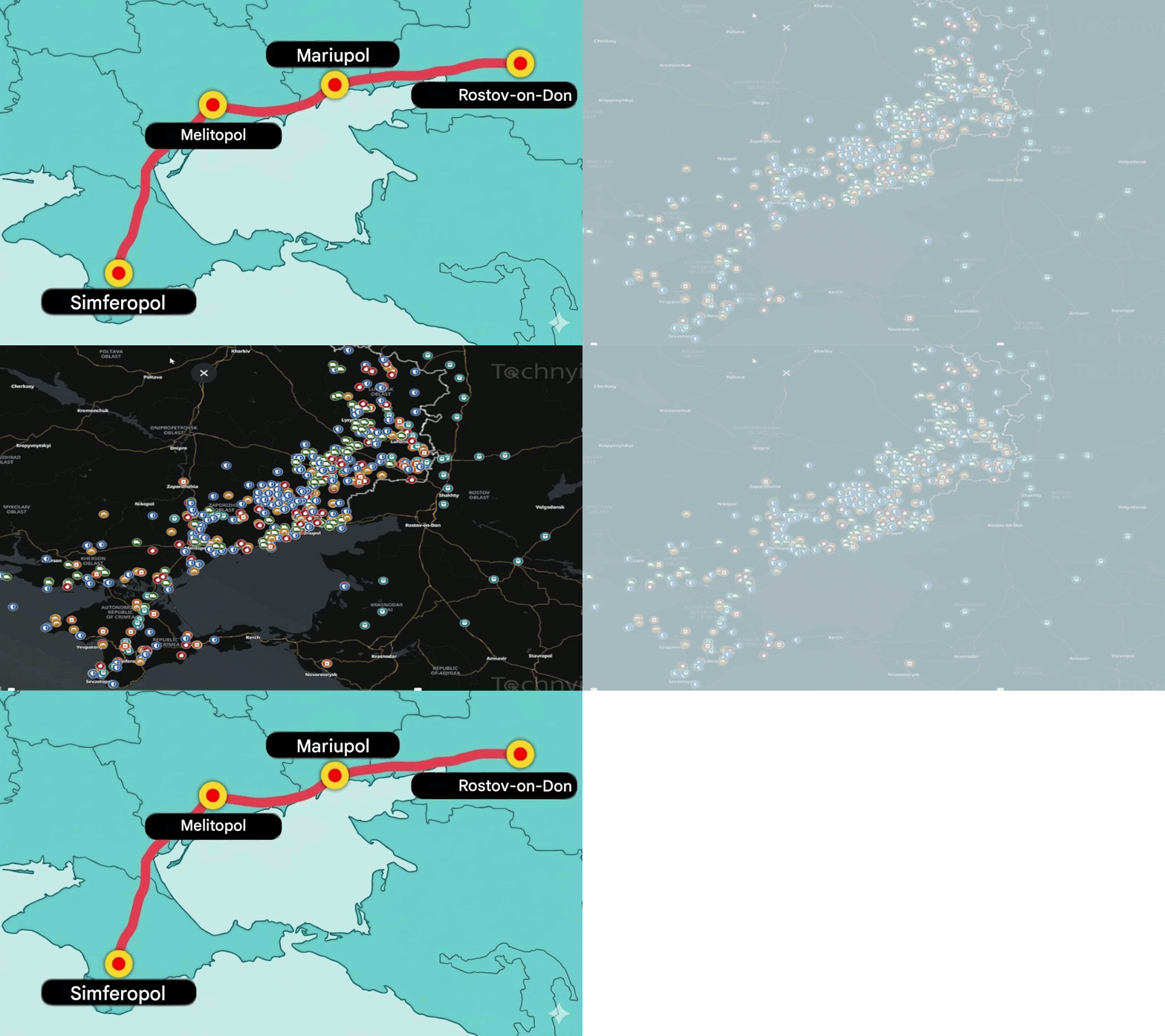
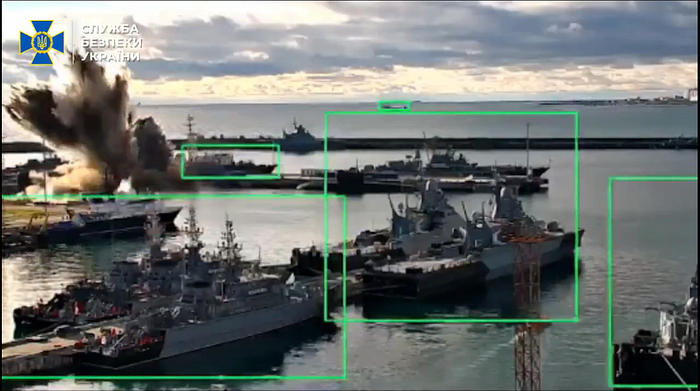
Image credit with thanks to: @evo1tactical on twitter
Analysis of the 2025 Die Welt wargame and NATO strategic vulnerabilities
The geopolitical landscape of Eastern Europe remains a focal point for military strategists and political analysts alike. The Baltic States in particular are very nervous about Russia’s intentions and, per capita, are the top providers of aid to Ukraine.
In December 2025, a significant simulation conducted by the German newspaper Die Welt, in collaboration with the German Wargaming Centre at Helmut Schmidt University, provided a sobering assessment of European security.
This exercise, set in the autumn of 2026, examined a hypothetical Russian incursion into Lithuania. The results suggested that a limited but focused military effort could achieve strategic objectives before a multinational response could be organised.
This finding challenges the current assumptions regarding the efficacy of the North Atlantic Treaty Organisation in deterring hybrid aggression.
The mechanics of a manufactured crisis
The simulation utilised a scenario rooted in the complexities of Russia’s Kaliningrad exclave. In this narrative, the Russian Federation declared a humanitarian emergency, asserting that Lithuania had breached international treaties by obstructing the transit of essential goods.
Note: Russia started using this narrative about train restrictions in 2022.
To support this claim, state-controlled media disseminated fabricated evidence of civilian distress among ethnic Russians in the region. This information campaign served to justify the deployment of approximately 15,000 personnel from bases in Kaliningrad and Belarus.
Such claims of civilian distress are commonplace with authoritarian states before invasions. Hitler used the Sudentenland as a pretext in the 1930s, and in 2014 Russia used such a pretext to invade eastern Ukraine and annexe Crimea. There have been others. Even today, Hungary’s Viktor Orban rants about ethnic Hungarian speakers in Transcarpathia (Ukraine).
In the December 2025 Die Welt war game, the operational focus of this force was the city of Marijampolė in the Suwalki Gap, about which I have written several articles. As a vital transport node near the borders of Poland and Belarus, the seizure of this location offered the potential to establish a terrestrial link between Russian territory and its ally.

Image credit: Map, Wikipedia, with author overlays
Such a corridor would effectively sever the land connection between the Baltic states and the rest of the alliance. The tactics employed during the exercise reflected a sophisticated integration of conventional and unconventional methods.
Cheap unmanned aerial vehicles were utilised to maintain surveillance and fire control over transport routes, while remote mining operations hindered the movement of local defensive forces.
Note that Russia does not have a border with Lithuania and would have to move through Belarus — or use Belarusian forces for the initial thrust, as well as existing, possibly re-inforced, Russian forces from within Kaliningrad.
Hybrid tactics and the exploitation of ambiguity
A defining feature of the Russian strategy in the simulation was the deliberate creation of moral and legal ambiguity.
Troops advanced alongside civilian groups and purported aid organisations, a tactic designed to complicate the rules of engagement for defensive forces.
By embedding military objectives within a humanitarian framework, the aggressor sought to paralyse the decision-making processes of democratic states. Electronic warfare played a critical role in this effort, as widespread jamming of satellite and radio communications isolated local commanders and prevented accurate reporting to central headquarters.
Simultaneously, the use of information operations aimed to fracture international opinion. By framing the incursion as a protective measure for vulnerable populations, the aggressor provided a pretext for hesitant allies to advocate for diplomatic de-escalation rather than military intervention.
As we have seen in Ukraine, the West majors on talking, inter-country consultation and is slow to act, transforming procedural rigor into a strategic liability. Putin just plans and then gives an order after endlessly denying any malicious intent.
Institutional paralysis and the failure of consensus
So it’s no surprise to find that the most significant finding of the Die Welt wargame concerned the internal dynamics of NATO.
In the simulation, the invocation of Article 5 — the principle of collective defence — was met with substantial resistance. Delegates from the United States expressed concern regarding the risk of a broader nuclear escalation, citing a lack of definitive evidence that the incident constituted a full-scale invasion. This caution was echoed by several European capitals, which prioritised the maintenance of diplomatic channels over the deployment of combat power.
How many times have we heard that since 2022?
While Poland mobilised its forces, it refrained from unilateral action to avoid being perceived as an escalatory actor. Germany, in this exercise, focused primarily on the implementation of economic sanctions and the pursuit of a mediated settlement.
Consequently, no significant reinforcements reached the Lithuanian border within the first seventy-two hours. This delay allowed the Russian force to consolidate its gains and establish a fortified zone around Marijampolė. The absence of pre-authorised command structures meant that local commanders were unable to respond effectively to the initial stages of the incursion, leaving the alliance in a reactive posture.
Yes, you’d think that there was a NATO playbook ready for this scenario, with a command structure in place.
Historical context and the evolution of the threat
The results of the 2025 simulation align with previous scholarly and military research. Studies conducted by the RAND Corporation between 2014 and 2015 indicated that Russian forces could reach the capitals of Estonia and Latvia in less than sixty hours.
At that time, the conclusion was that the alliance lacked sufficient heavy armour and air defence in the region to mount a credible defence. In response, the alliance established the Enhanced Forward Presence, which stationed multinational battlegroups in the Baltic states and Poland.
Despite these improvements and the conduct of large-scale exercises such as Steadfast Defender 2024, which involved 90,000 personnel, the Die Welt simulation suggests that the fundamental challenge remains political rather than purely material.
While the alliance possesses overwhelming economic and military superiority in the long term, it struggles to generate decisive force in the short term. The ability of an adversary to create a fait accompli — a completed action that is difficult to reverse — remains a potent threat to the territorial integrity of Eastern European members.
Strategic recommendations for enhanced deterrence
To address the vulnerabilities identified in the December 2025 wargame, several structural and technological reforms would be necessary. The first involves the delegation of authority.
Current protocols require high-level political consensus before significant military movements can occur. Establishing pre-approved sets of responses for specific triggers would allow military commanders to act with the necessary speed to contest an initial incursion.
Then, there is a clear requirement for increased investment in specific technologies.
The prevalence of drones in modern conflict demands the widespread deployment of electronic and kinetic counter-unmanned aerial systems at the tactical level. Communications must be hardened against sophisticated electronic warfare to ensure that the chain of command remains intact during the opening hours of a crisis.
Additionally, the pre-positioning of expeditionary units with the capacity for autonomous operation would reduce the reliance on long supply lines that are vulnerable to disruption.
Don’t forget that Russian has been using GPS signal jamming in the Baltic for several years.
Source: @auonsson on Twitter
Resilience and the role of information
The psychological aspect of the conflict is as critical as the physical one. The ability of an adversary to exploit internal social divisions and disseminate disinformation requires a robust response at the national level.
Strengthening the information resilience of populations in frontline states can reduce the effectiveness of humanitarian pretexts and other narratives designed to justify aggression. This involves not only the identification of false information but also the proactive communication of alliance objectives and legal obligations.
The ongoing conflict in Ukraine has provided a temporary reprieve for Western Europe, as a significant portion of Russian military capacity is currently committed elsewhere.
However, this window of opportunity is limited. The lessons learned from the simulation at Helmut Schmidt University indicate that the window for effective deterrence is measured in hours, not weeks. The credibility of a collective defence agreement rests entirely on the certainty of its application; if an adversary perceives that the alliance will hesitate, the deterrent effect is lost.
Conclusion
The Die Welt wargame provides a necessary reminder that military mass is insufficient without the political agility to employ it.
- The simulation demonstrated that a modest force, utilised with speed and supported by hybrid tactics, can achieve significant territorial gains against a numerically superior but indecisive opponent. For NATO, the challenge of the coming years involves reconciling the requirements of democratic consensus with the need for rapid military response unhindered by political hand-wringing.
- Preventing the spread of war in Europe depends on the ability to convince Russia that the costs of an incursion will be immediate and severe. Achieving this requires a shift from a culture of reaction to one of prepared, proactive defence. Without such changes, the risk remains that the alliance could find itself a spectator to the dismantling of its own security architecture.
- I see a particularly knotty problem in this tactic that ‘Russia’ used in the war game:
Troops advanced alongside civilian groups and purported aid organisations, a tactic designed to complicate the rules of engagement for defensive forces.
A solid approach to deal with this will be essential. We have seen how terror regimes sponsored by Russia have used NGOs and hospitals and schools as cover for military activity, without scruple.
- It is apparent to me that Putin is intent on recapturing the Baltic States and preparations have long been under way in line with plans he has been working on for thirty years. Hitler festered after the 1919 Versailles Treaty, and Putin has been festering over the implosion of the USSR in 1991. He has been carrying out jamming exercises and now has Oreshnik nuclear-capable missiles deployed in Belarus.
- Whether the next step will come in 2026 I do not know, but I feel certain that Putin will want to exploit the political nightmare that he has manufactured in the US, and he will want to do that while Trump is still alive — or very soon after Trump’s demise.
Europe needs to sort its problems, and quickly, whether through NATO or with a separate European force structure.
https://www.hsu-hh.de/politikwissenschaft/en/wargaming-center-hsu
메타데이터
- post_id
- 4a1acfc04e84
- slug
- nato-war-game-russia-could-seize-lithuania-in-days-via-kaliningrad-4a1acfc04e84
- url
- https://medium.com/the-dock-on-the-bay/nato-war-game-russia-could-seize-lithuania-in-days-via-kaliningrad-4a1acfc04e84
- canonical_url
- https://medium.com/the-dock-on-the-bay/nato-war-game-russia-could-seize-lithuania-in-days-via-kaliningrad-4a1acfc04e84
- author_url
- https://medium.com/@james-marinero
- status
- ok
- fetched_at
- 2026-06-09 14:34:10