Do People Actually Open Hotel Emails?
When I think about email marketing, I usually think about my inbox being flooded with brands like Skims, Sephora, or the hundreds of NYU…
Do People Actually Open Hotel Emails?
When I think about email marketing, I usually think about my inbox being flooded with brands like Skims, Sephora, or the hundreds of NYU emails I receive every day. The kinds of messages that constantly compete for attention. Hotels rarely come to mind in that mix. Travel is something people usually plan when they need it, not something they scroll through in their inbox the way they might scroll through a Zara sale.
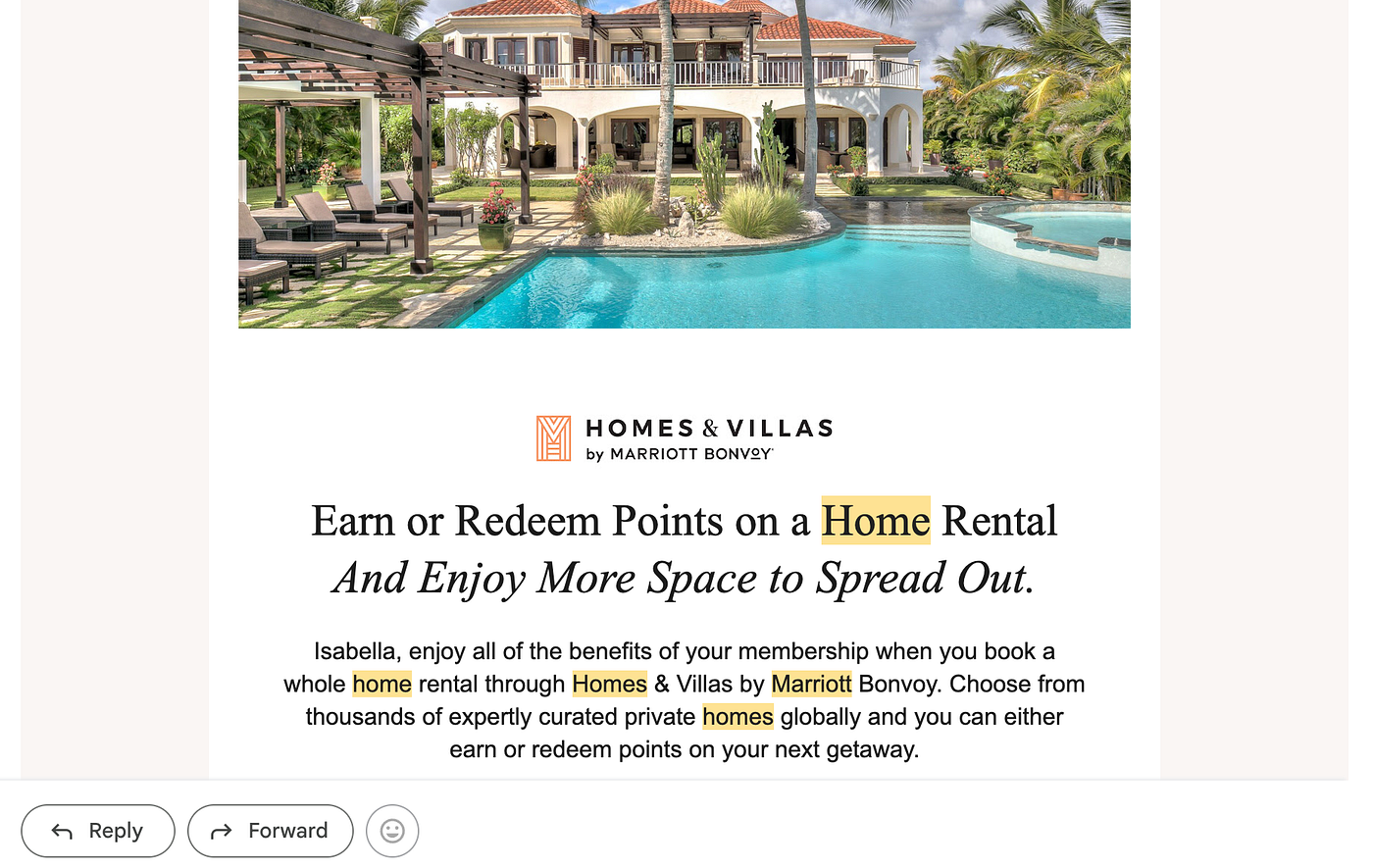
That is what made looking at Marriott Homes and Villas’ email marketing interesting. Marriott is a competitor to Airbnb, the platform my team is studying for our project. At first glance, the emails seem simple. Large photos, very little text, and a link to browse properties. But when you look more closely, the simplicity feels intentional.
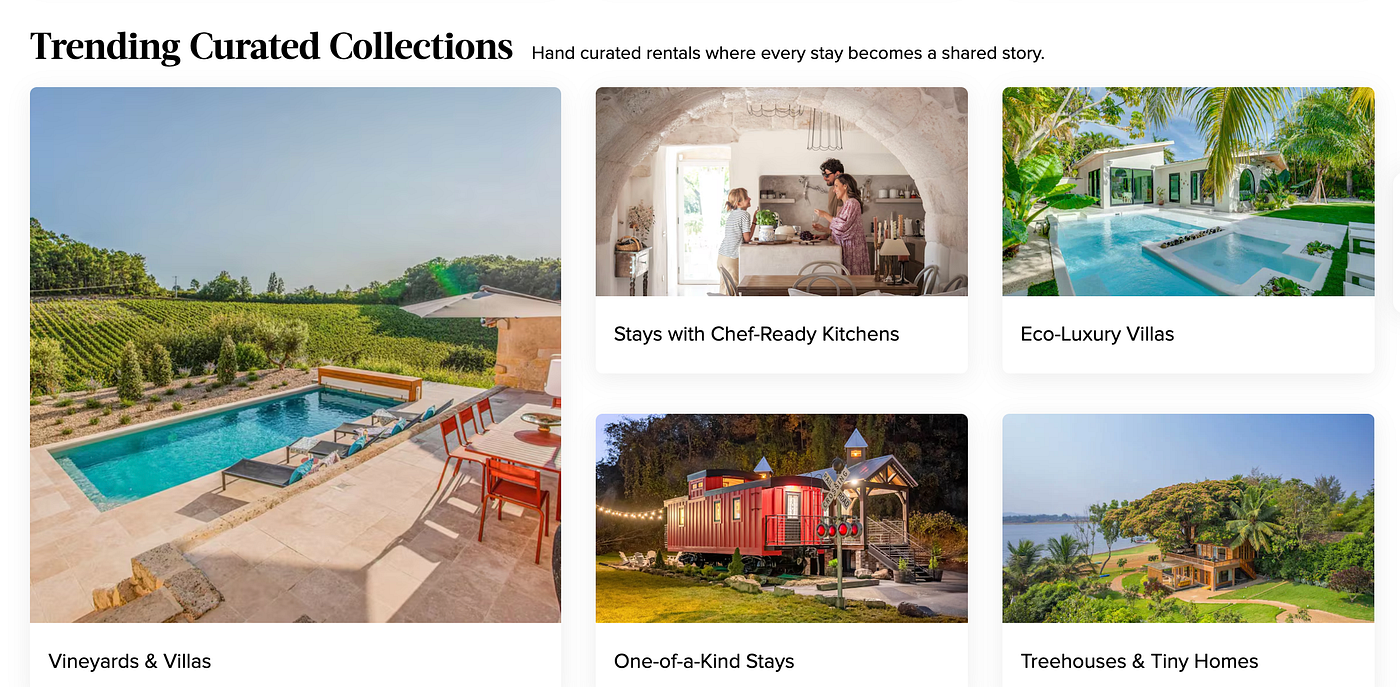
From what I observed after signing up, Marriott’s approach works for three reasons. They take advantage of the welcome email moment, they rely on visual storytelling, and they avoid overwhelming subscribers with constant emails.
Why the Welcome Email Matters So Much
After signing up, the welcome email arrived almost immediately. It introduced the Marriott Bonvoy program and explained the benefits of joining, such as discounted rates, points toward free nights, and access to travel experiences.
The timing is important. Research from Salesso shows that welcome emails achieve 4x the open rate and 5x the click through rate of regular marketing emails, and more than 8/10 people open them. In other words, the moment right after someone subscribes is when interest in the brand is highest.
Marriott uses that moment well. Instead of immediately pushing a promotion, the welcome email focuses on the value of the program and invites the reader to explore. It feels more like an introduction to the travel ecosystem than a sales message.
Travel Is Sold Through Images
Another thing that stood out was how visual the emails are. Most of the space is taken up by large photos of vacation homes with very little text.
For travel marketing, this makes sense. Travel decisions are emotional and aspirational. A photo of a beach house overlooking the ocean communicates the feeling of a trip much faster than paragraphs of description.
Image heavy emails have also become more common across marketing. According to Suped, modern spam filters focus more on engagement and sender reputation than strict image to text ratios. However, relying only on images can create issues if images fail to load or if accessibility tools are used. The strongest emails usually combine visuals with enough text to communicate the message clearly.
Sometimes the Best Strategy Is Sending Less
One thing I expected after signing up was to start receiving emails constantly. Instead, after two days I had only received the welcome email and one additional message. In a world where brands show up in your inbox morning, afternoon, and night, the quiet almost felt intentional.
I think that is intentional. Inboxes are more crowded than ever. Some people receive over 100 marketing emails per day. Because of this, Vertical Response notes that marketers are starting to realize that sending fewer emails can sometimes produce better engagement and stronger long term results.
For travel brands this makes sense. Vacations are not everyday purchases. If companies send too many emails, people may tune them out before they are even thinking about planning their next trip.
Where the Strategy Might Fall Short
There is one possible downside to Marriott’s approach. Because the emails are very minimal, they do not provide much detail about specific properties or destinations. Some readers might prefer curated listings or travel recommendations directly in the email.
At the same time, simplicity is actually what works for me, especially when thinking about travel. Planning a trip can already feel overwhelming, particularly for the person responsible for booking everything. There are flights, locations, prices, and activities to sort through. An email that tries to include too much information can start to feel like just another thing to manage.
Instead of explaining everything in one message, Marriott seems to use email as a starting point. The email sparks the idea of a trip, and then the website becomes the place where you actually explore the details. For travel, where inspiration often comes before planning, that approach is smart.
Travel Marketing Starts With Inspiration
Looking at Marriott’s emails made me realize that travel marketing works a little differently from other industries. It is not just about delivering information or promoting deals. Often it is about creating the first spark of an idea. A photo of a beach house, a reminder that points can turn into free nights, or simply seeing a destination pop up in your inbox can plant the seed for a future trip. In that sense, the goal of the email is not necessarily to make you book immediately. It is to keep the possibility of travel somewhere in the back of your mind.
메타데이터
- post_id
- 4a1df2d5eee5
- slug
- do-people-actually-open-hotel-emails-4a1df2d5eee5
- url
- https://medium.com/marketing-in-the-age-of-digital/do-people-actually-open-hotel-emails-4a1df2d5eee5
- canonical_url
- https://medium.com/marketing-in-the-age-of-digital/do-people-actually-open-hotel-emails-4a1df2d5eee5
- author_url
- https://medium.com/@irj2017
- status
- ok
- fetched_at
- 2026-06-09 15:37:30