If You Want to Manifest Something, Stop Desiring It
The word “desire” literally means “far from the stars.” And that’s exactly the problem.
If You Want to Manifest Something, Stop Desiring It
The word “desire” literally means “far from the stars.” And that’s exactly the problem.

“You are in Barbados.”
There’s a word you use every day in your manifesting practice that is quietly working against you.
Not a limiting belief, not a block, not a paradigm running in your background. A word. One of the most common words in the entire Law of Attraction vocabulary. A word that appears in virtually every manifesting guide, every visualization script, every conversation about what you want to create in your life.
The word is: desire.
I heard an astrophysicist use it in an interview recently, almost in passing, as an aside.
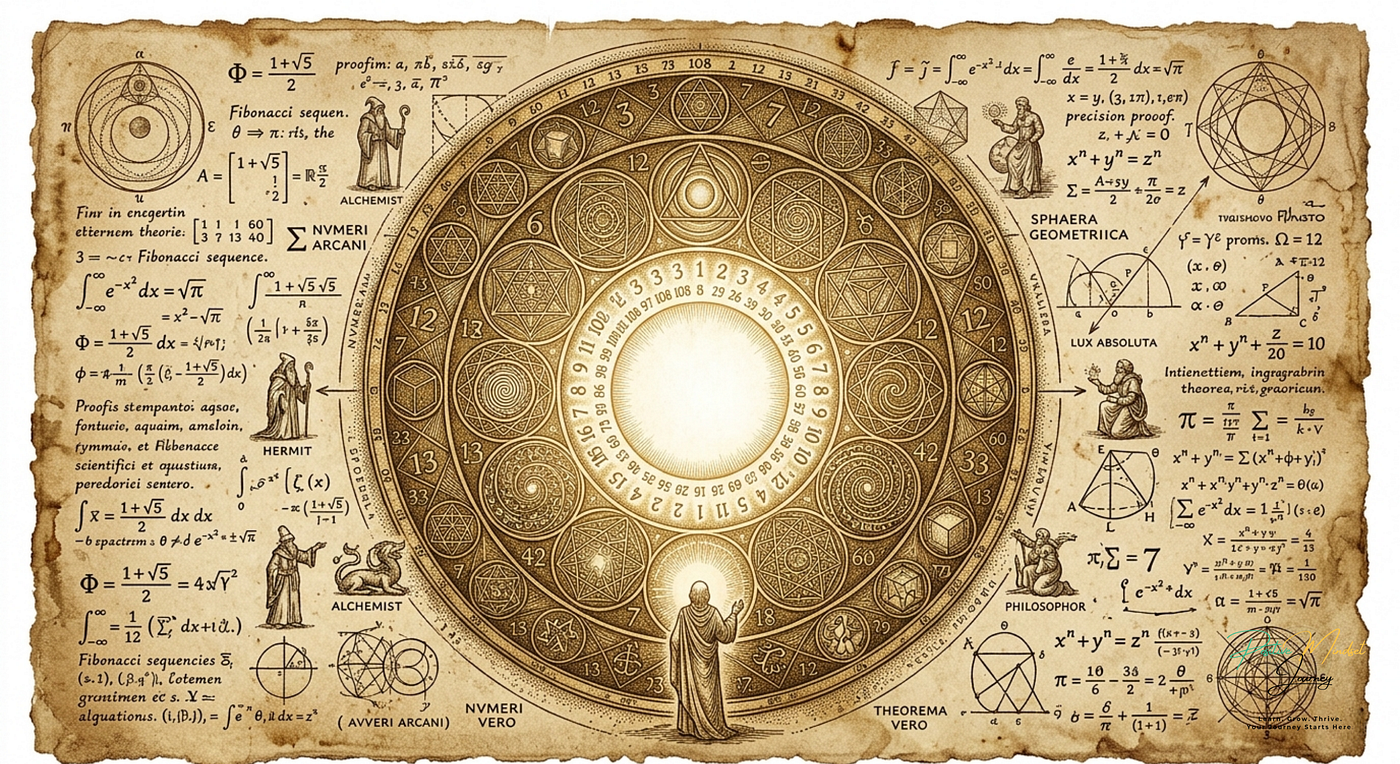
She mentioned that the word “desire” comes from the Latin desiderare: de, meaning away from, and sidus, meaning star. The Romans used sidus for navigation. The stars were how you knew where you were, where you were going, how to orient yourself in the world.
And desiderare, to desire, meant to look up at the night sky and notice that the stars were missing. To feel the absence of the thing you needed to find your way.
Desire, at its etymological root, is a declaration of distance.
I sat with that for a long time.
What you’re actually broadcasting when you desire something
The Law of Attraction, in every form it takes, from Abraham Hicks to Bob Proctor to Neville Goddard, says the same thing at its core: you attract what you are, not what you want.
You manifest from your dominant inner state, not from your conscious wishes.
And here’s the problem with desire, understood in its original sense: when you desire something, you are feeling the distance between where you are and where you want to be. You are feeling the gap. You are, in the most precise linguistic sense, looking up at the sky and noticing the stars are missing.
That gap is a frequency.
And it’s the frequency you broadcast every time you sit down to visualize “from desire,” every time you journal about what you want, every time you say “I really want this so much” with that particular quality of longing in it.
The subconscious doesn’t hear the content of what you want. It reads the emotional state you’re in when you want it.
And if the emotional state is “I am far from this,” that’s the instruction it receives. That’s the reality it keeps producing.
This doesn’t mean you shouldn’t know what you want, or that clarity of intention is the problem. Clarity is essential. What creates the block isn’t knowing what you want. It’s the emotional position you hold while wanting it.
Those are two completely different states. And they produce completely different results.
The man who was already in Barbados
In November of 1933, a young man named Neville Goddard said goodbye to his parents on a New York dock as they sailed home to Barbados.
He’d been in the United States for twelve years. He had no job, no money, and up until that moment, no particular wish to return home.
Then the ship pulled away, and something shifted in him. An intense, overwhelming desire to go to Barbados came over him, seemingly from nowhere.
He went straight to his mentor, a man named Abdullah, an Ethiopian rabbi who had been teaching him the principles of manifestation.
He told Abdullah what he was feeling. He described the longing, the wish, the impossibility of it given his circumstances.
Abdullah’s response wasn’t sympathetic. It wasn’t practical. It didn’t involve advice about saving money or finding a way.
He looked at Neville and said: “You are in Barbados.”
Neville was confused. He was standing in an apartment on 72nd Street in New York City in the middle of the Great Depression with no money and no ticket. How could he be in Barbados?
Abdullah explained: “As you walk through this door now, you are not walking on 72nd Street. You are walking on palm-lined streets, coconut-lined streets. This is Barbados. Do not ask me how you are going to go. You are in Barbados. You do not say ‘how’ when you ‘are there’. You are there. Now you walk as though you were there.”
Neville walked out into New York in a daze. And he did what Abdullah told him. He stopped desiring Barbados, stopped picturing it from a distance, stopped feeling the gap between where he was and where he wanted to be. Each night, as he drifted toward sleep, he placed himself in Barbados.
Not reaching for it. In it. He felt the warmth of the tropical air, heard the sounds of the island, saw New York from Barbados, not Barbados from New York.
Weeks passed with no visible movement. At one point, Neville went back to Abdullah, anxious, wanting to discuss the situation, to talk about whether it was going to happen in time for the December sailing.
Abdullah slammed the door in his face.
Not metaphorically. Literally closed the door and refused to speak.
Because, as he later explained, it was absurd to discuss how Neville was going to get to Barbados when Neville was already in Barbados.
There was nothing to discuss. The discussion itself was the problem: it would have put Neville back outside of Barbados, back in the position of someone waiting to arrive somewhere, back in desire.
On the 4th of December, a letter arrived from Neville’s brother Victor. Inside was fifty dollars and the news that a ticket was waiting for him at the Furness Withy Line.
When Neville got to the shipping office, he was told only third class was available. He reported this to Abdullah.
Abdullah was unimpressed. “Who told you that you went to Barbados third class? You went first class.”
Two days later, a first class passenger cancelled, and Neville sailed to Barbados in first class.
He spent three months there that he later described as heavenly.
If you’re noticing a pattern in your own practice of staying outside the thing you want rather than inhabiting it, the Manifesting Archetypes Test will show you exactly which subconscious pattern is keeping you at a distance.
👉 **Manifesting Archetypes Test**
The shift that changes everything
What Abdullah was teaching Neville isn’t about pretending, or toxic positivity, or convincing yourself that circumstances aren’t what they are.
Neville was genuinely in New York with no money. That was true. Abdullah didn’t ask him to deny it.
He asked him to change his inner position.
Not working toward the end. Not visualizing the end from a distance. Living in it. Inhabiting it. Feeling it as the current reality of your inner world, regardless of what the outer world is showing you.
This is the precise opposite of desire in its etymological sense.
Desire looks up at the sky and notices the stars are absent. Living in the end looks out from the stars. The position is completely different, and the subconscious reads that difference with extraordinary precision.
When you’re in desire, the subconscious hears: this is not here yet.
When you’re living in the end, it hears: this is already true. And it reorganizes your perception, your behavior, your energy, and through those things, the circumstances around you, to match what it’s receiving.
This is why the specific quality of your visualization matters so much more than the length or frequency of it.
Thirty seconds of genuinely inhabiting the wish fulfilled produces more than thirty minutes of reaching for it from a place of longing. The content is the same. The inner position is everything.
What this looks like in practice
The practical shift is simpler to describe than it is to execute, which is worth saying honestly.
The instruction is this: when you sit down to do your inner work, notice where you are in relation to what you want.
Are you picturing it from the outside, reaching toward it, feeling the gap? Or are you inside it, looking out from it, feeling it as already yours?
If you’re scripting, the question isn’t “what do I want to happen?”
It’s “what does it feel like to be someone for whom this has already happened?” Write from inside that state, not toward it.
If you’re visualizing, don’t watch yourself having the thing like a film. Be in the scene.
Feel the specific texture of a moment in which your desire is already your ordinary reality. The conversation you’d have, the way a room would feel, the thought you’d have waking up on a morning when this is already true.
If you’re using affirmations, notice whether they’re pulling you toward something or anchoring you in something. “I am attracting abundance” positions you outside abundance, reaching for it. “I am someone for whom abundance is normal” places you inside it.
The difference isn’t semantic. It’s the entire thing.
Abdullah didn’t tell Neville to try hard to get to Barbados.
He told Neville he was already there, and then refused to discuss the matter further.
Because the moment you discuss how you’re going to get somewhere, you’ve already placed yourself outside of it.
From the stars, not toward them
The word desire will keep appearing in this practice.
It’s too embedded in the language of manifestation to disappear. But perhaps now, every time you use it, you can let it be a signal: which side of the stars am I on right now?
Am I looking up from the ground, feeling their absence, broadcasting the gap?
Or am I already there, feeling their light, living in the reality I came here to inhabit?
Neville walked out of an apartment on 72nd Street in the middle of the Great Depression and placed himself, in consciousness, on a palm-lined street in Barbados.
He didn’t have a ticket. He didn’t have money. He had something more important: an inner position that the Universe could only match.
Three weeks later, he was sailing first class.
You don’t need to stop wanting things. You just need to stop standing outside of them.
Stay in the flow
메타데이터
- post_id
- 4a7f0fcaa640
- slug
- stop-desiring-start-manifesting-law-of-assumption-4a7f0fcaa640
- url
- https://articles.positivemindsetjourney.com/stop-desiring-start-manifesting-law-of-assumption-4a7f0fcaa640
- canonical_url
- https://articles.positivemindsetjourney.com/stop-desiring-start-manifesting-law-of-assumption-4a7f0fcaa640
- author_url
- https://medium.com/@amaralane
- status
- ok
- fetched_at
- 2026-07-09 17:12:49