Stephen King’s Female Characters: Pet Sematary & The Soil of a Woman’s Heart
*This article contains discussion of grief, suicide, child death, terminal illness, ableism, and appropriation of indigenous…
Stephen King’s Female Characters: Pet Sematary & The Soil of a Woman’s Heart
This article contains discussion of grief, suicide, child death, terminal illness, ableism, and appropriation of indigenous culture/mythology/folklore. It’s also obnoxiously long, because I am incapable of being normal about this book.

Hey-ho, let’s go! This week on SKFC, we’re finally to my favorite Stephen King novel since I was a teenager: the infamous Pet Sematary, known as “the novel King thought was too scary to publish.” Pet Sematary is a book that will swallow you whole in its grief, and thoughtful ideas about death, hardly a book without flaws (the “Indian burial ground” trope, and use of the Wendigo, as well as parts of Zelda’s arc, come to mind)… but a book that has always, in my mind, stood as a shining beacon of “This is what a horror novel should BE.”

My cat Macbeth studying up on cat-ho… Wait.
From its cozy family scenes, to midnight walks through the woods, to American history through a folkloric lens, to that final chilling page, Pet Sematary inhabits a very special place in my horror-loving heart, and will probably stay my #1 King, unless he tops it in the future. (Mr. King, if you’re reading this… I’ve wanted a Doctor Sleep style Ellie sequel since high school.)
The Mary Lambert film was also one of my very first horror movies, when I was still getting used to the genre, and picked up the novel shortly after starting my “King binge” pre-high school… the only books of which I felt I actually understood were The Dark Half, Misery… and Pet Sematary. The book stuck with me. And when I found an original paperback — with my favorite cover, the snarling cat and Louis carrying a body up the hill — at an estate sale a few years later, I snatched it right up.

I was sixteen, in love with The X-Files and all things horror, and ready to give King another try. I read Pet Sematary and It in quick succession on vacation. More on that later, when I cover It; but let’s just say Pet Sematary was my clear favorite. So much so that I kept coming back to it in high school, the way I did — do — all my favorite books. I don’t know how many times I’ve visited Ludlow and the Sematary; I lost count a long time ago. But I read it so many times that my original copy wound up getting destroyed in my locker. By the time the 2019 remake came around, I was eighteen, and felt I was a Sematary expert.
All this to say… my relationship with Pet Sematary goes back further than most King novels. And despite its morbidity and sadness, despite my hopes each time I crack the cover that something for the Creeds will go different… it still remains my favorite Stephen King book.
I wonder if this would dismay Mr. King, considering Pet Sematary is famously the book he considered “too scary to be published.” The story is told in the intro to the hardcover edition I received one Christmas. During King’s stint at a guest lecturer for the University of Maine, in the latter half of the 1970’s, the Kings lived on a rural road in Orrington, Maine — a highway which contributed to the adjacent pet sematary near the property. (The spelling was just the same, which I love; the misspelled title is one of the book’s biggest charms.) Unfortunately, King’s daughter Naomi would lose their family cat, Smucky, who cameos in the novel. Naomi’s grief inspired a great deal of Ellie’s arc. Shortly after, King’s youngest, Owen ran towards the busy road… although unlike Louis, King was able to stop him. I don’t blame King a bit for being uncomfortable with the resulting story. It’s one thing to wonder, “What if?”; it’s another to live inside that horrible reality… and the raw grief that imbues the narrative after Gage’s death feels all the sadder because of it. Reportedly, it wasn’t just this incident which made it into the book, but Owen King’s scare with hydrocephalus. King says, “I found myself not just thinking the unthinkable, but writing it down…” He ended up submitting the book due to contract disputes with Doubleday, his first publisher, and Tabitha King ultimately encouraged him: “She thought it was good. Awful, but too good not to be read.”

Caroline Bicks’s excellent novel, *Monsters in the Archives: My Year of Fear with Stephen King analyzes first drafts of several of King’s early work, including Pet Sematary. It reveals that though this was not the first time King had conceived of such a dark ending, this was perhaps one of the first times he carried it out.1 Danny Torrance lives, Mark Petrie lives, and Tad Trenton survives in the movie version released the same year as Sematary. The closest King had come to the horror of Gage’s violent death is the fate of Randy McDougall in Salem’s Lot.2 Even Danny Glick’s funeral in Salem’s Lot *has moments reminiscent of Gage’s funeral. But the death(s), burial(s), and resurrection of Gage Creed top them all.
At the end of the day, Pet Sematary is a tragedy… arguably as Shakespearian as The Shining or Carrie.3 The first half is so idyllic, so that the second half will hurt as much as possible. Stewart O’Nan writes, “At the beginning, Louis Creed daydreams of being rid of his family. By the end, he’s nearly achieved that dream.”

Louis thinks, in his final moment of sanity, of taking Ellie from his in-laws and running; but I think their actual last chance comes when Louis considers going to Chicago with Ellie and Rachel:
“… he would let Gage lie in his Pleasantview grave. Instead of trying to reopen a door that had swung shut, he would latch it and double-bolt it and throw away the key. He would…. tidy up their affairs here and catch a plane back to Shytown… Then, when mid-August came, they would come back to this house which now seemed so sad and so shadowy, and perhaps it would be like starting over…
But would that not be the same as murdering his son? Killing him a second time?”
Sematary is a novel that lingers in grief, in the sinking mud of grief (is it a coincidence that Louis passes through a swamp filled with quicksand to get to the burial ground?), and specifically on how lingering in grief can pull you right down with the ones lost. This is what Jud means by “Sometimes dead is better.” King says in his introduction,
“I hope with all my heart that that is not true…. [but] Perhaps ‘sometimes dead is better’ is grief’s last lesson… That lesson suggests that in the end, we can only find peace in our human lives by accepting the will of the universe.”

All this is not to say Pet Sematary is without its flaws… namely in its use of the Wendigo, a Native American spirit which has been appropriated in many works of horror fiction. King did not invent this trope, and you can perhaps sense he intended well with this portrayal… In the novel, Jud says, “The [Mi’kmaqs] knew that place, but that doesn’t necessarily mean they made it what it was… the place will stay no matter who’s here…” Grady Hendrix writes,
“This could all be read as an uncomfortable othering narrative: nice white people settle down and an evil native curse ruins their lives. But King makes it explicit that the evil is the result of the settlers, not the indigenous people… We bought America, and the parts of it we spoiled are the parts we own, and eventually we’ll have to pay for them.”
These are nice interpretations, and perhaps quite accurate; but they don’t save Sematary from criticism. When it comes down to it, King’s use of the Windigo is flawed. Kallie Hunchman writes in her paper, Stolen Spirits: The Appropriation of the Windigo Spirit in Horror Literature, about how horror depictions of the Windigo undermine the cultural context and history:
“Depicting the windigo as a supernatural monster targeting white people in Maine misrepresents the purpose and existence of the windigo, as it is no longer representative of the Native environmental and cultural struggles it stems from. Instead, it is a depiction of the wild, animalistic stereotype of Native Americans often used by Western writers to instill fear and distrust in their readers.”
Despite uncomfortable aspects, I suppose a nod in Sematary’s favor is that I’ve almost never seen anyone speak of the novel in a negative light — ahhh, horror, one of the only genres where “terrifying” and “heartbreaking” are compliments! Most critics speak of how hard the novel becomes to read after becoming a parent. While parental love is certainly the most aching scenario here, the sematary uses all love as a weapon: the love between spouses, the love of a pet owner for their pet. (As much as I love this book, I’m with the Loser’s Club podcast on Louis’s abuse of Zombie-Church being ENTIRELY unnecessary. Or maybe I’m just being overly sensitive because my aged childhood cat has been nicknamed “Church” by my parents.)

Beezus — she’s much prettier
Hell, as much as I shake my head at Jud and Louis for going up to that cemetery… I can’t entirely blame them. The pets I’ve lost have been the greatest grief I’ve experienced yet. What would I do if there was some chance to keep them around longer?
I’m glad the question is limited to horror novels.
Some of you may be surprised that I actually have a lot to say on the actual subject of this article: Pet Sematary’s women. After all, the novel mostly takes place in Louis’s head, with brief sojourns into the minds of Jud, Rachel, and Steve Masterton in Parts 2 and 3. And we find out that both Louis and Jud — halves of two of the novel’s “great love stories” — have cheated on their wives. Louis’s “one visit to a whore in Chicago six years ago” is mentioned briefly, and handwaved away (despite the fact that Rachel would have been pregnant with Ellie at the time)… whereas Jud’s confession that he visited a “whorehouse in Bangor” regularly is dismissed with “Norma would not have left me if she had known. But something sweet in her would have died forever.” Perhaps we are supposed to forgive these indiscretions because of Jud’s and Louis’s unwavering love and devotion for their loved ones? The love and devotion that gets Louis’s entire family, as well as both of them killed?
Or are we supposed to forgive them at all?
For me, these aspects of the novel just make it more interesting. Perhaps I’m more inclined to “forgive” Louis and Jud because their wives are not perfect either. This is not a Nice Young Couple novel. Rachel Goldman Creed, Norma Crandall, and even Ellie are fascinating characters in their own right, not simplified or boxed in by one trait (“Flanderized”). Pet Sematary isn’t going to win any feminism awards (is that a thing?), but neither is it full of misogynistic or one-note portrayals, like some of its predecessors. They aren’t the main characters (except for Rachel), but the majority of them are fully characterized, and most importantly, human.
Zelda Goldman
Now to contradict all this stuff I just said.
Zelda Fitzgerald, Rachel’s sister who died of spinal meningitis, is one of the original “haunt the narrative” girlies — as well as the origin of Rachel’s fear of death. Her arc is fascinating, but is one of the aspects of Pet Sematary which has not aged well. The depiction of a family tormented by a family member who is terminally ill is scarily accurate; but little agency is given to Zelda herself, who never appears on the page, is never given a voice. And the depiction of her illness — both on the page, and onscreen — is used for shock value. (The ableism doesn’t even stop there… Louis throws around the r-slur when discussing Gage’s hydrocephalus scare.)
I debated including this section at all — Zelda is more of a plot device than a true character. But ultimately, that’s all the more reason to discuss her: both what is on the page and what isn’t, as well as the implications.

Zelda is an unseen and unspoken-of presence for most of the book. This makes sense, as we’re mostly in Louis’s head. He first remembers his deceased sister-in-law noting Rachel’s uncomfortability when Jud takes the family to the pet sematary, thinking, “it had left a scar which [he] had learned early in their marriage not to touch… Rachel would have been at an impressionable age. If she wanted to forget it, he thought there could be no harm in that.” The next day, Louis and Rachel argue after Ellie grieves Church dying someday, and Louis says, “‘Zelda… Christ, that must have been bad for her.’” But it isn’t until Norma Crandall dies that Zelda really enters the plot.
Rachel tells Louis the story, explaining why she can’t go to Norma’s funeral: Zelda, two years older than her, caught spinal meningitis and was “[dying] in the back bedroom like a dirty secret.” Rachel describes Zelda’s physical decline, her loss of mobility, and accuses her of soiling the bed on purpose. Her descriptions of Zelda’s body are laden with horror; Rachel describes being afraid of her, and screaming when her sister touched her. Zelda ultimately choked to death at age ten, left alone with her younger sister while her parents were out visiting for Passover. Rachel tried and failed to save her, straining her back in the process. After Zelda’s death, her presence is almost completely erased in the house; Rachel remembers her parents keeping only two pictures. Rachel’s trauma and backstrain give her nightmares about Zelda coming back to take revenge.
All Louis’s sympathy lies with his wife in this story, but one particular detail sticks with him: Rachel relays that Zelda loved the Wizard of Oz books “before she got sick,” and she had a picture of “Oz the Gweat and Tewwible” on her wall. (Zelda presumably lost certain speech functions over the course of her illness.) Zelda begins to loom in Louis’s mind, a sort of haunting. After Gage dies, Rachel dreams of her sister again: “… both she and Gage will get me. For letting them die.”
This is foreshadowing: before Zombie-Gage kills his mother, she sees Zelda in his place, saying “I finally came back for you, Rachel, I’m going to twist your back like mine and you’ll never get out of bed again…”

It’s a heartbreaking scene. But, considering Zelda Godman’s life from her perspective… it’s hard not to wish for her to get some revenge.
Zelda is essentially dismissed by her family. Obviously, Dory and Irwin Goldman are the primary culprits, as parents and caretakers; but Rachel tells Louis not to blame them: “That was a terrible time for them. The bills… were sky-high. My dad had missed his chance to expand into the suburbs… my mother was half-crazy herself… Well, it all worked out. It was as if Zelda’s death was the signal for good times to come around again.” As if Zelda’s suffering, and shortened life, isn’t nearly as important as Irwin’s financial concerns.
When Irwin mentions his older daughter later, after Gage’s funeral, he mostly says it was “difficult,” lingering over the effect on Rachel rather than the loss of Zelda. If the narrative itself isn’t dehumanizing Zelda, then her own family certainly is. And as Dr. Louis notes, they did not even have a resident nurse caring for their terminally ill daughter at the end. This is implied to be because of their embarrassment.
Rachel’s memories of spinal meningitis are used as body horror: she says, “all of the monsters looked like my sister Zelda,” describes her “birdy” hands and feet, and blatantly says that Zelda looked like, and became, a monster. She villainizes Zelda without sympathy, projecting that Zelda wished her pain on Rachel. It’s hard to blame Rachel for her trauma, or even her resentment; but when she and the narrative both show the sick little girl so little care, it’s hard to get too defensive. Louis takes on the descriptors afterwards thinking about Zelda’s “blackened tongue,” “her cheesy face.” In the first movie adaptation, director Mary Lambert cast an adult man, Andrew Hubatsek, as Zelda, because she didn’t think a thirteen-year-old girl would be scary and “wanted something to be ‘off.’” (Because why not throw in some transphobia on top of the ableism, right?)

These portrayals are harmful, not just for demonizing physical illness and disabilities, but for the message communicated to disabled fans. Kristen Lopez writes,
“Growing up with a bone disability, Zelda utterly terrified me, because I had no other disabled women, on screens large or small or elsewhere, to compare her to. To me, I wasn’t just scared of Zelda because the movie portrayed her as a villain, I was scared because I worried that this is what disabled women ended up like. That this is what I was going to end up like.”
Zelda is part of a larger trend in horror, both in the portrayal of disabled characters, and the frequent reduction of disabled women into victims (if they’re good-looking) or monsters. Lopez notes that things are getting better, and that her understanding of Zelda has changed over the years… but the bad taste lingers. Perhaps the movies are the worst culprits. Katie Marie Robinson-Sherlock notes that the book centers Zelda and the family’s trauma, compared to adaptations: “Horror often leans on disability as a source of fear. Zelda’s character challenges this narrative. In the novel, her disability is central to the family’s trauma. It’s not just her appearance, but the isolation and neglect she experiences that haunt the characters.”
Still, it’s frustrating to see Zelda so sidelined and silenced, to never linger over how much she must have suffered, dying in the back room like a “dirty secret.” She exists to give Rachel trauma with death; as a parallel to Gage, and another loss of a child for the Goldman family; and as a different portrayal of grief, how grief can rot you from the inside out if you refuse to confront it. But Zelda was more than a plot device; she was a girl. And in a Kingverse where we know every detail of random cops, mailmen, and passer-bys, I hate that all we know about Zelda is that she loved Oz the Gweat and Tewwible… the novel’s eventual personification of Death.
Missy Dandridge

Missy is really a side character, but Louis talks about her often enough — and in the most random of situations! — that I felt like discussing her. Missy is a married neighbor of the Creeds, who often babysits Ellie and Gage, and apparently helps Rachel with the cleaning. (When Victor Pascow takes Louis into the woods to warn him, Louis hides the muddy sheets in the laundry, and laughs about Missy speculating over their sex life. Earlier, he uses “wife swapping with, say… Missy Dandridge” as an example about the randomness of dreams… I think Louis is maybe just horny and in denial.) She and her husband Roger — or David? In the second half of the book, it’s David — live a mile down the road. Missy is even more of a plot device than Zelda; she only shows up to get the kids out of the picture, talk to Rachel about things, and indicate community reaction. Missy, the Crandalls, and Louis’s coworkers are the only friends we see the Creeds having.
Missy watches Gage while Church is neutered; she helps Rachel make Gage a bug costume (but Gage doesn’t go trick-or-treating); and she is the first to arrive at Gage’s funeral. Louis is coping by asking everyone to sign the book; Missy does, of course, but Rachel’s parents refuse. Her attempt to comfort Louis — “At least it was quick” — sets off a brutal memory of Gage’s death in Louis’s mind. Later, when Louis considers the repercussions of resurrecting Gage: “What happens the first time Missy Dandridge pulls into the driveway and sees Gage riding his trike in the yard? Can’t you hear her screams, Louis? Can’t you see her harrowing her face with her fingernails?”
The scene that gives me the impression that Missy is something of a shit-starter (or at least, bad at judging what information to share) comes after Gage’s funeral. The literal night after, when Missy calls up Rachel and tells her that the driver who hit Gage has been left by his family, and tried to hang himself. The call exists to provide the exposition that the driver apparently “‘just felt like putting the pedal to the metal… he didn’t even know why…’” which supports Jud’s idea that the burial ground itself killed Gage.
But if we’re just talking about Missy herself… why in the WORLD would she call up a grieving mother the day they buried her son and tell her that?!?! Did she think Rachel would WANT to know? Seriously, Missy, if you need to gossip, I’m SURE you have other friends! Or, you know, you could tell Roger-David.
The 1989 film eliminates Norma Crandall, and so it is Missy Dandridge whose funeral Louis and Ellie attend, where Louis explains the customs of death, and the avenue for Louis and Rachel to discuss Zelda is provided. It’s an elegant solution that, regardless, casts a bit of a dark shadow over Missy as she exists in the book. It’s revealed that Missy committed suicide due to stomach cancer, and one of the movie’s most haunting scenes is her death.

Norma Crandall
Norma Crandall is an interesting character in that she didn’t really make either movie. She doesn’t appear at all in the 1989 version; and she is already dead in the 2019 remake, referenced when Zombie-Ellie shows up to taunt Jud.4 It makes sense, Norma is an easy character to cut… but it’s also fascinating that neither version uses her, considering in the novel, Jud claims his entire motivation for taking Louis to bury Church in the burial ground is that Louis saved Norma’s life.

The masks were the best thing about this remake
Norma is arguably one of the hearts of the book, in that she has affectionate relationships with all the Creeds, as well as her husband; after Jud helps with Gage’s bee sting, he sends them to Norma for baking soda. Rachel reports Gage, surprisingly, took right to Norma, and that she gave Ellie a doll. She has beers with Louis and Jud; she exchanges recipes with Rachel; she reminisces with Jud about the ages of children they’ve seen, coming and going. She makes apple pie and “the best oatmeal cookies [Ellie] ever ate.” On Halloween, she laughs with Ellie about bruised apples being yucky. Norma also helps tell one of the few happy stories about the pet sematary: a boy who lost his dog, and the neighborhood children who rallied around and gave the dog a “funeral of state.”
Norma suffers from arthritis, but seems to be handling it as well as she can, until a near-fatal heart attack on Halloween. It is when Louis helps her through this attack that he continues to muse on aging, death, and how quickly things change; later, he notices Ellie’s changing perspectives on death when she says that Norma will probably die soon anyways. And Ellie is right: Norma dies the following January.
In November and December, Norma seems to be recovering well — she drinks wine, fixes Thanksgiving dinner, goes to a church party — and she is seemingly entirely unaware of Jud and Louis’s activities in the Ludlow woods. Jud makes a point of keeping it from her. It’s not the first secret of their marriage: “I’ve told Norma more than one lie in the fifty-eight years we’ve been married, and I’d guess that most men tell their wives a smart of lies, but you know, most of them could stand before God and confess them without dropping their eyes from His.” This might seem obscene considering what we know about Jud’s extracurricular activities… but we don’t know everything about Norma yet, either.

A young Norma in the prequel Pet Sematary: Bloodlines
Norma ultimately dies of a “cerebral accident,” and Louis helps Jud arrange the funeral. It’s not the first we’ve heard of funerary practices, but it’s the best preview we get of what’s to come in the second half of the novel. Louis wonders if Jud would try to resurrect Norma, and then swiftly dismisses the idea. Louis is one of the pallbearers, alongside Norma’s younger brother. Ellie mourns Norma, and then seems to quickly recover… but just as this is not Ellie’s last funeral of the year, this is not the last we will see of Norma Crandall.
After Gage’s death, Jud comes to warn Louis of what happens when a person is buried in the Mi’kmaq burial ground. He relays an incident he remembers, where Norma urged him to take care of it because the resurrected Timmy Baterman was “an abomination.” This is the same scene where Jud confesses his infidelity. You don’t doubt that Jud loved Norma — she’s at the forefront of his thoughts til the very end. And you don’t doubt that Norma loved Jud, either. But secrets lie just as deep at the core of their marriage as Rachel’s and Louis’s. Hendrix writes, “Even Jud and Norma Crandall’s 50-year marriage, which Louis and Rachel idolize, turns out to be built on lies…. When Gage comes back from the dead he reveals that not only was Jud secretly visiting prostitutes throughout his marriage, but Norma was having an affair with more than one of Jud’s friends… it seems their marriage wasn’t built on love and devotion, but secrets and lies.”

Indeed, Norma’s seeming last appearance in the novel is when Gage appears as a possessed embodiment of the burial ground. “Gage” tells Jud of Norma’s infidelity, claims he — It — saw her burning in Hell, and then takes on Norma’s voice:
“‘I laughed at you! We all laughed at you! How we laaaaaauuughed […] We did it in our bed, Herk and I did it, I did it with George, I did it with all of them. I knew about your whores but you never knew you married a whore and how we laughed, Jud! We rutted together and we laaaaaaaaaughed at — ’”*5*
Richard Chizmar writes of his reaction to this scene, reading Pet Sematary for the first time in college:
“I was absolutely devastated. Dammit, Steve. Kill Church if you have to. Splatter cute little Gage in the middle of the highway if that gives you a good chuckle behind the keyboard. But, for Godsake, don’t mess with sweet old, cookie-baking Norma Crandall. Norma…a filthy, lying whore? For me, that was a whole lot more disturbing than a moss-covered, evil grinning Gage slicing Jud to death with Louis’s scalpel. I kept turning the pages and praying it was a trick — not my sweet Norma! — but I knew in my heart that it wasn’t. It was the cold, hard truth — and we were stuck with it. Just as in real life, there are some truths even the past can’t erase.”
The only reason I say Norma’s “seeming last appearance” is because the novel leaves it ambiguous as to how much truth the burial ground is telling. Hendrix says, “There is no reason to doubt Gage, since these revenants have never lied before in the book,” and this is a good point, if you only consider that everything Timmy Baterman said was true. But 1. How trustworthy is Jud’s recollection?6 and 2. What evidence do we have that Timmy was telling the truth about anyone but Jud? (Besides Jud’s word.)
Additionally, it’s the burial ground’s other personified moments that make me wonder. It has to invent a voice for Gage, because Gage cannot articulate sentences in the adult way that Zombie-Gage speaks. Zombie-Gage says he’s going to fuck with Jud because Jud fucked with him — is he referring to Jud’s murder, or the stuff he says about Norma? Jud thinks, after he loses his knife, that “he had been fooled again.” Either Rachel hallucinates Zelda, or the burial ground imitates Zelda, before it kills her. When Louis kills Zombie-Gage, he sees “his son — his real son — his face unhappy and filled with pain,” and Gage calls him Daddy before he dies. Is this a moment of the real Gage shining through? Does the burial ground keep the resurrected dead hostage inside themselves, like any possession movie? Or is the burial ground pretending to be Gage to torment Louis — or to keep itself alive?

We have no way of knowing. Just like I sense we have no way of knowing whether that was the real Norma speaking through Zombie-Gage. I think it’s past the point. All we need to know is that Jud and Norma’s marriage was built on secrets and lies… and the stony soil of a man’s heart.
Eileen “Ellie” Creed

Ellie Creed — five years old at the start of the novel — is one of Sematary’s major catalysts. She is just old enough for Jud to show her the path to the sematary. It is her cat who gets killed in the road. It’s Louis’s love for Ellie that leads him to follow Jud. It’s Ellie who puts the story of Lazarus in Louis’s head, aching for her brother to come back. And it’s Ellie’s psychic dreams that send Rachel running home in the final half.
Ellie is Sematary’s final girl, the one who sees everything before it happens, but is powerless to stop it. In Caroline Bicks’s episode on Talking Scared, she and Neil McRobert discuss one of the scariest parts of The Shining is Danny being a five-year-old struggling to understand his psychic visions, because he cannot read; and Ellie’s arc has a lot of that same energy. She can understand simple things — dreams about her cat, mother, or father dying — but she struggles to communicate “Pascow” and “discorporated” to her mother. She repeats “Oz the Gweat and Tewwible,” presumably with no knowledge of her Aunt Zelda.

By way of Ellie being the Creed child who can talk (throughout the book), and at the age where children start to really learn, in earnest, about the world around them (she’s in kindergarten), Ellie is at the center of a lot of the novel’s major plot points, set pieces, and key emotional moments. Perhaps in a sort of attention-shifting method, to make us worry for the other Creed child. In a book called Pet Sematary, someone is going to die… but who? Stewart O’Nan writes,
“Early on it feels as if King is running a subtle shell game, making us guess which one it will be, with both Gage, the adorable toddler, and Ellie, the needy kindergartener, slipping away unnoticed from their distracted parents. When the accident inevitably happens, it’s a shock, mainly because of how it’s presented.”
The 2019 remake actually does this, too, with frequent nods to Gage’s book-fate, intended to throw the reader off… Ellie’s fate in that movie might have been the shock of the year, if it hadn’t been featured prominently in nearly every trailer. (Yeah, I’m still mad about this.)
Ellie arguably is “first blood” of the book: during the stressful move, she falls off a tire swing and cuts her leg. Louis thinks later, about the house seeming strange at first: “strange and even hostile, what with Ellie cutting herself out back and Gage getting stung by a bee at almost the same time…”

Ellie is also the child Louis has the most tumultuous relationship with… although if this is due to Ellie being old enough to talk back, or just good old-fashioned misogyny, we’re never told. Still, it’s clear he truly loves his daughter… and we even get the sense that Ellie may come to Louis more often for questions about Life’s Hard Truths. We mostly see Ellie through her father’s eyes, of course; but it’s Louis that Ellie comes to with her worries about Church dying; her questions about what caused Norma’s heart attack (and later, Heaven); and her prayers for God to bring Gage back (despite the Creeds not being particularly religious). Church’s resurrection is even (Jud says) an attempt at teaching Ellie a lesson, showing her the truth of death, and that dead is better… although how Ellie is supposed to learn that when she doesn’t realize Church has died escapes me.

Through the book, Ellie starts kindergarten, turns six, goes as a witch for Halloween, visits Chicago twice, attends two funerals, and has several psychic visions which create tension in the latter half. Part of what makes Pet Sematary such a menacing book is that most of the characters are completely unaware of what kind of story they’re in. Rachel and Ellie know the pet sematary, and they obviously know Gage has died; but they don’t know that Church has died and been resurrected; and when Louis sends them to Chicago, they know he is hiding something, but not what. And how could anyone guess a magical burial ground that “resurrects” the buried dead? Their only clues are Ellie’s visions.
Ellie’s shining — to use King terms — is a great deal milder than what we see in Carrie White or Danny Torrance. Whereas the Torrances are all aware there’s something the slightest bit strange about Danny before they leave for the Overlook, Ellie’s intuition never seems to show except when Louis has irrevocably messed with the mechanics of death. (Unless — as some might argue — Ellie’s explosion of grief for Church, only a few months before his demise, is actually her precognition that Church will soon die. I could see arguments going either way.) After Church has died and come back, when Louis picks up his family at the airport, Ellie discloses her dream about Church being run over. There is no mention of worries for Church — only asking how he is — when they speak after Church has been run over, but before he has returned to the house. Ellie’s psychic flash coming after Church has already died, been buried, and come back suggests that Richard Chizmar is right when he says, “… nothing is the same after Church dies. When the Creed family cat is run down out on Route 15, it starts a spiraling chain of events, a dark descent… unlike the events at the Overlook, this time there is no escape — for anyone.”

What’s even more interesting about Ellie’s visions is that she is the one who first mentions wanting Gage to return from the dead… if God brought him back. But the spirit beyond the deadfall is implied to be anything but holy. The timeline further suggests that Ellie has her second premonitory dream directly after this conversation with Louis… perhaps even at the same time that Jud is telling Louis about Timmy Baterman. After Louis has heard the story, and still decided he has a chance to try and resurrect Gage, he presses Rachel to return to Chicago with Ellie and her parents. Rachel counters Louis’s lies with Ellie’s dream:
“‘Ellie dreamed you were dead… Last night. She woke up crying… She said that in her dream you were sitting at the kitchen table and your eyes were open, but she knew you were dead. She said she could hear Steve Masterton screaming… the way she told it . . . the elements . . . it seemed to me to have a quality of prophecy.’”
Minus the appearance of Steve Masterton — who leaves Ludlow forever after he sees Louis going to bury Rachel — this is almost exactly the scene we close on, and the best clue as to what happens with Zombie-Rachel and Louis after The End. The next morning, when Louis takes them to the airport, Ellie tells him of another dream in a private moment: “‘I don’t know what I’m scared of. Daddy, I dreamed we were at Gage’s funeral and the funeral man opened his coffin and it was empty. Then I dreamed I was home and I looked in Gage’s crib and that was empty too. But there was dirt in it.’”

On the flight, while Louis prepares for grave-robbing, Ellie dreams of Gage returning, and using Louis’s scalpel to murder people. Her consistent state of fear and anxiety by the time they land, as well as a vision of Pascow, convinces Rachel that she needs to go east and find out what is happening with Louis. This comes only after Rachel has tried to piece together Ellie’s visions: “‘Something about Gage. Or maybe it was Church… I dreamed I was in the Pet Sematary… Paxcow took me to the Pet Sematary and said Daddy was going to go there and something terrible was going to happen. … He said that he was sent to warn but that he couldn’t interfere.’”
Ellie effectively disappears from the book after Rachel leaves Chicago, mercifully spared the bloodbath of the final pages. Left with her grandparents, Irwin Goldman calls to tell Louis she woke hysterical from nightmares, and they’ve taken her to the hospital to sedate her: “‘She said Oz the Great and Terrible had killed her mother . . . she said ‘Oz the Gweat and Tewwible,’ which was the way our other daughter always used to say it… how much have you and she told Eileen about Zelda and how she died?’” Irwin ends the call with “‘Paxcow says it’s too late,’” but not before he urges Louis to remember Ellie is alive and needs her parents. An echo of Jud’s urging, the night before Gage’s funeral, and even the morning of: he tells Louis that he’s luckier than Timmy’s father, having a living wife and child; and he glares at Rachel and Louis while Ellie tells him memories of Gage:
“What are you doing for her? Jud’s eyes asked. Your son is dead, but your daughter is not. What are you doing for her? … There was nothing [Louis] could do for her, not yet. She would have to swim in her grief as best she could. His thoughts were too full of his son.”
It’s this inability to grief, inability to focus on the daughter they have who needs them, that saves Ellie… and dooms her to a life haunted by the loss of her mother, father, and brother, just the way her mother lived, haunted by her dead sister. Contradicting his earlier thought about it being good for Rachel not to think about her sister, Louis silently urges Ellie to go on “keeping Gage alive,” even though “The shrinks would probably say it’s unhealthy as hell…” because he knows that Ellie will forget Gage sometime soon, just as Zelda did: “when Gage drops off whatever Hot One Hundred where is that exists in little girls’ hearts and starts to become Something That Happened in 1984.”

Considering that Ellie presumably watched Gage die alongside her parents — and considering her mother has never really forgotten Zelda — I suspect Louis is wrong there. I don’t think Ellie will ever forget Ludlow, the pet sematary, or the loss of her family.
This is why I want a sequel about her so bad. It comes together so perfectly. Unlike a lot of King’s other horror novels, Ludlow is still standing at the end. The pet sematary is a Ludlow secret, and we see very little of the culture around it, with only Jud and Norma to tell us about how the town’s children do the upkeep. (The 2019 film tried to remedy this with the kids in masks, a striking image that goes absolutely nowhere.) While Jud sits up on “sentry duty,” watching for Louis, he notes, “There were other ways up to the Pet Sematary and the place beyond, but Louis didn’t know them.” Not only does the place have multiple entrances, a long history, and an unspoken culture in the fictional Ludlow (Ludlow in the Kingverse is adjacent to Bangor, while the real Ludlow, ME is very nearly in Canada)… but the place also gives off a will of its own, a quality that keeps men like Jud coming back to bury dead bodies, even after they’ve seen things go sideways. On sentry duty, Jud hears the place warning him to stay out of things. Steve Masterton only narrowly escapes being pulled into the place’s grasp.

Apparently Mary Lambert’s original concept for Pet Sematary 2 involved a grown-up Ellie returning to Maine with her cat: “Actually I have a whole idea about feral cats because I love cats so much… The idea that there’s a feral cat community there that eventually takes her to find her father.” This is so perfect, and I’m mad it doesn’t exist. The sequel writes itself. What happens when Ellie Creed is all grown-up, and starting to ask questions about what happened to her family? She was only five, remember, and the way she remembers it going can’t possibly be the truth… can it?
(Mr. King. PLEASE.)7
Rachel Creed

Rachel Creed, at first glance, seems to be a character King has written before: she’s a nice young housewife, a good mother, a woman with a difficult childhood. She’s not the first Love Interest to have a strange relationship with her parents, or even a dead sibling (Wendy; Frannie…). Unlike Susan, Wendy, or arguably Frannie, Rachel is out of the action for long periods of time, simply because she has no idea any of this is going on. Jud almost acts as more of a secondary protagonist than Rachel.
However, in the last half of the book, Rachel begins narrating out of pure necessity (Louis isn’t there to narrate), and her interior voice adds to my fascination. I might just be biased, because I’ve read the book so many damn times; but I think Rachel Goldman Creed is an interesting, multifaceted character, not as simplified as her husband thinks she is. Rachel’s arc hinges largely on her fear of death, originating with her trauma from losing Zelda; and once Louis understands the reasons behind Rachel’s phobia, he bypasses sympathetic and seems to set up camp right in condescension. Perhaps the audience is holding their breath right alongside Louis when Gage dies, knowing how horrible the loss must be for her… but considering she’s watched her toddler child die in a horrific manner, Rachel seems to be handling things very well. Particularly compared to her husband, Mr. “Death Is a Natural Part of Life.” Hendrix writes, “Louis sentimentalizes death as a natural part of life, but when it suddenly reaches out and claims his daughter’s cat, his son, and his wife, his first reaction is to fight it at all costs. His being at peace with death was a lie, and so was his sense of safety.”
Rachel may be ignorant not only of Louis’s occult activities, but also why he hates her parents so much… but by confronting death, if only through her fear and avoidance, Rachel proves herself better able to handle the loss of Gage than Louis. Rachel, hard as it is, is looking to the future. Rachel is worried for the wellbeing of her daughter and husband. Rachel is looking to comfort, as much as for comfort, whereas Louis just wallows.

Maybe I’m being cruel to Louis. But after he thinks uncharitable things like “It’s a minor miracle that she isn’t in the fucking hospital, being fed through an I.V. tube…” after he’s called his wife a bitch because of their argument over Church… after he’s lied to her repeatedly throughout the novel… it’s hard to hold too much sympathy for his having to — deal with his wife’s grief. And the fact is, Louis dismisses Ellie’s worries — her psychic visions — while Rachel takes them seriously. Sure, it gets her killed… but so does Jud insisting that Rachel come to his house first, instead of going straight home. And if Louis had listened to Ellie before digging up their son, he still might have saved the remains of their family.
Rachel’s perspective on death is entirely filtered through her husband, who is very dismissive, and at times cruel over the whole thing. When they argue over Ellie’s reaction to the pet cemetery, it ends with Rachel crying and screaming that she hates Louis. Her insistence that Ellie should be entirely protected from death isn’t all that practical, sure, but that doesn’t mean Louis isn’t belittling her. Jud has a similar reaction pages before, when Rachel says she wants Ellie to only come to the pet sematary with a grown-up. He “look[s] pained,” and insists to Rachel that the path is safe… as if not wanting her five-year-old running around alone in the wilderness is a crime! (I know, I know, “Gen X grew up different…” but this is Maine, and I’ve seen videos of moose, and I think Rachel is fine to be worried.) As if there’s not a magical burial ground/portal to another dimension right behind the dead trees.

What’s funny about Rachel’s arc is that she’s entirely unaware of the Mi’kmaq burial ground. She knows that there’s a pet cemetery, she knows Victor Pascow died, and she knows what Ellie tells her about her dreams/visions. Despite this stunning lack of context, Rachel adjusts remarkably quickly to the presence of the supernatural. She goes back east based on her daughter’s anxiety, Jud’s word, and Louis not picking up the phone. Her worries are more mundane: she fears Louis is contemplating suicide, which is strangely not far from the truth. O’Nan writes of the climax, “King abruptly shifts into Rachel as well as Jud to exteriorize the drama, setting up a three-way crosscut race-against-time… Instead of being stuck in Louis’s haunted, claustrophobic thoughts, we’re now focusing on whether Rachel will arrive in time to prevent whatever’s going to happen when Gage comes back.”
Even missing her flight in Boston does not discourage Rachel, who decides to get a car and drive. Jud’s suggestion that she get a hotel, a near car-accident, and a malfunction with her rental car does not stop Rachel, who begins to entertain the thought of the supernatural on her endless drive. It’s here we get perhaps the most reflection from Rachel, aside from her having referred to the fight with Louis as “silly,” or remembering calling Ellie “big sister”:
“She should never have allowed Louis to bulldoze her out of the house the way he had, but she had been weakened by Gage’s death… There had been times in the dark watches of night when she had longed to hate Louis for the grief he had fathered inside her, and for not giving her the comfort she needed (or allowing her to give the comfort she needed to give), but she could not. She loved him too much still, and his face had been so pale… so watchful . . .”
Love is what holds the Creeds together, what pushes Louis down that dark path into oblivion both times. It’s what guides Rachel back home… and what ultimately kills her. She theorizes that the last roadblock has “held [her] up… just long enough for . . . something irrevocable to happen.” Indeed, by the time Rachel arrives, Jud is dead, and her “son” is waiting for her… although she sees her dead sister at first.

It’s Rachel’s love for Gage that kills her, as she realizes he is somehow back with her:
“She cried his name and held her arms out. He ran to her and climbed into them, and all the time one hand remained behind his back, as if with a bunch of posies picked in someone’s back meadow.
‘I brought you something, Mommy!’ he screamed.”
Because Rachel only gets scant amounts of narration, we know little about her relationship with her children. We know that she has been with Louis for a decade, and worked while he attended med school; we know that Rachel and Louis came from different economic backgrounds, and that the Goldmans were presumably well-off (although not well-off enough to get their dying daughter medical care); we know she was a Girl Scout, attended summer camp yearly, and had problems with her back for years after trying to save her dying sister. We know that Rachel, at eight, was left alone with her dying sister, and that she believed she was coming down with spinal meningitis herself.
The nastiest side of Rachel is shown in the combination of guilt and resentment for her dead sister. This arc is written out of sympathy for Rachel — and it’s hard not to feel bad for a child put in Rachel’s position… but it’s also not easy to read Rachel’s cruder descriptions of her sister’s suffering. Lopez writes, “Later, she even admits that she was laughing after [Zelda dies]. Rachel Creed: villain.”
Perhaps this is expected: Zelda isn’t a character, she’s Rachel’s Tragic Backstory, who exists to 1. give Rachel trauma surrounding death, 2. serve as a parallel to Gage after his death, and 3. be the “Goldman ghost.” Rachel’s reaction to Zelda is supposed to preview her reaction to Gage… but of course, the situations are pretty different, and so is Rachel’s grief. Rachel’s explicit ableism is reserved for her sister. When Louis asks about how she could have dealt with Gage, if he had been hydrocephalic — secretly plotting his resurrection — Rachel says, “It wouldn’t have been the same… [Gage] was our son. That would have made all the difference.”
Of course, Rachel gets so little time to actually react to the darkest parts of the novel — outside of the horrors of grief — that it’s hard, sometimes, to pin down exactly how she is taking in certain events. We hard-cut after Gage pulls out the scalpel. Rachel never even knows that Church died and was resurrected… hell, she doesn’t even know that her father tried to pay Louis not to marry her! It’s the kind of open-ended character work that leads to interesting analysis. The 2019 remake tries to explore Rachel’s character further, particularly by allowing Rachel to come home before Zombie-Ellie (in this version) has gone full slicey-slice, and lingering on her reaction: fearful and horrified, rather than overjoyed. Maybe this would have landed better if the climax didn’t start to feel vaguely cartoon-like, or… MAYBE… if they hadn’t released the clips of Rachel reacting to Ellie before the damn movie even came out.8

“Hug your daughter”
Ultimately, I think Rachel is an interesting character who’s underutilized, and I’m not even mad about it. After all, the secrets Louis is keeping from Rachel (family arguments; a dead cat; a trip to a prostitute; his plans to resurrect Gage) are the plot the novel is built on. How would the novel change if Rachel was plodding up to the pet sematary right alongside Louis? We don’t know, because that’s not the book Pet Sematary is.
Jud’s refrain — originated by Victor Pascow — is, “‘The soil of a man’s heart is stonier, Louis. A man grows what he can and tends it.’” Before this, he says, “‘Women are supposed to be the ones good at keeping secrets, and I guess they do keep a few, but any woman who knows anything at all would tell you she’s never really seen into any man’s heart.’” Jud’s implication, I suppose, is that playing with life and death is man’s work, and that men know how to listen to their instincts, their hearts… the only woman we hear of burying a pet at the burial ground is Linda Lavesque… but the book suggests something altogether different. The book makes it clear Jud and Louis are messing with forces that they don’t understand, that should be left alone. The implication seems to be that their wives would talk them out of such silliness if they knew… but how can we be certain?
What would Rachel do if she’d known that Gage “living” again was a possibility? There’s no real way of knowing. But a mother driven by her fear of death, her insistence that “no one is going to die around here,” her plea that she’d watch Gage better if she could just have him back… I think the implications speak for themselves.9
After all, when Jud says he intends to teach Ellie that “sometimes dead is better,” since Ellie doesn’t know that because “your wife don’t know it.” Maybe Rachel only seems to accept Gage is gone before Louis does… because she doesn’t realize there’s any other option.

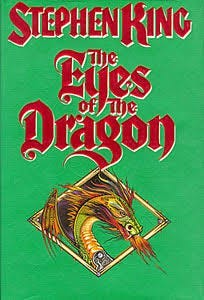
(This has been an unreasonably long edition of Stephen King’s Female Characters… join me in two weeks for King’s fantasy novel, The Eyes of the Dragon.)
1: According to his dated drafts, Cujo, published in ’81, was begun before Pet Sematary, so maybe King had already written about Tad Trenton’s death before Gage Creed’s? But I could not say for certain.
2: Check out Bicks’s book for further insights on King’s first drafts, including Randy’s fate. As a King aficionado, I cannot recommend it enough!
3: Let me plug Bicks’s novel again. As an undereducated Shakespeare nerd, I’m obsessed.
4: I’d say this is a spoiler… but the trailers ruined this damn film. The end.
5: Does anyone get the sense King was super influenced by DePalma’s Carrie? “They’re all gonna laugh at you!”
6: If there’s any major issue I have with King’s writing style, it’s when people are able to recall every detail of a memory perfectly, down to the dialogue. Suspension of disbelief, sure, but who tells a forty-year-old story with elaborate dialogue exchanges?
7: I read a wonderful fanfiction, at the turn of the decade, that not only featured Ellie returning to the sematary, but also had her working at the Derry Library with Mike Hanlon. Alas, I can’t find that fic anymore…
8: I’ve been skipping watching trailers recently, and I think it’s a better way to live. Going in to see Hokum and Obsession blind was unbelievably fun.
9: For a very Pet Sematary-esque novel, that features mothers willing to do a hell of a lot to keep their kids alive, read Craig DiLouie’s Suffer the Children. His character, Ramona Fox, would fit RIGHT into Ludlow.
메타데이터
- post_id
- 4a887971dfbe
- slug
- stephen-kings-female-characters-pet-sematary-the-soil-of-a-woman-s-heart-4a887971dfbe
- url
- https://medium.com/@graceterryfier/stephen-kings-female-characters-pet-sematary-the-soil-of-a-woman-s-heart-4a887971dfbe
- canonical_url
- https://medium.com/@graceterryfier/stephen-kings-female-characters-pet-sematary-the-soil-of-a-woman-s-heart-4a887971dfbe
- author_url
- https://medium.com/@graceterryfier
- status
- ok
- fetched_at
- 2026-07-09 21:48:21