Beyond the Map: The Auteur Theory of Fantasy Fiction
Why the most enduring worlds aren’t built, they are dreamt by a single, obsessed mind
Beyond the Map: The Auteur Theory of Fantasy Fiction
Why the most enduring worlds aren’t built, they are dreamt by a single, obsessed mind
There is a moment of quiet, almost instinctive, when you open a book and know where you are.
Not the map. Not the kingdom or the coastline. Something deeper.

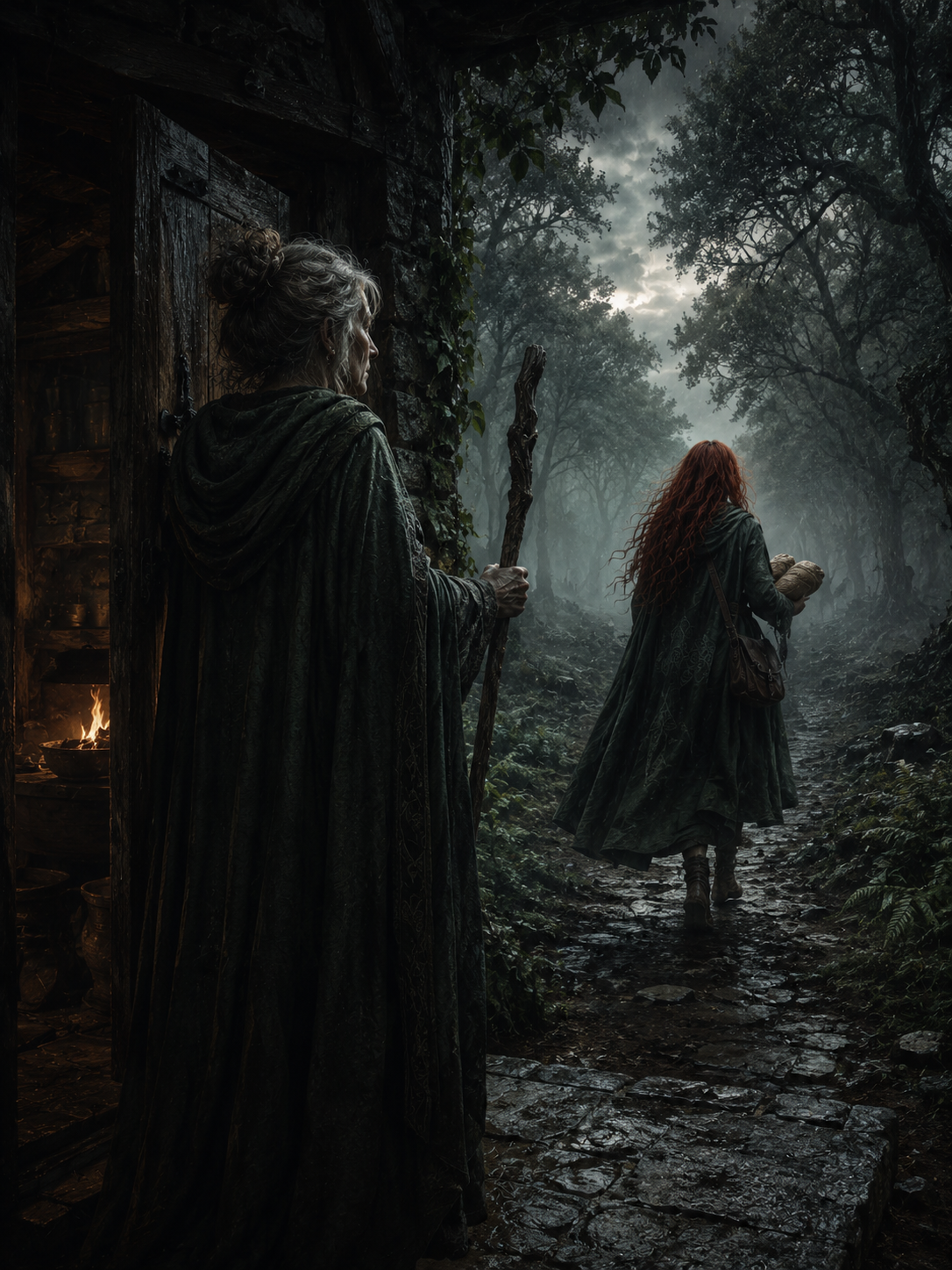
The Auteur’s Portal: Beyond the literal map lies the particular way of seeing that defines enduring fantasy.
You feel it in the cadence of the first paragraph. In the way the light falls across a sentence. In the rhythm of how a character thinks before they speak. Within two pages, you can tell if you are walking through the philosophical stillness of Ursula K. Le Guin, the satirical clockwork of Terry Pratchett, or the brutal, human gravity of George R. R. Martin.
It is not the magic system. It is not the lore.
It is the soul-print of the creator.
Generic fantasy is a blueprint. It follows the instructions. It places the Dark Lord in the tower because that is where he belongs.
Auteur fantasy is a confession. It uses the Dark Lord to talk about the author’s own relationship with authority, or fear, or the void.
The difference is palpable. One feels like a set of instructions; the other feels like a dream you’ve been invited into.
In cinema, they call this the Auteur Theory, the idea that the director is the primary author of a movie, not the machinery that produced it. Fantasy has spent decades training writers to think in terms of construction: build the world, design the rules, map the continents.
But the stories that endure are not engineered.
They are dreamt.
They are haunted.
They are marked indelibly by the mind that made them.
The Auteur theory attempts to explain how a director can be as much an artist as a novelist. My attempt in this piece is to bring it back to books, identifying a specific type of writer: one whose work is defined by a singular, recognizable soul-print rather than a set of genre instructions.
The concept of caméra-stylo (the camera-pen) holds that a director uses film techniques as a writer uses a pen. In the current landscape of fantasy, we see a widening gap between the architectural and the existential.
The Blueprint Writer (Engineer) operates from the outside in. They ask, “How does the economy of this kingdom work so that the castle can exist?” The result is a world that is structurally sound but sometimes lacks a “ghost.”
The Soul-Print (Auteur) operates from the inside out. They ask, “What does the fear of death look like when it’s built into a city’s architecture?” The result is a world that feels “haunted” by the author’s preoccupations.
The Auteur’s world might defy the laws of thermodynamics or the logic of trade routes, but it obeys the laws of the human heart. You aren’t reading a story about a dragon; you are reading a report from the interior of another person’s soul.
The Personal Mythology vs. the Trope
Fantasy is a language of shared symbols.
Dark lords. Chosen ones. Ancient relics. Forgotten prophecies.
None of these are the problem.
The problem is when they are used without a question behind them.
Generic fantasy arranges tropes. Auteur fantasy interrogates them.
An Auteur does not ask, “What belongs in a fantasy world?” They ask, “What question won’t leave me alone?”
That question becomes the gravitational center of everything.
Consider J. R. R. Tolkien. He was not simply writing about rings or quests. He was wrestling with loss, with memory, with the quiet devastation of a world being mechanized beyond recognition. The Shire is not just a place, it is a wound. Mordor is not just a villain’s domain; it is an inevitability.
The tropes are not the story.
They are the vocabulary through which the story asks a deeply, personally unresolved question.
If you strip away your magic system, your lore, your map — what remains?
If the answer is nothing, you have built a world.
If the answer is a question you cannot escape, you have begun to dream one.
The Modern Auteurs: Interrogating the New Frontier
If Tolkien used fantasy to wrestle with the loss of the past, the modern Auteur uses it to interrogate the tensions of the present.
In Piranesi, Susanna Clarke (The Auteur of Atmosphere) doesn’t just build a magic house. She interrogates the nature of isolation, devotion, and the way a setting can be both a prison and a god. Her “soul-print” is one of scholarly gentleness masking a profound, labyrinthine mystery.
N.K. Jemisin (The Auteur of Systemic Trauma) doesn’t just design a world with earthquakes; she interrogates how a planet that wants to kill you would shape the sociology of oppression. Her “soul-print” is visceral, urgent, and deeply concerned with the structural weight of history on the individual body.
Tamsyn Muir (The Auteur of Attitude) takes the Necromancer trope and interrogates it through a lens of messy, modern, gothic intimacy. Her “soul-print” is unmistakable: a chaotic blend of High-Church ritual and digital-age snark. You can tell a Muir sentence from a mile away, not because of the magic, but because of the vibe.
Style as a Camera Lens
If theme is the question, then style is the instrument through which it is seen.
Writers rarely think of themselves as cinematographers… but they should.
Because every sentence is a lens choice.
The Long Take (The Lingering Eye)
This is the prose of the observer. It suggests a world that exists independently of the plot, a place where the dust motes and the shadows matter as much as the hero. It is the style of Le Guin or Clarke, where the sentence itself is an act of attention.
The Jump Cut (The Fractured Eye)
This is the prose of the survivor. It is jagged, immediate, and often breathless. It suggests a world where there is no time for scenery because the stakes are pressing against the throat. It is the style of Muir or Martin where the rhythm is dictated by the pulse.
Most writers use both.
But an Auteur chooses how and when.
The grammar becomes part of the magic.
A clipped sentence can feel like a blade. A winding one can feel like memory itself refusing to end cleanly.
This is where voice stops being ornamentation and becomes architecture.
Not the visible kind.
The structural kind, the kind the reader feels but cannot always name.
When the lens is chosen with intent, the map becomes irrelevant. The reader doesn’t need to see the coastline to know where they are; they can feel the world’s temperature in the very shape of the words.
Keeping the Darkness at Bay
There is a kind of darkness that does not come with shadows.
It comes with sameness.
With stories that feel interchangeable. With worlds that are technically sound but spiritually vacant. With prose that moves but does not mean.
You can feel it when a story has been assembled instead of lived.
Voice is what resists that.
Voice is not branding. It is not tone. It is not a stylistic preference.
It is the residue of a human mind refusing to flatten itself.
To write as an Auteur is not an act of ego. It is an act of defiance.
Because what you are offering the reader is not just a narrative.
You are offering them a hand in the dark.
Not a generic one.
Not a polished, market-tested one.
A specific hand. A human one. One shaped by your fears, your questions, your unfinished reckonings.
And when a reader takes that hand, something rare happens:
The darkness does not vanish.
But it becomes navigable.
The Auteur Checklist (For Those Who Would Build Something That Breathes)
If you are writing fantasy, and you want it to endure beyond its map start here:
The Recurring Ghost What is the one idea, fear, or question that keeps returning to your work — whether you invite it or not?
Do not avoid it. Do not disguise it.
Follow it.
The Visual Totem What image, object, or symbol appears repeatedly in your stories?
A blade. A mirror. A forest. A crown.
These are not decorations. They are anchors for meaning.
The Technical Signature What “rule” of writing do you break — intentionally?
Do you linger longer than you should? Do you cut faster than expected? Do you let silence sit where explanation would be easier?
This is not indulgence.
This is authorship.
Fantasy does not need more maps.
It needs more minds willing to leave their imprint on the terrain.
Because in the end, readers do not return to worlds.
They return to the feeling of being inside a particular way of seeing.
And that more than any system, any structure, any perfectly drawn continent —
is the true magic.
If this stirred something in you, something unresolved, something persistent. Then you are already closer to your story than any map could take you.
Put down the compass. Open the Ledger. And begin there.
This ledger remains open because of readers who value the ‘soul-print’ over the blueprint. If this interrogation of the genre stirred something in you, consider buying a pint to keep the ‘ghost in the machine’ spirited. Every contribution helps keep this space independent and haunted by the questions that matter. https://ko-fi.com/lirianeverweaver
메타데이터
- post_id
- 4ab23f512d52
- slug
- beyond-the-map-the-auteur-theory-of-fantasy-fiction-4ab23f512d52
- url
- https://medium.com/@jfhopper/beyond-the-map-the-auteur-theory-of-fantasy-fiction-4ab23f512d52
- canonical_url
- https://medium.com/@jfhopper/beyond-the-map-the-auteur-theory-of-fantasy-fiction-4ab23f512d52
- author_url
- https://medium.com/@jfhopper
- status
- ok
- fetched_at
- 2026-07-11 02:18:47