The Asymmetry of Fear
Why Privilege Feels Threatened While the Oppressed Fight to Survive
The Asymmetry of Fear
Why Privilege Feels Threatened While the Oppressed Fight to Survive
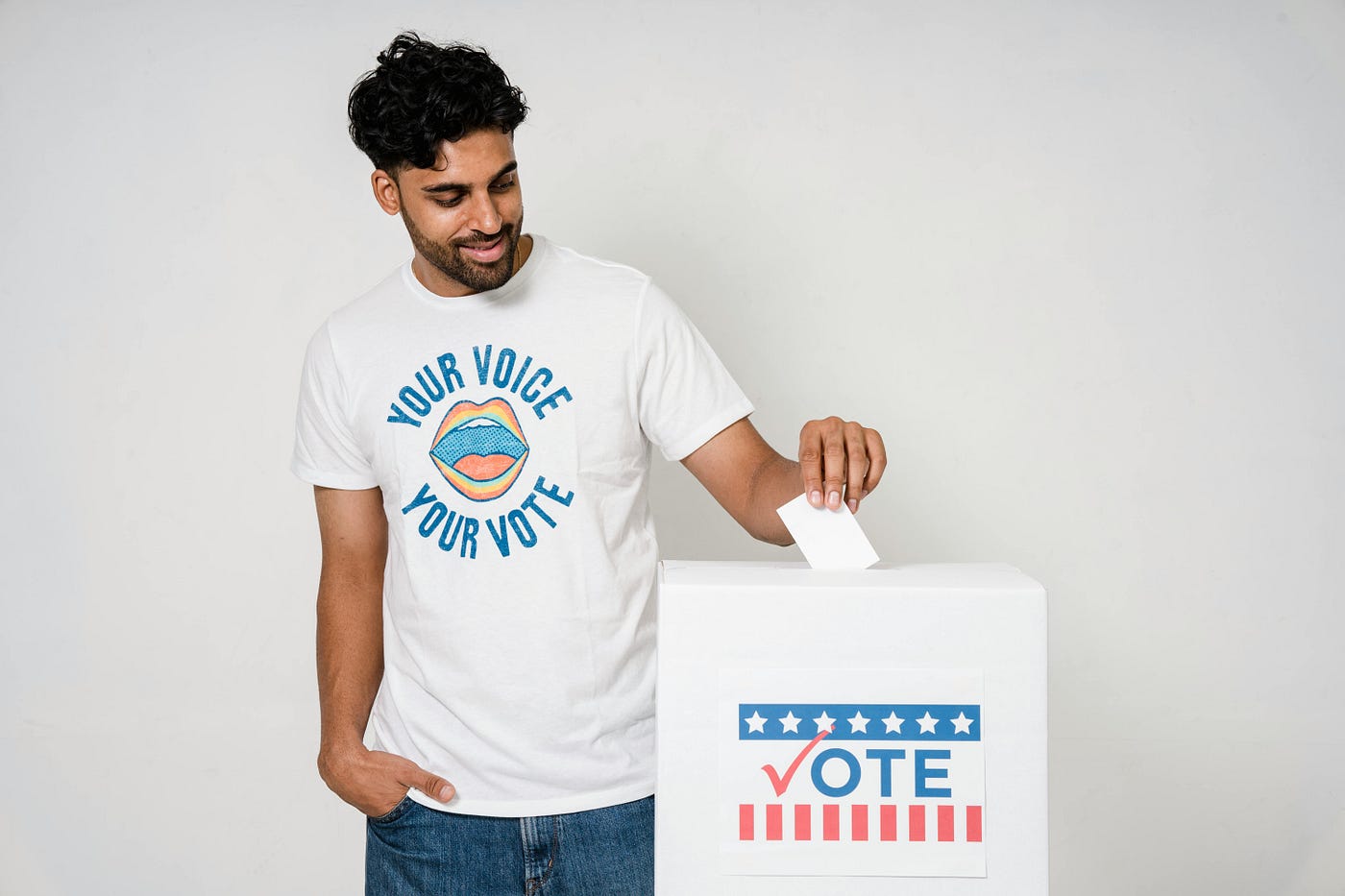
Photo by Zoe VandeWater on Unsplash
“While offenders were in fear of losing a small part of their privilege, the victims were running the risk of losing everything.” — Cho Nam-joo, Kim Jiyoung, Born 1982
Why do those with the most advantage feel most under attack when justice is served?
Cho Nam-joo’s haunting observation reveals a fundamental paradox in how oppression functions: privilege reacts to even minimal challenges as existential threats, while those who suffer under unjust systems face genuine dangers to their safety, dignity, and survival. The scenario in Kim Jiyoung, Born 1982 — where male colleagues discover voyeuristic photos of women coworkers and choose complicity over intervention — isn’t confined to fiction. It mirrors courtrooms, boardrooms, and communities around the world.
Perhaps nowhere is this asymmetry more evident than in debates over affirmative action. While the privileged fear losing marginal advantages, the marginalised are still fighting for their right to exist with dignity.
How Complicity Sustains Oppression
How Complicity Sustains Oppression
The case involving Gisele Pelicot in France, where her husband Dominique Pelicot was revealed to have drugged, raped, and filmed her being raped by dozens of men without her knowledge, echoes the behavior of the male colleagues in Nam-joo’s novel. Gisele, now 72, testified in court that she was “sacrificed on the altar of vice,” describing the thousands of images police recovered as scenes of “barbarity.” Rather than confronting harm, many men involved chose silence or participation. This act of passive and active complicity reveals a deeper truth: systems of oppression don’t survive only through blatant acts of violence, but through the quiet acquiescence or enabling of bystanders.
Gisele waived her anonymity to speak publicly, not only for herself but in solidarity with other women who remain unrecognized as victims. Her courage in confronting the judicial system highlights both the scale of harm and the pervasiveness of silence around it.
Research on bystander intervention shows that those with structural privilege often hesitate to disrupt harm, fearing social or professional repercussions. Studies find that women are more likely than men to intervene in sexual violence contexts, likely because they share identity markers with the victims and better grasp the stakes.
But complicity operates far beyond the individual. When institutions remain passive, fail to punish abuse, or reward silence, they entrench power structures that make injustice feel normal. Individual courage, in such a landscape, often seems futile against the might of systemic inertia.
Why Privilege Reacts Like It’s Under Siege
To understand why minor reforms feel catastrophic to the privileged, we must explore how privilege shapes perception.
When male privilege is challenged, even slightly, it often activates defensive responses rooted in group-image threat — a fear that acknowledging injustice will tarnish one’s social identity. Privilege is frequently invisible to its holders. It forms the silent backdrop of their world. And when that backdrop shifts, even slightly, it feels destabilizing.
What privileged groups often experience as “persecution” is usually just fairness taking root. Losing a minor job advantage, for example, isn’t equivalent to being locked into a hereditary occupation. Yet this “relative deprivation” causes those with privilege to see equity as oppression.
The Myth of Meritocracy and the Invisible Hand of Caste
Affirmative action debates reveal the most vivid example of this fear asymmetry. Online professional spaces like LinkedIn frequently feature upper-caste professionals decrying how “less qualified” individuals gain access to institutions via reservation policies.
But what is left unsaid is crucial: caste-based privilege has operated as the oldest and most enduring affirmative action program in history. The invisible advantages of upper-caste groups include:
- Generational wealth and property ownership
- Fluency in English and access to elite education
- Cultural capital and familiarity with elite environments
- Private tutoring, coaching, and alumni networks
- Career mentorship through family connections
- Risk-taking capacity made possible by financial safety nets
When someone with a surname like Sharma, Gupta, or Iyer gains admission to a top school, no one questions whether they “deserved” it. Their advantages are normalised. But a Dalit student who benefits from reservation is subjected to suspicion and scorn.
This is not about reversing discrimination. It is about correcting centuries of exclusion.
The Brutal Reality That Privilege Ignores
While debates rage over who deserves college seats, an estimated 1.3 million Dalits in India continue working as manual scavengers — a hereditary occupation of cleaning human waste. 97.25% of identified manual scavengers are from Scheduled Castes. Between 2016 and 2020, 340 of them died inside sewers.
These statistics don’t feature in anti-reservation rants. They are invisible to those who mistake equality for injustice.
The “creamy layer” argument is often raised to suggest that reserved category individuals no longer face disadvantage. But this ignores that most Dalit families remain trapped in generational exclusion. The few who succeed do so not because of privilege but despite systemic hostility.
When Marginalised Talent Proves Merit Abroad
Perhaps the strongest rebuttal to anti-reservation narratives comes from international achievements. Reserved category students who win fully-funded admissions to universities in the U.S., Europe, or Japan prove that their talent was never the issue.
In these global contexts, caste carries no influence. If these students secure fellowships and thrive in competitive environments, their success exposes the lie at the heart of India’s meritocracy myth. What reservation offered was not an unfair advantage, but long-overdue access.
The real question isn’t, “How did this student get in?” It should be, “How many others did we fail to see because the system excluded them?”
The Pattern Repeats Across Systems of Privilege
Caste is not the only domain where the asymmetry of fear manifests. In racial contexts, confronting white privilege can trigger defensive backlash rooted in fears of group identity loss. In gender politics, men often react to feminist reforms as if they face extinction, not equality.
These patterns repeat across class, sexuality, disability, and religion. Those accustomed to systemic advantage interpret minor shifts as existential crises, while those without privilege continue facing real threats to livelihood, safety, and survival.
Trust Deficits and the “Not All” Fallacy
The pervasive nature of complicity creates a deep trust deficit for marginalised communities. The “not all men” refrain, for instance, misses the point. The issue isn’t whether all men harm women — it’s that marginalised individuals cannot predict who will stand with them and who will stay silent.
For those navigating systems of violence, the rational response is caution. When so many have remained complicit, trust becomes a risk they cannot afford.
From Complicity to Solidarity: A Way Forward
To dismantle these cycles, both psychological and structural reforms are needed. Educational interventions that help privileged individuals recognise their inherited advantages can reduce defensiveness. When privilege becomes visible, equity feels less like loss.
Institutions must shift incentives. Reward intervention. Protect whistleblowers. Make reporting easier than silence. Cultivate environments where justice is safe and complicity is costly.
Crucially, elevate the voices of those facing real threats. Center Dalit students, not upper-caste resentment. Listen to survivors, not those made uncomfortable by their testimony. Focus policy on manual scavengers, not LinkedIn meritocrats.
Conclusion: Choosing Justice Over Comfort
Cho Nam-joo’s words offer more than literary insight — they expose a truth about how power maintains itself. Oppressive systems depend on making those with privilege feel persecuted by equity. This feeling is not truth. It is the backlash of a world where fairness finally begins to take root.
The meritocracy myth collapses when examined closely. It is not that reservation introduces unfairness; it reveals the deep and ancient unfairness that already exists.
Breaking these cycles requires clear vision. Recognise the difference between actual and perceived threat. Understand how much of your comfort rests on others’ exclusion. And most importantly, make a choice: justice over complicity, solidarity over silence.
Because in the end, as Kim Jiyoung reminds us, we are all making that choice. Daily.
메타데이터
- post_id
- 4adc82dd9ea0
- slug
- the-asymmetry-of-fear-4adc82dd9ea0
- url
- https://medium.com/activated-thinker/the-asymmetry-of-fear-4adc82dd9ea0
- canonical_url
- https://medium.com/activated-thinker/the-asymmetry-of-fear-4adc82dd9ea0
- author_url
- https://medium.com/@pratibhadeerghlife
- status
- ok
- fetched_at
- 2026-06-21 19:25:17