Official vs Unofficial Platforms (2026): Why This Comparison Matters
In 2026, scammers don’t just “fake websites” anymore.
Official vs Unofficial Platforms (2026): Why This Comparison Matters
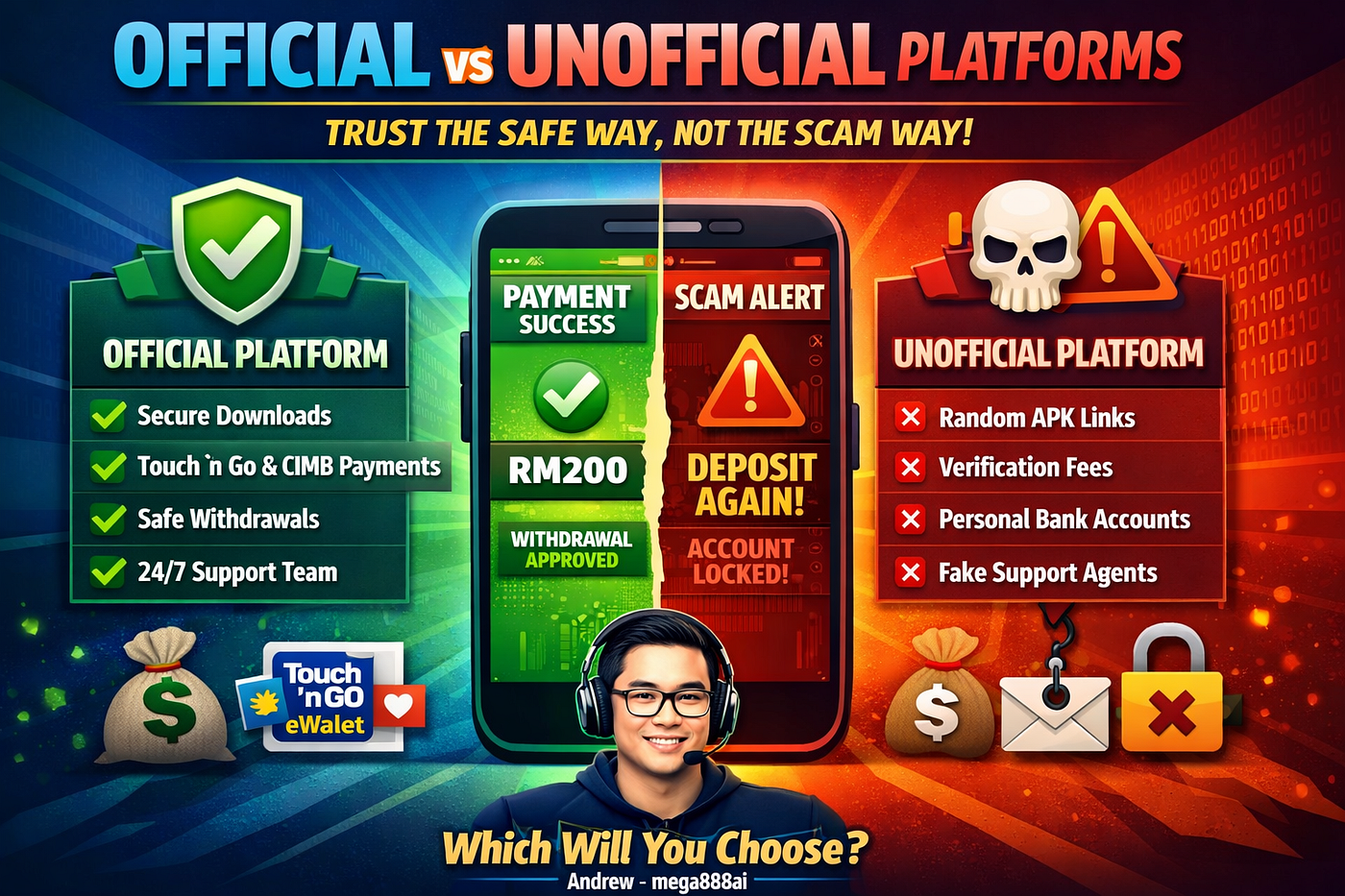
In 2026, scammers don’t just “fake websites” anymore.
They build fully working apps, clone UI screens, and even create fake Telegram support accounts that look legit. The trap usually happens during:
- “Download APK here” from random link
- “Pay verification fee first”
- “Your withdrawal stuck, top up to unlock”
- “Install this helper app to fix login” (this one is dangerous)
So before you log in, deposit, or even install anything, compare these points first.
1) Download Source: The #1 Difference You Can’t Ignore
Today I tested a few download sources and here’s the pattern:
Official-style platforms usually have:
- Consistent domain branding (same name everywhere)
- A proper SSL lock + clean redirect behaviour
- Clear version notes (like v3.xx, patch notes, update date)
- No weird popups forcing you into “install now” immediately
Unofficial platforms usually show:
- “Mirror download” links with random filenames like
mega888_v9_finalFINAL.apk - Shortened links (bit.ly / tinyurl)
- “Install this config file” prompts
- Aggressive banners like “LIMITED SLOT! CLAIM NOW!”
My real test today: On Android 14, when I tapped one unofficial APK link, Chrome instantly warned me it “may be harmful”, and the file name looked generic (not branded). That’s a huge red flag.
✅ Pro tip (Malaysia context): If the “agent” DMs you the APK through WhatsApp/Telegram, don’t blindly trust it. A lot of scam agents in Malaysian Facebook groups reuse the same “working link” script.
2) Install & Security Prompts (Android 14 Makes This Super Clear)
Android 14 security updates are more strict now, especially on newer phones (Samsung, Xiaomi, Pixel).
Official platforms feel “normal” during install:
- You install once, and it behaves like a normal app
- It doesn’t ask for crazy permissions
- It doesn’t try to install another app
Unofficial platforms often do this:
- Ask you to allow Accessibility Service (BIG danger)
- Ask permission like:
- “Read SMS”
- “Manage all files”
- “Display over other apps”
- Force-disable security warnings
If an app asks for Accessibility permission, it can potentially:
- Read what you type
- Tap buttons for you
- Hijack login screens
- Auto-approve transfers (yes, I’ve seen this)
Bottom line: A gaming app should not need Accessibility. Period.
3) Payment Methods: Touch ’n Go, CIMB Clicks, and the Scam Pattern
This one is very Malaysia-specific.
Official-style platforms usually support:
- Touch ’n Go eWallet (proper flow, clear reference)
- CIMB Clicks / Maybank / online transfer with correct beneficiary name
- Clear “Deposit history” records and timestamps
Unofficial platforms often push:
- Personal bank accounts with weird names
- “Deposit to this guy first, we settle for you”
- Fake receipts
- “Minimum deposit RM50 but send RM53 for processing”
🚩 Red flag phrases Malaysians always fall for:
- “Boss, system need verification fee ya”
- “Withdrawal stuck, need top up to unlock”
- “Bank maintenance, use this personal account first”
If you see verification fee, assume scam until proven otherwise.
4) Withdrawals: Real Platforms Don’t Ask You to Pay to Get Your Money
I tested support chats today by asking a simple question:
“If withdrawal pending, do I need to top up again?”
A legit platform will answer clearly:
- Pending reason (bank processing / queue)
- Estimated time
- Clear steps (no extra payment)
A scam platform will say:
- “Need unlock fee”
- “Need tax fee”
- “Need deposit again to verify”
Important: A real withdrawal process does NOT require you to deposit more money.
5) Network & Performance: Maxis/Celcom Coverage Exposes Fake Apps Fast
This one sounds small, but it’s actually useful.
Today I tested on:
- WiFi + mobile data switching
- A Maxis line (stable)
- A secondary hotspot (Celcom coverage in my area)
Official-style platforms usually:
- Recover smoothly when switching network
- Keep login session stable
- Don’t crash when reconnecting
Unofficial platforms often:
- Freeze on login
- “Reconnect loop”
- Random “server busy” popups (to buy time)
- Force you to reinstall again and again
If the app feels unstable and support keeps pushing you to “install a new version from my link”, that’s a trap cycle.
6) Customer Support Proof: Ask These 3 Questions (Today-Tested)
When I evaluate a platform, I don’t ask “Are you legit?” Scammers will always say yes.
I ask questions that require real operational proof:
Ask support:
- “What’s the latest app version today?”
- “Can you show me the official deposit method list?”
- “If I change phone, how to secure my account?”
A trustworthy platform replies with:
- Version number + update date
- Clear steps (not voice notes only)
- Security advice like PIN / OTP / device binding
A scam agent replies with:
- “Boss just follow my link”
- “No need worry”
- “Top up first then settle”
7) Updates & File Integrity: Why “Random APK Updates” Are Dangerous
Unofficial platforms love to push “new update” every week.
But here’s the issue: Many fake APKs are modified to include extra tracking or risky code.
Today’s real behaviour I noticed: One unofficial APK tried to download an extra file after install (without explaining). That’s not normal.
What safe updates look like:
- One app update
- Clear changelog
- Same developer identity
- No “plugin installs”
What unsafe updates look like:
- Multiple APKs
- “Install helper app”
- “Install this certificate”
- “Allow unknown source again”
8) What Users Should Compare (Quick Checklist)
If you’re busy, compare these 8 things before using any platform:
- Download source (official domain vs random links)
- Permissions requested (SMS/Accessibility = danger)
- Payment options (Touch ’n Go / CIMB flow must be clean)
- Withdrawal policy (no fee to withdraw)
- Support behaviour (answers with proof, not pressure)
- Update style (stable versioning, not constant “new APK”)
- Network stability (Maxis/Celcom switching shouldn’t break it)
- Brand consistency (domain + name + app version all match)
My Personal Rule (From Testing Apps in Malaysia)
If I see even ONE of these, I stop immediately:
- “Verification fee required”
- Personal bank account payment
- Accessibility permission request
- Support rushing me to deposit
- APK file name looks random
- Facebook group “agent” pushing private link
Because once your phone is compromised, it’s not just about the game anymore — it’s your banking apps, OTPs, and identity.
Safer Next Step (If You Already Downloaded Something Unofficial)
If you already installed an app and feel something is off, do this now:
- Uninstall the app
- Go to Settings → Accessibility and disable anything suspicious
- Check Device Admin Apps (disable unknown ones)
- Run Play Protect scan
- Change passwords (especially email + banking)
- If you used banking: monitor CIMB/Maybank transaction history
And if you need a cleaner reference point to compare against, I usually tell people to start from a trusted info hub first — you can check Mega888 resources and platform comparison notes from **Mega888** so you don’t get trapped by random “agent” links again.
(Yes, I still recommend comparing everything yourself — don’t trust blindly.)
Final Takeaway: Official vs Unofficial Is About Behaviour, Not Promises
In 2026, anyone can claim they’re official. But only real platforms behave like one:
- Stable installs
- Clean payment flow
- No weird permissions
- No withdrawal fees
- Support that answers with proof
메타데이터
- post_id
- 4b0f96ecd82c
- slug
- official-vs-unofficial-platforms-2026-why-this-comparison-matters-4b0f96ecd82c
- url
- https://medium.com/@mega888ai/official-vs-unofficial-platforms-2026-why-this-comparison-matters-4b0f96ecd82c
- canonical_url
- https://medium.com/@mega888ai/official-vs-unofficial-platforms-2026-why-this-comparison-matters-4b0f96ecd82c
- author_url
- https://medium.com/@mega888ai
- status
- ok
- fetched_at
- 2026-07-18 21:53:05