Your Team Doesn’t Have a Coding Problem — It Has a Requirements Problem
Most expensive software failures begin long before a single line of code is written.
Your Team Doesn’t Have a Coding Problem — It Has a Requirements Problem
Most expensive software failures begin long before a single line of code is written.
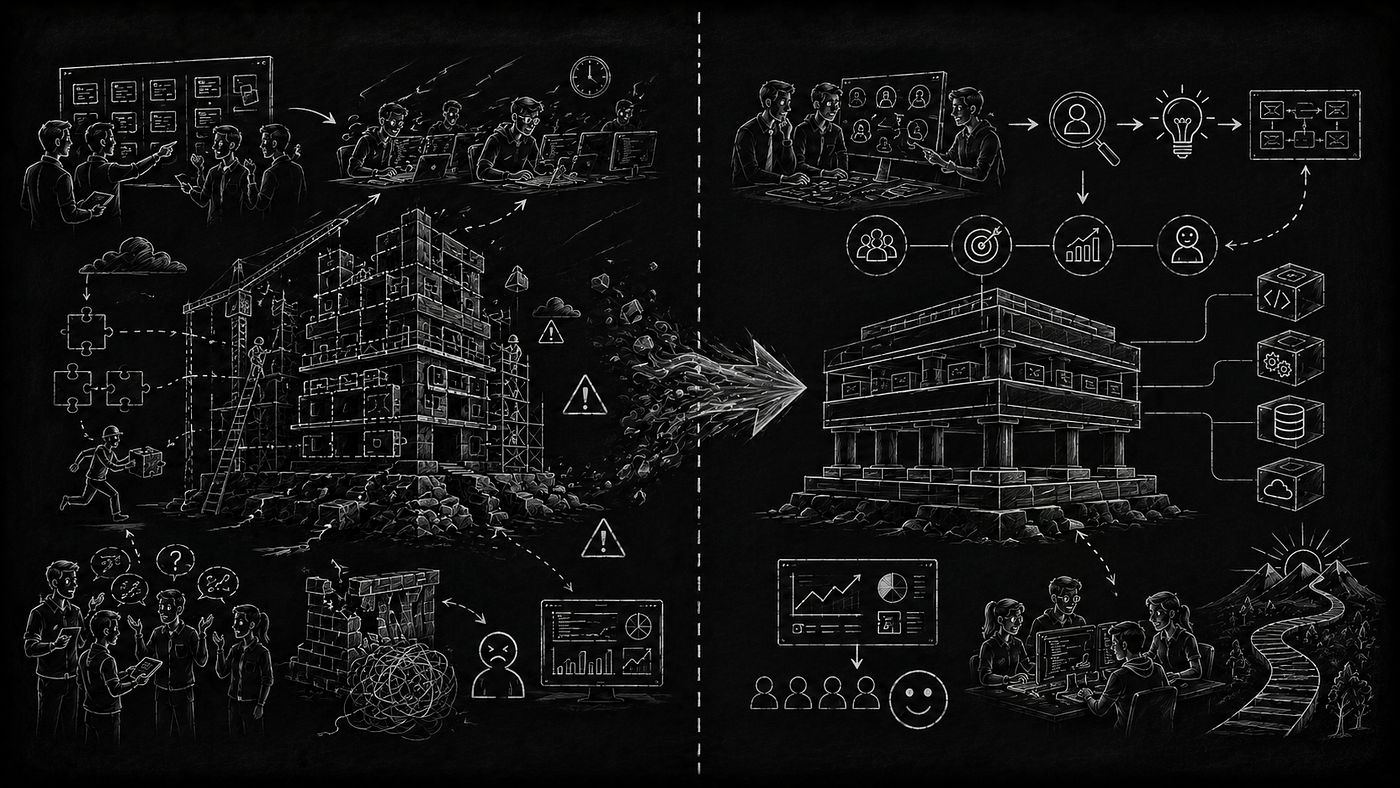
When projects struggle, engineering teams often blame:
- bad code
- technical debt
- poor architecture
- framework limitations
- performance issues
But in many cases, none of these are the real problem.
The real problem started much earlier.
It started with requirements.
Because building the wrong solution perfectly is still failure.
And many teams spend months optimizing code for requirements they never fully understood.
The Engineering Illusion
A project launches.
Users are unhappy.
Leadership asks:
Why didn’t this feature work?
The immediate reaction is often:
We need better implementation.
But implementation may not be the issue.
A more important question is:
Did we solve the right problem?
Because software quality cannot compensate for incorrect requirements.
Why Requirements Problems Are Dangerous
Coding problems are visible.
Requirements problems are invisible.
Bad code creates:
- errors
- bugs
- failures
Bad requirements create:
- wasted effort
- wrong features
- unnecessary complexity
- missed business goals
And those problems are much harder to detect.
Common Requirement Mistakes
❌ Building What Was Asked Instead Of What Was Needed
Stakeholder says:
Add another approval step.
Team implements another approval step.
Nobody asks:
Why is the approval step needed?
Sometimes the actual problem is:
- unclear ownership
- missing validation
- poor workflow visibility
The requested solution isn’t always the correct solution.
❌ Requirements Treated As Fixed Truth
Many teams assume:
Requirement
     =
Correct Solution
That’s rarely true.
Requirements are often:
- assumptions
- observations
- hypotheses
Good engineering validates them.
❌ Starting Development Too Early
Teams often begin coding when they have:
- partial understanding
- incomplete workflows
- unclear business rules
The result:
Build
 ↓
Clarify
 ↓
Rebuild
Multiple times.
❌ Focusing On Features Instead Of Outcomes
Requirements often describe:
What To Buildinstead of:
What Problem To SolveThose are completely different conversations.
Real Enterprise Example
Business requests:
Add a dashboard.
Team builds dashboard.
Six months later:
Nobody uses it.
Why?
Because the real problem wasn’t visibility.
The real problem was data quality.
The dashboard solved the requested feature.
Not the underlying issue.
The Cost Of Requirement Failures
When requirements are unclear:
- architecture becomes unstable
- scope expands continuously
- timelines slip
- technical debt grows
- teams become frustrated
And the worst part?
The system may work exactly as designed.
It simply solves the wrong problem.
Bad Engineering Process
❌ Solution-First Thinking
Requirement
     ↓
Implementation
     ↓
Deployment
Very little understanding occurs.
Better Engineering Process
✅ Problem-First Thinking
Problem
     ↓
Root Cause
     ↓
Desired Outcome
     ↓
Requirement
     ↓
Implementation
Now the software solves actual business needs.
Questions Great Engineers Ask
Instead of:
What should we build?
Ask:
- Why is this needed?
- What problem are we solving?
- What happens if we do nothing?
- How will success be measured?
- What business outcome changes?
These questions often uncover hidden assumptions.
Practical Example
❌ Requirement
Add Search FiltersBetter Discussion
Users cannot find records quickly.Now multiple solutions become possible:
- search filters
- improved indexing
- workflow redesign
- categorization improvements
The team solves the problem instead of blindly implementing a feature.
Important Engineering Principle
Requirements Are Design Inputs, Not Commands
Engineering is not simply translating requests into code.
Engineering is understanding:
- intent
- constraints
- trade-offs
- business outcomes
before implementation begins.
Senior-Level Insight
Junior developers often focus on:
How do we build this?
Senior engineers focus on:
Should we build this at all?
That question can save months of wasted effort.
Because the highest ROI feature is often the one that never needed to exist.
Final Takeaway
Many software failures are blamed on:
- code quality
- architecture
- frameworks
But the root cause often exists before development starts.
Requirements define the direction of the entire system.
If the direction is wrong:
Perfect execution still produces poor outcomes.
Strong engineering teams spend as much energy understanding problems as they do building solutions.
Because solving the wrong problem efficiently is still failure.
Connect with Me
If you enjoyed this post and would like to stay updated with more content like this, feel free to connect with me on social media:
- Twitter : Follow me on Twitter for quick tips and updates.
- LinkedIn : Connect with me on LinkedIn
- YouTube : Subscribe to my YouTube Channel for video tutorials and live coding sessions.
- Dev.to : Follow me on Dev.to where I share more technical articles and insights.
- WhatsApp : Join my WhatsApp group to get instant notifications and chat about the latest in tech
Email: Email me on dipaksahirav@gmail.com for any questions, collaborations, or just to say hi!
I appreciate your support and look forward to connecting with you!
메타데이터
- post_id
- 4b2d72eaed7b
- slug
- your-team-doesnt-have-a-coding-problem-it-has-a-requirements-problem-4b2d72eaed7b
- url
- https://medium.com/angular-engineering/your-team-doesnt-have-a-coding-problem-it-has-a-requirements-problem-4b2d72eaed7b
- canonical_url
- https://medium.com/angular-engineering/your-team-doesnt-have-a-coding-problem-it-has-a-requirements-problem-4b2d72eaed7b
- author_url
- https://medium.com/@dipaksahirav
- status
- ok
- fetched_at
- 2026-06-09 15:37:30