The Art of Bridging: Connecting Local Action to Global Goals
The 21st century presents a paradox: while our global challenges demand unified, large-scale solutions, the most innovative and effective…
The Art of Bridging: Connecting Local Action to Global Goals

The 21st century presents a paradox: while our global challenges demand unified, large-scale solutions, the most innovative and effective responses often emerge from the local level. This tension creates a critical challenge: how can we design systems that connect grassroots insights with overarching global objectives? Bridging this divide is not merely about coordination; it requires a deliberate, systemic approach that ensures both local relevance and global coherence.
Systemic design — a methodology that prioritises adaptability, inclusivity, and interconnectedness — offers a powerful lens for navigating this complexity. By integrating diverse perspectives, fostering continuous feedback, and maintaining resilience, systemic design provides the tools to create dynamic pathways between local action and global goals. This post explores how systemic design can unlock the potential for transformative impact by bridging these often-disconnected realms.
Why Bridging Matters
The disconnect between local and global systems carries profound consequences. Consider the implementation of international climate agreements. While these agreements establish critical benchmarks, they often fail to resonate with the on-the-ground realities of local communities. For instance, rural regions reliant on subsistence agriculture for their livelihoods may lack access to technology or infrastructure necessary for adopting sustainable practices. Without meaningful integration, such top-down initiatives risk alienating the very communities they aim to support.
Bridging is not simply about scaling up local innovations or disseminating global policies. It requires reciprocal pathways where local solutions inform global strategies and global frameworks are adapted to local contexts. This interplay ensures that systemic change is both equitable and effective, addressing the nuances of diverse environments while aligning with shared objectives.

Principles of Systemic Design for Bridging
Systemic design provides a roadmap for navigating the complexities of bridging through key principles:
Inclusivity:
Engaging diverse stakeholders ensures that multiple perspectives — from policymakers to community leaders — shape solutions. The **Medellín Urban Innovation Lab in Colombia exemplifies this principle. By integrating the lived experiences of residents into urban planning, the initiative transformed informal settlements into sustainable, liveable spaces. This participatory approach** not only addressed immediate challenges but also cultivated a shared vision for the future.
Feedback Loops:
Creating channels for ongoing dialogue between local and global levels fosters real-time learning and adaptation. The **EU’s LEADER programme** illustrates this well. By funding local rural development projects and systematically incorporating their outcomes into broader EU policies, the initiative creates a dynamic exchange of insights that benefits both scales.
Resilience and Agility:
Effective systems must adapt to shifting conditions. The **One Acre Fund, which supports smallholder farmers in Sub-Saharan Africa, demonstrates how iterative design processes** can refine strategies in response to local successes and challenges. This agility enables interventions to remain relevant and impactful, even amidst changing environmental or economic landscapes.

Accountability:
Transparent and equitable governance builds trust and ensures sustained commitment. **Citizen Assemblies on Climate**, which empower everyday citizens to contribute to climate policymaking, highlight the importance of embedding accountability in collaborative processes. By aligning diverse stakeholder interests, such models foster both trust and legitimacy.
Compelling Examples of Bridging in Action
The power of bridging emerges vividly in practice. The **C40 Cities Climate Leadership Group, a network of nearly 100 cities, demonstrates how local initiatives can shape global frameworks. By sharing best practices, cities like Copenhagen have scaled their carbon-neutral urban planning** efforts into globally influential models. Copenhagen’s integration of community input with cutting-edge green technology offers a blueprint for sustainable urban development worldwide.

Similarly, **Gavi, the Vaccine Alliance, highlights the importance of aligning global health goals with local healthcare systems. Through strategic vaccine distribution in underserved areas, Gavi addresses immediate health crises while simultaneously building local capacity for long-term resilience. Another example lies in Southeast Asia’s [Agroecology Knowledge Hubs](https://www.fao.org/agroecology/overview/en/)**, which connect smallholder farmers with international research communities. These hubs enable the exchange of actionable insights, allowing local agricultural practices to shape global food security policies while enhancing resilience to climate variability.
Who Should Bridge?
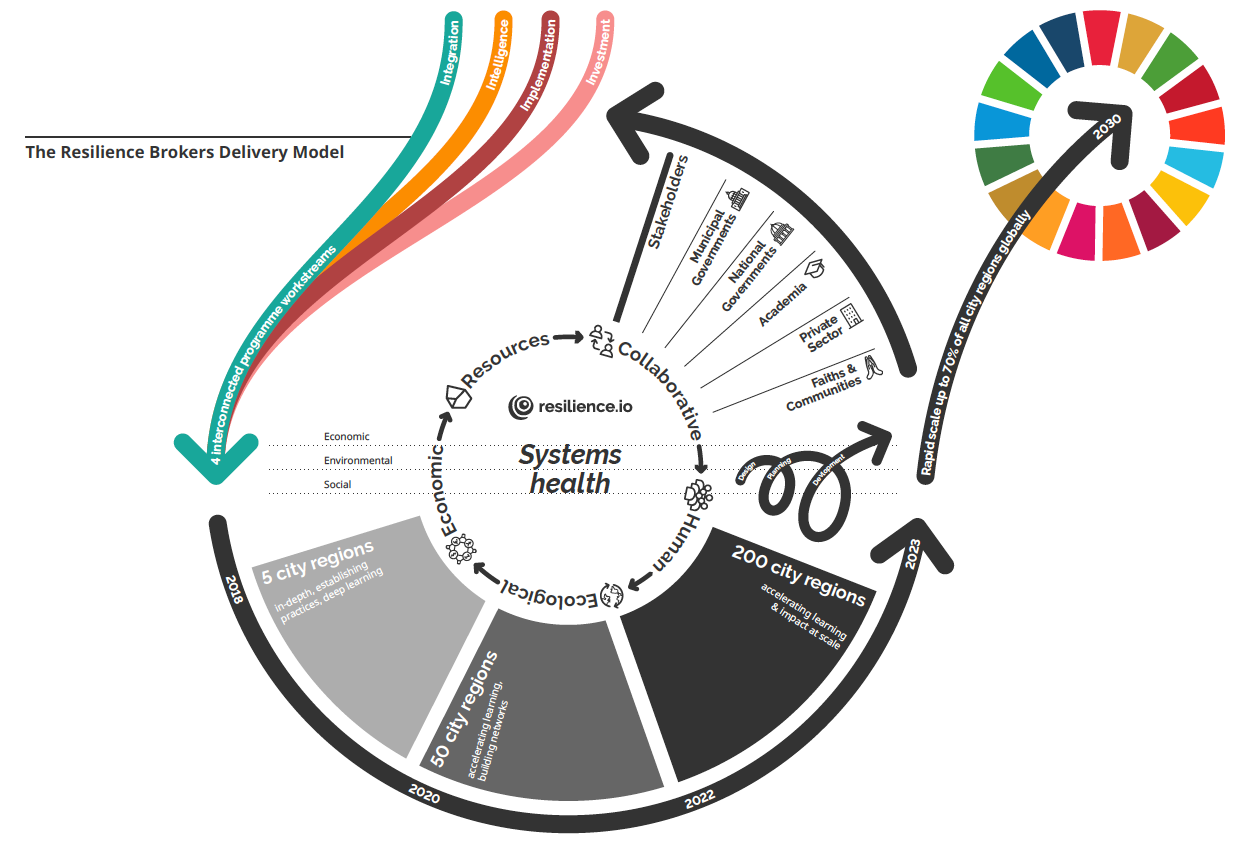
The responsibility for bridging spans across sectors and disciplines. Institutions provide legitimacy and resources, local communities contribute indispensable context, and interdisciplinary teams — spanning science, design, and technology — translate insights across scales. Hybrid intermediaries, such as the **Resilience Brokers** initiative, play a critical role in coordinating these efforts. Acting as connectors, they integrate local innovations with global priorities, creating cohesive strategies that drive systemic change.
Challenges and Solutions
Despite its promise, bridging is fraught with challenges. Power imbalances can distort priorities, and scalability constraints may limit the reach of successful local initiatives. Addressing these obstacles requires systemic tools such as participatory design and digital platforms for knowledge exchange. Platforms like **CoLab** foster global collaboration on local challenges, ensuring that diverse voices shape solutions adaptable across contexts. These approaches mitigate the risks of top-down imposition, keeping efforts grounded in lived realities.
Conclusion: Bridging as a Path to Systemic Change
Bridging the divide between local action and global systems is not merely a necessity — it is a transformative opportunity. Systemic design provides the frameworks and principles needed to create dynamic, interconnected systems that amplify the impact of both scales. By prioritising inclusivity, fostering feedback loops, and embracing resilience, we can forge pathways to meaningful change that resonate locally and globally.
As the world grapples with increasingly complex challenges, the art of bridging will become indispensable. It is through collaboration — across disciplines, sectors, and scales — that we can design a future where local ingenuity and global ambition work in harmony to create a more equitable, sustainable world.
메타데이터
- post_id
- 4b2e53774d0e
- slug
- the-art-of-bridging-connecting-local-action-to-global-goals-4b2e53774d0e
- url
- https://medium.com/ren-m/the-art-of-bridging-connecting-local-action-to-global-goals-4b2e53774d0e
- canonical_url
- https://medium.com/ren-m/the-art-of-bridging-connecting-local-action-to-global-goals-4b2e53774d0e
- author_url
- https://medium.com/@neil_meka
- status
- ok
- fetched_at
- 2026-06-09 21:21:26