How to Grocery Shop Smarter: Beat Decision Fatigue and Stay on Track With Your Health Goals
Grocery shopping seems simple — until you’re standing in the middle of the aisle trying to make a hundred small decisions at once.
How to Grocery Shop Smarter: Beat Decision Fatigue and Stay on Track With Your Health Goals
Grocery shopping seems simple — until you’re standing in the middle of the aisle trying to make a hundred small decisions at once.
Should you get oats or cereal? Chicken or beef? Chips or fruit? Suddenly, what should take 20 minutes turns into an overwhelming experience filled with distractions, cravings, and impulse decisions.
If this sounds familiar, you’re not alone.
The truth is, grocery stores are designed to influence your decisions. But once you understand how decision fatigue works, you can shop smarter, save money, and stay aligned with your health goals.
What Is Decision Fatigue?
Decision fatigue is the idea that the more choices you make, the harder it becomes to make good ones.
As your brain gets overloaded with decisions, your ability to resist temptation weakens. This is why unhealthy impulse items are often placed at checkout counters and eye level in aisles — they rely on your mental exhaustion to influence last-minute choices.
By the time you’ve made dozens of small decisions in a grocery store, your self-control is already reduced.
That’s when impulse buys happen.
Why Grocery Shopping Feels So Hard
Grocery stores are carefully designed environments.
- Essential items are often placed far apart
- Healthy foods require more intentional selection
- Highly processed foods are heavily marketed and easy to grab
- End caps and checkout lanes are filled with impulse items
Even with the best intentions, it’s easy to get distracted.
That’s why strategy matters more than willpower.
How to Grocery Shop Smarter and Stay on Track
Instead of relying on motivation in the moment, the goal is to reduce decisions before you even walk into the store.
Here’s how.
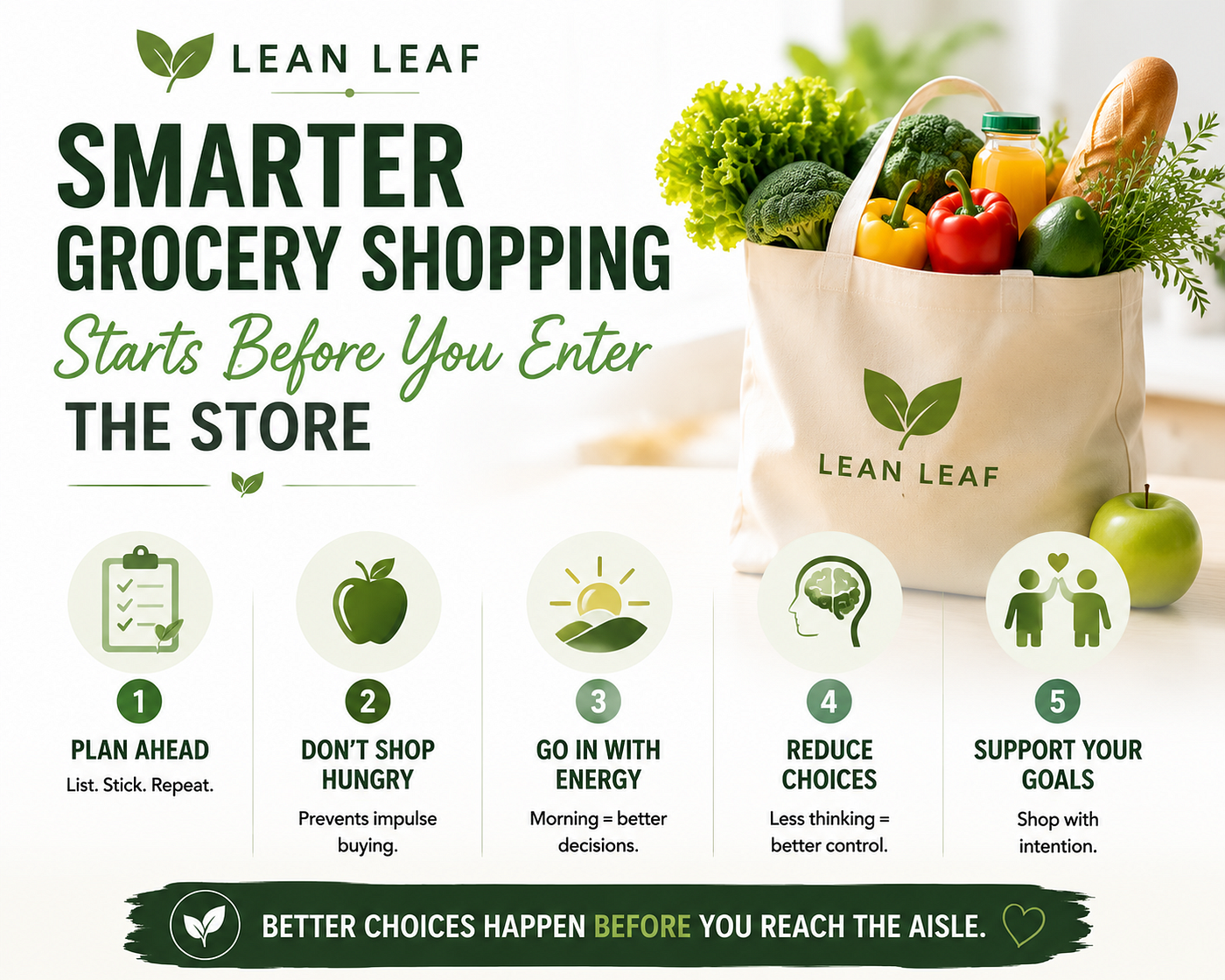
1. Always Shop With a Plan
Never enter a grocery store without a list.
A structured list reduces decision fatigue and prevents impulse buying.
Even better:
- Plan your meals for the week
- Group items by category (protein, produce, pantry, etc.)
- Stick to your list without adding extras
When decisions are made ahead of time, you save mental energy in the store.
2. Never Shop on an Empty Stomach
Shopping while hungry is one of the fastest ways to overspend and make poor food choices.
When you’re hungry:
- Cravings feel stronger
- Processed foods become more appealing
- You’re more likely to buy items not aligned with your goals
A simple protein-rich snack before shopping can significantly improve your decisions.
3. Shop When Your Energy Is Highest
Timing matters more than most people realize.
After a long workday, you’re tired, hungry, and mentally drained. That combination leads to faster, less intentional decisions.
Instead, try shopping:
- In the morning
- On your day off
- When you’re mentally fresh and focused
Better energy = better decisions.
4. Reduce In-Store Decision Making
The fewer decisions you make in the store, the better.
A helpful strategy is to create “default meals,” such as:
- Breakfast: eggs + fruit + oats
- Lunch: lean protein + vegetables + rice or quinoa
- Dinner: balanced protein + fiber + healthy fat
When meals are pre-defined, grocery shopping becomes predictable and simple.
5. Don’t Try to Avoid Temptation — Learn to Navigate It
Completely avoiding unhealthy foods forever isn’t realistic for most people.
Instead, the goal is control.
You will see processed and highly palatable foods in every grocery store. The skill is learning to acknowledge them without acting on impulse.
Over time, this builds stronger awareness and self-control.
6. Shop With Someone Who Supports Your Goals
Having a shopping partner can help you stay accountable.
The right person can:
- Keep you focused on your list
- Help you avoid impulse purchases
- Offer better product suggestions
- Reinforce your goals in real time
Avoid shopping with people who encourage unnecessary indulgence if you’re trying to stay consistent.
7. Structure Your Environment for Success
Healthy choices should be the easiest choices.
At home, this means:
- Keeping healthy foods visible
- Prepping ingredients ahead of time
- Storing processed snacks out of sight
- Making quick, healthy meals convenient
Your environment plays a bigger role than willpower.
The Bottom Line
Grocery shopping isn’t just about food — it’s about decisions.
And too many decisions lead to decision fatigue, which leads to impulsive choices that don’t support your health goals.
But with the right structure, grocery shopping becomes simple, predictable, and aligned with your weight loss journey.
At Lean Leaf, we remind patients that success isn’t just about medications like Semaglutide and Tirzepatide — it’s also about building systems that make healthy living easier in real life.
Because the easier you make good decisions, the more consistent your results will be.
메타데이터
- post_id
- 4b37dee0d4c2
- slug
- how-to-grocery-shop-smarter-beat-decision-fatigue-and-stay-on-track-with-your-health-goals-4b37dee0d4c2
- url
- https://medium.com/@leanleaf/how-to-grocery-shop-smarter-beat-decision-fatigue-and-stay-on-track-with-your-health-goals-4b37dee0d4c2
- canonical_url
- https://medium.com/@leanleaf/how-to-grocery-shop-smarter-beat-decision-fatigue-and-stay-on-track-with-your-health-goals-4b37dee0d4c2
- author_url
- https://medium.com/@leanleaf
- status
- ok
- fetched_at
- 2026-06-26 12:24:55