You Don’t Always Need Clarity You don’t always need clarity; it is not always the answer.
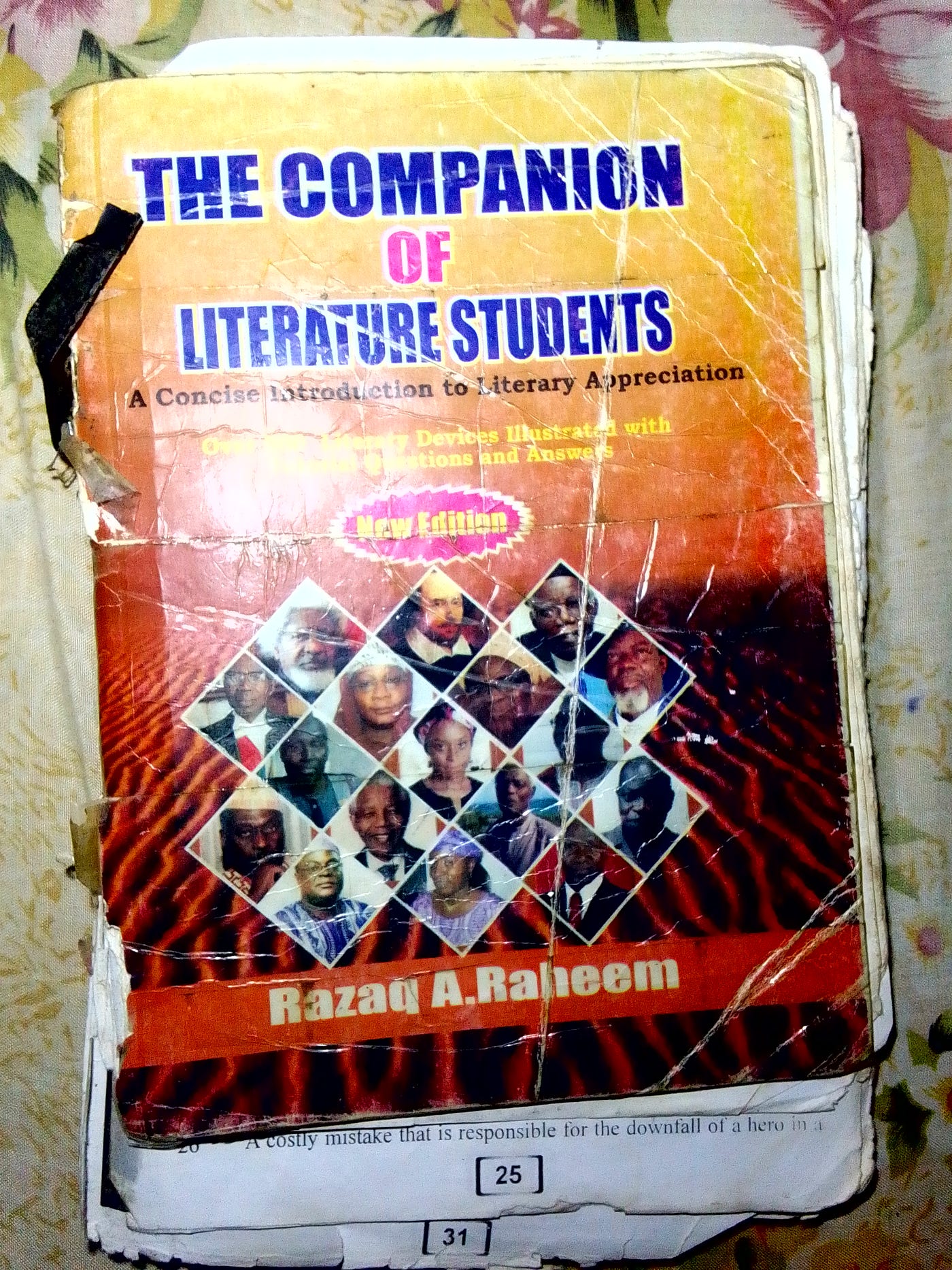
You Don’t Always Need Clarity You don’t always need clarity; it is not always the answer. In SS1, around 2020, I bought a textbook for 700 naira. To this day, it remains one of the greatest books I have ever purchased. Its title was The Companion for Literature Students. Since it was a book our teachers frequently recommended, I became obsessed with mastering every literary term in it. I read it repeatedly, memorised definitions, and convinced myself that I understood literature. Six years later, in 2026, I realised something surprising: memorisation is not understanding. This reflection is not really about personal evolution. Rather, it is about recognising that certain stages of growth cannot be skipped. Some lessons require time, confusion, mistakes, and experience before they become meaningful. I have learnt that I do not always need clarity. Sometimes confusion is part of the process. I do not always need immediate answers. Answers may take time to arrive, but that does not mean they will never come. Growth often happens quietly beneath uncertainty. We live in a world that celebrates certainty, but confusion has its own value. It forces us to question, reflect, and learn. Instead of fighting every moment of uncertainty, we can occasionally allow ourselves to sit with it. Get confused for once. Give yourself space and time. Talk to yourself without attacking your ideas or judging your progress too harshly. Growth, healing, recreation, planning, grief, and even self-discovery all follow their own timelines. Ayi Kwei Armah’s Fragments unexpectedly reinforces this idea. Set in post-colonial Ghana, the novel explores themes such as social expectations, brain drain, consumerism, and the conflict between traditional and modern values. Baako returns from abroad with dreams, ideals, and what appears to be clarity about his future. He wants to contribute meaningfully to society through creative work. However, he soon discovers that his family’s expectations differ greatly from his own vision. The pressure placed upon him becomes overwhelming. Society measures success through material wealth, while Baako seeks something deeper. Unable to reconcile these competing demands, he gradually loses his peace of mind and eventually suffers a psychological breakdown. At first glance, one might argue that Baako’s problem was a lack of clarity. Yet the novel suggests something more complex. His struggle emerges from trying to satisfy expectations that were never truly his. He is pushed toward a future defined by others and, in the process, becomes disconnected from himself. In contrast, Naanan, his grandmother, represents patience, wisdom, and traditional values. She stands as a reminder that not every step in life can be rushed. Some things must unfold naturally. Through her character, Armah criticises consumerism and the obsession with material success while affirming the importance of inner balance. The lesson is simple. You can rest without giving up. You can be uncertain without being lost. While preparing for the future, do not neglect the present. A person who is constantly chasing tomorrow may eventually lose today. Sometimes clarity comes after confusion, not before it.
메타데이터
- post_id
- 4b59ece8b56c
- slug
- you-dont-always-need-clarity-you-don-t-always-need-clarity-it-is-not-always-the-answer-4b59ece8b56c
- url
- https://medium.com/@onistella2023/you-dont-always-need-clarity-you-don-t-always-need-clarity-it-is-not-always-the-answer-4b59ece8b56c
- canonical_url
- https://medium.com/@onistella2023/you-dont-always-need-clarity-you-don-t-always-need-clarity-it-is-not-always-the-answer-4b59ece8b56c
- author_url
- https://medium.com/@onistella2023
- status
- ok
- fetched_at
- 2026-07-10 01:40:30