The Dining Room Table Didn’t Make The Cut
A cross-border move does what a decade of minimalism didn’t
The Dining Room Table Didn’t Make The Cut
A cross-border move does what a decade of minimalism didn’t

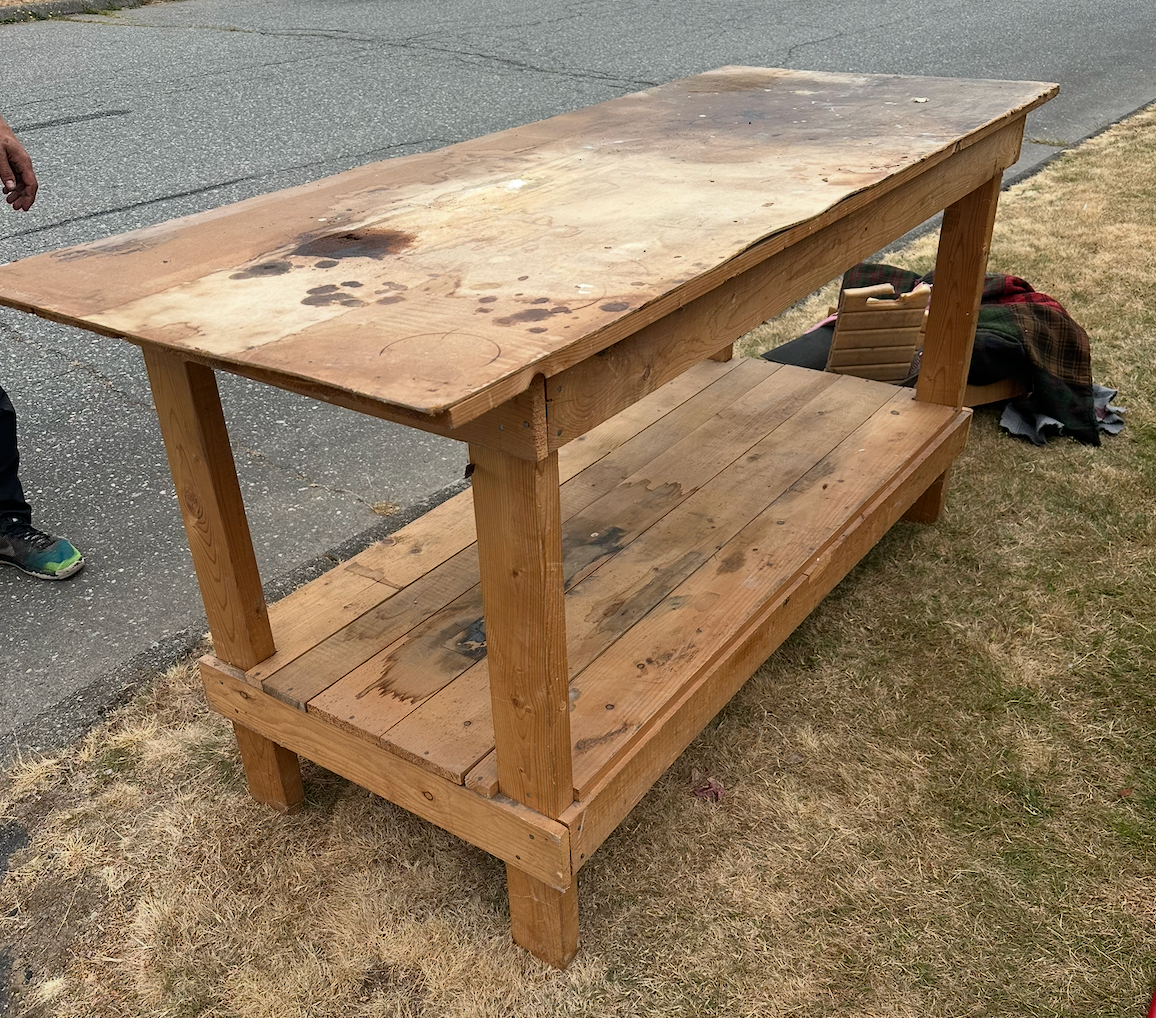
The dining room table
I was pricing U-Box containers on my laptop when the number finally did what all my years of practicing minimalism never could.
Three containers would hold what I’d planned to bring across the border from the U.S. into Canada. A few pieces of furniture. Some boxes of clothes and kitchen things. The basics. U-Box turned out to be the cheapest legitimate option, and the bill came to a little over six thousand dollars.
I sat with that for a minute. Six thousand dollars to move my stuff. Six thousand. Was my stuff worth that? Not really. Not even close.
That was the first crack.
The second was almost funny. Canadian customs guidelines, it turns out, have specific rules about mattresses. If you want to bring one across the border, it has to be professionally cleaned, fumigated, and certified. I assumed it was over concerns about bed bugs. I read the page twice and then closed the tab. A mattress certainly wasn’t worth that much hassle. It’s out. We’d figure that out on the other side.
And then I started walking through my house.
I was an unlikely candidate for this particular reckoning. My U.S. home was 800 square feet. I wasn’t hauling a lifetime of hoarded stuff. I’d already done the small-space editing most people never get around to. What could possibly be left to cut?
As it turned out, almost all of it.
I started with the easy things. The couch wasn’t coming — too big, too old, not worth the shipping. The dishes could stay or go to my sister. Pots, pans, linens, replaceable. Then I got to the dining room table.
The dining room table was the one thing I’d always said I’d never give up.
It’s a singular piece. I loved the hidden storage in the base. For twenty years, I’d eaten at it every day. Inside the base lived an orange leaf-shaped serving bowl that only came out at Thanksgiving, and a carved wood platter with irregular, smooth edges that I’d pull out when having guests for wine and cheese. If someone had asked me the week before I priced U-Boxes what one item I couldn’t imagine parting with, the answer would have been the table.
I was in Canada when my sister and her husband asked to stay at my Utah home for the weekend while visiting our parents. I asked her to take the table… and anything else she wanted.
Her kids are getting ready to move out and furnish their own homes. She’s been collecting pieces for them. The table went to her, along with the Instant Pot and a painting I’d done years ago of one of her sons. When I got back and realized things were gone, I felt — this is the strange part — not much. The thing I’d been sure I couldn’t live without turned out to be a thing I’d only been storing.
There’s a name for this. A couple of them.
Why the audit worked
The psychologist Russell Belk has been making the case since the late 1980s that our possessions are part of what he calls the extended self — that the line between “me” and “my stuff” isn’t as clean as we pretend. We don’t just own our things; we’re partly built out of them. And around the same time, Kahneman, Tversky, and Thaler worked out the endowment effect: we systematically overvalue the things we already own. In their experiments, the moment a cheap coffee mug became “yours,” its value doubled in your head. Losing it would feel roughly twice as bad as gaining an identical one would feel good.
For twenty years, my dining room table had been my mug. It had accumulated the weighting that time and daily use put on an object. The weighting was real. It was also, it turned out, not load-bearing.
What broke the spell was the number at the top of the U-Box quote.
A domestic move never forces this reckoning the same way. When you’re moving across town, or even across a state, the cost of bringing a piece of furniture isn’t such a big deal. I rent a U-Haul, and maybe make a couple of trips, but it’s reasonable. The price of keeping stays hidden. So the endowment effect holds. You keep the table because of course you’re keeping the table. You keep the mattress because it would cost more to replace.
A cross-border move puts the price of keeping on a line item. And once the cost is visible, you can finally see which items are worth what.
The table, it turned out, was not worth six thousand dollars. Neither was the mattress, once you added a certification fee and shipping. Neither were my dishes, nor my couch, nor most of my things.
What stayed
Some items were worth it. That was the more surprising half.
I have a curio cabinet I’ve owned as long as I've owned the table. It’s bright red and shaped like a vintage British phone booth — the kind of piece no reasonable minimalism checklist would approve of. It’s not tiny. It’s not practical. I should probably let it go.
It’s coming with me. I was certain of that before I priced a single thing.

The phone booth cabinet at Christmas, with Pearl on her dog bed
My husband Steve, who is Canadian, insists on bringing the American flag I’d had on a shelf. I’d have left it. He says it’s essential. So it’s coming.
The things that made the cut weren’t the ones I’d predicted. They weren’t the one thing I’d never give up. They were the pieces that, when I picked them up, felt less like objects and more like part of a story I was still writing. Red phone booth cabinet. Steve’s insistence on the flag. A set of champagne flutes with our wedding date stamped on them.
The audit wasn’t a test of what I owned. It was a test of what I was carrying into the next chapter.
The identity question underneath
I still feel American. It’s April, and I’m writing this from a rental near Abbotsford, British Columbia, with another move to Kelowna in a couple of weeks. My permanent resident application is in progress. Citizenship is three years of physical presence away. I’m learning the Canadian anthem, roughly. I go to hockey games. I drink from a big white mug with a red maple leaf and CANADA stamped on the side.
I’ve always been flexible about what home meant. For most of my adult life, home was wherever my dog Olivia was. She was with me for twelve years, and wherever her bed was, I was home. She passed away before the move, and my sense of home is now tied to Steve and to Pearl, our Dalmatian. I’ve gotten comfortable settling into Airbnbs, cabins, and borrowed rooms over the last two years. What I actually need to feel at home is a short list: a quiet workspace, my laptop, a hot coffee… and my white-noise sleep mask to block out Steve’s snoring.
It turns out those things all fit in a car (more-or-less). And once I pared down to what really mattered in the move, we found it would fit just fine in a rented U-Haul trailer.
The number that started this — six thousand dollars for the contents of my life — was a useful reality check. My life wasn’t actually in those containers. It was in the handful of things that survived the audit, and the one person and one dog who were coming with me either way. The audit didn’t minimize who I am. It showed me what really matters, once I was finally ready to notice.
메타데이터
- post_id
- 4b5d0c98780d
- slug
- the-dining-room-table-didnt-make-the-cut-4b5d0c98780d
- url
- https://medium.com/tiny-house-big-mind/the-dining-room-table-didnt-make-the-cut-4b5d0c98780d
- canonical_url
- https://medium.com/tiny-house-big-mind/the-dining-room-table-didnt-make-the-cut-4b5d0c98780d
- author_url
- https://medium.com/@rcoop801
- status
- ok
- fetched_at
- 2026-06-09 15:37:30