A View From the Couch: The Primal Unmasking of the Predator Next Door — ‘Apex’
Rating: 8.5/10
A View From the Couch: The Primal Unmasking of the Predator Next Door — ‘Apex’
Rating: 8.5/10
Going into Baltasar Kormákur’s survival thriller Apex entirely blind is a double-edged sword.
For a sustained period during the opening chapters, the audience is forced to cope with a creeping, suffocating sense of dread, where it starts to feel like a narrative that will delve extensively into a character coping with loss, a story arc so depressing that it leaves you feeling entirely weighed down.
It heavily reminds me of another film set in Australia earlier this year, We Bury the Dead, where Daisy Ridley dragged us through an hour and a half of pure misery.
It felt like Charlize Theron was taking us down that exact same grueling route, which was a genuine concern given that I hadn’t seen a single trailer before sitting down on the couch.
Thankfully, the film avoids getting completely lost in its own sorrow, aided in no small part by a mercifully swift exit for Tommy (played by Eric Bana).
In the few moments we are exposed to him, we encounter the exact same performance that has come to define so many of his roles over the years, and his quick departure is a blessing in disguise, clearing the structural bottleneck and allowing the movie to shift toward something far more psychologically complex.
The moment the narrative fog of grief clears, the film introduces a terrifying exploration of deception that completely alters the stakes of survival.
The Illusion of the Innocuous Neighbor
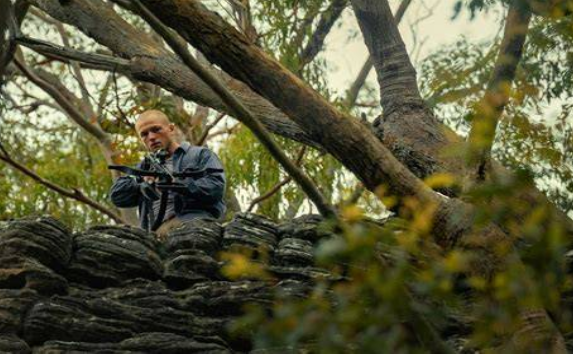
The true thematic heavy lifting of Apex is ignited by a career-defining performance from Taron Egerton, who takes on the role of adventurer Ben, played with an electrifying, predatory ferocity.
Egerton completely outshines far more established, high-profile industry names, to the point where you completely forget the rest of the cast even exists.
We are introduced to Ben as an outdoor adventurer whom we are somewhat forced to accept is a local, because the script lacks total clarity on his regional accent. But that is ultimately a minor detail, completely overshadowed by a character who raises profoundly disturbing questions about the hidden depths of human psychology.
The core terrifying theme operating beneath the surface here is the deliberate weaponization of everyday normalcy, where Ben looks like a very normal, genuine, and completely harmless fellow — the kind of unassuming citizen you wouldn’t hesitate to trust in the wilderness.
Yet, if you are even just a little bit observant, you notice right from the get-go that there is something deeply devious lurking in his eyes, and tThe real cinematic skill in this film is the slow, calculated manner in which this mundane mask begins to unravel as the plot plays out.
It challenges the audience to confront a deeply uncomfortable reality: the most dangerous threats in our world don’t announce themselves with obvious malice. Instead, true sociopathy often wears the face of an ordinary neighbor, hiding its rot behind a helpful smile and an innocent demeanor.
The Primal Tearing Down of the Mask
The absolute psychological climax of the hunt that fuels this movie, arrives in a sequence that shatters the thin veneer of human civilization entirely.
In a staggering, visceral moment, Ben removes a set of false teeth to openly reveal what he has done to his real teeth underneath, which is a grotesque transformation that signals the final, definitive removal of the mask, unleashing the raw, animalistic predator within.
What makes the performance so profoundly strong is that we are genuinely terrified of what this character is capable of, precisely because he looked so innocent moments before.
For the duration of the hunt, before and after the revelation, Ben utilizes terrifying body language that turns the open wilderness into a claustrophobic trap, which includes him unleashing a series of chilling animal sounds that echo through the terrain with a haunting intensity.
Whether those sounds are pure actor mechanics or heavily enhanced by post-production sound effects, the psychological impact is undeniable, and Ben becomes a living manifestation of primal violence, demonstrating that beneath the rules and costumes of society lies a beast waiting for the right environment to break free.
The Extraction of Human Center Stage
The ultimate irony of Apex is that Sasha (played by Charlize Theron), who is supposed to be the headline attraction for this film, is completely reduced to a support act.
By the time the second act hits its stride, it takes a moment for the less observant among us to even register that she is sharing the canvas.
When Sasha finds herself completely isolated and on the run from her assailant, the overwhelming anxiety she experiences radiates directly off the screen, yet, that anxiety is felt not because of Theron’s performance, but entirely because the hunter (Ben) pursuing her is so utterly magnetic and terrifying.
Sasha’s flight through the wild becomes an agonizing journey of unlearning everything she knows about human decency and trust.
She is stripped of her civilian security, forced to look into a brutal mirror where survival demands that she adapt to the primal rules of her attacker.
It takes a moment of extreme physical friction and existential strife for the penny to finally drop regarding her true vulnerability in this space, and she must shed the paralysis of her past grief and find a raw, hard-won sovereignty over her own skin just to make it out alive.
The Dissonance of a Poisoned Landscape
Visually, Kormákur’s production is an absolute spectacle throughout, using the vast grandeur of the terrain to establish an immense cinematic scope, where the high-stakes mountaineering scenes and the white-knuckle river sequence are masterfully shot, capturing the raw, majestic power of the Australian wild.
Yet, beneath this stunning visual framework lies a profound thematic dissonance between the beauty of the world and the savagery of man.
The film intentionally poisons the landscape, using gorgeous, sweeping cinematography to frame acts of relentless, calculated cruelty, and by the time the final credits start rolling, you walk away from the screen questioning whether experiencing any of that natural grandeur could ever be worth it.
The visual beauty becomes a hollow, terrifying trap — a beautifully lit stage for a psychological nightmare that leaves a permanent stain on the mind.
It forces a final, sobering reflection from the couch: the most breathtaking environments mean absolutely nothing when the humanity within them has completely rotted away.
The Verdict
Apex succeeds spectacularly because it refuses to be just another brainless wilderness chase, anchoring its thrills in deep psychological horror.
Come for the stunning mountaineering vistas and white-water tension; stay for Taron Egerton’s chilling, masterfully executed unmasking that will make you question the true face of every stranger you meet.
This column exists to slice through the superficial layers of modern media, uncovering the cultural and societal subtext operating beneath the screen. To support independent cultural critique, keep this public library workspace running, and ensure the reviews keep coming, consider leaving a tip via the options below:
메타데이터
- post_id
- 4b6822f4e95b
- slug
- a-view-from-the-couch-the-primal-unmasking-of-the-predator-next-door-apex-4b6822f4e95b
- url
- https://medium.com/@heelextension/a-view-from-the-couch-the-primal-unmasking-of-the-predator-next-door-apex-4b6822f4e95b
- canonical_url
- https://medium.com/@heelextension/a-view-from-the-couch-the-primal-unmasking-of-the-predator-next-door-apex-4b6822f4e95b
- author_url
- https://medium.com/@heelextension
- status
- ok
- fetched_at
- 2026-06-14 17:09:17