New U.S. Law Blocks Commercial Driver’s Licenses to Asylum Seekers
For asylum seekers with valid work permits in the U.S., the path to a stable career in trucking is about to end. A new final rule is set to…
New U.S. Law Blocks Commercial Driver’s Licenses to Asylum Seekers
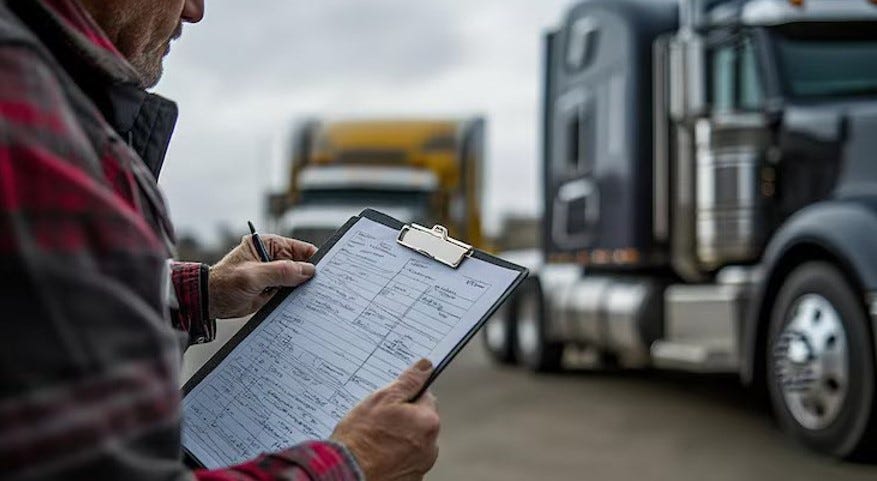
For asylum seekers with valid work permits in the U.S., the path to a stable career in trucking is about to end. A new final rule is set to take effect on March 16, 2026, that will permanently stop all non-citizens without a visa from obtaining or renewing commercial driving licenses.
“I quit my job, I ended my lease, and I passed the commercial driver’s test,” said Ali, 23, from Azerbaijan. “But now, they told me my license will be denied because of a new law,” he added.
Ali came to the U.S. three years ago on a student visa and has a pending asylum case. With a valid work permit, he has worked at Speedway, a gas station and convenience store chain, eventually becoming a general manager. Faced with high rent and a paycheck that covered it but left little to save, he saw trucking as a path to a better future. He ended his apartment’s lease in January 2026 and decided to go to Ohio to take commercial driver’s license (CDL) lessons. His plan was to obtain the license, move into long-term trucking, and save enough to eventually reunite with his family in Azerbaijan.
Instead, his plans collapsed after an abrupt policy change.
On September 26, 2025, the U.S. Department of Transportation Secretary Sean P. Duffy took an emergency action that restricted the issuance of non-domiciled CDLs to only specific visa holders. Two months after this action, in November 2025, a federal court order was issued to temporarily block it.
However, the Federal Motor Carrier Safety Administration (FMCSA) issued a new final rule on February 13, 2026. This final rule was set to be implemented on March 16, 2026, and it will permanently restrict the eligibility for non-citizen CDLs only to individuals who hold H-2A, H-2B, or E-2 visas.
Employment authorization documents alone, such as Ali’s, will no longer be recognized as a valid form of eligibility after this new final rule takes effect. States would be required to check each applicant’s immigration status through the Systematic Alien Verification for Entitlements (SAVE) system before taking any action, such as issuing, renewing, or upgrading a non-domiciled CDL.
Transportation Secretary Sean P. Duffy initially stated that the policy was meant to protect America’s roads from “dangerous foreign drivers.” Supporters argue that the rule would strengthen safety and accountability.
Though immigrant advocates, such as NILC, warn that it will block thousands of legal workers from building stable careers. The National Immigration Law Center expressed criticism, saying that the measure punishes people who are already authorized to work and creates a big disadvantage for industries that need drivers.
Ali’s story shows the law’s cost and impact on people’s lives. He traveled from Minnesota to Ohio in early January 2026 to take his CDL test, investing nearly $3,000 in driving lessons and $1,000 in expenses during his stay over there. He quit his job, gave up his apartment, then he passed his driver’s test and was ready to start a full-time job while waiting for his license. However, just because the Department of Motor Vehicles (DMV) has not yet issued his license before the law takes effect, his application would be denied.
“I was shocked. I had been planning this for months. I risked everything — my job, my savings — and now I’m left with nothing,” Ali said.
His friend Ahmet, 22, from Turkey, faced the same situation but with a different outcome. Like Ali, he has a pending asylum case and valid work authorization. The two men took the driving lessons together and planned to start their new jobs soon after they got their CDLs. But Ahmet passed his lessons and test first and applied for his license a few weeks earlier than Ali. As a result, Ahmet’s license has already been issued. Nevertheless, he is afraid to start working as it is still unclear whether the new rules could still cause problems or not, and he plans to wait and see if more information becomes available. Under the upcoming final rule, Ahmet can continue driving until his current license expires.
“It feels unfair. We are in the same situation, but my timing was lucky. Ali’s wasn’t. And in a few years, when my license expires, I’ll be in the same place he is now,” Ahmet said.
Ali has run out of luck. He now sleeps on Ahmet’s couch in Minnesota, without any plan for his next steps and struggling with a growing sense of despair.
“I just wanted a chance to work hard and be able to save enough not only for the bills but to have money to support my family and build my future,” he said. “Instead, a law changed overnight and took that away,” he added.
The FMCSA estimates the rule could affect up to 194,000 non-domiciled CDL holders over the next five years, as existing licenses expire and cannot be renewed.
*The names of Ali and Ahmet have been changed in order to protect their anonymity due to their immigration status.
메타데이터
- post_id
- 4b6fcf7854bc
- slug
- new-u-s-law-blocks-commercial-drivers-licenses-to-asylum-seekers-4b6fcf7854bc
- url
- https://medium.com/@vu12345/new-u-s-law-blocks-commercial-drivers-licenses-to-asylum-seekers-4b6fcf7854bc
- canonical_url
- https://medium.com/@vu12345/new-u-s-law-blocks-commercial-drivers-licenses-to-asylum-seekers-4b6fcf7854bc
- author_url
- https://medium.com/@vu12345
- status
- ok
- fetched_at
- 2026-06-15 20:49:13