Sugarcane Juice and Silent Contacts
The Slow Heartbreak of Charukeshi
Sugarcane Juice and Silent Contacts
The Slow Heartbreak of Charukeshi

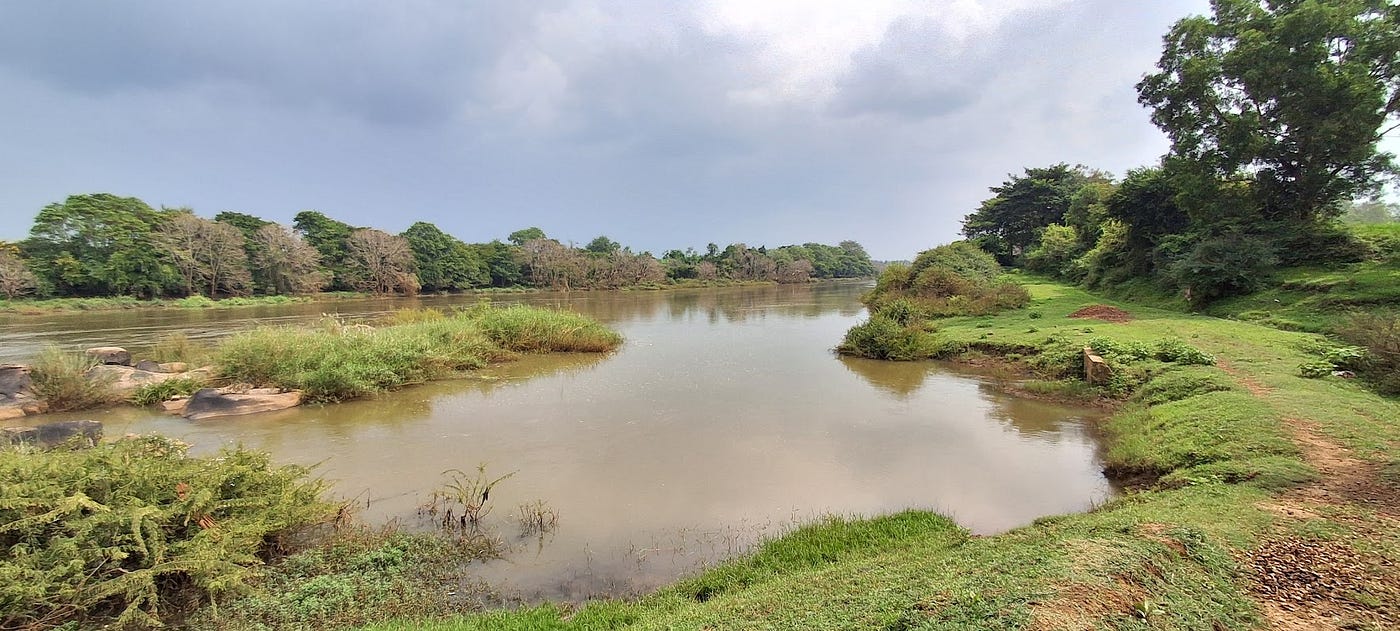
A serene morning on the Bhadra. Halfway through the quiet ride, realisation hits that the water isn’t a peaceful escape…it’s a mirror forcing us to look inward.
I am not really a reality show person. Usually, I swipe right past those hyper-dramatic audition clips on Instagram. But because my feed is quite tailored to music, the algorithm serves them up anyway. Most days, I scroll on by. But the other day, amidst the mindless loop of doom-scrolling, a clip of a visually impaired contestant on Indian Idol forced me to pause.
She was singing O Palanhare from Lagaan.
Well, putting aside the usual reality-show melodrama, her rendition was moving. It was a slow, simmering performance. When she accentuated the words Bhagwan… ye jeevan…, something fluttered inside me. Suddenly, I wasn’t looking at a five-inch screen anymore. I was transported back over two decades, sitting in a theater, watching Lagaan for the very first time.
Two decades — poof!
There was a distinct fulfillment in going to the movies back then, a commitment to a singular story that contrasts so sharply with today, where we spend hours endlessly browsing OTT titles without a single one feeling compelling. This collective downsizing isn’t just about how we watch movies; it has fundamentally altered how we listen, too. It made me wonder about the state of our world today. Once, musical memories took years to form, deeply etched into the fabric of our lives. Now they are reduced to fleeting 15-second social media clips. Amidst a sea of mediocre, repetitive, and algorithmically engineered noise, true brilliance only flashes in rare, brief moments before being swallowed by the next swipe. We consume music the way we consume everything else now: fast, shallow, and disposable. What happens to the melodies that require patience to grow inside us, the ones that build note by note until they become a permanent part of who we are?
The Dual Face of a Raga
All of Lagaan’s soundtracks are masterpieces — the Mozart of Madras at his absolute best. While the film’s main theme deserves its own dedicated post, O Palanhare — a desperate plea to the divine not to abandon humanity in its darkest hour — has had a different clutch over me. Even then, sitting in that theater, the composition, the vocals, and the acoustics perfectly converged to envelope my mind. By then, my ears could already recognize the scale it was set to: Charukeshi.
It is the ultimate musical irony: a song that desperately begs the divine not to abandon them, set to a scale that structurally feels like a betrayal midway!
Charukeshi is a fascinating, deceptive raga. It begins with a bright, cheerful disposition, only to plunge into a complex, melancholic space in its second half: A piercing contrast to its sweet beginning. But forget the technicalities of the raga; it’s the emotional math of this transition that really does something to us. It feels like a musical scale that mirrors how life actually happens: things rarely shatter all at once; they dissolve in slow motion.
Consider how we change, rather, how times change. We once had friends with whom we shared almost everything. I still remember walking down a street with a close friend, years ago, just to get a glass of sugarcane juice. True to form, I gulped my entire glass down in seconds. Shocked by my speed, my friend snapped, “Are you crazy? Did you even taste it?”
Honestly, I hadn’t. I didn’t even know what the rush was. I had simply guzzled down something that was meant to be devoured slowly, over casual banter. But it taught me a lesson I would only fully understand decades later: some things must be slowed down to be appreciated.
Today, that close friend — the one who told me to slow down, the one with whom I shared hours of endless conversations — is merely a silent name, a static contact on my phone. We didn’t fight. There was no big fallout. Time simply passed, quickly and quietly, and neither of us noticed how things were changing until the distance was already insurmountable. Like the opening notes of Charukeshi, the friendship began with absolute sweetness, only to leave behind an echoing ache, an invisible distance built purely out of silent years. Neither of us is to blame, really; it’s just the slow gravity of time, expanding responsibilities, and how our circles inevitably shrink. It’s an unspoken grief that I am sure so many of us resonate with.
The academic pitfall vs. Six minutes of sheer bliss
Unfortunately, my introduction to this beautiful scale in the classical format was a bit of a mess. As much as I remember, my very first exposure to it was through the Tyagaraja kriti, Adamodi Galade Ramayya, on the radio. While I have immense respect for the legendary vocalist’s unbeatable musicianship, that particular rendition did absolutely nothing for me. It felt purely academic — hurried, rushed, and entirely devoid of the soul Charukeshi is supposed to evoke. Later, I heard a rendering of Pallandu in the same raga from another vocalist. It was yet another display of undeniable technical brilliance, but it completely lacked an emotional core. It was a total disappointment. It killed the very essence of the raga for me, so much so that for a long time, I stopped seeking out Charukeshi altogether. My love for it was kept alive only in fragments.
The definitive Charukeshi experience of my life didn’t happen in a grand concert hall or on a commercial record. It came much later, long after I had first discovered the raga through O Palanhare and suffered through those initial classical disappointments. I was at a high school singing competition — not just as an observer, but as a nervous participant myself. Tied to the spot with no choice but to sit through the other performances, my competitive guard was, sort of, up. Then, a girl from another school walked onto the stage and sang Swati Thirunal’s Kripaya Palaya Shoure in a slow, compelling tempo.
There were no accompanying instruments, no fancy vocal acrobatics, and no complex musical circus. Even the tanpura volume was quietly dialed back. It is hard to describe the grip that performance had on the audience. She didn’t need gimmicks; she just knew exactly how to deliver the weight of every note, emphasizing the right words with pure, emotionally packed intention. It was six minutes of absolute bliss.
That moment taught me something I still carry with me: forget the prizes, the scores, or the accolades. True mastery is simply learning how to deliver a melody with the right vocal dynamics and the right emphasis. It is something I still struggle to achieve today, whether I am singing or playing the violin. But I am deeply conscious of it now. Every time I pick up my instrument, I am chasing that same honesty she had. And perhaps, that is when Charukeshi finally unfolded as to what it was truly supposed to do — not to dazzle the mind with technical brilliance, but to completely disarm the soul.
I have heard both slow and fast versions of this raga over the years. While some slow interpretations certainly have their moments of brilliance, I’ve also heard a lot of famous artists play Charukeshi incredibly fast. Sure, it’s technically fine, but that kind of speed completely strips away its magic. Speed brings a certain thrill, but it kills the soul. It forces a melody meant for deep reflection into a hurried exhibition, leaving no room for the notes to actually land.
But having said that, speed also lies entirely in the hands of the interpreter. If a slow pace allows the raga to simmer, a fast tempo can transport the listener to a completely different paradigm — provided the musician knows how to make those critical life notes work their magic. It is less about the tempo itself and more about the soul behind it; even at a high speed, the execution must carry an undeniable intention.
Barring its initial introduction, my history with this raga is filled with incredible memories and endless conversations with friends. I miss them deeply now. It’s a longing born not just from life’s changing rhythms, but from the temporal cruelty of Charukeshi itself!
The Anatomy of a Slow Heartbreak
Charukeshi is not a raga for the broken-hearted. It is for those whose hearts are still breaking — slowly, inevitably, perhaps like a shoreline quietly giving way to the tide.
It is the musical equivalent of realizing, mid-conversation, that the person you are pouring your heart out to is no longer really there. It is looking at a contact list of people you used to love and realizing how quickly the time passed while you were busy rushing through life.
If Charukeshi forces you into a soul-searching, inward sojourn, do not be surprised. That is its power. In a world that moves far too fast — a world of fifteen-second clips, fleeting interactions, and forgotten friendships — this raga asks you to do the bravest thing possible:
Slow down. Taste the sugarcane juice. Feel the ache. Stop for a moment and allow yourself to experience its absolute bliss…a state of being that, paradoxically, stirs a tempest of contrasting emotions all at once.
And yet, how do we cope with a pain that deep?
Consider the absolute philosophical brilliance of Saint Purandaradasa’s Bombe Atavayya (The Puppet Show of Life). The song itself is a profound commentary on human existential helplessness, but its adapted cinematic visualization is pure, hilarious irony. It takes that deep, echoing existential ache, and packages it into absolute comedy.
Perhaps that is the ultimate destiny of this raga, and of life itself: to make us feel the profound weight of our slowly breaking hearts, only to remind us that we are all just puppets in a grand, absurd, and beautiful theater.
Beyond the playlist
Unlike my previous posts, I am not anchoring this piece down with a list of links. Music is deeply personal, and I worry that providing a curated playlist might block you from discovering your own way into this scale — after all, the most profound musical memories are the ones we stumble upon ourselves.
Instead, I only ask this: begin your journey with a slow, deliberate rendition of Charukeshi before you venture into the faster ones. Speed may be technically flawless, but true art rests entirely in the hands of the interpreter. A schoolgirl on a simple stage can grip an entire audience with such an astonishing rendition, while a legendary musician might leave you entirely cold. It doesn’t matter how many decades of training or accolades an artist has; if the music fails to connect, if it doesn’t evoke a shift within you, it remains just another sequence of notes.
Go… find your own way in. Search for the melody, but more importantly, let it search you. Slow down. Pause. Reflect. But if you need a place to start, let this be your clue: seek out an instrumental first.
Eight Strings and a bitter-sweet echo
Years ago, a friend came over to show me his brand-new acoustic mandolin. The moment it was in my hands, I couldn’t help myself — I simply started playing Charukeshi. It was a raw, experimental choice for an eight-stringed instrument, from a loose freestyle into rhythmic improvisation.
I deeply miss those moments of pure, unfiltered joy. They stay with me now like the music: a beautiful, lingering sweetness, wrapped in a quiet ache — pretty much like the raga itself!
메타데이터
- post_id
- 4bc8639dee61
- slug
- sugarcane-juice-and-silent-contacts-4bc8639dee61
- url
- https://medium.com/musicality/sugarcane-juice-and-silent-contacts-4bc8639dee61
- canonical_url
- https://medium.com/musicality/sugarcane-juice-and-silent-contacts-4bc8639dee61
- author_url
- https://medium.com/@ramyabadrinath
- status
- ok
- fetched_at
- 2026-06-10 22:22:12