🚀 From Permit to EIP-7702: Modern Patterns for One-Step ERC-20 Approve & Transfers
One of the biggest friction points in ERC‑20 token usage is the two-step approve + transfer flow. EIP-7702 is the true game changer!
🚀 From Permit to EIP-7702: Modern Patterns for One-Step ERC-20 Approve & Transfers
One of the biggest friction points in ERC‑20 token usage is the two-step approve + transfer flow. EIP-7702 is the true game changer!
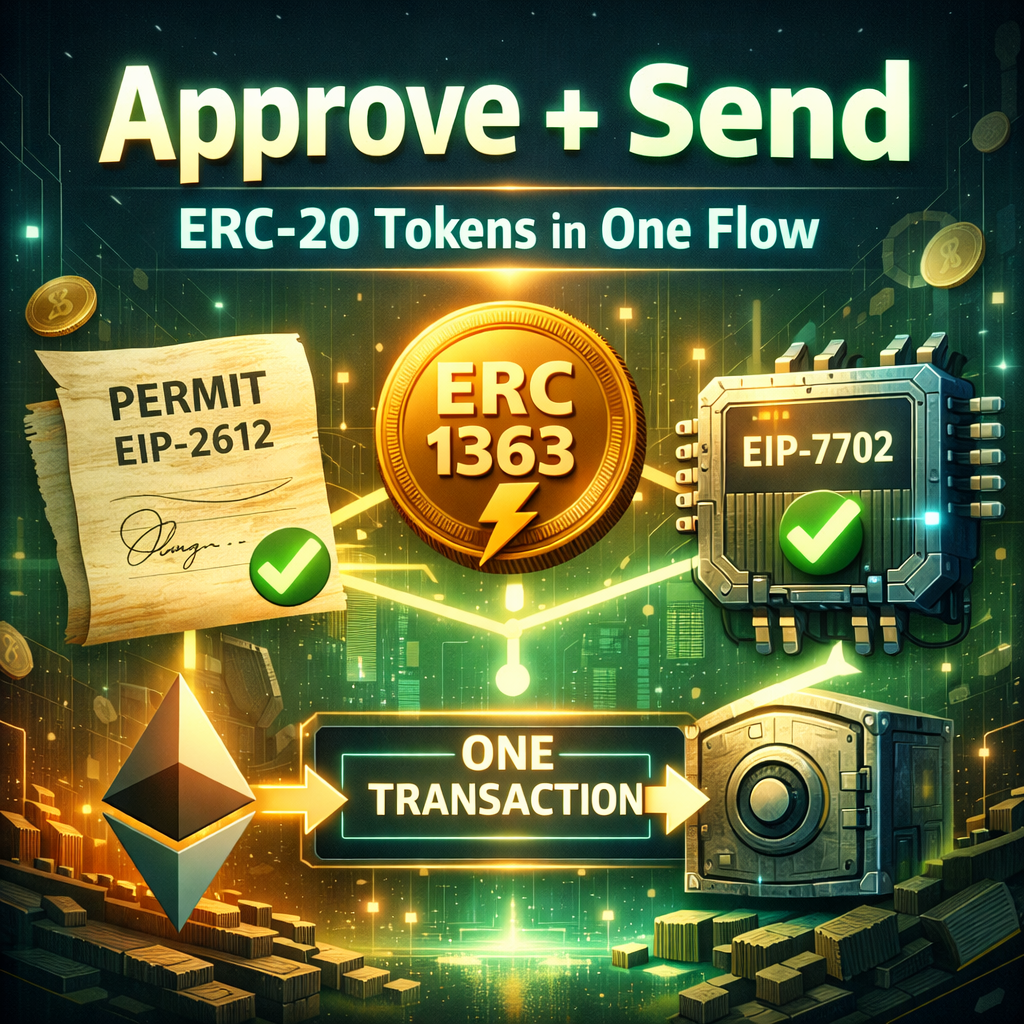
Most ERC‑20 interactions require users to first call approve() and then transferFrom(). This is clunky, doubles gas fees, and creates a bad UX.
Fortunately, modern patterns let you collapse this into a single user interaction. Below, I’ll walk through three practical approaches — all implemented and tested in my GitHub repo so your dApp can transfer tokens in one smooth flow.
In my example, we have a Staking Vault that would perform transferFrom in behalf of the user to lock some ERC-20 tokens in the vault, which would need to be approved ahead.
1. Permit (EIP‑2612)
A standardised way for users to sign an off-chain approval that a contract executes on-chain. Eliminates the need for a separate approve() transaction, instead you would use permit.
How it works:
- The user signs a typed data permit off-chain and call a gas-less
permit. - The contract executes
transferFrom()in a single transaction.
Example:
IERC20Permit(token).permit(
    msg.sender,
    address(this),
    amount,
    deadline,
    v, r, s
);
IERC20(token).transferFrom(msg.sender, address(this), amount);
const signature = await user.signTypedData({ /* domain, Permit type */ });
await token.permit(owner, vault.address, amount, deadline, v, r, s);
await vault.deposit(token.address, amount);⚡ Pros:
- Single transaction for the user
- No on-chain approval needed
⚠ Cons:
- Only works with tokens that implement EIP‑2612
2. ERC‑1363: Transfer with Callback
ERC‑1363 extends ERC‑20 with extra callback functions, letting the receiving contract react immediately when tokens arrive:
transferAndCallapproveAndCall
Instead of calling approve() and transferFrom(), the receiving contract executes logic in a callback (onApprovalReceived or onTransferReceived).
Example:
token.approveAndCall(stakingVault, amount, data);
token.transferAndCall(stakingVault, amount, data);
The receiving contract implementing IERC1363Receiver and IERC1363Spender gets an immediate callback:
onApprovalReceived(...)
onTransferReceived(...)
⚡ Pros:
- Single transaction for the user
- Automatically triggers contract logic
⚠ Cons:
- Requires a modified token supporting ERC‑1363
- Not compatible with legacy tokens
🌟 3. The Game changer — EIP‑7702 (EOA Delegation)
Allows an externally owned account (EOA) to temporarily delegate execution to a batch contract, running multiple calls atomically (e.g., approve + transferFrom).
How it works:
- The EOA signs a delegation authorization (EIP‑7702).
- A single transaction executes approve + deposit in one atomic operation with a deployed batch contract.
- Works with any ERC‑20 token, including legacy ones.
Example:
const tx = {
  to: eoaAddress,
  data: encodeFunctionData(BatchExecutor, "executeBatch", [
    [token, vault],
    [0, 0],
    [approveCalldata, depositCalldata]
  ]),
  authorizationList: [signedAuthorization],
};
⚡ Pros:
- Works with all ERC‑20 tokens
- No token upgrade needed
- Keeps the same EOA address
- Atomic single transaction
⚠ Cons:
- Requires network support for EIP‑7702
📊 Comparison Table

📝 Conclusion
You no longer have to force users through a clunky two-step ERC‑20 approval flow.
Whether your token supports EIP‑2612, you can use ERC‑1363 callbacks, or you rely on a batch executor with EIP‑7702, each pattern lets you collapse approve + transfer into a single, smooth experience.
Let’s connect
If you’re exploring options for your smart contracts or want to create a new dApp, I’d love to chat.
📌 Check out my Github repo for working contracts and tests: https://github.com/cladjules/evm-experiment-approve-transfer
📌 Want advice or personalised guidance? Let’s connect: https://linktr.ee/julien.a
메타데이터
- post_id
- 4be9b0c17bbe
- slug
- how-to-perform-approve-send-for-erc-20-tokens-in-one-flow-4be9b0c17bbe
- url
- https://medium.com/@cladjules/how-to-perform-approve-send-for-erc-20-tokens-in-one-flow-4be9b0c17bbe
- canonical_url
- https://medium.com/@cladjules/how-to-perform-approve-send-for-erc-20-tokens-in-one-flow-4be9b0c17bbe
- author_url
- https://medium.com/@cladjules
- status
- ok
- fetched_at
- 2026-08-02 21:20:52




