How to Plan a Mount Kun Expedition
Mount Kun (7,077 meters or 23,218 feet) is a prominent peak in the Indian Himalayas, located in the Zanskar range of Jammu and Kashmir. It…
How to Plan a Mount Kun Expedition
Mount Kun (7,077 meters or 23,218 feet) is a prominent peak in the Indian Himalayas, located in the Zanskar range of Jammu and Kashmir. It is known for its challenging terrain, high altitude, and breathtaking landscapes, attracting mountaineers who seek a mix of adventure and technical climbing. Planning an expedition to Mount Kun requires careful consideration of several factors, including physical preparation, logistical coordination, gear requirements, and the risks involved in high-altitude mountaineering.
This guide will help you understand how to properly plan for a successful Mount Kun expedition, taking into account essential elements such as the best time to visit, required permits, physical fitness, gear, and the necessary steps for safety and risk management.
1. Choosing the Right Season
The timing of your expedition is crucial to your success. The weather in the mountains can change unpredictably, and the best months for climbing Mount Kun are typically during the summer and early autumn, which are from June to September.
- Best Time for Climbing: The months of July and August are considered the ideal window for climbing because the snow conditions are more stable and weather patterns are more predictable.
- Avoid Winter: Climbing in winter is not advisable due to extreme cold, heavy snowfalls, and dangerous avalanche conditions.
Make sure to check detailed weather forecasts as your departure date approaches and always have contingency plans for unexpected weather.
2. Obtaining Permits and Legal Requirements
Before setting out, you must secure the necessary permits and approvals to climb Mount Kun.
- Indian Mountaineering Foundation (IMF) Permit: If you’re climbing Mount Kun as part of a guided expedition, you’ll need to apply for a permit from the Indian Mountaineering Foundation, which regulates expeditions to high-altitude peaks.
- Protected Area Permit (PAP): The region where Mount Kun is located falls under a protected area, so you must also apply for a Protected Area Permit, especially if you’re a foreign national.
- Forest Department Permission: Ensure you also get approval from the local Forest Department for access to trekking and climbing routes.
It is advisable to plan your permits well in advance and consult local agencies for any changes to requirements.
3. Physical Preparation and Fitness
Climbing a peak like Mount Kun requires not just technical skills but also significant physical fitness. The high altitude and challenging terrain will demand strength, stamina, and mental fortitude. The following elements of physical preparation should be considered:
- Endurance Training: Incorporate long-distance running, cycling, or hiking into your training routine. Your cardiovascular system will need to be in top condition to handle the demands of high-altitude trekking.
- Strength Training: Focus on building leg and core strength, as these muscles will be critical for navigating rocky terrain, icy surfaces, and carrying heavy packs. Include squats, lunges, and leg presses in your workout routine.
- Altitude Acclimatization: Mount Kun’s high altitude demands proper acclimatization to avoid altitude sickness. Plan for gradual ascent, with rest days at various altitudes to allow your body to adjust to the thinning air.
- Climbing Skills: If you’re new to mountaineering, take courses in rock climbing, ice climbing, and avalanche safety. Understanding how to use crampons, ice axes, and ropes is essential for this expedition.
You should begin your physical conditioning at least 6–9 months before the expedition to give your body enough time to adapt to the rigorous demands.
4. Selecting the Right Team
A successful expedition requires a team with complementary skills. You’ll need to collaborate closely with experienced mountaineers, guides, and support staff.
- Experienced Guides: Ensure you hire professional, certified guides familiar with the route and conditions of Mount Kun. They will be familiar with the local terrain, dangers, and altitude challenges.
- Porters and Support Staff: Depending on your expedition’s logistics, you may need porters or sherpas to help carry gear, food, and supplies. Their knowledge of the terrain can be invaluable in ensuring the safety of the group.
- Medical Assistance: Having a medical professional on the team or at base camp is essential. This can help in managing altitude sickness, injuries, and any medical emergencies.
The size of the team will depend on the route and objectives, but it’s often best to travel with a small, experienced team that you trust to handle the stresses of high-altitude mountaineering.
5. Route Planning and Logistics
The route up Mount Kun is demanding and should be selected carefully to avoid unnecessary risks. There are several routes up the mountain, but most expeditions will follow the south or southeast faces.
- Base Camp Setup: The base camp is typically set up at an elevation of around 4,800 meters. This is the primary launch point from where you will begin your ascent.
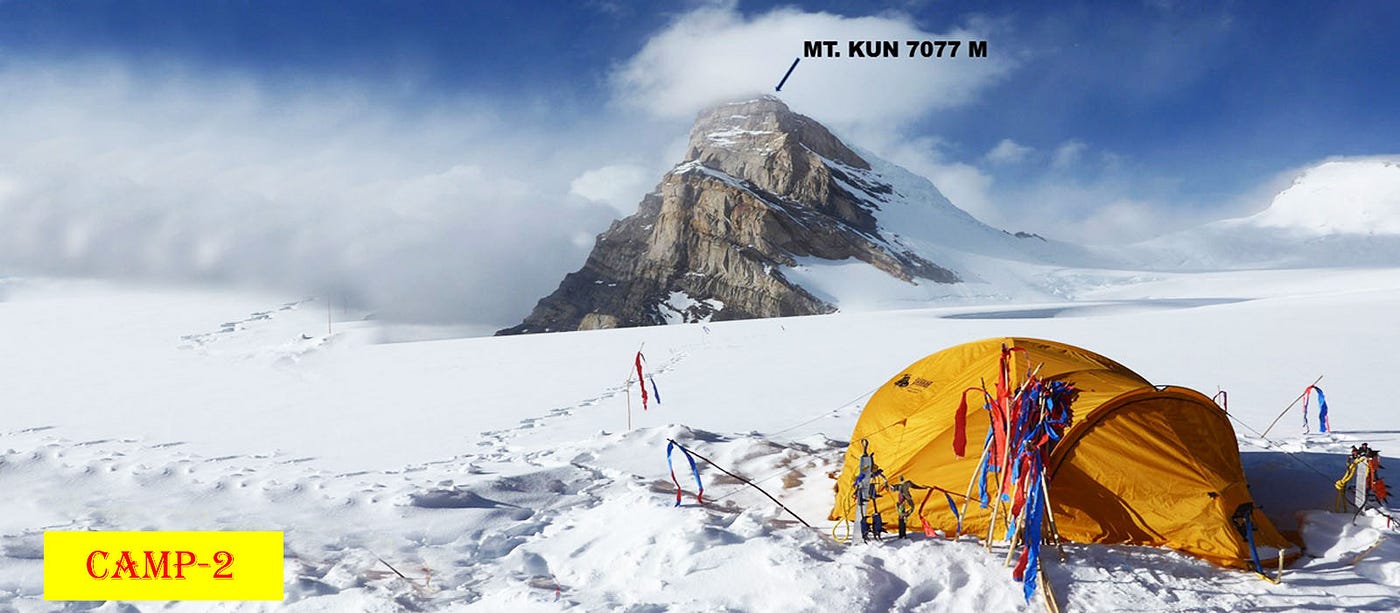
- Advance Camps: Depending on the specific route chosen, you will need to set up one or two higher camps before attempting the summit. Camp 1 is generally located at around 5,500 meters, and Camp 2 is at around 6,500 meters. Each of these camps will serve as rest points, allowing your body to acclimatize before pushing higher.
- Climbing Route: The ascent typically follows a combination of rocky terrain, glaciers, and snowfields. The summit ridge can be technical, requiring ice climbing skills and experience with crevasses and other glacier hazards.
- Descent: The descent is equally challenging and should be planned with enough time to ensure safe return to base camp.
Ensure that all logistics are accounted for, including communication systems, food and water supplies, and emergency evacuation procedures.
6. Essential Gear and Equipment
The proper gear is critical for your safety and comfort on the mountain. Make sure your team is equipped with high-quality, durable equipment designed for extreme conditions. The essential items include:
Clothing and Wear:
- Base Layers: Moisture-wicking underwear and long-sleeve tops.
- Mid Layers: Insulating layers like fleece or down jackets.
- Outer Layers: Waterproof and windproof shell jackets and pants to protect against snow, rain, and wind.
- Gloves and Hats: Multiple pairs of gloves, including insulated ones for high-altitude conditions.
- Footwear: Mountaineering boots, suitable for ice and rocky terrain.
Climbing Gear:
- Crampons: For traction on ice and snow.
- Ice Axes: For climbing steep slopes and self-arresting in case of a fall.
- Rope and Harnesses: For glacier travel, crevasse rescue, and belaying.
- Carabiners, Snow Pickets, and Pitons: Essential for securing ropes and creating anchors.
Camping and Cooking Gear:
- Tents: Lightweight, four-season tents for high-altitude camping.
- Sleeping Bags and Mats: Insulated, cold-weather sleeping bags rated for temperatures well below freezing.
- Stoves and Fuel: Compact stoves for melting snow and cooking food.
- Food and Hydration: High-energy, freeze-dried meals, and energy bars. Water purification tablets or filters are essential for clean drinking water.
Safety Gear:
- Avalanche Safety Gear: Transceivers, probes, and shovels are essential when traversing avalanche-prone areas.
- First-Aid Kit: A comprehensive first-aid kit that includes supplies for altitude sickness, frostbite, and common mountaineering injuries.
- Oxygen Systems: Depending on the altitude, supplemental oxygen may be necessary for some climbers to prevent altitude sickness and hypoxia.
7. Risk Management and Safety
Climbing Mount Kun presents numerous risks, and managing them effectively is key to the success of your expedition.
- Acclimatization: Follow a steady and gradual acclimatization schedule. Plan for rest days at higher altitudes to allow your body to adapt to the lower oxygen levels.
- Weather Monitoring: Keep a constant watch on weather forecasts. Severe weather can lead to avalanches, rockfall, or sudden storms.
- Altitude Sickness: Be prepared to recognize symptoms of altitude sickness, such as headaches, nausea, dizziness, and shortness of breath. Immediate descent is essential if symptoms worsen.
- Emergency Procedures: Have contingency plans for emergencies such as injuries, equipment failure, or extreme weather. Know the nearest evacuation routes and how to call for help in case of a serious emergency.
8. Mental Preparation
The psychological aspects of high-altitude mountaineering should not be underestimated. The mental challenges can be just as difficult as the physical ones. Preparation for the mental stresses of the climb includes:
- Mental Toughness: Prepare for extreme exhaustion, discomfort, and moments of doubt. Trust your training and your team, and know that summiting a mountain like Kun requires not only physical strength but resilience.
- Team Dynamics: A cohesive, positive team environment can make all the difference. Effective communication, mutual support, and shared responsibility for decision-making will help reduce stress.
Conclusion
Planning an expedition to Mount Kun is a significant undertaking that requires careful preparation, a clear strategy, and the ability to adapt to changing circumstances. With the right planning, a strong team, and a focus on safety, you can achieve the summit and return home safely. Whether you are an experienced mountaineer or a seasoned adventurer seeking to push your limits, Mount Kun offers one of the most challenging and rewarding climbs in the Indian Himalayas.
메타데이터
- post_id
- 4bee7e8091ce
- slug
- how-to-plan-a-mount-kun-expedition-4bee7e8091ce
- url
- https://medium.com/@rawat.singh_27087/how-to-plan-a-mount-kun-expedition-4bee7e8091ce
- canonical_url
- https://medium.com/@rawat.singh_27087/how-to-plan-a-mount-kun-expedition-4bee7e8091ce
- author_url
- https://medium.com/@rawat.singh_27087
- status
- ok
- fetched_at
- 2026-06-23 17:05:31