When Every Dashboard Is Green and You Still Can’t Sleep
Why multicloud security is a governance problem, not a tooling problem — and what to look for in a provider that treats it that way.
When Every Dashboard Is Green and You Still Can’t Sleep
Why multicloud security is a governance problem, not a tooling problem — and what to look for in a provider that treats it that way.
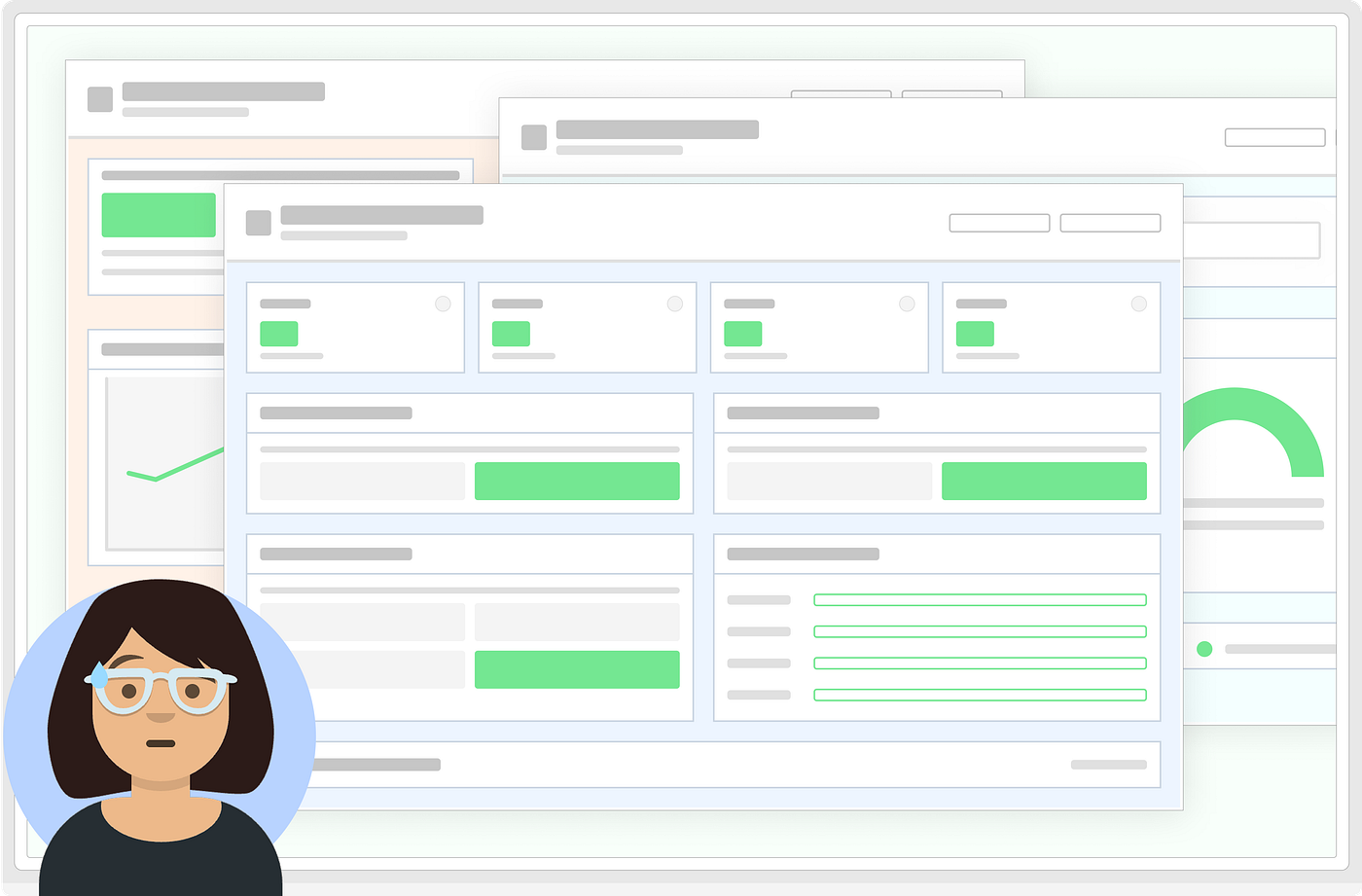
Multiple tools can show healthy environments — but not a unified view of risk.
It’s 11:47 p.m. the night before the audit
Rubi, a Security and Compliance Lead, is still at her desk — stressed.
Her AWS console says everything is healthy. Azure shows a clean posture. IBM Cloud checks out. The CSPM tool her team rolled out last quarter reports zero critical findings. On paper, everything looks fine. And yet, she’s not done.
Because tomorrow morning, the auditor isn’t going to ask, “Is each environment healthy?” They’re going to ask, “Can you prove that the identity policy in AWS matches the one in Azure? That nothing drifted in the last 90 days? That this evidence wasn’t stitched together manually over the weekend?”
Rubi can answer those questions. But not quickly — and not from a single place. So, she cross-checks dashboards. Exports reports. Reconciles policies. Connects dots that were never designed to connect.
That gap between “each environment looks fine” and “I can govern this as one system” is the real problem. Not the tools. Not the clouds. The fact that Rubi has become the integration layer between them.
The real problem isn’t too few tools–it’s too little coherence
For security and compliance leads, like Rubi, protecting applications across multiple clouds tend to inherit the same pattern. Each environment arrives with its own controls, its own reporting model, its own assumptions about what “secure” means. The natural response is to add: another scanner, another posture management product, another identity layer, another logging pipeline, another compliance framework.
More tools, more coverage. That’s the story most teams have been operating from.
But that leads to fragmentation. Alerts must be correlated by hand. Policy has to be translated by hand. Evidence must be assembled by hand. And the questions that matter most — the ones a CISO has to answer to the board, or an auditor must sign off on — are the ones no single dashboard was built to answer:

The hardest questions in multicloud security don’t live in any one dashboard — they emerge in the gaps between them.
The uncomfortable answer in most enterprises is: we don’t know. Each environment looks individually healthy, while the real risk lives between them — in drifted configurations, inconsistent identity policies, incomplete evidence trails, and exposure paths that never appear in a single console. That’s the appearance of coverage without a reliable view of cross-cloud exposure. And it’s what makes multicloud security so much harder to govern than the individual providers make it look.
What to actually look for in a multicloud security model
Before evaluating cloud providers, teams should start with this question: can this help us govern, monitor, and prove security across distributed environments without increasing operational fragmentation?
A practical evaluation framework for security and compliance leads like Rubi should include:
1. Unified visibility across environments
Can your team see meaningful security posture across AWS, Azure, IBM Cloud, and hybrid infrastructure in one place? More importantly, can leaders understand risk without jumping between provider-specific consoles and manually interpreting each one?
Unified visibility does not just mean centralizing alerts. It means creating a usable view of posture, policy, drift, and exposure across environments.
2. Continuous compliance and audit readiness
Can the system continuously gather evidence, map configurations to policy expectations, and support audit preparation without requiring manual assembly every time someone asks for proof?
A strong model should reduce the time spent collecting evidence and increase confidence in what that evidence represents.
3. Policy consistency across providers
Can teams define policy once and apply it consistently, even when each cloud provider uses different native constructs and control models?
Policy fragmentation creates governance risk, especially when teams assume consistency that does not exist. A useful multicloud security model should help translate control intent into enforceable rules across environments.
4. Cross-cloud context
Does the system identify risks that exist between environments, not just within them? This includes attack paths, identity dependencies, configuration interactions, and posture gaps that only become visible when clouds are viewed together.
This is one of the clearest differences between collecting telemetry and actually understanding security.
5. Executive confidence
For CISOs, these same capabilities matter for a different reason: they help turn fragmented technical signals into a clearer view of organizational risk. The question is not whether each environment looks healthy on its own, but whether leadership can trust the security posture of the system as a whole.
IBM Cloud’s approach
IBM Cloud starts from a practical reality: most enterprises are already operating across multiple environments, and security must support that complexity.
1. Visibility across distributed environments
One of the biggest challenges for Security and Compliance Leads is that each cloud provider reports posture differently. IBM Cloud addresses that challenge in part through the capabilities within Security and Compliance Center Workload Protection. This helps teams assess security posture, validate controls, and track compliance across environments.
The value is not just centralization. It is clearer visibility into environments that are otherwise assessed separately, helping teams move from fragmented dashboards to a more coherent understanding of risk and posture.
2. Integrated identity and access controls
Security across multiple clouds is not only about posture. It is also about who has access to what, and under which conditions. IBM Cloud’s portfolio includes services such as IBM Cloud IAM and App ID, which help organizations manage identity and application access more consistently within IBM Cloud environments.
3. Secrets and key management
Multicloud applications also create challenges around secrets, credentials, and encryption. Services such as IBM Cloud Secrets Manager and IBM Cloud Key Protect help security teams manage sensitive material more securely. For customers with stricter control requirements, IBM Cloud Key Protect — Dedicated and its keep-your-own-key capabilities can also be an important differentiator.
Key takeaways
When evaluating cloud providers for Security and Compliance, focus on unified visibility rather than tool features:
- Fragmented visibility makes it harder to detect risk, prove compliance, and report posture confidently.
- A strong multicloud security model should support unified visibility, continuous evidence gathering, and policy consistency across environments.
- Cross-cloud context matters because many real risks emerge between systems, not only within one provider.
- Operational simplicity is a governance advantage, not just an efficiency advantage.
Conclusion
If you are a security and compliance leader like Rubi — or part of a cloud security team supporting applications across multiple clouds — the challenge is not simply selecting the right security products. It is about creating enough visibility, policy consistency, and audit readiness to govern the environment.
That’s why multicloud security should be evaluated as a control and assurance problem, not just a tooling decision.
IBM Cloud’s value in this context is not in adding another isolated layer of security. It lies in enabling a hybrid, multi-environment approach that helps teams reduce blind spots, simplify governance, and build confidence in the security posture of distributed applications.
A green dashboard in isolation doesn’t tell the full story. The real goal is for your organization to understand and govern risk across all environments as one unified system.
Contacts: Asha Newsom & Sam Mak
메타데이터
- post_id
- 4c2a6aee2c92
- slug
- when-every-dashboard-is-green-and-you-still-cant-sleep-4c2a6aee2c92
- url
- https://medium.com/ibm-cloud/when-every-dashboard-is-green-and-you-still-cant-sleep-4c2a6aee2c92
- canonical_url
- https://medium.com/ibm-cloud/when-every-dashboard-is-green-and-you-still-cant-sleep-4c2a6aee2c92
- author_url
- https://medium.com/@ashanewsom
- status
- ok
- fetched_at
- 2026-06-10 15:53:41