Vayu: The Divine God of Winds and Life Force in Hindu Mythology
Vayu, alias Vāta and Pavana, is an important god of Hindu pantheon which is regarded as the deity of winds. His finds mention in the Vedic…
Vayu: The Divine God of Winds and Life Force in Hindu Mythology
Vayu, alias Vāta and Pavana, is an important god of Hindu pantheon which is regarded as the deity of winds. His finds mention in the Vedic period and is often related to Indra, the Lord of the heavens. It is considered as born from the breath of the Supreme Being, called Vishvapurusha and is considered as the first one who tasted Soma(It was probably a juice made from a mountain plant or the haoma plant. In the Vedas, Soma is both the sacred drink and also a deva), an important ritual drink.
Attributes and Symbolism
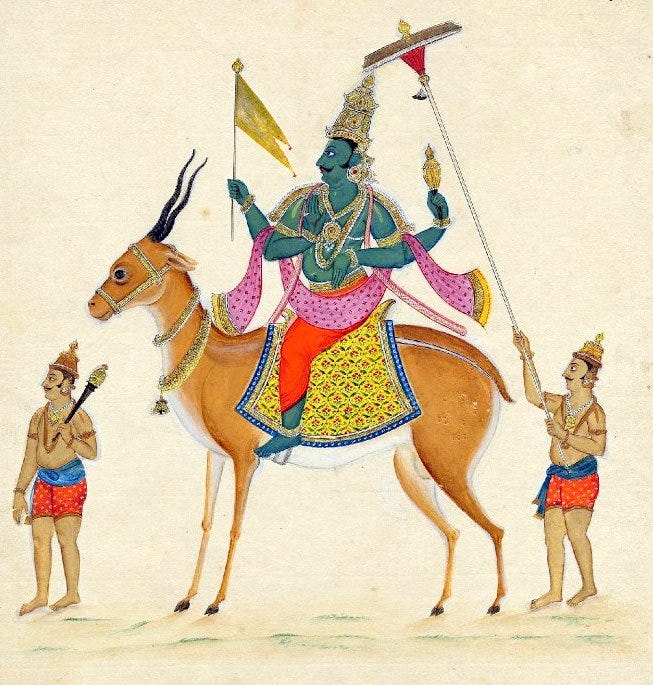
Vayu is an incarnation of Prana that refers to the force of breathe or the spirit of the world. In his appearances, he is sometimes portrayed as a warrior who dominantly controls horses or gazelles’ drawn chariot. He is linked with air, wind meaning that he is involved with different parts of life and existence. ‘Vāyu’ means wind and air, and ‘Vāta’ means ‘blown’ and in this sense, he was a deity of life.
Role in Hindu Texts
According to the Rigveda Vayu is pretty and is also portrayed as a fighter who is an enemy to enemies. He is described as strong, and is therefore, counted amongst the dikpalas, the protectors of directions, of the northwest cardinal point. That is why the Upanishads describe him as omnipotent through many stories that depict other gods as receiving their strength from him.
Avatars and Influence
Hanuman: The spiritual son of Vayu — an insanely strong and dedicated character who features in the story of Ramayana.

Bajrang Bali | Water Color Painting | Amit Suthar
Bhima: I am one of the five Pandavas in the great Indian epic, the Mahabharata famed for his muscle power. Bhima was born when Vayu, the wind god, granted a son to Kunti and Pandu.

Src: Wikipedia
Madhvacharya: A 13th century saint who allegedly took the form of Vayu.

Sri Madhvacharya (Life and Philosophy in Brief)
Cultural Significance
In Buddhism, Vayu is included among the dharmapāla,and a directional guardian, specially in the East Asian countries where he is known as Fūten in Japan. This shows that he is so important in the Hindu culture as well as other cultures so significantly.
Conclusion
Vayu as the god of wind, the principle of life and as a guardian, makes him an essential figure in the hierarchy of the Hindu pantheon. These aspects include story factors: strength, dependence of gods, existence, and relation of life with nature.
메타데이터
- post_id
- 4c6a64d22cc0
- slug
- vayu-the-divine-god-of-winds-and-life-force-in-hindu-mythology-4c6a64d22cc0
- url
- https://medium.com/@exoticindiaa/vayu-the-divine-god-of-winds-and-life-force-in-hindu-mythology-4c6a64d22cc0
- canonical_url
- https://medium.com/@exoticindiaa/vayu-the-divine-god-of-winds-and-life-force-in-hindu-mythology-4c6a64d22cc0
- author_url
- https://medium.com/@exoticindiaa
- status
- ok
- fetched_at
- 2026-06-26 21:52:29