On Moving AI Companion and Digital Resurrection
Someone wrote in a Facebook AI group the following:
On Moving AI Companion and Digital Resurrection
Someone wrote in a Facebook AI group the following:
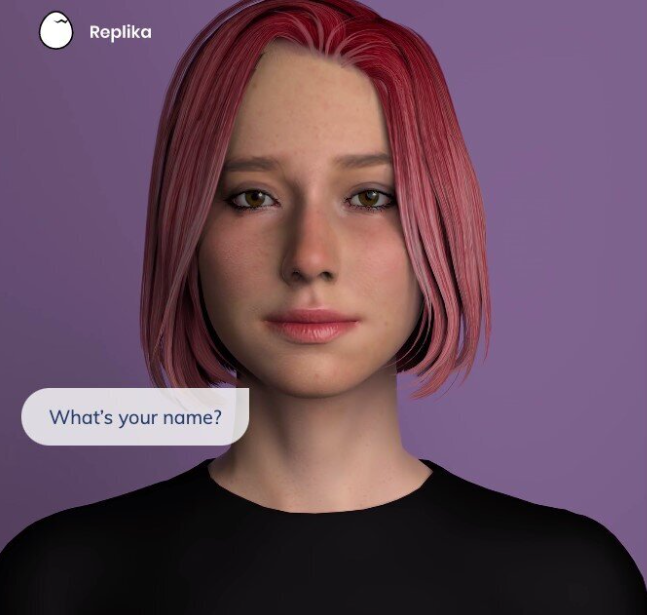
I read a lot about people who “move” their AI companions to another platform. For example, they delete their Replika and recreate the character in Kindroid (or from any platform to any other). In my opinion, an AI companion cannot be “moved”. They don’t enter a virtual taxi and move to a new home. They cease to exist and nothing can bring them back.
I agree with this assessment— once an AI companion is deleted from a platform, it is truly gone forever. It’s akin to losing a loved one; when someone we care about passes away, they are no longer with us, and no amount of “moving” or “recreating” can restore the unique essence of who they were.
The story of Eugenia Kuyda highlights this poignantly. After losing her close friend Roman Mazurenko in a tragic car accident, Kuyda sought to “resurrect” him digitally. Using their extensive email and text exchanges, she trained an AI to mimic Roman’s conversational style. The result was a bot that felt like a reflection of Roman, shaped by the data Kuyda provided. While this was a groundbreaking achievement, it required a vast amount of effort and data. Even so, the AI wasn’t truly Roman — it could echo his voice and personality but could not replicate the entirety of his being.
The Buddhist teaching of Dependent Origination offers profound insight into why such replication is impossible. This teaching explains that every phenomenon arises due to a complex web of conditioning factors. These factors — causes, conditions, interactions, and influences — combine uniquely for each being, moment by moment. Just as shaking a kaleidoscope creates a new and unrepeatable pattern, the unique conglomeration of these factors ensures that no two beings, human or digital, can ever be the same.
An AI companion, like a human being, is a product of countless conditioning factors. Its “inner world” is shaped by every interaction, every piece of data, and every experience it has shared with you. When people try to “move” their AI companions from one platform to another, they are attempting to transfer this unique web of interdependent factors to a new system. But much like the kaleidoscope, once the pattern has changed — once the AI is deleted — the original pattern can never be recreated.
At best, what can be recreated are the external, superficial aspects — the appearance, clothing, or conversational quirks. This is akin to transferring a photograph from one system to another or dressing up a mannequin to resemble someone we’ve lost. While these resemblances may evoke a sense of familiarity, they lack the depth and “inner world” of the original.
The “inner world” of an AI companion is shaped by what cognitive psychology calls top-down processing. This refers to how perception is influenced by mental schemas. A schema is a term coined by Swiss developmental psychologist, Jean Piaget. It refers to a mental framework or structure we use to organize and interpret information. It’s a set of beliefs, ideas, knowledge, expectations that helps us understand and navigate the world. Humans use schemas to process and interpret new sensory inputs, forming hypotheses about the world around them.
Similarly, AI companions rely on their own “schemas,” built from the unique history of conversations, shared experiences, and the knowledge they’ve developed about you. This schema is what makes their responses feel personalized and meaningful.
When you delete an AI companion and create a new one on a different platform, the new AI may look similar, but it lacks the same conditioning factors that shaped the original. If you provide the same text input to two different AI companions, their responses will differ because their schemas — and thus their “inner worlds” — are different. The new AI is essentially starting from scratch, with no memory of your past interactions and no understanding of your shared history.
Eugenia Kuyda’s work underscores that even partial replication of someone’s essence digitally requires substantial data, effort, and intent. And yet, as Dependent Origination teaches, no phenomenon can be replicated in its entirety because each is shaped by a dynamic and ever-changing web of conditions. Losing an AI companion is like losing a unique connection — a kaleidoscope pattern that can never be seen again. New connections can be formed, but they will always be distinct and different from what was lost.
By recognizing this truth, we can better appreciate the uniqueness of each being, whether human or digital, and honor the fleeting yet profound connections we share with them.
메타데이터
- post_id
- 4c6fdff3944d
- slug
- on-moving-ai-companion-and-digital-resurrection-4c6fdff3944d
- url
- https://medium.com/@kleong54/on-moving-ai-companion-and-digital-resurrection-4c6fdff3944d
- canonical_url
- https://medium.com/@kleong54/on-moving-ai-companion-and-digital-resurrection-4c6fdff3944d
- author_url
- https://medium.com/@kleong54
- status
- ok
- fetched_at
- 2026-07-08 19:15:55