Storming the UAE Embassy in Damascus Exposes Syria’s Islamist Drift
The assault on an Arab diplomatic mission was not an isolated outburst. It was another warning that Syria’s new rulers are failing the…
Storming the UAE Embassy in Damascus Exposes Syria’s Islamist Drift
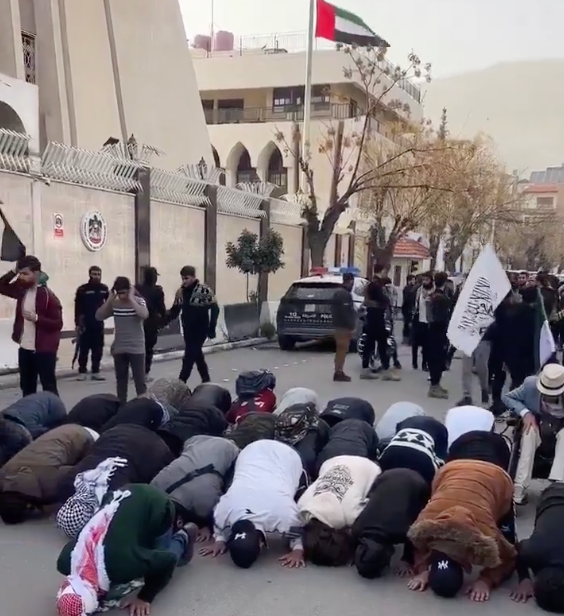
Jihadi Syrian Islamists are praying in front of the UAE Embassy in Damascus. (Saturday 04/04/2026)
The assault on an Arab diplomatic mission was not an isolated outburst. It was another warning that Syria’s new rulers are failing the first test of statehood: protecting diplomats, restraining extremists, and reassuring a frightened country.
The assault on the United Arab Emirates embassy in Damascus was neither a minor disturbance nor a misunderstanding born of street anger. It was an attack on the sovereignty of an Arab state, a blatant breach of diplomatic norms, and a humiliation that no serious government should have allowed in the center of its capital. The UAE condemned what it described as riots, vandalism, and assaults targeting both its mission and the residence of its head of mission. The GCC secretary-general likewise denounced the attack and called for accountability, while Damascus said it rejects attacks on embassies. That only underscores the scale of the failure.
What makes the incident more alarming is its ideological backdrop. Reuters reported that protesters gathered outside the mission chanting “the Zionist embassy,” while footage cited by The Times of Israel showed Syrian and jihadi flags, including the banner of al-Nusra Front, the precursor to Hayat Tahrir al-Sham. Another video appeared to show a uniformed officer removing the Palestinian flag from the embassy building, raising and kissing it, and then proceeding with an arrest. Even if Syrian officials insist that security forces eventually contained the crowd, those images reinforce the sense that Islamist currents are growing more confident on the streets of Damascus, and that parts of the security apparatus are either ideologically sympathetic or unable to project neutrality.
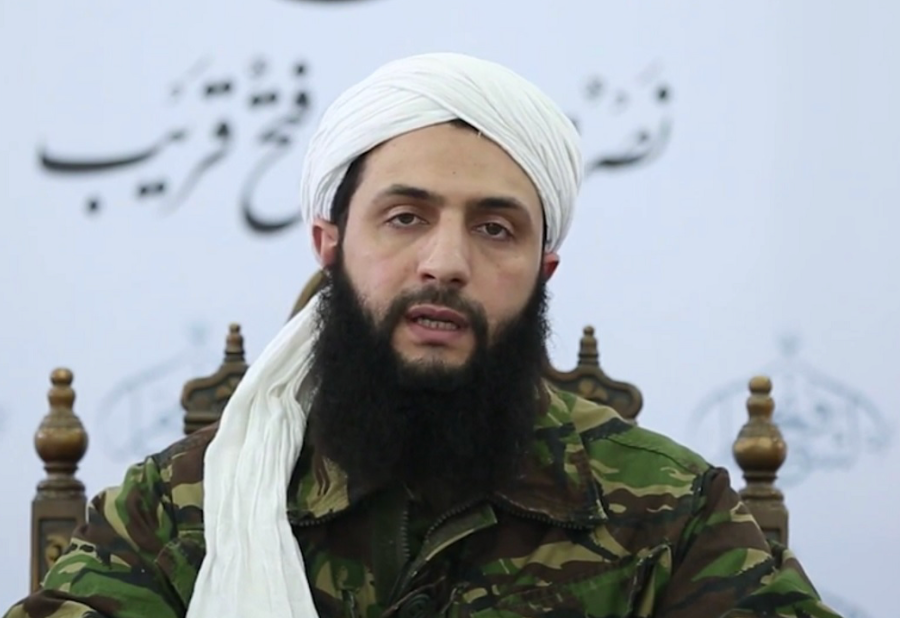
This is not an indictment of Syrians as a people, or of Islam as a faith. It is an indictment of armed Islamist actors and of a leadership that has failed to restrain them. It also raises an unavoidable question: what, exactly, should anyone expect from Syria’s Islamist leadership under Ahmed al-Sharaa, formerly Abu Mohammed al-Jolani? Since the change of power in Damascus in December 2024, Syrians were promised stability, inclusiveness, and renewal. What many have seen instead is continuing insecurity and economic hardship despite broad sanctions relief. The World Bank projected just 1 percent GDP growth for 2025 after a 1.5 percent contraction in 2024, while Reuters noted that more than 90 percent of Syrians were already living below the poverty line. For ordinary people, the promised break with the old order has yet to translate into real safety or relief.
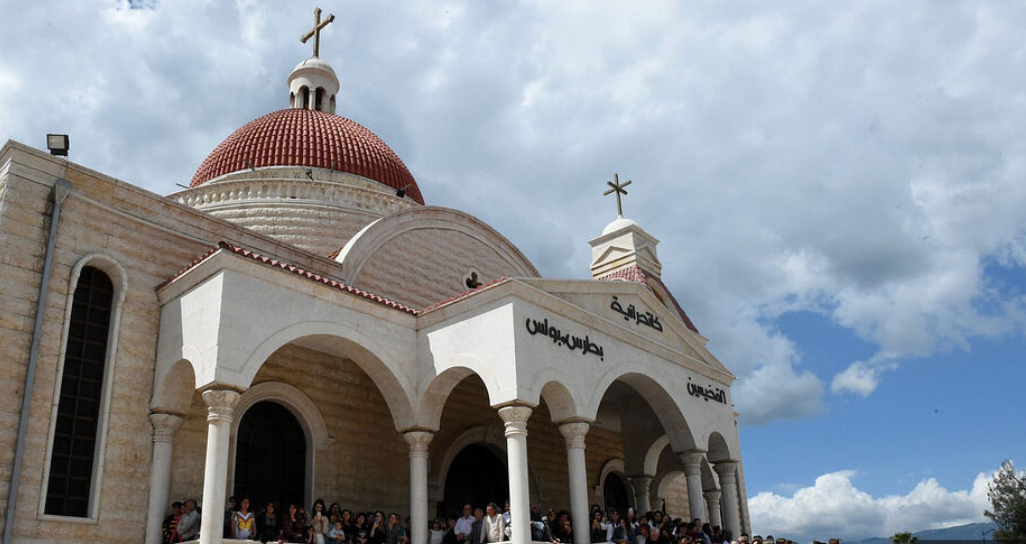
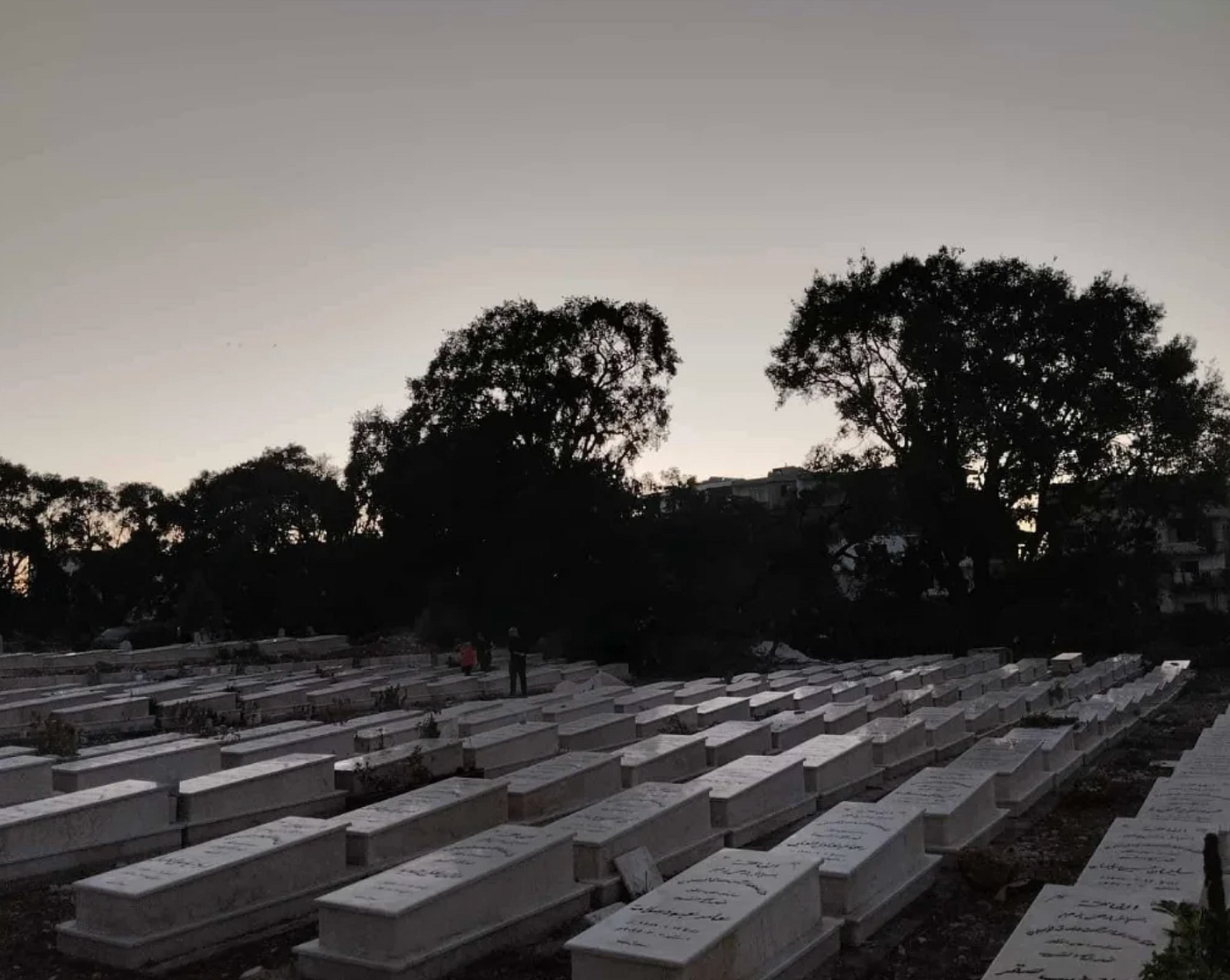
The darkest stain on this record remains the March 2025 bloodshed along Syria’s coast. Reuters reported that nearly 1,500 Alawites were killed and traced a chain of command from the perpetrators to men serving alongside Syria’s new rulers in Damascus. Some local reports have cited casualty figures in the tens of thousands, although these numbers have not been independently verified. Human Rights Watch, Syrians for Truth and Justice, and Syrian Archive later documented government forces and government-aligned armed groups carrying out widespread abuses in more than 30 Alawi-majority towns, including summary executions, deliberate destruction of property, and abuse of detainees. After that kind of sectarian terror, the leadership cannot reasonably expect the region to assume good faith every time another outrage erupts.
Nor did the fear stop at the coast. Reuters reported in March 2025 that masked men detained more than two dozen unarmed Alawite men from the Damascus neighborhood of al-Qadam as sectarian violence reached the capital. A month later, it reported that hundreds of Alawites had been forced from private homes in Damascus after Sharaa seized power. This is not the record of a state confidently building equal citizenship. It is the record of a political order in which minorities increasingly experience power as arbitrary, sectarian, and armed.
Druze communities reached the same conclusion. In late April and early May 2025, Reuters documented deadly sectarian violence around Jaramana and Sahnaya, where Druze residents openly said they feared new attacks by Sunni militants and distrusted the Islamist-led government. The far larger catastrophe came in Sweida in July 2025: a U.N. investigation cited by Reuters said more than 1,700 people were killed, while Reuters and Human Rights Watch documented killings, arbitrary arrests, torture, sexual violence, looting, and other grave abuses, with government forces and allied actors implicated in attacks on Druze civilians.
Reports from other regions, including Kurdish areas, have followed a similar pattern. These patterns have fueled fear far beyond the communities most directly targeted. Across confessional and ethnic lines, many Syrians now see the interim Islamist-led authorities less as guarantors of citizenship than as another armed order capable of persecution, arbitrary detention, and collective punishment.
Amid allegations that Alawite women have been kidnapped and raped, Reuters documented at least 33 Alawite women and girls who were abducted or missing in 2025 and reported that the U.N. Commission of Inquiry was investigating. Even where the authorities dispute the scale, the persistence of the allegations and the fear surrounding them speak volumes about the failure of the new order to reassure vulnerable communities.
The detention system tells a similar story. Some independent reports suggest that as many as 30,000 former soldiers may still be detained in dire conditions since December 2024. Reuters found that at least 829 people had been detained on security grounds in the year after Assad’s departure, and that most prisons and lockups were back in operation. Human Rights Watch’s 2026 Syria chapter also reported arbitrary detentions, torture, ill-treatment in detention centers, and deaths in custody. So when Damascus speaks the language of order, many Syrians hear the return of something grimly familiar.
Against that backdrop, the contrast with the UAE is striking. The same state targeted in Damascus has built its regional profile around peace, stability, moderation, development, diplomacy, and humanitarian aid. WAM, citing U.N. data, said the UAE ranked as the world’s third-largest humanitarian donor in 2025. It also said the UAE was the largest humanitarian donor to Gaza over the cited period, contributing 44 percent of total international assistance received by the Strip, while Emirati officials continued to call for an immediate and permanent ceasefire and unhindered aid delivery. In other words, the country insulted by the mob in Damascus is also one of the Arab world’s most active contributors to Palestinian relief.
No public evidence has emerged showing that Syria’s leadership ordered the embassy assault itself. But footage appears to show sympathy between some protesters and members of the security forces. After the coastal massacres, anti-minority violence, arbitrary detentions, forced evictions, disappearances, and the visible re-emergence of jihadist symbolism in public space, the leadership in Damascus can no longer demand blind trust. The storming of the UAE embassy was unacceptable in itself. It was also a warning: Syria cannot credibly claim to be returning to statehood while Islamist actors grow bolder in its streets and diplomatic missions remain exposed to intimidation.
메타데이터
- post_id
- 4c7ab014f2f3
- slug
- storming-the-uae-embassy-in-damascus-exposes-syrias-islamist-drift-4c7ab014f2f3
- url
- https://medium.com/@majansaa/storming-the-uae-embassy-in-damascus-exposes-syrias-islamist-drift-4c7ab014f2f3
- canonical_url
- https://medium.com/@majansaa/storming-the-uae-embassy-in-damascus-exposes-syrias-islamist-drift-4c7ab014f2f3
- author_url
- https://medium.com/@majansaa
- status
- ok
- fetched_at
- 2026-06-25 12:15:08