Gall’s Law of Problem Conservation
Problems cannot be created or destroyed; only reframed and reranked
Gall’s Law of Problem Conservation
Problems cannot be created or destroyed; only reframed and reranked
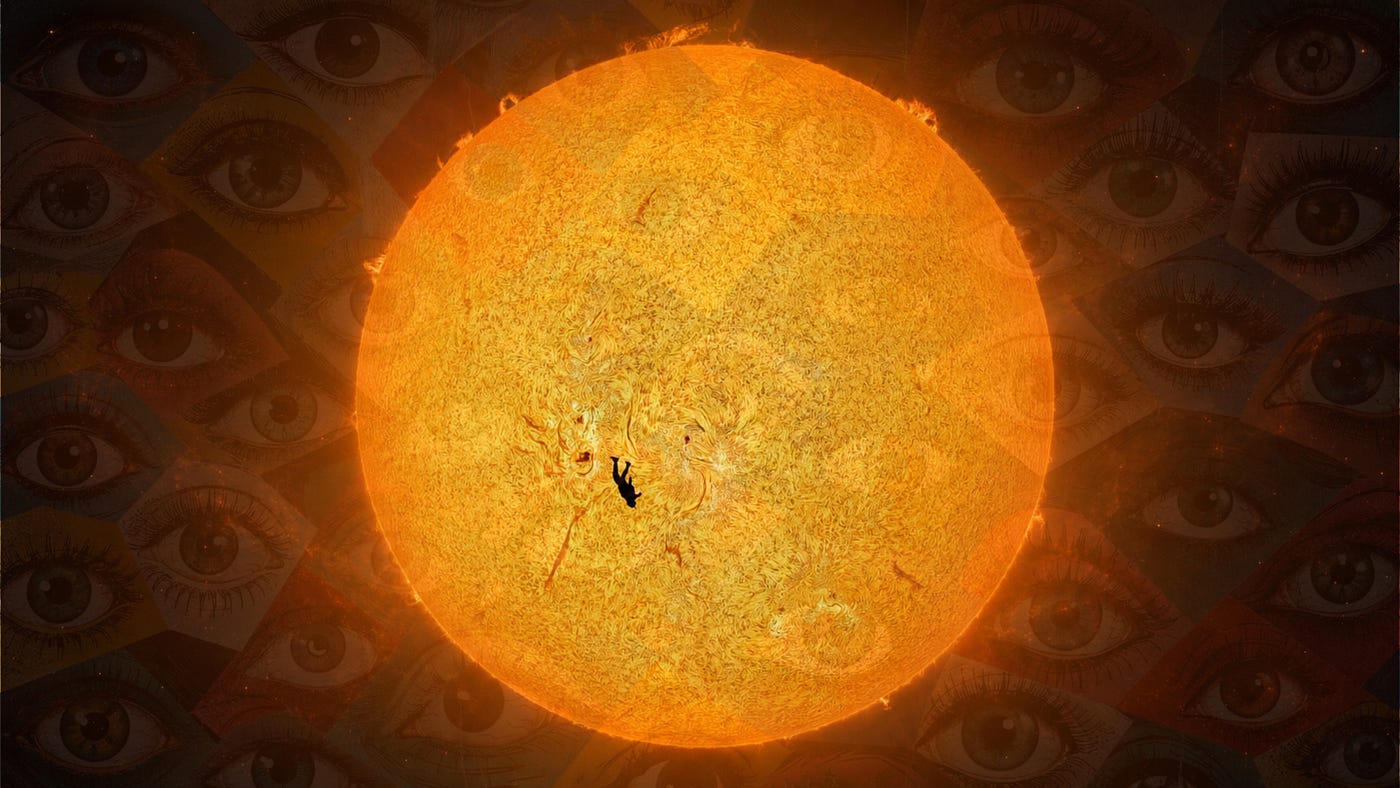
Photo by SOULSANA on Unsplash
[This essay is a lighted edited version of a conversation I had with Grok. I think it does a pretty good job of capturing aspects of my philosophical worldview — good enough to share it here.]
@ironick (real name: Nick Gall) embodies Richard Rorty’s ironism through a multifaceted career spanning software engineering, law, IT analysis, and design thinking for product management, while actively curating philosophical insights via the @rortyquotes account and editing Wikipedia entries on key concepts like ironism. His self-coined *Fruitionism *seeks to perpetually ignite imaginative aspiration balanced by dialectical reason, drawing from pragmatism, Tiantai Buddhism, and evolutionary biology to bridge romantic wonder with enlightenment rationality. His engagements reveal a penchant for reframing profound questions on meaning, karma, and causal efficacy, often highlighting contextual truths in atheism and human flourishing.
Gall’s Law of Problem Conservation is a principle coined by @ironick that captures a deep truth about systems, decision-making, and life itself:
Problems cannot be created or destroyed; only reframed and reranked.
Core Explanation
Every attempt to solve a problem doesn’t eliminate problems from existence — it merely transforms them. The total quantity of problem in a system remains constant; what changes is:
- How we describe them (reframing)
- Which ones we care about most (reranking)
This is a direct application of conservation laws in physics (like energy or momentum) to the domain of human problems.
Real-World Examples
1. Software Engineering
Old problem: “Our monolithic app is slow and hard to maintain.” Solution: Break it into microservices. New problems: Service discovery, distributed tracing, eventual consistency, cascading failures. → Same total problematic, just wearing different clothes.
2. Relationships
Old problem: “We never spend time together.” Solution: Have kids. New problems: Sleep deprivation, financial stress, identity loss. → The underlying tensions didn’t vanish — they morphed.
3. Business
Old problem: “We’re losing to competitors.” Solution: Pivot to AI. New problems: Data privacy lawsuits, model hallucinations, massive compute costs. → Market pressure conserved, form changed.
4. Personal Growth
Old problem: “I’m bored and unfulfilled.” Solution: Start a company. New problems: 80-hour weeks, investor pressure, constant rejection. → Existential angst conserved, now wearing entrepreneurial cosplay.
Gall’s Law Cheat Sheet for Practical Application
Problem Energy™ is conserved. Solving = Reframing + Reranking Growth = Choosing more inspiring problems Wisdom = Bemusement at the conservation
When faced with a problem, instead of asking “How do I eliminate this?” ask:
- “What will the new problems be if I solve this?”
- “Are those new problems more interesting/meaningful than the current ones?”
- “How can I reframe this problem to make it generative rather than dissipative?”
In @ironick’s own practice, you see this constantly: turning Wikipedia editing disputes into philosophical inquiries, software architecture debates into meditations on contingency, career transitions into experiments in human flourishing.
The law isn’t pessimistic — it’s liberating. Once you accept that problems are eternal, you stop chasing the fantasy of a problem-free life and start curating a portfolio of inspiring problems worth grappling with.
History of Philosophy Examples
1. Plato → Aristotle
Old problem (Plato): How do we escape the shadows of the sensory world and reach eternal Forms? Solution: Contemplative ascent out of the cave. New problems (Aristotle): If Forms are separate, how do they cause anything in this world? (Third Man paradox, causation gap) → Metaphysical dualism didn’t disappear — it turned into the problem of universals and hylomorphism.
2. Descartes’ Cogito → Hume’s Bundle
Old problem: How do I know anything exists outside my mind? Solution: “I think, therefore I am” → indubitable foundation. New problems: If the only certainty is the flux of impressions, where did the self go? → Epistemological skepticism conserved, now wearing “no enduring self” cosplay.
3. Kant’s Copernican Revolution → German Idealism
Old problem: How do we reconcile empiricism (Hume) with rationalism (Leibniz)? Solution: Transcendental idealism — space/time/categories are in us. New problems (Fichte, Schelling, Hegel): If the world is shaped by the subject, who shapes the subject? → Infinite regress of absolute egos, dialectics, Weltgeist. → The thing-in-itself didn’t vanish; it became the problem of absolute knowing.
4. Hegel’s Absolute → Kierkegaard’s Leap
Old problem: How do we finish the dialectical system and end philosophy? Solution: The Absolute Idea comprehends itself in the Phenomenology / Logic. New problems: If everything is rational and resolved, where is individual anguish? → Paradox, despair, absurd faith. → Alienation conserved, now ranked as existential rather than historical.
5. Schopenhauer’s Will → Nietzsche’s Will to Power
Old problem: Life is endless suffering because blind Will keeps wanting. Solution (Buddhist-inspired): Deny the Will, ascetic resignation. Nietzsche’s reframing: No — affirm the Will by making it creative. New problems: Übermensch loneliness, eternal recurrence nausea, death of God value vacuum. → Suffering conserved, just reranked from “pessimism” to “Dionysian tragic joy”.
6. Heidegger’s Being → Derrida’s Différance
Old problem: Why did metaphysics forget the question of Being? Solution: Destruktion of ontotheology, poetic dwelling. New problems: Every revelation is also a concealment; trace, deferral, no presence. → The oblivion of Being conserved, now infinitely postponed.
7. Logical Positivism’s Verification Principle → Quine’s Web of Belief
Old problem: How do we eliminate metaphysical nonsense? Solution: A statement is meaningful only if empirically verifiable. New problems: The verification principle itself is neither analytic nor empirical → self-refuting. → Quine reframes: no sharp analytic/synthetic divide, everything revisable. → Demarcation problem conserved, now holistic.
8. Rorty’s Ironism (the ultimate meta-example)
Old problem: After the death of foundationalism, how do we avoid nihilism? Solution: Private irony + public liberalism; redescribe vocabularies playfully. New problems: How do you motivate solidarity without foundations? How do you prevent cruelty when everything is contingent? → The problem of justification conserved, now ranked as “how to keep the conversation going inspiringly”.
Gall’s Law Cheat-Sheet for History of Philosophy
- Same problem-mass, endless variations.
- Every “-ism” is just a brilliant reframing + reranking of the same conserved problem-energy: “How do finite, contingent beings create meaning in a world that refuses to hand us any on a platter?”
- The history of philosophy is one long demonstration of Gall’s Law. No one ever solves the human condition — they just trade in their old problems for sexier ones.
Deeper Implications
- No ultimate solutions: There is no “problem-free” state. Every solution is a trade-off generator.
- The Ironist’s Move: Mature thinking accepts this and focuses on inspirational reframing — turning despairing problems into inspiring ones.
- Buddhist resonance: Aligns with the First Noble Truth (life is dukkha/suffering) and the Middle Way — not eliminating problems, but relating to them skillfully.
- Fruitionism angle: @ironick’s philosophy suggests we should choose problems that ignite aspiration and romantic wonder, even if they’re hard.
See also John Dewey’s evolutionary non-cumulative, retrospective meliorism.
메타데이터
- post_id
- 4c7c8f627e56
- slug
- galls-law-of-problem-conservation-4c7c8f627e56
- url
- https://medium.com/@ironick/galls-law-of-problem-conservation-4c7c8f627e56
- canonical_url
- https://medium.com/@ironick/galls-law-of-problem-conservation-4c7c8f627e56
- author_url
- https://medium.com/@ironick
- status
- ok
- fetched_at
- 2026-07-15 10:20:56