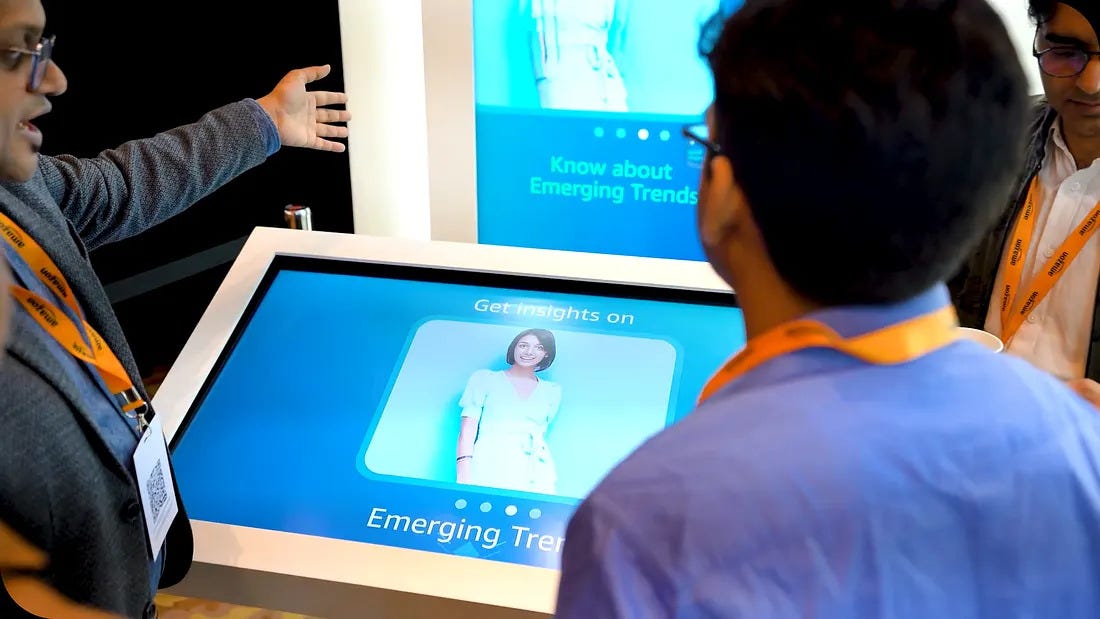
Interactive Experience Center Design Trends Shaping Customer Journeys
Five years ago, a large touchscreen in a showroom felt futuristic. Today, it barely earns a second glance. The bar for what counts as a…
Interactive Experience Center Design Trends Shaping Customer Journeys
Five years ago, a large touchscreen in a showroom felt futuristic. Today, it barely earns a second glance. The bar for what counts as a meaningful brand experience has shifted — and for marketing leaders building or refreshing their spaces, the question is no longer should we have an interactive experience center? It’s what kind, and how do we make it genuinely work?
The design trends shaping customer journeys right now aren’t about novelty. They’re about psychology — how people process information, build trust, and move through complex decisions. Understanding these trends is the difference between a space that impresses once and one that converts, repeatedly.

Trend 1 — Narrative Architecture Over Feature Showcasing
The old model: show every product feature in every zone. The new model: design the space as a story with a beginning, middle, and resolution.
The most effective experience centers today are content-first — meaning the narrative comes before technology selection. What should visitors feel in the first three minutes? What question should they be able to answer for themselves by the time they leave?
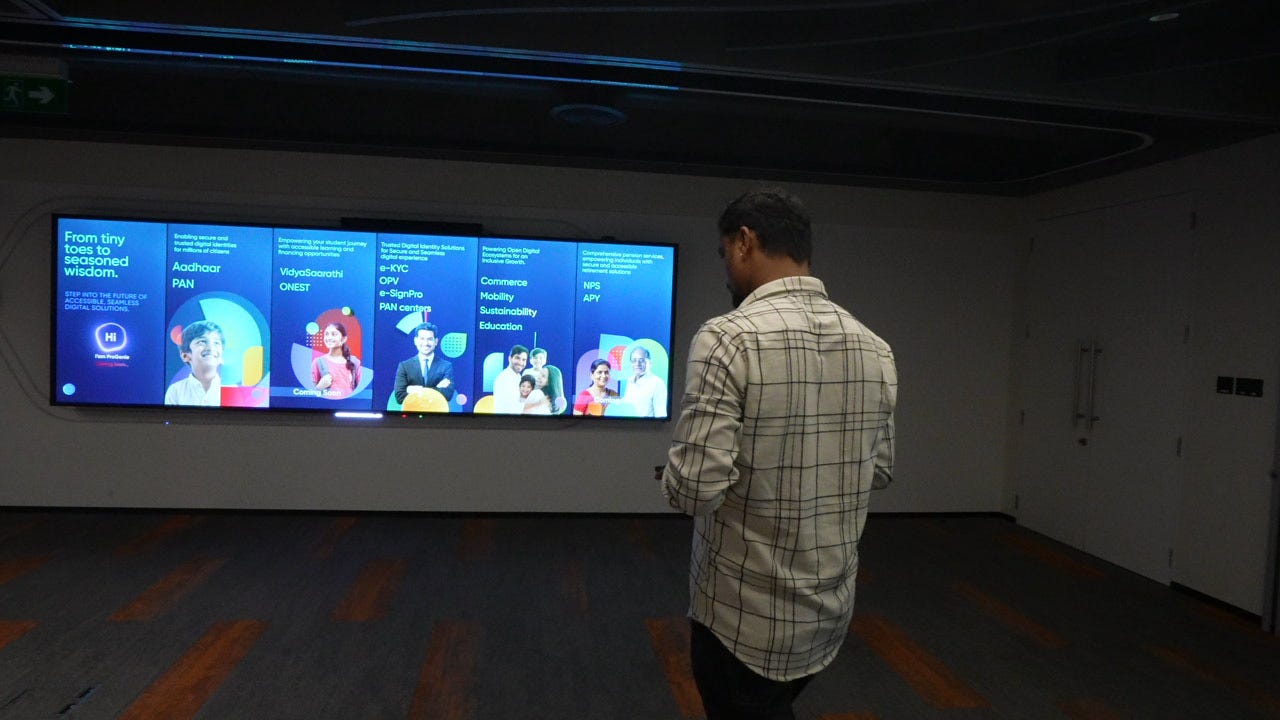
IIC Lab’s work on Protean’s experience center is a clear example. Rather than zone-by-zone product showcasing, the entire space was structured as a progressive journey — identity, to geography, to platform capability, to national vision. Each zone built emotional and intellectual context for the next. Technology served the story. Not the other way around.
Trend 2 — Sensory Layering for Deeper Retention
Cognitive science has long established that multi-sensory experiences create stronger memory encoding than single-channel ones. Experience center design is catching up.
Progressive spaces now layer:
- Spatial sound design that shifts between zones to signal transitions
- Haptic interfaces — physical dials, touch surfaces, gestural controls — that create motor memory
- Dynamic lighting that guides attention without signage
- Large-format visual environments that create genuine peripheral immersion
Protean’s Zone 3 used haptic dial interfaces for their gamified RISE platform simulation. Visitors physically connected APIs to build service stacks. The muscle memory of that interaction made the concept of digital orchestration land — far more effectively than any diagram on a wall could have.

Trend 3 — The Digital Journey Layer (Beyond the Physical Visit)
Here’s the problem most experience centers haven’t solved: a visitor spends 45 minutes in your space, has a genuinely positive experience, steps outside — and then what?
The **future of experience center design** includes a connected digital layer that continues the journey. QR-triggered personalised summaries. AR-enabled ID cards that reactivate the experience at home. CRM-integrated behaviour tracking that tells your sales team what each visitor engaged with, how long, and what questions their behaviour suggested.
IIC Lab built exactly this for Protean — a QR-enabled web portal connected to a printed PVC ID card with a unique AR marker. Scanning it post-visit reactivated Protean’s digital ecosystem. The experience didn’t end at the exit. It extended into the visitor’s world.
Related: How Brands Repurpose Experience Center Content Across Digital Channels

Trend 4 — Group Conviction Mechanics
Most high-value sales environments involve multiple stakeholders. A real estate buyer brings a spouse. An enterprise decision gets made by a committee. Experience centers designed only for one-on-one walkthroughs leave commercial value on the table.
The emerging approach builds for group dynamics — environments that create shared ‘wow’ moments, where the group’s collective emotional response reinforces conviction for each individual.
Godrej Properties’ experience center for their Panvel project was an amphitheatre-style room capable of hosting 15+ people simultaneously. The 180-second immersive journey was experienced together, deliberately. Individual follow-up happened at touch tables immediately after — personal scenario exploration, bookmarked and pushed to CRM.
Trend 5 — Modular, Scalable Architectures
Single-use experience centers are expensive and inflexible. The smartest brands are building modular architectures — spaces where content can be updated, zones rearranged, and technology swapped without a full rebuild.
This requires thinking about the future of experience center design at the architecture level: socket-based real-time synchronisation that allows multi-screen updates from a single controller, offline-first server logic for reliability, and content management systems that let non-technical teams refresh zones without developer support.
The Shift From Impression to Investment
What unites all these trends is one underlying shift. The best experience centers being designed today aren’t primarily about making a strong impression. They’re built to justify the commercial investment — to convert stakeholder visits into decisions, buyer visits into sales, and government audiences into advocates.
Design that understands this doesn’t chase the newest technology. It asks: *what does this visitor need to believe by the time they leave?* Then works backwards from that outcome.
Building or refreshing your experience center? IIC Lab designs spaces that convert.
메타데이터
- post_id
- 4c7e8917d4f8
- slug
- interactive-experience-center-design-trends-shaping-customer-journeys-4c7e8917d4f8
- url
- https://medium.com/@ravivpatel1978/interactive-experience-center-design-trends-shaping-customer-journeys-4c7e8917d4f8
- canonical_url
- https://medium.com/@ravivpatel1978/interactive-experience-center-design-trends-shaping-customer-journeys-4c7e8917d4f8
- author_url
- https://medium.com/@ravivpatel1978
- status
- ok
- fetched_at
- 2026-06-11 22:20:54