Nobody Tells You What a Designer’s Life Actually Looks Like. So I will.
The AI tools, the people worth following, and the parts nobody puts in their portfolio.
Nobody Tells You What a Designer’s Life Actually Looks Like. So I will.
The AI tools, the people worth following, and the parts nobody puts in their portfolio.
People always ask me what it’s like to be a designer.
And I always pause. Not because I don’t know the answer. But because the honest answer is nothing like what they’re expecting.
They’re expecting me to say, "I make beautiful things. I solve problems. I get paid to be creative.”
Which is true. But it’s also the version of this job that lives on LinkedIn and Behance portfolios. The one that makes it look like every project is a case study with a clean before-and-after.
That’s not the job. That’s the highlight reel.
The actual job is a lot of unclear briefs. A lot of stakeholders who don’t know what they want until they see what they don’t want. A lot of Figma files have 47 versions, and none of them are named properly. A lot of explaining why the button needs to be bigger to someone who hasn’t opened the product in three months.
That’s the job nobody writes about.
Someone once asked me in an interview: “What’s the hardest part of being a designer?”
I said, "Knowing when you’re done.”
They wrote it down like it was profound. But I meant it practically. There’s no moment where the design is finished. There’s only the moment where you run out of time, or someone approves it, or you ship it and immediately see three things you’d change.
You never stop looking at it. That’s both the best and worst part of this work.

“Do you use AI now? Does it change things?”
Yes. Completely. But not in the way most people think.
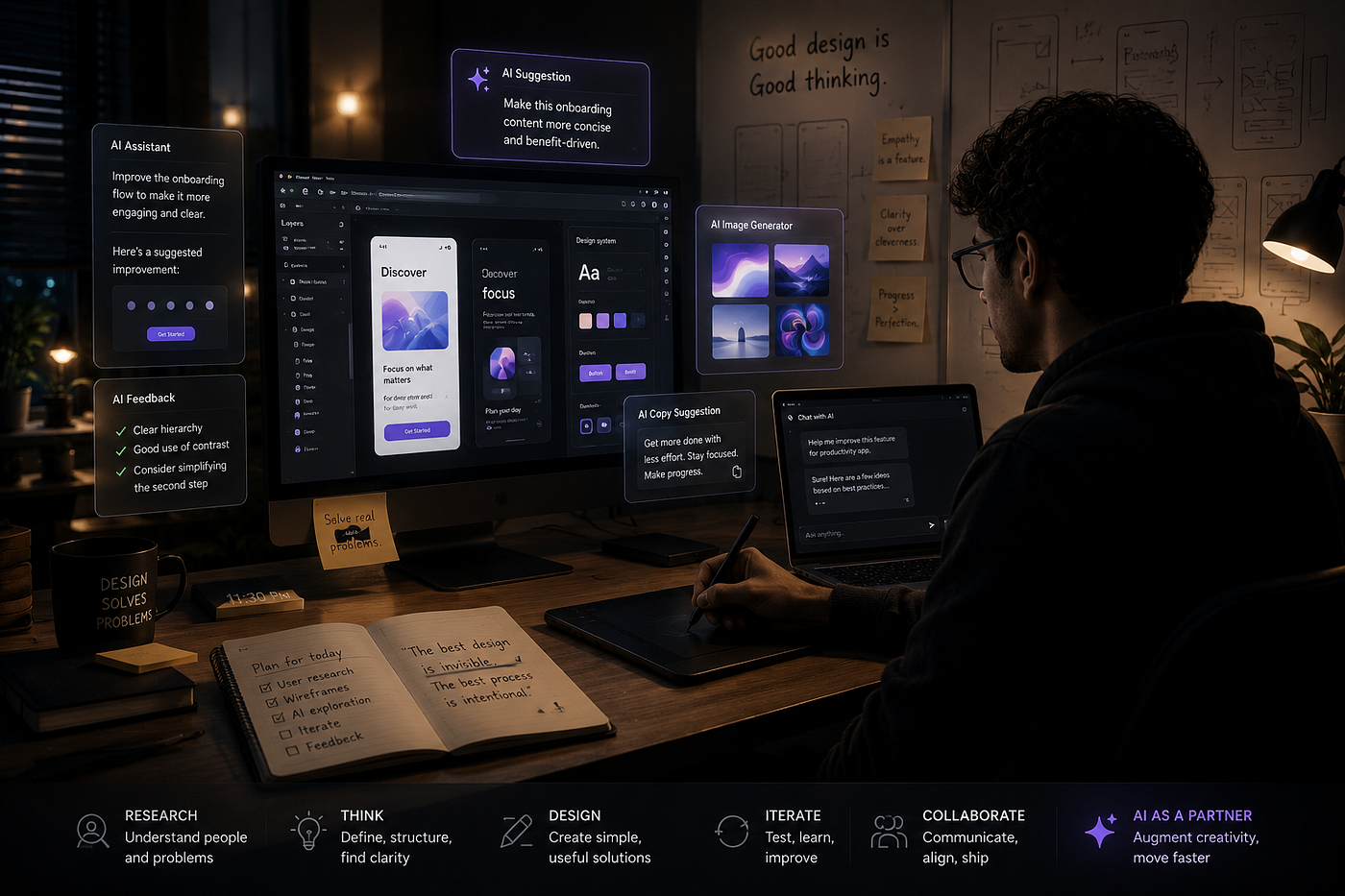
AI didn’t make the creative work easier. The creative work was never the hard part. The hard part was always everything around it — the documentation, the audit reports, the first-pass wireframes you make just to think out loud, the stakeholder decks where you’re explaining a decision you already know is right.
AI does all of that now.
Which means I spend more time on the stuff that actually needs me. The weird problem. The product that has no clear user yet. The design that has to work across twelve contexts and still feel simple.
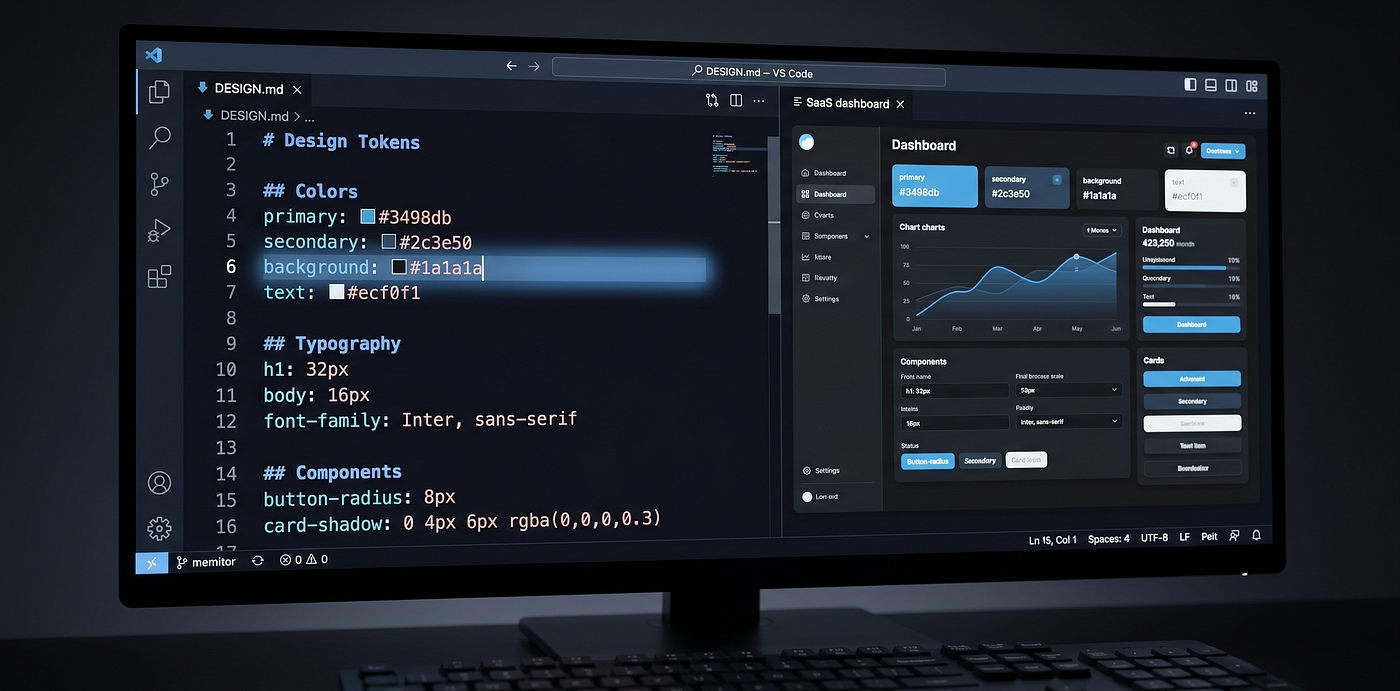
The tools I actually use every day: Figma for everything. Claude for thinking — I’ll dump a messy brief into it and ask it what’s missing, and it usually finds the thing I was avoiding. v0 for spinning up rough React components fast when I need to show something moving. Framer when the design needs to feel real before it is real.
That’s the honest stack. Not a sponsored list. Not “top 10 AI tools for designers in 2026.” Just what’s open on my laptop right now.
“Who should I follow if I want to get better?”
This is the question I get most. And I always say the same thing: follow people who show their thinking, not just their output.
Anyone can post a beautiful screen. The people worth following are the ones who show you why they made that decision. The ones who post the ugly first draft next to the final version. The ones who write about the project that failed.
Specifically:
Julie Zhuo—former VP Design at Facebook. Her writing about design leadership is the most honest thing in the industry. Read everything she’s written, not just the famous stuff.
Maggie Appleton—she designs and writes about AI, interfaces, and the future of how humans interact with computers. Different from everyone else. Think differently after reading her.
Paco Coursey — his personal site alone is a masterclass in restraint. Study how he makes decisions.
Rauno Freiberg — Radix UI, Vercel. Watch what he builds. He doesn’t explain much, but you learn more from his work than from most essays.
George Francis — if you want to understand creative coding and generative design. His experiments make you remember why you got into this.
On YouTube: Flux Academy for real-world web design processes. Mizko for product thinking. Kevin Powell: If CSS still confuses you—it'll stop.
Don’t follow people who make you feel behind. Follow people who make you curious.
“Is it a good time to be a designer?”
Honestly? Yes. But not for the reasons people say.
It’s not because AI is “creating opportunities.” It’s because the bar for what a designer can produce alone just went through the roof. A solo designer with the right tools can now do what used to take a team of five. That’s not a threat. That’s leverage.
The designers who are struggling right now are the ones who are waiting to see what happens. The ones who are watching the AI conversation from the sidelines.
The ones who are thriving are the ones who picked up the tools, got uncomfortable for a few weeks, and came out the other side moving faster than they ever have.
That’s always been how this industry works. The tools change. The fundamentals don’t.
Learn to think well. Learn to communicate clearly. Learn to defend a decision without getting defensive. Ship things. Look at them honestly. Do it again.
That’s the job. That’s always been the job.
AI just changed how fast you can do it.
💡 Stay inspired every day with Muzli!
Follow us for a daily stream of design, creativity, and innovation. ***Linkedin | [Instagram](https://www.instagram.com/usemuzli/) | [Twitter](https://x.com/usemuzli)***
메타데이터
- post_id
- 4c821cafbac3
- slug
- nobody-tells-you-what-a-designers-life-actually-looks-like-so-i-will-4c821cafbac3
- url
- https://medium.muz.li/nobody-tells-you-what-a-designers-life-actually-looks-like-so-i-will-4c821cafbac3
- canonical_url
- https://medium.muz.li/nobody-tells-you-what-a-designers-life-actually-looks-like-so-i-will-4c821cafbac3
- author_url
- https://medium.com/@chetansingh19999
- status
- ok
- fetched_at
- 2026-06-21 21:05:38