Tokyo: open doors inside an infinite labyrinth
I got lost in Tokyo to unravel the secrets of a culture
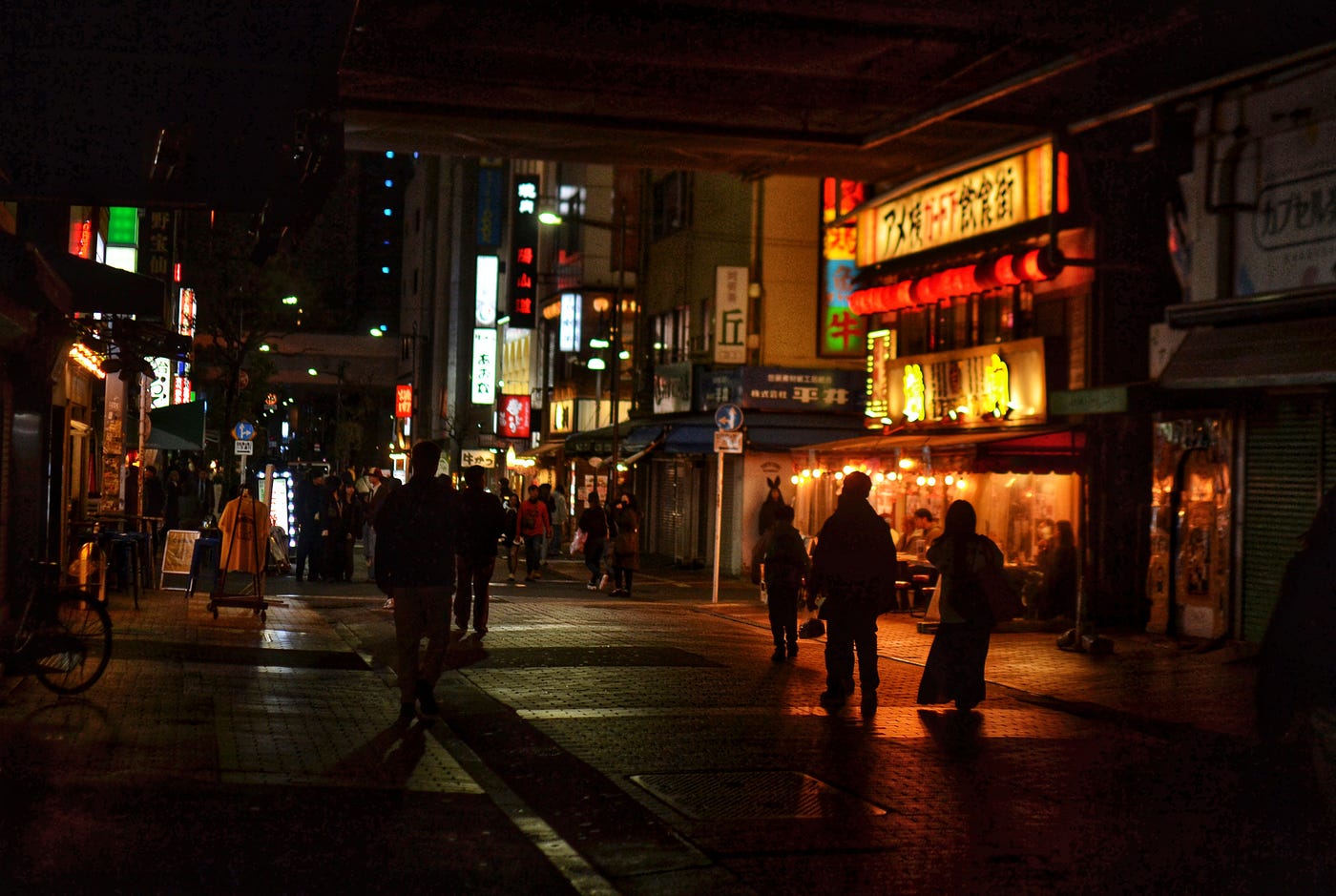
I got lost in Tokyo to unravel the secrets of a culture. Photo by author
Fear, uncertainty... Was there anything else I felt before traveling to Japan? Yes, also a beautiful intrigue to see how my life would shape itself when faced with a culture as foreign to me as the Japanese one.
I made the mistake of letting myself get carried away by those generic advices—the ones shown to me by the algorithm, or by a part of myself that just couldn't look away—from tourists who swear that by doing certain things, you break the unwritten Japanese rulebook.
“You must not speak loudly. You must not eat while walking down the street. You must not jaywalk. Public displays of affection are forbidden.”
But I arrived and began to feel the hidden nuances between all those invisible rules—perhaps written, perhaps not.
I saw crowds of Japanese people crossing in the middle of the avenue while I waited for eternal minutes, staring at the little red man who seemed to have frozen forever. There are also the unexpected bursts of laughter, ridiculously high-pitched, usually heard at night after a few drinks release those personalities that otherwise seem to be at rest, perhaps molded by a daytime performance of perfection.
In a small museum, I saw a teenage couple; she was dressed in that characteristic sailor school uniform, and he was in a suit. They kissed on the lips without moving, frozen, their heads tilted in the posture of those who kiss with intent, not just in passing. It was the ultimate display of public love.
In Tokyo, I felt like I was floating between different cities, but in the end, it was just one: a glass anthill where the most foolish eccentricities show off in broad daylight. Cat cafes, rabbit cafes, hamster cafes. Offers for paid dates and "hot legs" from suspiciously young Japanese girls; kawaii shops and samurai suits all on the exact same block. Little birds singing through the subway loudspeakers to remind us that there is something in the present moment worth paying attention to; hundreds of signs warning that subways might stop suddenly because someone saw a quick exit on the tracks to something that seemed to have no exit.
In Tokyo, I observed the men in suits; they flood the subways, seeming to take turns filling the visual quota of black suits and bluish ties among the silent crowds. I saw their heads bobbing to the rhythm of the platforms, defeated after more than full workdays—the heavy weight on tired shoulders of not being able to go home until the boss decides to grab his briefcase and release the samaritans. They would then walk into a konbini, microwave their ramen, and slurp those noodles with the sound of success from a day already finalized; blocks walked in a rush, a few hours of sleep ahead before starting it all over again.
Japan is its history, and also the result of it: a country built as a fortress, almost impossible to conquer, which then turned into wanting to have the world at its feet. Japan was both, almost without middle ground. Now there is an in-between, characterized by a culture that for a very long time didn't want to have to share itself with the rest of the world.
I see the hand-carved wooden dragons staring at me from above the Buddhist temples, the ancient tiles that shake every now and then but never fall. I learned to enter through the inner side of the torii gates so as not to fall into the abyss of another dimension. I learned to bow and to differentiate their depths: there are small ones, and there are those that turn a person into a snail. There are endless ones, those that make it seem as if the back has locked up and there is no way to straighten up again. I have seen it: a car salesman saying goodbye to the buyer of a latest-model BMW, and even though his client was already blocks away with his new toy, the salesman remained bent over in his eternal gratitude. It wasn't until several seconds later that he finally straightened up, satisfied, in front of no one.
It was in Tokyo that I discovered a city hidden inside another city. A hair salon on the seventh floor, a restaurant on the fourth floor, stairs leading to bridges leading to malls leading to subway stations. No Google Maps can handle the experience of getting lost in these labyrinths of no return. That is also how I found neighborhoods that used to be villages and ended up becoming part of this metropolis without wanting to, with their corroded wooden walls, curtains drawn halfway to hint at foreign worlds full of steam and yellowish lights that at night invite you to cross them like portals. Gardens can be glimpsed over low walls; they are spaces of visual pleasure and simple stimuli, the trees looking like soap bubbles.
Someone is always weeding, and I only manage to see their arched back, hands almost a century old, and a body entirely covered with a hat and a face mask included; their tasks have been repeated in silence for decades, long before feeling like part of a place called a city, a labyrinth, or simply, Tokyo.
메타데이터
- post_id
- 4cb11f6ce4ae
- slug
- tokyo-open-doors-inside-an-infinite-labyrinth-4cb11f6ce4ae
- url
- https://medium.com/@paulaerikadebonis/tokyo-open-doors-inside-an-infinite-labyrinth-4cb11f6ce4ae
- canonical_url
- https://medium.com/@paulaerikadebonis/tokyo-open-doors-inside-an-infinite-labyrinth-4cb11f6ce4ae
- author_url
- https://medium.com/@paulaerikadebonis
- status
- ok
- fetched_at
- 2026-07-14 10:19:40





