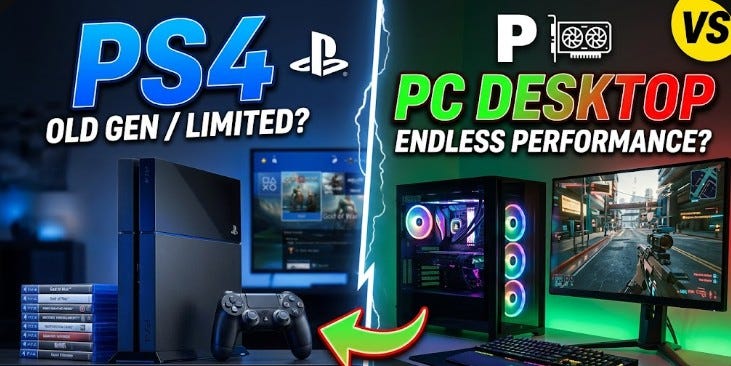
Is the PS4 Still Viable in 2026? The Reality of Last-Gen AAA Gaming
The Ultimate Verdict on Hardware Endurance, Compromises, and Whether It Is Finally Time to Upgrade
Is the PS4 Still Viable in 2026? The Reality of Last-Gen AAA Gaming
The Ultimate Verdict on Hardware Endurance, Compromises, and Whether It Is Finally Time to Upgrade
It has been over twelve years since Sony launched the PlayStation 4, a console that defined a generation of gaming. Yet, midway through 2026, millions of players still haven’t made the leap to current-gen hardware. With the PlayStation 5 Pro out in the wild and next-gen rumors circulating, a burning question remains for budget-conscious gamers and tech enthusiasts alike: Can a console from 2013 actually handle the demands of modern gaming today?
The short answer is yes — but the long answer requires a look at deep optimization, glaring compromises, and a rapidly shrinking release calendar. While major studios are finally leaving last-gen machines behind to chase higher graphical fidelity, the PS4 isn’t completely dead in the water just yet.
If you are wondering how your trusted matte-black box holds up under the weight of 2026’s gaming landscape, here is the unvarnished reality of last-gen performance.
The 2026 AAA Landscape: What Actually Runs?
For the past few years, the massive cross-generation bridge kept the PS4 afloat. However, in 2026, major publishers like Capcom, Atlus, and Square Enix have firmly shifted their focus exclusively to current-gen systems. Despite this industry-wide exodus, the PS4 still manages to pull off a few surprises.
The most notable anomaly is Activision’s ecosystem. Because of the massive remaining PS4 install base, reports indicate that blockbuster franchises are hesitant to leave money on the table. Rumors and industry testing reveal that even Call of Duty 2026 (heavily tipped to be Modern Warfare 4) has been actively tested on the base PS4 hardware.
Beyond massive annual franchises, the console is also relying on indie gems and mid-tier releases to stay relevant. Titles like Mina the Hollower and Ratatan are actively keeping the platform’s release radar active.
Performance and Compromises: The Cost of Longevity
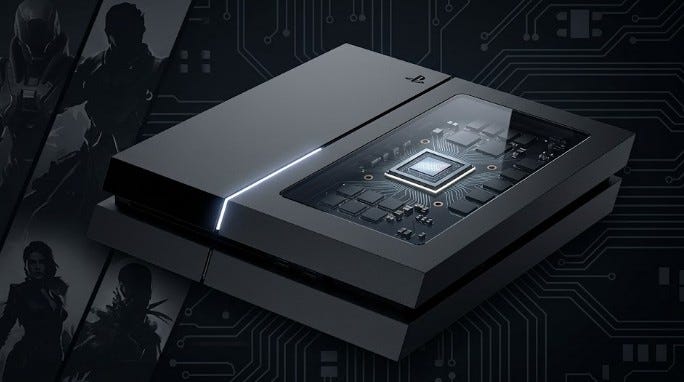
Running a modern title on an 8-core AMD Jaguar processor and an outdated graphics architecture is a masterclass in software engineering, but it comes at a steep price.
Resolution and Frame Rates
To get newer titles to boot and run at a playable pace, developers have to aggressive scale down the presentation. On a base PS4, you can expect sub-1000p dynamically scaled resolutions, heavily reduced texture filtering, and lower-quality shadows. Target frame rates generally hover at 30 FPS, frequently experiencing dips during chaotic, asset-heavy sequences.
The Loading Time Crisis
The biggest bottleneck for the PS4 in 2026 isn’t just the graphical output; it’s the ancient mechanical Hard Disk Drive (HDD). Current-gen titles are built ground-up around ultra-fast Solid State Drives (SSDs). Trying to open massive open-world titles or asset-heavy environments on a stock PS4 results in grueling loading screens that can easily stretch past the two-minute mark.
“Developers have spent years squeezing blood from a stone with this hardware, but the sheer physical speed of old mechanical drives cannot keep up with modern data streaming.”
Where the PS4 Still Shines: The Backlog Legacy
While playing brand-new 2026 AAA releases requires massive compromises, the story completely flips when looking at the console’s native library. The PS4 features one of the greatest software catalogs in gaming history, and these titles run exceptionally well.
- First-Party Masterpieces: Masterclasses in late-generation optimization like Ghost of Tsushima, God of War Ragnarök, and The Last of Us Part II look stunning and offer incredibly stable performance.
- Third-Party Staples: Evergreen titles such as Red Dead Redemption 2, Elden Ring, and Grand Theft Auto V continue to maintain massive active player bases on last-gen hardware.
- The PS4 Pro Advantage: If you happen to own a PlayStation 4 Pro, the 2026 experience is noticeably elevated with 4K checkerboard rendering, HDR support, and more robust frame-rate stabilization.
Thermal Maintenance: Keeping the Box Alive
If you intend to keep using a PS4 for demanding gaming sessions this year, hardware maintenance is no longer optional.
The thermal paste applied inside consoles over a decade ago has long since dried out, leading to overheating, performance throttling, and the infamous “jet engine” fan noise. A thorough internal cleaning to remove dust buildup and an application of fresh thermal paste can actively prevent thermal throttling and ensure stable framerates during heavy gaming.
Conclusion
The PlayStation 4’s ability to handle select modern titles in 2026 is a massive testament to the talent of game optimizers. However, the age of the cross-gen release is practically over. While the console remains a brilliant, cost-effective machine for tackling an legendary backlog of classics, using it as a primary device for new AAA experiences means signing up for low resolutions, unstable frame rates, and painful load times. It hasn’t died yet, but the horizon has finally caught up
YouTube Link
[embed]
메타데이터
- post_id
- 4cbb583d64be
- slug
- is-the-ps4-still-viable-in-2026-the-reality-of-last-gen-aaa-gaming-4cbb583d64be
- url
- https://medium.com/@gamertesto56/is-the-ps4-still-viable-in-2026-the-reality-of-last-gen-aaa-gaming-4cbb583d64be
- canonical_url
- https://medium.com/@gamertesto56/is-the-ps4-still-viable-in-2026-the-reality-of-last-gen-aaa-gaming-4cbb583d64be
- author_url
- https://medium.com/@gamertesto56
- status
- ok
- fetched_at
- 2026-06-13 00:08:42